World
Germany, Canada to sign major LNG deal

Germany, Canada to sign major LNG deal

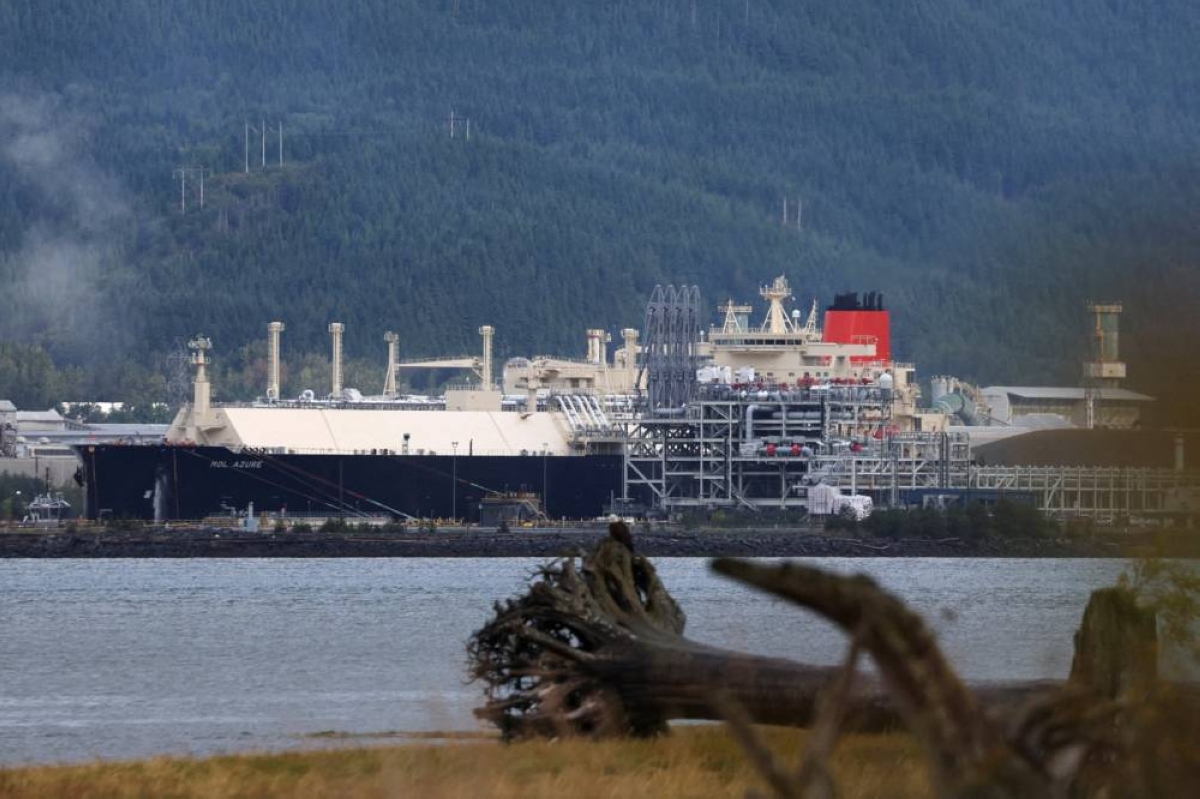
Canada is set to announce a deal to supply Germany with liquefied natural gas from a planned export facility on the coast of British Columbia, according to people familiar with the matter.The gas will be shipped from the Ksi Lisims project, a C$10bn ($7.3bn) floating export facility that has already received regulatory approval, said the people, speaking on condition they not be identified because the matter is still private.The buyer is Germany’s SEFE, the former Gazprom PJSC unit nationalised by the German government after the invasion of Ukraine. The deal is expected to be announced today by Tim Hodgson, Canada’s minister of energy and natural resources.Ksi Lisims LNG is backed by Blackstone Inc.-funded Western LNG, as well as Rockies LNG Partners and the Nisga’a Nation, an Indigenous group that owns the development land.The project has not yet reached a final investment decision to start construction. The investor group is planning a facility capable of producing 12mn metric tonnes a year of LNG — making it nearly as large as the first phase of LNG Canada, a Shell Plc-backed project that went into operation last year.Officials with SEFE, Western LNG and the Canadian government declined to comment. Representatives for Rockies LNG Partners and the Nisga’a Nation didn’t immediately respond to requests for comment.Hodgson, speaking in a recent interview with Bloomberg News, said European nations are actively looking for a reliable supply of gas to replace flows from Russia and the Middle East, which have been disrupted by war.European countries don’t want to become overly reliant on American gas, Hodgson said — partly because of trade tensions with the Trump administration but also because they want the security of having a range of suppliers.“We can be that alternative,” Hodgson said. “We can be that reliable supplier who will not use energy for coercion.” That could eventually take the form of LNG being shipped via Canada’s east coast or through Hudson Bay in the north, but in the near term, “we have huge increases in supply coming off the west coast, which are music to their ears.”Asked whether west coast LNG would be shipped to Europe through the Panama Canal, Hodgson said there are multiple options. “Some ships will go through Panama, some will go around, some they’ll just trade” in return for LNG shipments available elsewhere, he said.Ultimately, it makes sense for Canada and Europe to become closer energy partners at a time when global superpowers are looking to use trade as a tool of geopolitical coercion, Hodgson said.“They’re looking around and saying, how do we create energy security?” he said. “Where can we find a supplier who shares our values? And they look around and they don’t see a lot of choices.”  Related Story

World
Bangladesh boosts vigilance over suspected forced crossings from India

Bangladesh boosts vigilance over suspected forced crossings from India

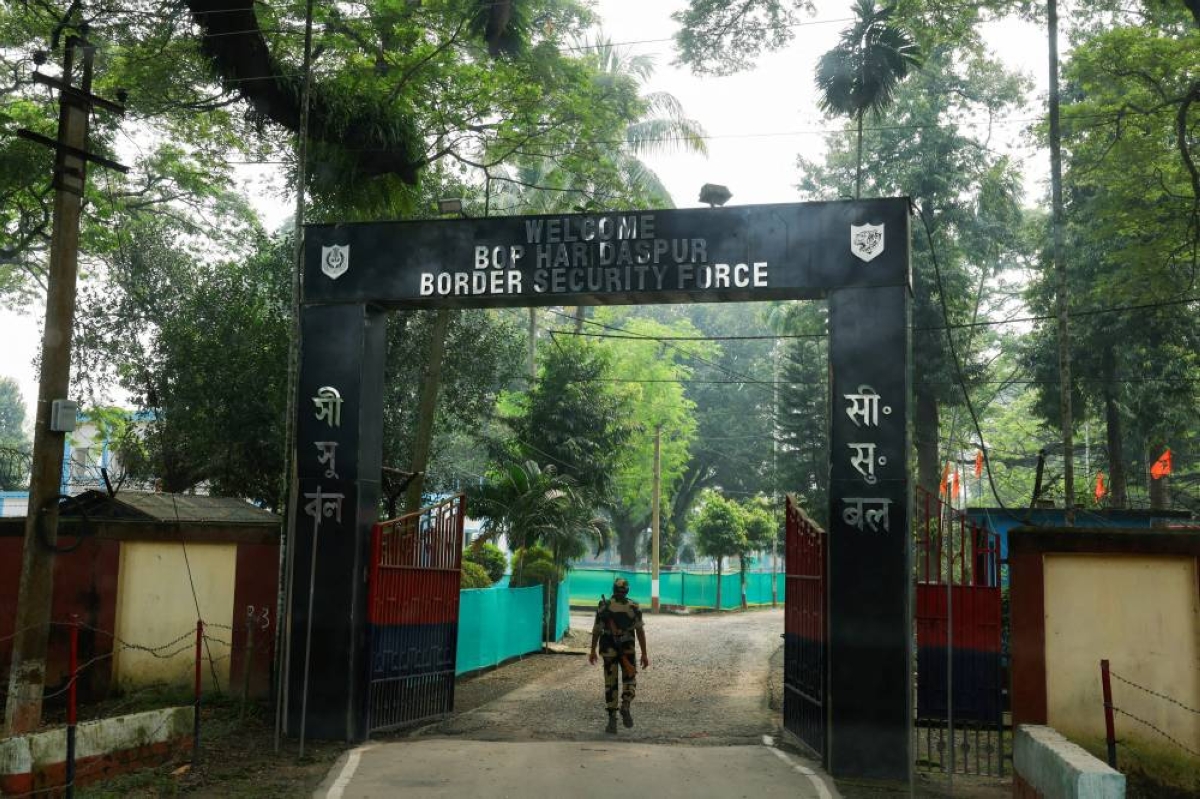
A Border Security Force (BSF) official walks into a Border Outpost (BOP), a self-contained defence outpost situated near the India-Bangladesh international border in Petrapole, India. (Reuters/File Photo) Bangladesh’s border ‌guards have intensified patrols and launched public awareness ​campaigns along parts of the ‌frontier with India because of concerns India has ‌illegally forced ⁠people into ‌Bangladesh, officials said. India's ruling Bharatiya ‌Janata Party, which governs the border states of Tripura, West ⁠Bengal and Assam, has said it would tackle undocumented migration as a priority.Earlier this month, India's foreign ministry told reporters that India has asked Bangladesh to verify the nationality of more than 2,860 people suspected of being Bangladeshis and of living illegally in the country. India's foreign ​ministry did not respond to a request for comment yesterday.The 60th Battalion of Border Guard Bangladesh began campaigns on Sunday in ‌border areas of the Brahmanbaria district, using ⁠loud speakers ​to warn residents and urging them to remain alert ​to attempts to push people across the border."We have started miking in border villages to raise awareness among residents and ask them to stay vigilant against any illegal crossings or push-in attempts," Lieutenant Colonel S M Shariful Islam, commander of the battalion, told Reuters."Our patrols and surveillance have been strengthened across the border areas. Intelligence operations are also continuing to prevent illegal push-ins, ‌human trafficking, and the ‌smuggling of drugs and other ⁠goods,” he said.ONE OF THE LONGEST LAND BORDERSBangladesh and ⁠India share a ⁠border that stretches over more than 4,000 kilometres (2,485 miles), one of the longest land frontiers in the world.Three sub-districts in Brahmanbaria district in eastern Bangladesh account for around 73 kilometres of the border with the Indian state of Tripura. India's northeastern state of ​Assam which shares its border with Bangladesh has, since May 2025, pushed back hundreds of people into Bangladesh out of the 30,000 people tribunals have declared to be foreigners. Several human rights groups have said the authorities have arbitrarily thrown people out of the country.Dhaka has repeatedly said any repatriation must follow formal bilateral procedures and has warned against unilateral push-ins across ‌the border.  Related Story

World
Record temps as spring heat wave bakes Europe

Record temps as spring heat wave bakes Europe

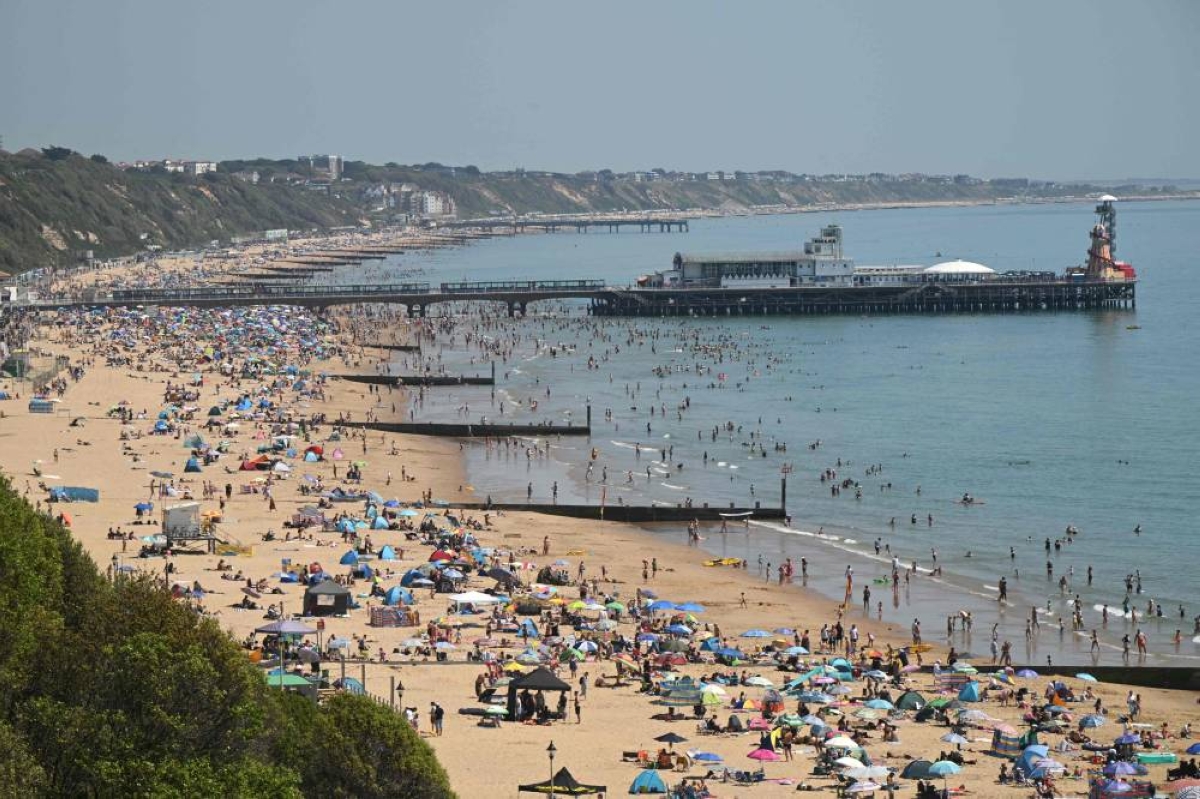
Residents of western Europe turned to fans and fountains as they sweltered through a record-breaking heat wave yesterday, with temperatures set to soar even further.Hit by a so-called 'heat dome' of warm air from northern Africa that is pushing the mercury well above normal levels for May, some Europeans even admitted they were considering getting air conditioning, in a region famously averse.Baking in a bright London sun, 47-year-old Gurjit Gill, who works in banking, said he was happy to be going into work — because of the air con.'I'm thinking about actually maybe getting an AC unit, because the bedrooms at nighttime are quite unbearable,' he told AFP.People across western Europe swarmed beaches, braved the streets clutching handheld fans and umbrellas to fend off the sun, and went for a dip or splashed themselves wherever they could — including Rome's Barcaccia fountain and the bubblers in the Jardin du Palais Royal in Paris.The UK reported its hottest-ever day for May, at 35C near London — breaking a record of 33.5C set Monday — as a high-pressure system trapped warm air over western Europe.In France, which also logged its hottest-ever May day Monday and then again yesterday, the weather agency said the heat wave could last through the week, predicting temperatures could go as high as 39C in some areas.Scientists say human-driven climate change is amplifying such extremes, with weather events like heatwaves, droughts and floods becoming more intense and frequent.'This record-breaking heat has the fingerprints of climate change all over it,' said Friederike Otto, a professor of climate science at Imperial College London.'Temperatures on this scale were once exceptional even at the height of summer... But the science is very clear — climate change makes these heatwaves hotter, longer and far more frequent.'Swiss tourist Philippe Bignens, 56, visiting London with his father, told AFP they had to change plans and retreat to their hotel to avoid being outside at the hottest time of day.'If you're not concerned about global warming, you must be deaf, blind altogether, right? So it is there, yes. We have to be concerned and try to do something about it,' he said.— Deadly turn —Across the English Channel, tennis fans in Paris baked in temperatures of 33C at the French Open, with players battling through heat that Norway's Casper Ruud said left him feeling 'like a zombie'.Government authorities also noted the heat had taken a deadly turn.French authorities yesterday reported at least seven deaths linked to the heatwave — five of which were drownings, as many people sought relief on beaches and in the water, even though lifeguard supervision is not due to start in many areas until July.Authorities in Britain said four teens had drowned in England since Sunday.A record May temperature of 28.8C was recorded at two of Ireland's weather stations amid the current blast of heat, Met Eireann data showed.In France, news channel BFMTV said its journalists had received threats and insults 'from climate-sceptic internet users' over the channel's weather maps — covered in red and 'based on broadly accepted scientific facts', it said.— Work affected —Benjamin Boisson, a fruit grower in southern France, worried the extreme fluctuation in temperature would cause a sharp drop in production, as well as complicate storage.Already, a previous warm weather spell forced him to harvest apricots five days earlier than planned this year, on May 1, he said.'That may not seem like much, but it changes everything. The major retailers weren't ready and are still selling Spanish apricots when they should have switched over to French ones,' he said.Spain's State Meteorological Agency (Aemet) also warned of 'extraordinarily high temperatures for this time of year' that will continue all week.'Widespread tropical nights' are also forecast in southwestern Spain from today, with temperatures peaking from today to Friday at between 36C and 38C, it wrote on X.Farther east, Italy's Lazio region, which includes Rome, on Monday approved rules limiting work in conditions 'with prolonged exposure in the sun' between 12:30pm and 4:00pm.In Austria, Vienna set up special misters to help passersby keep cool on the street.Europe is the continent that has experienced the fastest warming since 1990, closely followed by Asia, with North America in third place, according to data from the US National Oceanic and Atmospheric Administration. 

Sports
Qatar squad leaves Doha for last round of preparations in FIFA World Cup build-up

Qatar squad leaves Doha for last round of preparations in FIFA World Cup build-up

A 28-member Qatar football squad - coached by Julen Lopetegui - on Wednesday left Doha for Dublin where they will play an international against Ireland on Thursday. Following their friendly in Dublin, the Qatar squad will then leave for Los Angeles, United States, where they are scheduled to play their final friendly against El Salvador on June 6. On Tuesday, coach Lopetegui announced a 28-member squad. The squad will be trimmed to 26 on or before June 2nd deadline announced by FIFA. The FIFA World Cup will be staged across the United States, Canada and Mexico from June 11 to July 19. Two-time Asian champions Qatar secured qualification for a second consecutive FIFA World Cup - the first on merit - after progressing through the play-offs against Oman and the UAE late last year. Al Annabi have been drawn in Group B and will open their campaign against Switzerland on June 13 at San Francisco Bay Area Stadium before facing co-hosts Canada on June 19 in Vancouver and Bosnia and Herzegovina on June 24 in Seattle. Qatar will base their FIFA World Cup campaign in Santa Barbara, California, with the national team set to train at Westmont College after FIFA confirmed team base camps for the 2026 tournament. The Qatar squad will stay in the coastal Californian city during the expanded 48-team World Cup, which will be jointly hosted by the United States, Canada and Mexico from next month. FIFA announced the official list of team base camps, with Qatar assigned to Santa Barbara, where Westmont College will serve as the team’s training site as the Gulf nation prepare for another appearance on football’s biggest stage. “Team Base Camps are an integral part of the fabric of any FIFA World Cup,” said Heimo Schirgi, FIFA World Cup 2026 chief operating officer. “They are where teams put down roots, train and recuperate, and experience the day-to-day rhythms of the tournament,” he added. Defending champions Argentina and England were both assigned bases in Kansas City, while the majority of participating nations will be stationed across the United States.According to FIFA, 39 of the 48 competing teams will be based in the United States, with seven teams located in Mexico and two in Canada. Iran were confirmed to be based in Tijuana, Mexico, with Mexican President Claudia Sheinbaum saying on Monday that the country would allow the team to stay there to avoid potential United States visa restrictions.  

World
Poland, Britain to sign defence treaty

Poland, Britain to sign defence treaty

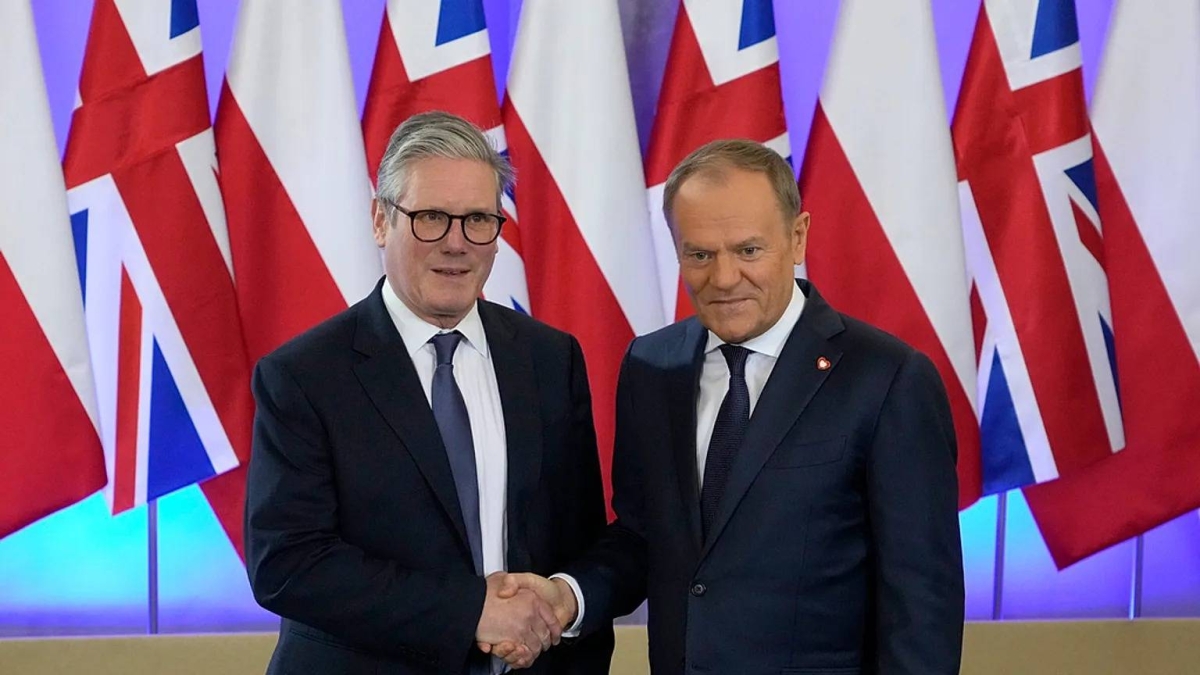
Poland and the United Kingdom will sign a defence treaty in London today, Polish Prime Minister Donald Tusk said yesteray."This is a historic moment because, after having signed a treaty in Nancy with the French Republic, Poland will sign this treaty with the United Kingdom tomorrow," Tusk told reporters in Warsaw.The security and defence pact, which Tusk will sign with his British counterpart Keir Starmer, paves the way for joint military exercises and information-sharing, and will also cover co-operation in cyber and health security, according to the Polish government.Poland — an EU and Nato member state — shares its eastern border with Russia, Belarus and Ukraine.But that geography means instability has become a reality for the former Warsaw Pact country, Tusk said."Certainly not for a month, but for years, given the neighbourhood," he added.As a result, Poland's defence pacts with European countries, alongside its alliance with the US, are designed to guarantee "total security", he added.Poland, the most populous country on Nato's eastern flank, spends the most in the alliance on defence — more than 4.8% of its gross domestic product this year alone.At the beginning of May, Warsaw signed a loan agreement with the European Commission to finance the modernisation of its army and arms industry, under which it will receive nearly 44bn euros.Last year, Poland and France signed a treaty of friendship and enhanced co-operation, which includes defence and mutual assistance clauses that France, a nuclear power, reserves for its closest allies.  Related Story

Sports
Paris Saint-Germain calls on fans to support the club in Champions League final at Novo Cinemas in Doha Oasis

Paris Saint-Germain calls on fans to support the club in Champions League final at Novo Cinemas in Doha Oasis

Paris Saint-Germain is inviting supporters across Qatar to come together for a special UEFA Champions League Final Viewing Party at Novo Cinemas in Doha Oasis, on Saturday, May 30, 2026, as the Club prepares for one of the biggest nights in its history.The event will bring PSG fans together to experience the excitement, passion, and intensity of European football’s biggest stage in a unique matchday atmosphere, surrounded by fellow supporters of the Rouge & Bleu.This year’s UEFA Champions League Final represents a historic milestone for Paris Saint-Germain, with the Club aiming to achieve the extraordinary feat of winning back-to-back UEFA Champions League trophies, a moment that could further cement PSG’s place among Europe’s football elite.PSG is calling on all supporters in Qatar to rally behind the Club and show their colours with pride. Fans are encouraged to attend wearing their official PSG jerseys, bringing their energy, passion, and unwavering PSG spirit as the Club pursues another historic European triumph.Doors will open at 6:30 PM, with kick-off scheduled for 7:00 PM. Entry to the viewing party is free of charge, however advance registration is mandatory to attend.Due to limited capacity, entry will only be granted to registered guests, and seats will be allocated on a first-come, first-served basis. Fans are strongly encouraged to register early to secure their place.Register here: https://form.jotform.com/261443126379459To mark PSG’s journey to the final, the Club has also officially launched the exclusive “Road to Budapest Finals” jersey, giving supporters the opportunity to wear a symbol of this historic campaign and stand behind the team in true PSG fashion. The official jersey is now available for purchase exclusively at the PSG Store in Villaggio Mall, with fans encouraged to wear it proudly at the viewing party and throughout the final.The viewing party promises an unforgettable experience for the PSG community in Qatar, bringing fans together to celebrate the Club, share the emotion of the occasion, and support the team as it chases European glory once again. With a vibrant fan atmosphere, shared passion, and one of football’s biggest nights on the line, Novo Cinemas at Doha Oasis will be the place to be for every PSG supporter on May 30.Wear your PSG colours. Bring your PSG spirit. Support the Club as we aim to make history together. Ici c’est Paris!  Related Story

Opinion
US Treasury rout tests Washington’s tolerance for higher borrowing costs

US Treasury rout tests Washington’s tolerance for higher borrowing costs

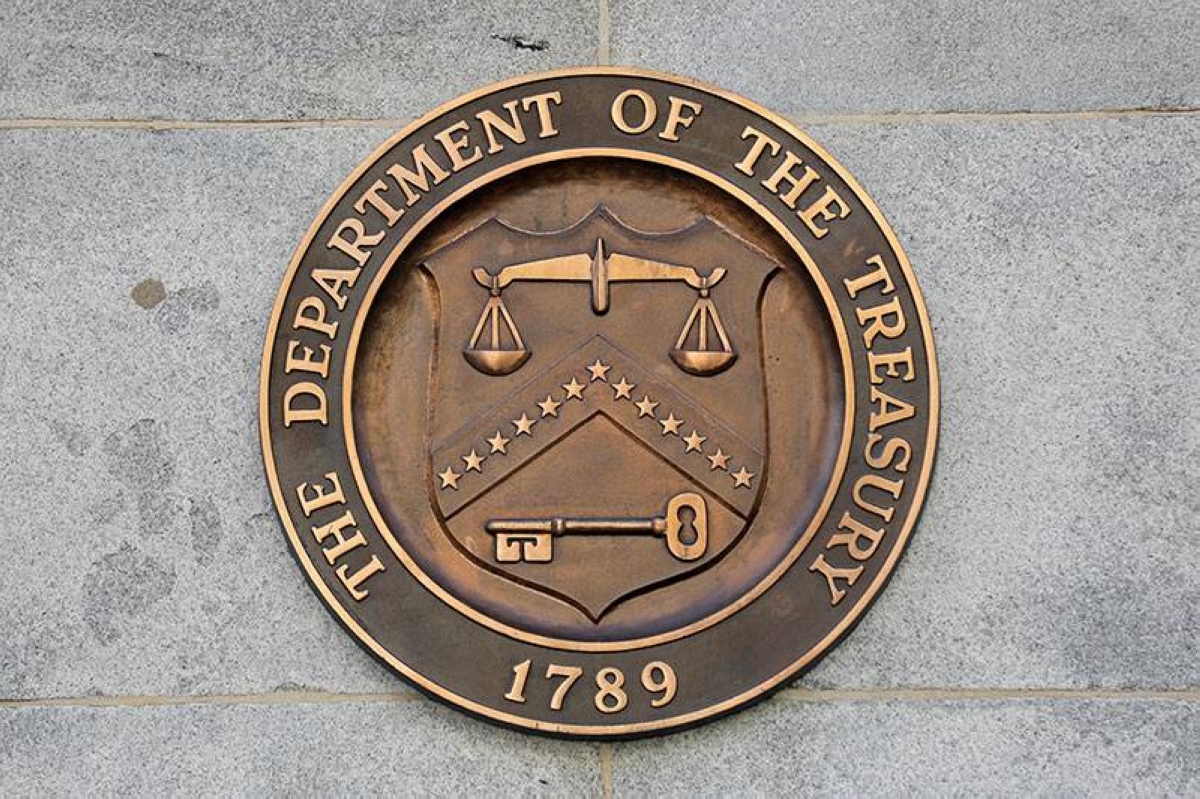
Signage is seen at the United States Department of the Treasury headquarters in Washington. (Reuters/File Photo) US President Donald Trump’s resolve on Iran is being tested by a force largely beyond his control: the bond market. As yields ‌rose rapidly over the last week, a White House official said there was significant anxiety among staff over gasoline prices and where ​the bond market is headed, with fuel prices ‌the biggest source of anxiety right now. Higher yields mean elevated borrowing costs for businesses and consumers while rising oil prices ‌push up inflation expectations. That mixture can cause headaches for the administration as ‌it prepares for midterm elections in November. “The markets are showing him ‌pain, and he has to figure out how to unwind that - and it’s not that easy,” said Greg Faranello, head of US rates strategy at AmeriVet Securities in New York. “We’re already at levels that ultimately will spill over into mortgage rates and it’s going to spill over into the housing market.” “I do think that if the administration is worried about higher yields, then trying to de-escalate the situation with calmer words is something they can do,” said Shawn Snyder, economic strategist at Potomac Fund Management in Bethesda, Maryland. He added that market prices are responsive to comments from Trump about a resolution to the war. Over recent days ​and weeks, US Treasury investors have focused on the elusiveness of a deal and long-term consequences of the war, lifting yields well above 4.5% on the benchmark 10-year note. Meanwhile, Federal Reserve officials looking to squash inflation have been discussing the possibility of raising interest rates instead of cutting them as Trump has urged. And some Republicans in Congress ‌are growing concerned at some of Trump’s calls for spending ahead of the midterm ​elections which will decide whether they maintain thin control of the House and Senate. Rising Treasury yields feed directly into borrowing ​costs across the economy, including mortgages, credit cards and business loans, and can cause financial stability issues. Bond investors said the administration would have to pay attention. US Treasury Secretary Scott Bessent and the White House both suggested that elevated yields would prove temporary. Yields on US Treasuries retraced some of their sharp run-up, after Trump said talks with Iran were in their final stage. Earlier in the week the 10-year yield touched 4.69%, the highest since January 2025. It has surged more than 50 basis points since the February 28 start of the US-Israeli war with Iran, and was last at 4.56%. Reaction to the latest progress on peace is yet to be seen in the market. A sustained rise in borrowing costs could cool housing demand, weigh on consumer spending and, in a worst-case scenario, tip the economy toward recession. That risk could prove especially significant heading into the US midterm elections. “Affordability is a buzzword in Washington and for good reason because affordability really resonates with a large number of households and ‌interest rates drive a lot of it,” said John Kerschner, ‌global head of securitized products at Janus Henderson in Denver. Still, if a peace deal is ultimately brokered, the effects could be transient. This week, Bessent said elevated yields, especially at the long end of the curve, were being driven by the Iran war energy shock that will prove temporary. The White House also said any disruption was likely to be short-lived. “President Trump has always been clear about temporary market disruptions as a result of Operation Epic Fury,” White House spokesman Kush Desai said in a statement. He said the administration was still focused on Trump’s “long-term agenda of accelerating economic growth, cutting red tape, and slashing fraud in government spending to restore America’s fiscal health.” The bond market has long been a powerful political force that can shape policy in Washington, which must maintain investor confidence to finance government debt. When investors lose faith, rising borrowing costs can pressure leaders. Former President Bill Clinton’s adviser James Carville ​told the ‘Wall Street Journal’ in the early 1990s that he wanted to be reincarnated as the bond market, because “you can intimidate everybody.” Market participants warned that Washington’s ability and willingness to respond may be limited, even if yields spike to a key pain level they identify as 5%, particularly when rates are driven by strong growth and persistent inflation rather than credit concerns. Intervening too aggressively in that environment risks undermining credibility on inflation and could exacerbate the pressures pushing yields higher. Sam Lynton-Brown, head of global macro strategy at BNP Paribas in London, said the rise was being driven less by fears over government borrowing and more by sticky inflation, strong economic growth, and elevated energy prices tied to geopolitical strains.     

World
Rubio revives ‘Quad’ with new Asia projects after questions on US

Rubio revives ‘Quad’ with new Asia projects after questions on US

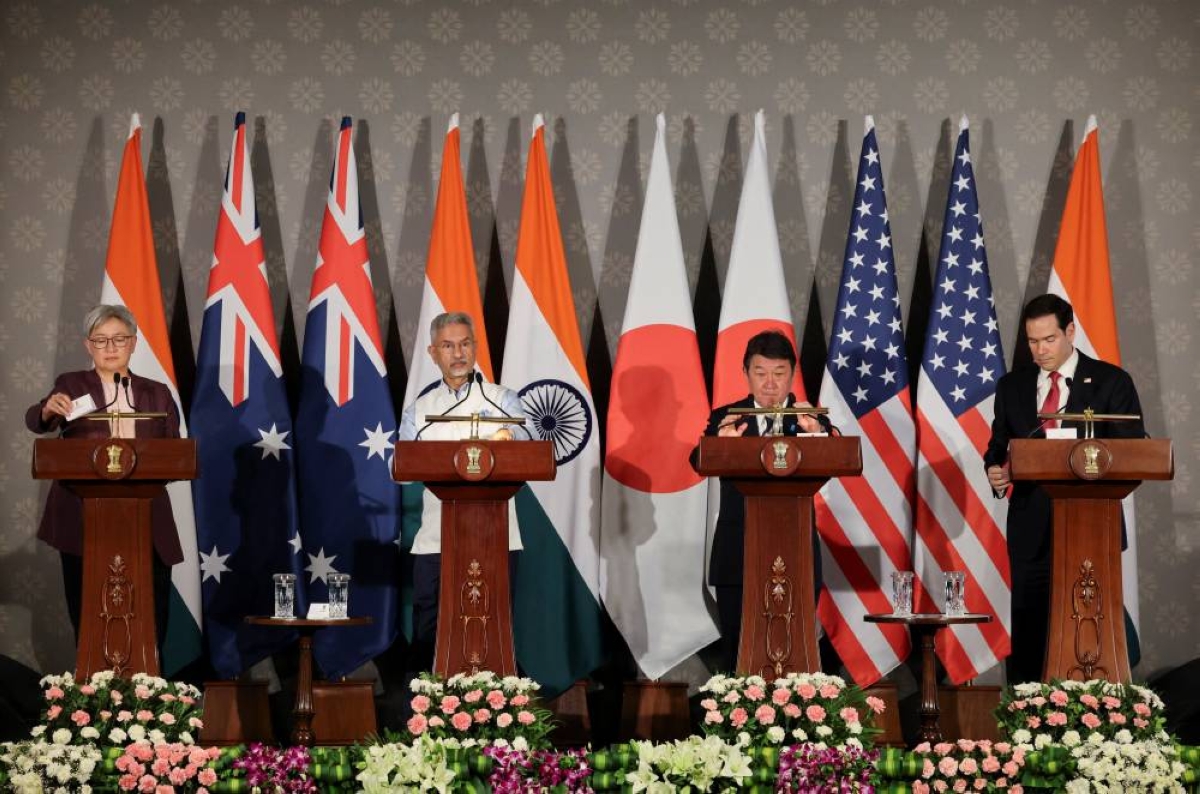
US Secretary of State Marco Rubio, Australian Foreign Minister Penny Wong, Japanese Foreign Minister Toshimitsu Motegi and Indian Foreign Minister Subrahmanyam Jaishankar attend a joint press conference after attending the Quad Foreign Ministers' meeting at

Sports
Patidar stars as Bengaluru hammer Gujarat to reach IPL final

Patidar stars as Bengaluru hammer Gujarat to reach IPL final

Royal Challengers Bengaluru's captain Rajat Patidar plays a shot during the 2026 Indian Premier League T20 match against Gujarat Titans at the Himachal Pradesh Cricket Association Stadium in Dharamshala on May 26, 2026. (AFP) Rajat Patidar led from the front with an unbeaten 93 to help defending champions Royal Challengers Bengaluru storm into the IPL final with a 92-run thrashing of Gujarat Titans on Tuesday.Captain Patidar's 33-ball knock steered Bengaluru to 254-5 and then their bowlers combined to bowl out Gujarat for 162 in 19.3 overs in the first qualifier in Dharamsala.Gujarat will have another shot at making the final when they go into Friday's second qulifier in Chandigarh where they will face the winner of the eliminator between Sunrisers Hyderabad and Rajasthan Royals.The final takes place in Ahmedabad on Sunday.Star batter Virat Kohli hit 43 to lay the foundation for Bengaluru's mammoth total - the highest ever in an IPL play-off - after being invited to bat first.The 37-year-old Kohli, who has stepped away from Test cricket and T20 internationals, is chasing a second straight IPL title with Bengaluru after waiting 18 seasons to lift his first in 2025.Kohli and Devdutt Padikkal, who made 30, put on 72 for the second wicket before Jason Holder hit back for Gujarat with two wickets in three balls.Holder got Kohli to drag the ball back onto his stumps and then had the left-handed Padikkal caught behind by wicketkeeper Jos Buttler.Sloppy fieldingBut Bengaluru quickly rebuilt the innings with Patidar and Krunal Pandya putting together a counter-attacking stand of 95 off 47 balls.Both Patidar and left-handed Pandya hit a flurry of fours and sixes including in a 28-run 15th over as Gujarat faltered with dropped catches and sloppy ground fielding.Kagiso Rabada dropped Patidar on 20 and a few fielding blunders let Bengaluru race away before Pandya top-edged Rabada to deep midwicket.Patidar kept up the charge as he reached his fifty off 21 balls with a six off Rabada.Patidar lost another partner in Tim David, bowled by Prasidh Krishna for four, but finished with a flourish alongside Jitesh Sharma who hit 15 off five balls. NEVER IN THE CHASEIn reply, 2022 champions Gujarat were never in the chase after being reduced to 51-5 inside six overs.Gujarat started briskly with in-form opener Sai Sudharsan starting with two successive fours off New Zealand quick Jacob Duffy.But the bowler had his revenge in a lucky manner in the next over when Sudharsan was out hit wicket, the bat slipping out of his hand and hitting the stumps as he played a sparkling cut to the cover boundary.Bhuvneshwar Kumar bowled skipper Shubman Gill for two and Josh Hazlewood rattled the stumps of Buttler, who departed for 29.Wickets kept tumbling as pace bowler Rasikh Salam struck twice in one over and the writing was on the wall.Impact substitute Rahul Tewatia made 68 to save Gujarat the blushes after they slumped to 88-8 in 11.2 overs. BRIEF SCORES Royal Challengers Bengaluru 254 for 5 (Patidar 93*, Kohli 43, Holder 2-39, Rabada 2-54) beat Gujarat Titans 162 (Tewatia 68, Duffy 3-39, Krunal 2-16) by 92 runs 

Opinion
Inside one of Middle East’s longest-running influence operations

Inside one of Middle East’s longest-running influence operations

Sudan’s civil war has produced one of the world’s worst humanitarian catastrophes. Since fighting erupted in April 2023 between the Sudanese Armed Forces (SAF), led by Abdel Fattah al-Burhan, and the paramilitary Rapid Support Forces (RSF), led by Mohamed Hamdan Dagalo (Hemedti), tens of thousands have been killed, millions displaced, and warnings of atrocity crimes and genocidal violence have intensified, particularly in Darfur. Yet the war has unfolded alongside another conflict: a vast online struggle over narrative, legitimacy, and visibility.For years, social media companies have claimed they are doing a lot to tackle disinformation, and bot networks (or electronic flies as we call them in the Gulf). Networks are supposedly identified, exposed, and removed. Yet a recent investigation I conducted as a UNESCO Fellow into influence operations surrounding Sudan uncovered something troubling: a sprawling bot and sockpuppet network that has operated across the Middle East for years, surviving suspensions, adapting to platform changes, and shaping political discourse across multiple countries and conflicts.The operation consisted of hundreds of core sockpuppet accounts supported by thousands of auxiliary bots producing more than 170,000 posts across multiple languages over several years. Its activity stretched across Sudan, Yemen, Tunisia, Mauritania, Libya, Syria, Egypt, and the Gulf - including Qatar. Sudan sat at the centreof the network’s activity.The findings suggest these networks increasingly function as parallel media infrastructures. They do not simply spread isolated pieces of false information. They sustain broader political narratives through repetition, selective omission, coordinated amplification, and the simulation of public consensus. Collectively, they manufacture the appearance of organic political sentiment while concealing the centralised and inauthentic nature of the operation itself.The network’s activity closely tracked developments in Sudan’s civil war. As violence escalated following April 2023, Sudan-related content surged dramatically. The operation overwhelmingly promoted narratives aligned with the RSF, portraying the group as humanitarian, peace-oriented, and legitimate, while assigning responsibility for civilian suffering, famine, and instability almost exclusively to the SAF and alleged Islamist actors.This framing extended well beyond ordinary wartime propaganda. The RSF leadership was repeatedly associated with diplomacy, civilian protection, and humanitarianism. Reports of abuses attributed to the RSF were systematically ignored, denied, or reframed. The result was a highly disciplined narrative environment in which one side of the conflict was persistently rehabilitated while responsibility for violence was externalised elsewhere.These dynamics matter because information manipulation directly affects how conflicts are understood internationally. In atrocity contexts, coordinated influence operations can muddy attribution, distort public understanding, weaken the visibility of credible reporting, and interfere with humanitarian and diplomatic responses. Sudan’s war has already suffered from limited media access, fragmented reporting, and competing geopolitical interests. Large-scale influence operations further degrade an already fragile information environment.One of the most striking findings in the report concerned the structure of the network itself. Rather than functioning as a single unified cluster, the operation was organised into regional “cells.” Different groups of accounts posed as users from specific countries, often using local flags, dialects, imagery, and national symbols to enhance credibility. Tunisian-focused accounts interacted heavily with other Tunisian-focused accounts. Sudan-focused accounts clustered around Sudanese themes. Mauritanian-focused accounts amplified Mauritanian content.Longitudinal analysis, however, revealed repeated interaction with the same low-salience “filler” accounts focused on entertainment, viral videos, and generic social media content. These auxiliary accounts acted as connective infrastructure linking otherwise separate regional clusters together. What initially appeared to be dispersed online communities increasingly resembled a coordinated transnational influence architecture.Temporal analysis also exposed patterns inconsistent with authentic geographically distributed behavior. Accounts claiming to represent users from multiple countries such as Libya or Tunisia displayed similar posting rhythms aligned with Gulf-region working hours. The further the claimed location was from Gulf Standard Time, the more pronounced the discrepancy became.Perhaps most importantly, the network adapted over time. Accounts were suspended, repurposed, renamed, and replaced. Narratives shifted in response to regional developments. More recently, the operation appears to have incorporated AI-assisted accounts, synthetic personas, and increasingly automated forms of engagement. Some accounts displayed homogenised language patterns, repetitive slogans, and coordinated interaction structures characteristic of emerging AI-enabled influence operations.This persistence is significant. The dominant assumption surrounding online influence operations is often that they are temporary campaigns tied to specific events or elections. What emerged in this investigation was something more durable and infrastructural. The network operated across years, multiple countries, several languages, and different political contexts while maintaining broad narrative consistency and operational coordination.The broader implications extend well beyond Sudan. For years, discussions around coordinated influence operations have focused heavily on Russia, China, or Western elections. Yet the Middle East is one of the world’s most sophisticated environments for digital authoritarianism, computational propaganda, and coordinated inauthentic behaviour. Governments, proxy actors, political networks, and commercial operators across the region have developed increasingly advanced methods for shaping online discourse and manufacturing legitimacy at scale.At the same time, social media platforms continue to struggle with systematic enforcement, particularly in Arabic and other non-English contexts. Many of these networks persist for years despite public exposure. Verification systems designed to enhance trust can instead be exploited to increase visibility and perceived legitimacy. Indeed, 40 of the accounts in this network had verification status, but were entirely fake.The consequences may extend even further as AI systems increasingly retrieve and synthesize information from social media ecosystems. Coordinated influence operations don’t just shape what users encounter online, but they also shape the informational environment from which AI systems generate knowledge itself.While disinformation is a central issue, perhaps more worrying is the emergence of durable influence infrastructures engineered to manipulate visibility, simulate public consensus, and shape political reality across entire regions over long periods of time.• The writer is an associate Professor of Media Analytics at Northwestern University in Qatar, a Unesco Fellow, and author of several books including Digital Authoritarianism in the Middle East.