World
Evacuation flights leave Tenerife after cruise ship outbreak

Evacuation flights leave Tenerife after cruise ship outbreak

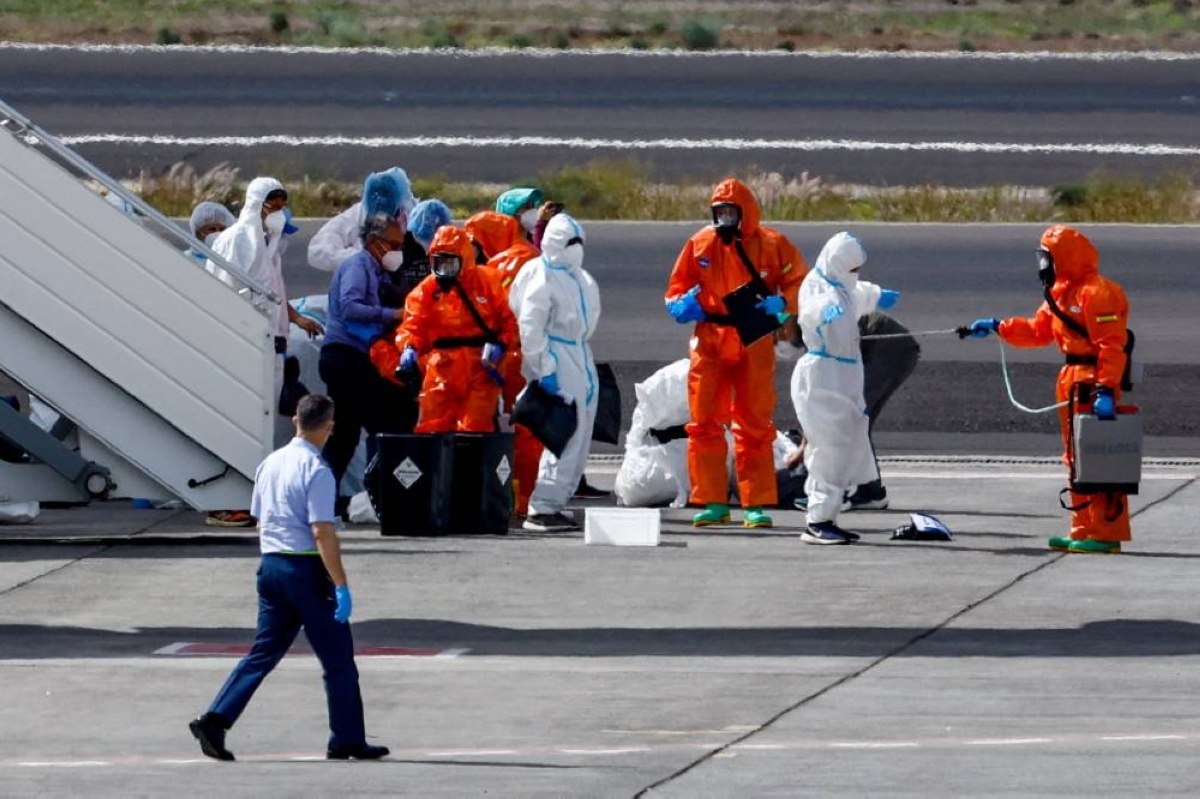
Groups of passengers and crew disembarked from a ‌cruise ship hit by a deadly hantavirus outbreak yesterday to be evacuated to their home countries where ​they will isolate according to national protocols ‌to prevent further spread of the disease. Government planes carrying Spanish and French nationals landed in Madrid ‌and Paris yesterday afternoon, where the passengers were ‌transported to hospital, according to the two countries’ governments.One ‌of the five French passengers showed symptoms during the repatriation flight, French Prime Minister Sebastien Lecornu said on X. Planes to Canada, the Netherlands, Turkiye, the UK, Ireland, and the US were due to depart by 2030 local time (1830 GMT) yesterday, with the final flights departing today by 1900 local time.The passengers will be tested upon arrival and then either taken to local hospitals or quarantine facilities or transported home for isolation. The World Health Organisation has recommended a 42-day quarantine for all passengers from the boat from yesterday, its director of epidemic and pandemic management Maria Van Kerkhove said in a briefing. The Spanish passengers will be kept in hospital for the full 42 days, while French passengers ​will be hospitalised for 72 hours then allowed home to self-isolate for a further 45 days, according to the respective governments. “Our recommendation is daily health checks, at home or in a specialised facility. It’s up to countries to develop their policies but our recommendations are ‌very clear,” Van Kerkhove said, highlighting that the incubation period for the ​virus was up to six weeks. The virus, usually spread by rodents but also ​transmittable person-to-person in rare cases of close contact, was first detected by health officials in Johannesburg on May 2 treating a British man who fell ill and was taken into intensive care, 21 days after another passenger had died. The man’s health has since improved, a WHO official said yesterday. The WHO said the first passenger who died on the ship may have been infected before boarding, possibly during travel in Argentina and Chile.Eight people no longer on the ship have fallen ill, according to a WHO tally from Friday, of which six are confirmed to have contracted the virus. Three have died – a Dutch couple and a German national. Four remain hospitalised in South Africa, the Netherlands and Switzerland. On the remote island of Tristan da Cunha, a British overseas territory, a suspected case is ‌being treated by a team of medical specialists ‌parachuted in by the UK military. Still, health officials urged calm, reminding a public scarred from the experience of the Covid-19 pandemic that this virus was far less contagious and posed little risk to the general population.A woman in Spain who was tested for the virus after sharing a flight with one of the victims tested negative. “This is not Covid and we don’t want to treat it like Covid,” acting US CDC Director Jay Bhattacharya said in an interview with CNN yesterday, adding the 17 US passengers from the ship would be given the choice of isolating at home or at a facility in Nebraska. Spain’s health ministry also downplayed the risk to the broader population. It added that rodents had ​not been detected aboard the ship.The luxury cruise ship left for Spain on Wednesday from the coast of Cape Verde after the WHO and European Union asked the country to manage the evacuation of passengers after the outbreak was detected. Passengers were taken from the ship to shore in small boats and transported to Tenerife airport in military buses, without coming into contact with the public.Thirty crew members will remain on board and sail to the Netherlands today evening where the ship will be disinfected.“Thank God we are all fine... I hope we’ll get through the quarantine process smoothly and be able to see family and friends again,” Turkish birdwatcher Emin Yogurtcuoglu, a passenger on the ship, ‌wrote in a public post ​on Instagram. 

Opinion
Hantavirus scare revives Covid-era conspiracy theories

Hantavirus scare revives Covid-era conspiracy theories

An outbreak of the deadly hantavirus on a Dutch-flagged cruise ship is reviving conspiracy theories about vaccines, alleged depopulation campaigns and miracle cures that flourished during the coronavirus (Covid-19) pandemic.The multilingual misinformation, which dominated online discourse and disrupted public health responses to the coronavirus, resurged even as the World Health Organisation (WHO) insisted this week that there remained minimal risk to the general public from passengers of the MV Hondius.“LOCKDOWN ALERT: Globalists Launch Covid 2.0 As Hantavirus Spreads Worldwide,” InfoWars founder Alex Jones said on X. “Just Like A Light Switch.”A flurry of similar posts declared the outbreak a “plandemic” – borrowing from the title of a widely discredited pseudo-documentary from 2020 that pushed falsehoods about Covid-19.A passenger is believed to have contracted the rare respiratory disease before boarding the ship in Argentina and infecting others on board.Yet, an AFP analysis found widespread claims alleging a sinister plot to force vaccines on the masses, coerce people into lockdown, or sway America’s November elections by justifying expanded use of mail-in ballots - voting method that election deniers have insisted without evidence is rife with fraud.“The almost-immediate resurrection of Covid-19 era conspiracy theories is a reminder that misinformation doesn’t simply disappear once the crisis that yielded them is over,” said Yotam Ophir, head of the University at Buffalo’s Media Effects, Misinformation and Extremism lab.During the Covid-19 pandemic, health misinformation became more entwined with political identity, he said, so the election-rigging narrative “primes existing beliefs”.Other posts pointed to past coverage of potential vaccines for hantavirus, Covid-era comments from billionaire Bill Gates and a fictional 1990s television show as evidence the hantavirus was intentionally released to reduce the population or make money for vaccine manufacturers.Some further claimed the hantavirus was a side effect of Pfizer’s Covid-19 vaccines, misrepresenting a document that showed only that it was one of many “adverse events of special interest” subjected to monitoring, not something caused by the shot.Ophir said many of the conspiracy theories now resurfacing have a long history, tracing to centuries-old fears that diseases were manufactured by elites.However, they spread faster now, boosted by social media algorithms and sometimes entertained by anti-vaccine voices installed in high-ranking offices by President Donald Trump.There are no approved vaccines or known cures for the hantavirus, which is usually spread from infected rodents and can cause respiratory and cardiac distress as well as haemorrhagic fever.However, online, anti-establishment physicians and some politicians immediately touted the anti-parasitic drug ivermectin and other medications as cures.Former US representative Marjorie Taylor Greene – who posted that the virus was a “bioweapon” unleashed so pharmaceutical companies could profit off “poison” vaccines – amplified ivermectin claims from Texas otolaryngologist Mary Talley Bowden, whom AFP has fact-checked for spreading misinformation.Bowden later posted an offer to sell ivermectin, while Florida Governor Ron DeSantis reupped support for failed legislation aimed at making ivermectin available without prescription.“There is extreme misinformation about ivermectin,” John Lednicky, a virologist at the University of Florida College of Public Health and Health Professions, told AFP. “Outside of laboratory tests, ivermectin has not proven effective in treating infections.”Ophir, from Buffalo, said the promotion of Covid-era conspiracy theories could be an effort to curry political favour – and may also be financially motivated.Amid anxiety and confusion over the outbreak, he told AFP that “online influencers, social media groups, or AI-operated users, may seize the chance to make some money”. – AFP 

Sports
Digital platform documents history of football in Qatar

Digital platform documents history of football in Qatar

His Excellency the Minister of Sports and Youth Sheikh Hamad bin Khalifa bin Ahmed al-Thani inaugurated the official digital platform for the project documenting the history of Qatari football (1948-present), marking the launch of a landmark national initiative aimed at preserving the legacy of football in Qatar through a modern institutional framework that combines scientific methodology with digital innovation. The project reflects a firm belief that football in Qatar has long served as a social and cultural pillar that contributed to shaping public consciousness and mirrored the transformations of Qatari society across different historical periods. In this context, the initiative seeks to transform decades of sporting heritage, milestones, and iconic moments into a credible national archive that preserves the past while ensuring its continuity for future generations. Speaking during the launch ceremony, the chairman of the Committee for the Documentation and Archiving of Qatari Football History, Ali Dawood, said that the achievement was the result of sustained institutional work that began in August 2020, driven by the conviction that documenting the history of Qatari football is a national responsibility equal in importance to the achievements themselves, as it preserves and sustains them. He said that the committee focused on collecting, verifying, and archiving a vast body of historical material, including documents, photographs, oral testimonies, and rare footage, all reviewed according to rigorous scientific standards. Dawood added that documentation, research, and technical teams succeeded in building a comprehensive knowledge base that has been organised, indexed, and digitised to serve as a reliable national reference for researchers, media professionals, and future generations. He stressed that the accomplishment was the product of integrated teamwork carried out in accordance with the highest standards of quality and governance. He noted that the committee’s attainment of ISO 9001:2015 certification within a record period for a documentation project reflects its commitment to institutional excellence and sustainable professional practices. The committee adopted a comprehensive organisational structure comprising specialised teams in historical documentation, oral history, archiving, digitisation, verification, and review to ensure accuracy, governance, and quality outputs. Its work began with the collection of rare documents, photographs, and video materials, alongside recording testimonies of pioneers and key figures in Qatari football, followed by cross-referenced historical verification, digitisation of content, and the development of an interactive database based on the latest international standards. The committee stated that the project has reached an advanced stage, noting that the digital platform currently contains nearly 15 terabytes of historical data and content and continues to undergo expansion and updates. The volume of content is expected to nearly double during upcoming phases as part of a phased strategy designed to ensure the project’s comprehensiveness, sustainability, and status as a living national reference for the history of Qatari football. The committee also announced the publication of several specialised documentary books as part of the archiving project, covering pivotal milestones in Qatar’s football journey. These include publications on the early beginnings of football in Qatar, the national team’s participation in the Gulf Cup, and Qatar’s journey in FIFA World Cup tournaments, within a vision aimed at delivering verified knowledge content that combines historical narrative with scientific methodology. Among the publications is The Story of the Beginning, which documents the formative years of football in Qatar, tracing its emergence within early labour communities before spreading across Doha neighbourhoods and evolving into clubs, teams, and stadiums. Another publication, Qatar in the Gulf Cup: Legacy and Impact, chronicles Qatar’s participation in the Arabian Gulf Cup since the tournament’s inception, highlighting the technical, organisational, and fan-related transformations that accompanied its football journey within the broader Gulf sporting landscape. The book Qatar in the World Cup: Journey and Milestones documents the evolution of Qatari football from its early qualification attempts to the historic hosting of the FIFA World Cup Qatar 2022 and the national team’s qualification for the 2026 FIFA World Cup. The publication offers both historical and analytical perspectives on a long journey marked by ambition, challenges, and achievement.  Related Story

Opinion
Education system building the nation and shaping the future

Education system building the nation and shaping the future

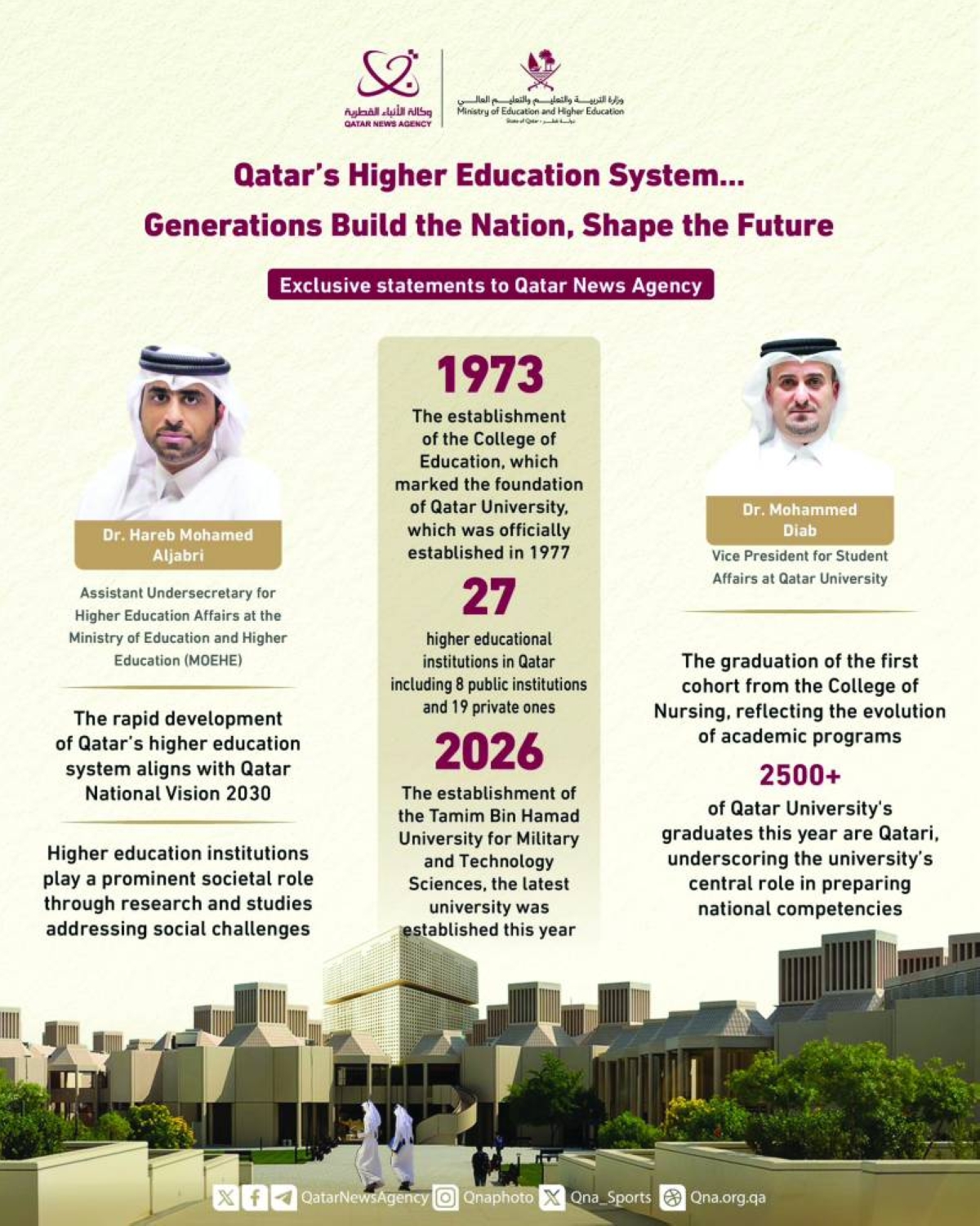
Higher education in Qatar is a cornerstone of human development and the knowledge-based economy, as it aims to prepare national cadres with the required skills, promote scientific research, and meet labour market needs.It also fosters cultural diversity and international exchange through scholarships and by attracting international universities and students, thereby providing a global educational experience.Qatar and its leadership’s growing attention to higher education and the continuous development of its quality reflect the country’s strong commitment to human development.By recognising education as a key driver of economic and social progress, Qatar has established numerous universities, colleges, research and training centres, while attracting international schools and universities, fostering successful global partnerships, and encouraging private educational institutions through continuous support.The establishment of the College of Education for male and female teachers in 1973, in co-operation with the United Nations Educational, Scientific and Cultural Organisation (Unesco), marked the foundation of the country’s first national university, Qatar University (QU), which was officially established in 1977.Today, the country’s higher education landscape includes a diverse range of universities, colleges, and institutes totaling around 27 entities, including eight public institutions and 19 private ones.The latest university was established this year.The Tamim Bin Hamad University for Military and Technology Sciences serves as an advanced academic umbrella integrating the expertise of military colleges while combining field professionalism with advanced technological knowledge.In the same context, His Highness the Amir Sheikh Tamim bin Hamad al-Thani issued Amiri Decision No. 51 of 2022 establishing and regularising the Police Academy.The academy aims to train security personnel according to international standards, consolidate training and academic units under one umbrella, and integrate the Police College into its structure to advance legal and police training.The expansion of higher education institutions in Qatar coincides with the continued increase of academic programmes, reaching nearly 350 accredited programmes covering diploma, bachelor’s, master’s, and doctoral degrees.According to data from the Higher Education Affairs Sector at the Ministry of Education and Higher Education (MoEHE), Qatar’s higher education institutions currently accommodate 52,564 students, including 47,326 undergraduate students and 5,238 postgraduate students.In remarks to the Qatar News Agency (QNA), Assistant Undersecretary for Higher Education Affairs at the MoEHE Dr Hareb Mohamed al-Jabri said that the rapid development of Qatar’s higher education system aligns with Qatar National Vision 2030, supporting the pillars of a comprehensive national development.He stressed that higher education contributes directly to human development, community development, environmental sustainability, and economic diversification, in addition to transforming scientific research outputs into startups and projects incubated within Qatar’s entrepreneurial ecosystem, thereby supporting the national economy.Dr al-Jabri added that higher education forms the foundation for preparing qualified national cadres capable of meeting labour market demands in terms of both specialisations and skills.Meanwhile, graduation ceremonies are currently being held throughout May, marking the end of the academic year, celebrating student achievements, and preparing graduates for a new chapter, the beginning of their professional careers.In this context, Qatar University celebrated the graduation of its 49th cohort, comprising 4,024 students, including 3,122 female students and 902 male students.In similar remarks to the QNA, QU Vice-President for Student Affairs Dr Mohammed Diab said this year’s graduation ceremony carried a significant milestone with the graduation of the first cohort from the College of Nursing, reflecting the evolution of academic programmes and their responsiveness to national priorities, particularly in the healthcare sector.He added that the large number of graduates this year reflects the scale of the QU’s impact on society, noting that more than 2,500 graduates are Qatari nationals, underscoring the university’s central role in preparing national competencies, alongside nearly 1,500 non-Qatari graduates, which further enhances academic and cultural diversity within the university.In a related context, the eight partner and local universities of Education City celebrated the graduation of the Class of 2026, the largest in its history, with 1,100 graduates from the various universities that make up the institution’s system, including 444 Qatari graduates representing 40% of the total number of graduates, and 660 graduates from 78 countries.Education City was officially inaugurated on October 13, 2003, under the supervision and initiative of the Qatar Foundation for Education, Science and Community Development (QF), which was established in 1995, to become a global centre for higher education.It now includes eight prestigious international partner and local universities, including the HBKU.All of these universities offer diverse and specialised academic programmes in various fields of knowledge, which has provided ample opportunities for Qatari students and other resident and international students to pursue their higher education in universities that are among the best of their kind in the world.The president of Higher Education and education adviser at the QF, Francisco Marmolejo, explained in a statement to the QNA the role that QF plays in supporting graduates after graduation, noting that each university within the system, along with the QF, works through specialised teams to follow up with them and support them in their career path.Marmolejo noted that a survey conducted during the Education City Job Fair 2026 showed that about 70% of graduates feel highly confident in their readiness to enter the labour market in Qatar, while employer surveys indicated that QF graduates have a high level of competence, particularly in communication skills, professional conduct and leadership.Regarding the sectors that attract the most graduates in Education City universities, he explained that artificial intelligence (AI) fields are witnessing increasing demand at the present time, as the QF is working in co-operation with its various universities to provide diverse educational opportunities in this field and others.He pointed out that Carnegie Mellon University in Qatar will offer an advanced AI programme ranked among the best in the world during the next academic year, and Virginia Commonwealth University in Qatar will offer a new programme in motion photography, while the Media and AI major at Northwestern University in Qatar is one of the most popular majors among students.Amid the momentum that Qatar is witnessing these days with the graduation of new batches of graduates, University of Doha for Science and Technology (UDST), which replaced what was known as the College of the North Atlantic in 2022, to be the first national university specialising in applied and technical education in the State of Qatar, will celebrate on the graduation of more than 1,200 students on May 19 in various technical and professional disciplines.In a similar statement to the QNA, UDST President Dr Salem bin Nasser al-Nuaimi pointed out that the university currently has more than 9,000 students in various programmes belonging to more than 86 nationalities, which reflects a diverse international educational environment.He noted that Qatari students constitute 25% of the total university student body, a figure that is an essential part of the student community, in support of national talent.Dr al-Nuaimi pointed out that this cultural diversity reflects the richness of the educational experience and enhances the exchange of experiences among students.Lusail University, the first private national university in Qatar, will also celebrate the graduation of its third batch of students on May 18-19.All who gave statements to the QNA emphasised the successful and well-thought-out expansion of higher education institutions in Qatar, and the flexibility, opportunities, and academic and professional options it has provided for students, enhancing their motivation to learn.This results in continuous growth in qualified national cadres, in line with the state’s strategy aimed at supplying the labour market with specialised competencies.Considering the development of Qatar’s higher education system and its remarkable local and international scientific achievements, the nation occupies advanced positions in the Education Quality Index issued by the World Economic Forum (WEF) in Davos, as well as in other competitive indicators and prestigious Arab and international rankings.In this regard, the QU has maintained its position as one of the best universities in the region and the world, according to the 2026 QS World University Rankings, rising to 112th globally and second in the Arab world.This ranking brings Qatar University much closer to joining the ranks of the top 100 universities in the world, especially considering its jump of 61 places compared to the 2024 ranking, in which it held the 173rd position globally.According to this ranking, some universities within Education City, such as the Hamad Bin Khalifa University and Weill Cornell Medicine-Qatar, were also among the top institutions.Furthermore, scholarships play a pivotal and strategic role in strengthening the higher education system in Qatar.They are key tools for developing national talent and building a knowledge-based economy, in line with Qatar National Vision 2030 and national development strategies, while also meeting the needs of the Qatari labour market.In this context, the MoEHE announced on April 21 the government scholarship plan for the 2026-27 academic year.This plan is based on four overarching strategic objectives: economic growth, equal opportunities, diversity and inclusion, and talent development, in alignment with the country’s national vision and the Third National Development Strategy.The plan marks a significant shift in the country’s strategy for building national competencies, introducing new features, most notably the Disability Track, which guarantees the right to higher education globally for this group through scholarships to universities that provide accessible environments and specialised programmes that support their independence and academic excellence. 

News
Motorcycle left hanging from traffic light after f…

Motorcycle left hanging from traffic light after f…

A motorcyclist was taken to hospital with serious but non-life-threatening injuries after a collision in British Columbia left the bike suspended from a traffic signal above a busy intersection on Saturday afternoon.Delta Police said officers

Entertainment
Savannah Guthrie Pleads for Nancy’s Return in Mother’s Day Post

Savannah Guthrie Pleads for Nancy’s Return in Mother’s Day Post

Savannah Guthrie Begs for Help Bringing Nancy Home ... In Emotional Mother's Day Post Published May 10, 2026 12:51 PM PDT Play video content This Mother's Day is a tough one for Savannah Guthrie ...

Entertainment
Martin Short Calls Daughter’s Death a ‘Nightmare,’ Details Her Mental Struggles

Martin Short Calls Daughter’s Death a ‘Nightmare,’ Details Her Mental Struggles

Martin Short Reveals Daughter Struggled Before Tragic Death ... 'Nightmare for the Family' Published May 10, 2026 12:04 PM PDT Martin Short is speaking candidly about the devastating loss of his daughter, Katherine, revealing she

News
French President Macron jogs through Alexandria st…

French President Macron jogs through Alexandria st…

French President Emmanuel Macron was seen jogging through the streets of Alexandria during his visit to Egypt.A video widely shared on social media showed Macron and members of his accompanying delegation taking part in a

Business
Dubai Chamber of Commerce sees over 30,000 membership renewals

Dubai Chamber of Commerce sees over 30,000 membership renewals

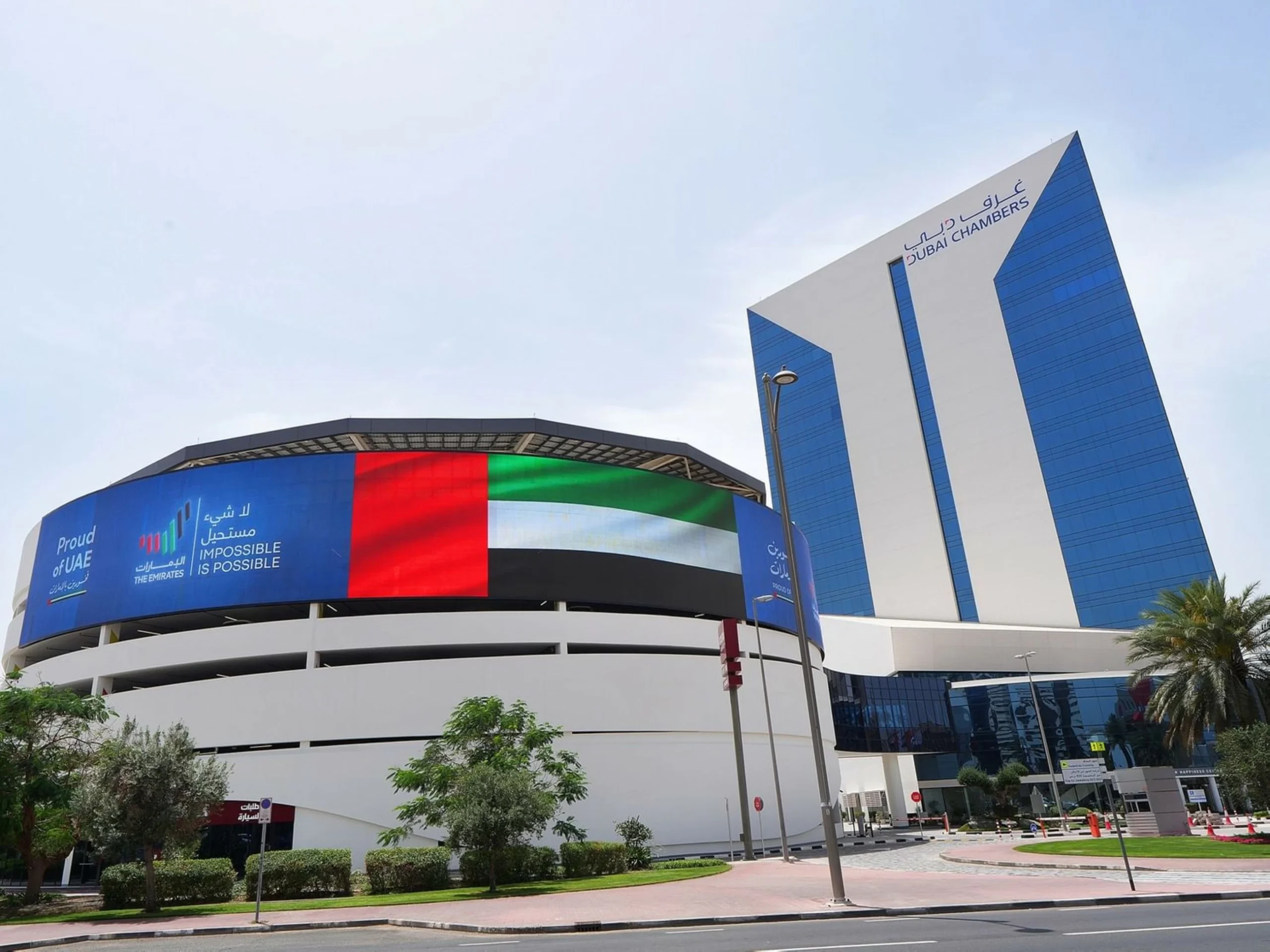
Dubai Chamber of Commerce, one of the three chambers operating under the umbrella of Dubai Chambers, has announced that it recorded 30,697 membership renewals during April 2026. The figure marks the highest monthly total in

Business
Sheikh Nahyan unveils Dubai’s first fully furnished maste…

Sheikh Nahyan unveils Dubai’s first fully furnished maste…

Sheikh Nahyan Bin Mubarak Al Nahyan, Minister of Tolerance and Coexistence, unveiled “Greenz by Danube,” the latest development by Danube Properties, during a major event held at Coca-Cola Arena in Dubai.The launch was attended by