Sports
Aya, Mariam bring medals glory for Qatar in table tennis competition

Aya, Mariam bring medals glory for Qatar in table tennis competition

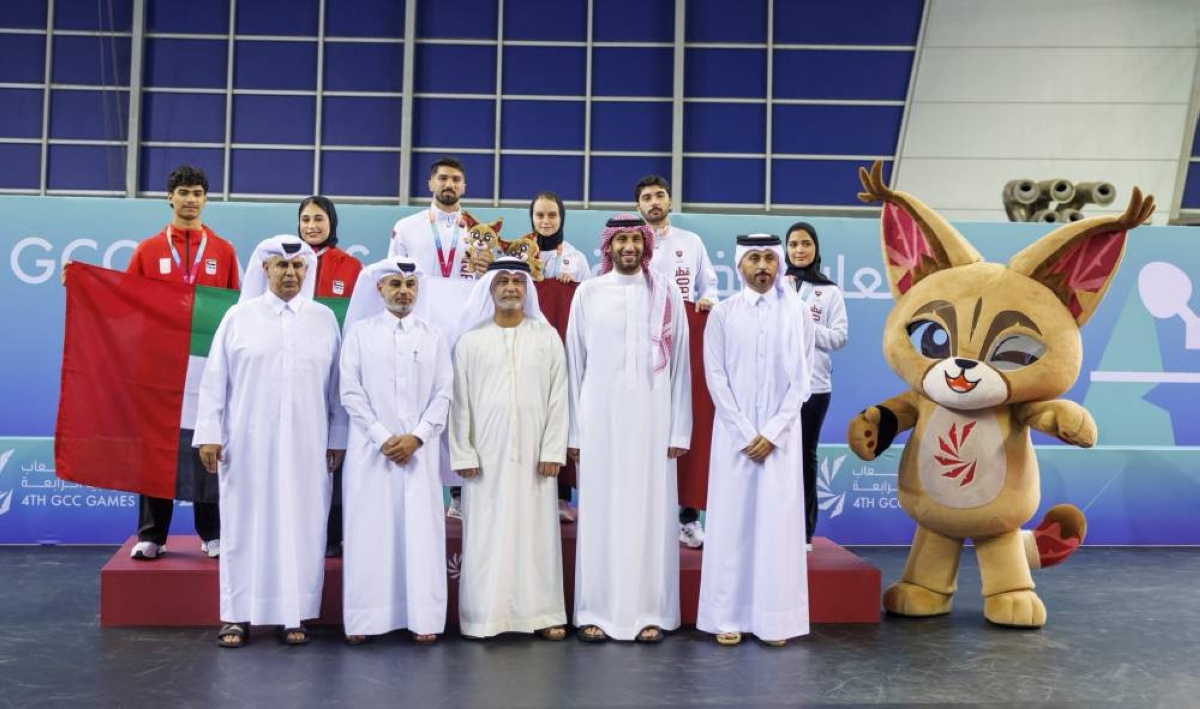
Team Qatar secured gold and silver in the women’s singles competition through Aya Mohammed and Mariam Ali respectively, after Aya defeated Mariam 3-1 in the final. Qatar also won silver in the men’s doubles event through Mohammed Abdulwahab and Abdullah Abdulwahab after they lost 3-0 in the final to Saudi Arabia’s Ali Al Khudrawi and Abdulaziz Boushalibi.On Saturday, Team Qatar had already won gold and bronze in the mixed doubles event. Mohammed Abdulwahab and Aya Mohammed captured gold after defeating the UAE pair Ali Al Hawai and Noura Al Mazmi 3-0 in the final, while Abdullah Abdulwahab and Mariam Ali secured bronze after defeating Bahrain’s Rashid Khalid Sanad and Rayan Emad 3-0 in the third-place playoff. In the men’s team competition, Team Qatar secured bronze to raise their overall tally in the tournament to six medals — including two gold, two silver, and two bronze medals.  Mohamed Abdulwahab and Abdullah Abdulwahab celebrate after winning the silver in the men's doubles table tennis competitions.  The winners were crowned by Hamad Ahmed al-Hammadi, President of the Qatar Table Tennis Association (QTTA), Prince Mohammed bin Abdulrahman Al Saud, President of the Saudi Table Tennis Federation, Ibrahim Al Aasam, Vice President of the UAE Table Tennis Federation, Ahmed Khalil al-Muhannadi, Secretary General of the Qatar Federation, and Jaber Saeed Afifa, Assistant Secretary General of the Qatar Federation. QTTA president al-Hammadi expressed his satisfaction with the technical and organisational success of the table tennis competitions, stressing that the tournament reflected Qatar’s growing status as a host of major regional, continental, and international sporting events. Al-Hammadi said: “We congratulate our players, who lived up to expectations and delivered performances worthy of Qatari sport. They proved their ability to compete strongly and reach the podium despite the participation of some of the best players in the GCC.” 

World
Trump warns ‘won’t be anything left’ of Iran unless it agrees to deal

Trump warns ‘won’t be anything left’ of Iran unless it agrees to deal

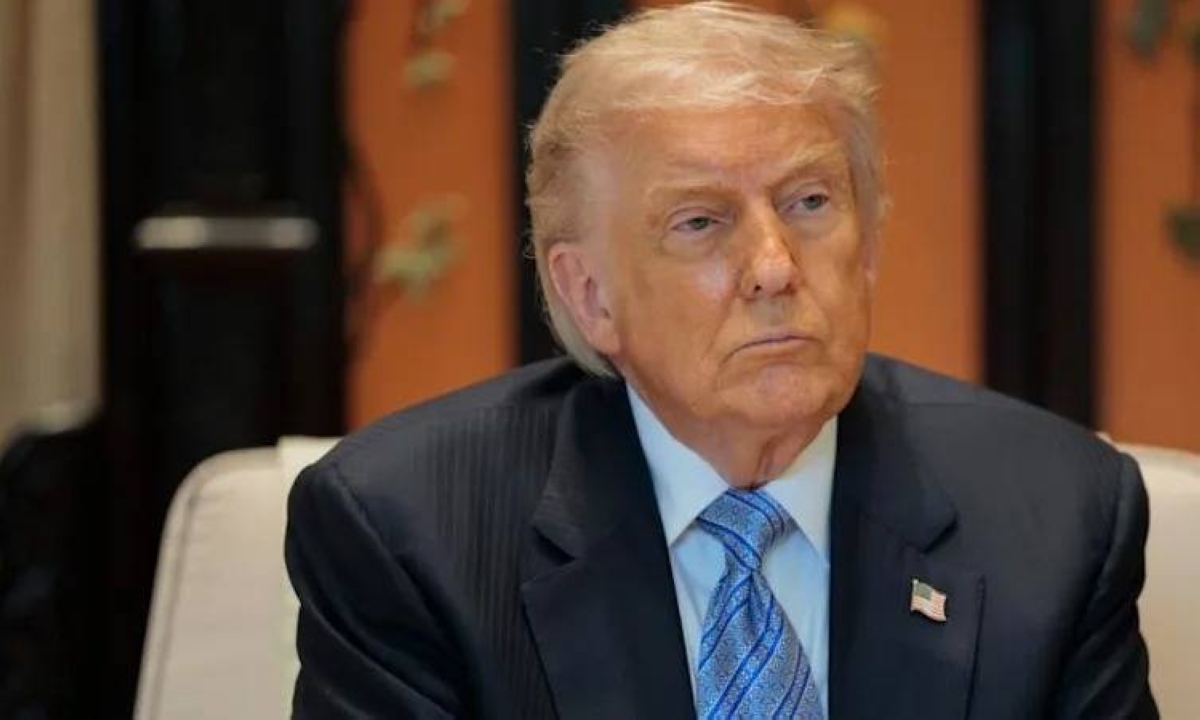
President Donald Trump yesterday warned Iran “there won’t be anything left of them” if Tehran does not quickly agree to a peace deal with the US. Washington, locked in conflict with Tehran since US and Israeli forces launched major strikes on the Islamic republic beginning February 28, has struggled to break an impasse and make any progress toward ending a war that has shaken the Middle East and sent energy prices climbing. “For Iran, the Clock is Ticking, and they better get moving, FAST, or there won’t be anything left of them,” Trump wrote on his Truth Social platform. “TIME IS OF THE ESSENCE!”The war has led to an effective blockade of the critical Strait of Hormuz, through which some 20% of global oil exports pass in peacetime, and has drawn neighbours Israel and Lebanon into a deadly side conflict. Iran’s clerical state, Hezbollah’s patron, has demanded a lasting ceasefire in Lebanon before any broader peace agreement with Trump, who has been frustrated by Tehran’s refusal to an accord on his terms. An Israeli military official said yesterday that Hezbollah had fired around 200 projectiles at Israel and its troops over the weekend, despite Israel and Lebanon agreeing to extend a ceasefire.Washington and Tehran agreed to a truce on April 8, but peace negotiations have stalled and sporadic attacks have continued.Yesterday, Iranian media said the US had failed to make any concrete concessions in its latest response to Iran’s proposed agenda for negotiations to end the war.The Fars news agency said Washington had presented a five-point list which included a demand for Iran to keep only one nuclear site in operation and transfer its stockpile of highly enriched uranium to the US.  Related Story

Opinion
Fibre-optic drones have exposed Netanyahu’s Hezbollah pipe dream

Fibre-optic drones have exposed Netanyahu’s Hezbollah pipe dream

In the ruined townships of southern Lebanon, a new kind of war has emerged — one that no Iron Dome can intercept and no electronic warfare suite can blind. A small quadcopter, guided not by radio waves but by a hair-thin fibre-optic cable unreeling silently behind it, skims rooftops before slamming into an Israeli Merkava tank with the precision of a surgeon’s scalpel. Israel’s multibillion-dollar defence architecture is, in this moment, rendered irrelevant by a spool of cable and a repurposed commercial drone. This is the battlefield arithmetic that confounds Benjamin Netanyahu’s proclaimed ambition to disarm Hezbollah — what his critics call his greatest pipe dream. Battered by a year of Israeli bombardment, stripped of key commanders, its Syrian supply corridor severed by Assad’s fall, the Party used fifteen months of fragile ceasefire not to disarm, as Beirut and Washington demanded, but to rearm — and to innovate. Israeli officials acknowledge that Hezbollah’s drone unit has launched over 160 FPV sorties since early March, 90 guided by fibtr-optic cables that defeat every electronic countermeasure in Israel’s inventory. When a medevac helicopter raced to evacuate the wounded at Taybeh, Hezbollah launched a second drone at the aircraft. Soldiers pointed their rifles at the sky. On May 7 and 8, FPV drones struck Iron Dome launchers, footage showing maintenance crews fleeing moments before impact. Netanyahu’s answer? A solution “will take time.” In the interim, front-line troops hang nets over their positions, hoping a drone snags on fabric before it finds flesh. Against this backdrop, the demand for disarmament assumes the quality of a theatre of the absurd. Behind closed doors, Lebanese officials have quietly conceded to American envoys that disarmament within any near-term horizon is not feasible. The Lebanese Armed Forces, underfunded and structurally compromised by decades of Hezbollah influence, have neither the firepower nor the political will to confront an organisation that has threatened civil war should anyone try. Secretary General Naim Qassem has warned that seizing the Party’s weapons will mean “no life in Lebanon.” In the vocabulary of Lebanese politics, that is not a threat — it is a constitutional fact. The Party’s negotiating position is a masterpiece of circular logic that happens to be tactically airtight: it will consider disarmament when Israel withdraws from all Lebanese territory — an outcome no Israeli leader, least of all Netanyahu, will accept before Hezbollah disarms. Israel retains forces at five strategic points along the border; Prime Minister Salam has noted that Israel effectively controls sixty-eight Lebanese villages in the south. The 1949 Armistice line, Lebanon demands as a baseline, remains a distant aspiration. The land Israel has seized by force shows no sign of returning for free. Washington pushes Aoun and Salam toward peace and mutual recognition with Israel — a proposition the Party categorically rejects, and that much of the Lebanese political class regards as surrender dressed in diplomatic language. The 1949 Armistice border is not merely a cartographic line; it is the architecture of national dignity. The Lebanese question cannot be understood apart from the larger battle between the US-Israel Axis and the Axis of Resistance. When American and Israeli strikes killed Khamenei on February 28, they did not merely decapitate a theocracy — they pulled the trip wire that brought Hezbollah back into combat after fifteen months of enforced restraint. Tehran, even in the convulsive aftermath, has not relinquished the Hezbollah card. It never will. The Party is the crown jewel of the IRGC’s four-decade investment in the Levant — trained, financed, and strategically directed by the Quds Force from its inception. To imagine Tehran surrendering that asset for diplomatic pleasantries is to misunderstand the Islamic Republic’s strategic grammar entirely. Now, with Trump dangling olive branches and threatening “massive maximum pressure” in the same breath, the most consequential variable hangs unresolved: what emerges from the Trump-Xi summit in Beijing? Regional sources have told CNN that progress in the Iran nuclear talks “will depend on the results of President Trump’s visit to Beijing.” Iran has already warned of ninety-percent uranium enrichment should a second round of US-Israeli strikes materialize.15 Should diplomacy collapse, and the bombs fall again, Hezbollah will unleash its remaining arsenal against northern Israel — where more than a million Israelis have already abandoned their homes, a demographic hostage to an impasse that no one in Washington, Jerusalem, or Beirut dares to resolve. Lebanon is, as it has always been, the theater in which larger powers rehearse their conflicts without suffering their consequences. The scorched villages, the families in schools north of the Litani, the iron-nerved drone operators threading quadcopters through bombed-out alleyways — all of this is the bill Lebanon pays for a geopolitical argument it did not author and cannot conclude. Disarming Hezbollah is not a policy question. It is a civilisational reckoning — with Iran’s ambitions, Israel’s appetite for security-through-dominance, America’s capacity to translate pressure into outcomes, and Lebanon’s chronic inability to imagine itself as a sovereign state rather than a corridor for other people’s wars. Netanyahu’s pipe dream of a disarmed Hezbollah will remain precisely that — a dream — as long as Iranian strategic interests, Lebanese political paralysis, and fiber-optic quadcopters make the alternative unenforceable. The Party has used every ceasefire to rearm, every setback to innovate, and every ultimatum to consolidate its base. The question no one in the triumvirate of Washington, Jerusalem, and Beirut dares answer aloud: if sixteen years of UN resolutions, three major wars, and the killing of Iran’s Supreme Leader have not disarmed the Party — what, exactly, will? • The writer is a news anchor, programme presenter and media instructor.  Related Story

Opinion
Starmer’s troubles a sign of fractured times

Starmer’s troubles a sign of fractured times

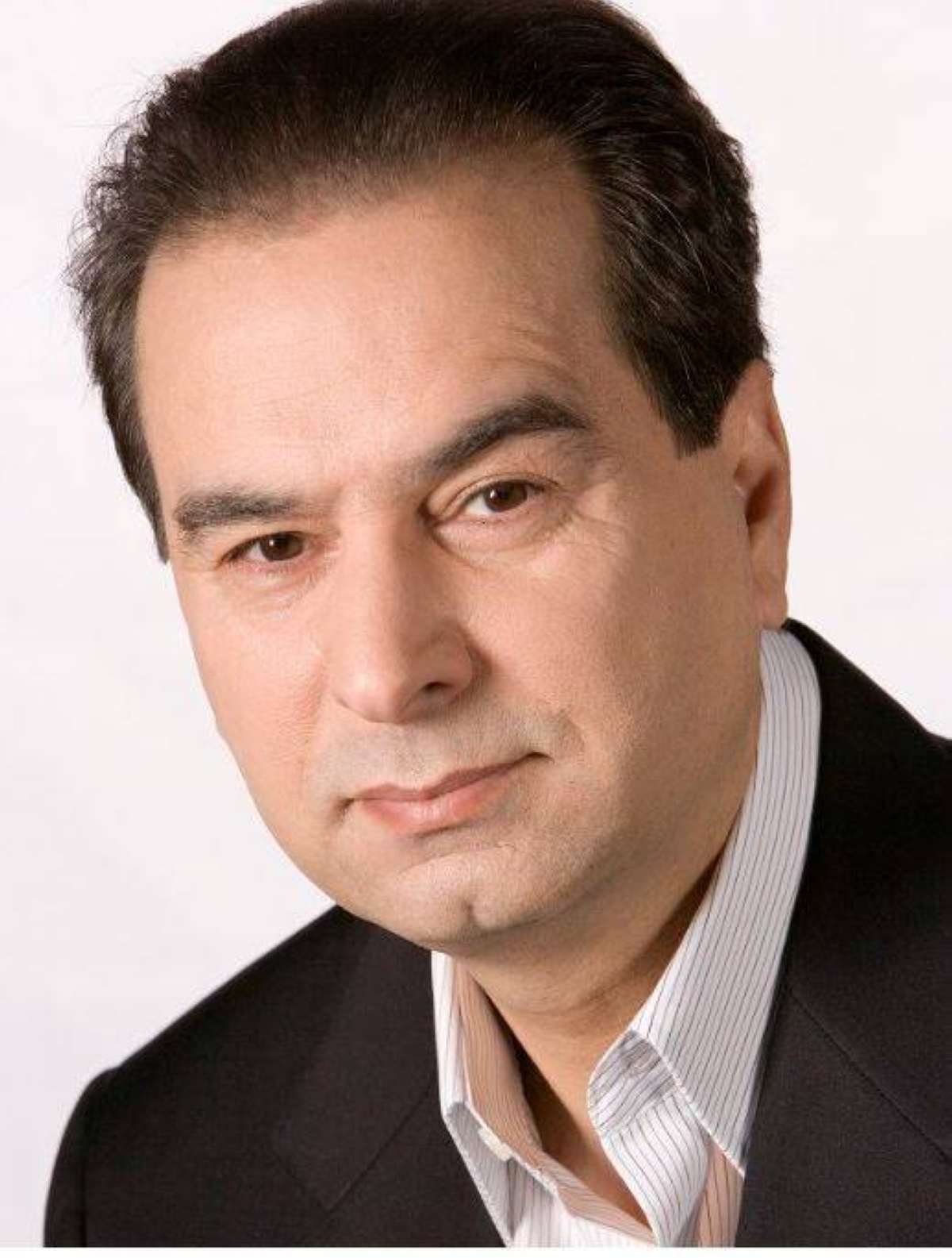
A week where everything and nothing seemed to happen in British politics left Sir Keir Starmer hanging on as prime minister, in office but not in power, as one of his predecessors at 10 Downing Street, John Major, was famously taunted back in 1993. While a threatened leadership challenge from Wes Streeting, the ambitious former Health Secretary, never materialised, Starmer remains under intense pressure to set a date for his departure. Less than two years into a premiership that began with a landslide election victory in July 2024, Starmer’s travails illustrate the difficulty of governing in an intensely populist age. From almost the moment he entered No. 10 as the first Labour Prime Minister in 14 years, Starmer has faced one political crisis after another. Many of them have been self-inflicted, such as the appointment of Peter Mandelson as ambassador to the US, while others reflect the challenging economic legacy that Starmer inherited from the Conservative Party.There is also the paradox of the 2024 election in which Labour won a 174-seat majority in the House of Commons, almost as large as Tony Blair’s record-breaking 179 majority in 1997, yet did so on the back of just 33.7% of the vote, 10 points lower than the previous general election in 2019 which delivered Boris Johnson’s Conservatives a majority of 80 seats. Starmer’s ponderous style of decision-making and wooden manner of speaking have not helped him connect with a public that is increasingly tired of the two-party system – Labour and the Conservatives – that has dominated politics for 100 years. This shone through in the disastrous results of the local elections in England on May 7 which saw Labour lose control of 38 councils and shed 1,498 councilors. Labour also performed badly in the elections to the Scottish Assembly, held the same day, and finished in a distant third place in the Senedd (Welsh Assembly) vote after having been the largest party in Wales for decades. Across the board, voters made it clear they had tired of Labour as well as the Conservatives. The results of the May 7 elections also suggest that the political landscape in Great Britain has fragmented in ways that make further volatility very likely. Politics in England has moved beyond the traditional two (or three, if you include the Liberal Democrats) party system to become a five-party affair as Reform and the Greens enter the mix. Nigel Farage’s Reform UK were the biggest winners of the local elections even if they finished 4% down on their vote share in the 2025 elections. Reform and the Green Party showed they can outflank Labour and the Conservatives from both the left and the right. Meanwhile, the fact that nationalist parties — Reform in England, the Scottish National Party, and Plaid Cymru — topped the vote in England, Scotland, and Wales, respectively, suggests that the union is fraying as voters in the constituent nations go their own ways. And yet, the Labour inquest into what went wrong and what should be done about it has descended into farce and looks set to dominate headlines for months and leave the UK effectively leaderless over the summer. Starmer’s unpopularity, with the public as well as his own MPs, generated an expectation that he would face a leadership challenge, likely from Streeting, who duly resigned from the Cabinet on May 14. However, Streeting failed to challenge Starmer, likely because he could not get the support of the 81 members of parliament needed to trigger a leadership contest under Labour Party regulations. Andy Burnham, the relatively popular Mayor of Manchester, duly declared his intent to re-enter the House of Commons as Josh Simons, hitherto a Starmer loyalist, resigned his seat to trigger a by-election in the Makerfield constituency that will likely take place in June or July. What happens next is anyone’s guess. While Makerfield has returned a Labour MP ever since the seat was created in 1983, Reform came a strong second in the 2024 election and won every local council seat in the constituency on May 7, finishing 28 points ahead of Labour. It is therefore not a shoo-in for Burnham and previous efforts to parachute figures into parliament have not always gone well. A cautionary tale is that of Patrick Gordon Walker, Foreign Secretary in Harold Wilson’s government who had surprisingly lost his seat in the 1964 general election, whereupon a Labour MP was elevated to the House of Lords to create a vacancy only for the Conservatives to defeat Gordon Walker in what had been a safe seat. Should Burnham win the seat, he would demonstrate that he is capable of taking on and defeating Reform in precisely the northern industrial heartland that Labour will need to retain if they are to have any chance of staying in office after the next general election. The fact that the by-election is essentially a vote on a potential prime minister makes it unique in recent political history. If Burnham does return to the House of Commons, where he sat from 2001 to 2017 and served in Gordon Brown’s cabinet, Starmer will face a choice of contesting a leadership election, which could take months, or stepping down to allow a swift coronation. The two Conservative Party leadership elections of 2022 provide a template for the choices Starmer must make. Nearly two months elapsed between Boris Johnson announcing he would resign as prime minister, on July 7, and Liz Truss winning the leadership election, on September 5. Following Truss’s ignominious exit after 49 days in office, however, the party decided not to hold a protracted second election in a matter of months and coalesced around Rishi Sunak who was elected unopposed just four days after Truss stood down. For Starmer, the tragedy is that there has rarely been a more highly qualified prime minister who was so unsuited to the style of retail politics all successful leaders must practice. • The writer is a leading scholar specialising in Gulf politics and international political economy, and a fellow at the Baker Institute and co-director of the Middle East Energy Roundtable.  Related Story

News
Electrical generator fire outside Barakah Nuclear Power P…

Electrical generator fire outside Barakah Nuclear Power P…

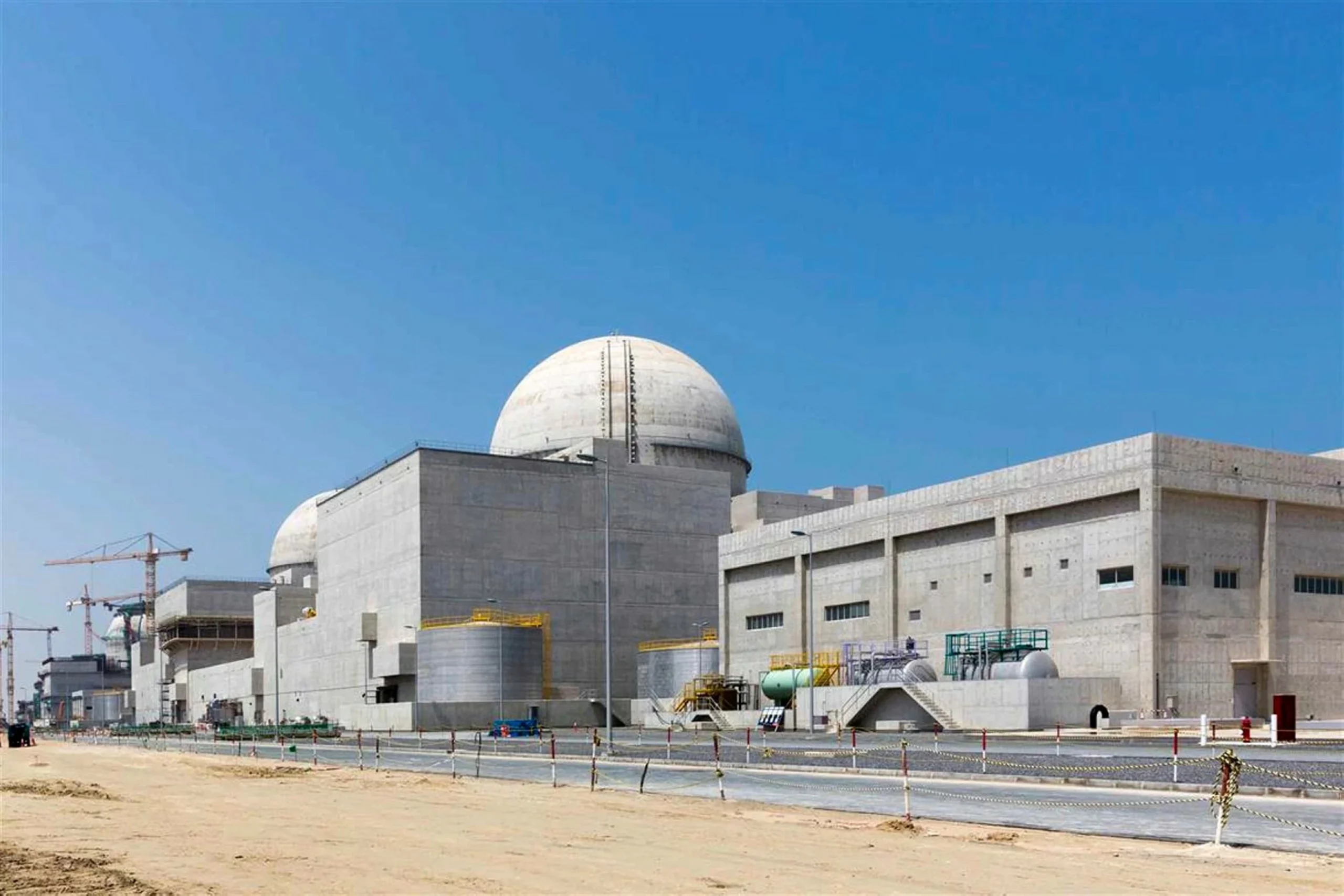
The Federal Authority for Nuclear Regulation (FANR) stated that it is continuing to closely monitor the incident involving a fire in an electrical generator located outside the inner perimeter of the Barakah Nuclear Power Plant

Entertainment
Brandon Clarke’s Fiancée Amber Lorraine Breaks Silence Over Death In Tribute

Brandon Clarke’s Fiancée Amber Lorraine Breaks Silence Over Death In Tribute

Brandon Clarke's fiancée Amber Lorraine is mourning his heartbreaking loss ... revealing the two were preparing to get married before his sudden death last week. Amber shared an emotional tribute to Instagram Sunday alongside a

Entertainment
Dak Prescott’s Ex Sarah Jane Ramos’ Bridesmaid Shuts Down Rumors She’s Dating Him

Dak Prescott’s Ex Sarah Jane Ramos’ Bridesmaid Shuts Down Rumors She’s Dating Him

Play video content Caitlin Rance is shutting down the chatter after getting spotted with pal Sarah Jane Ramos’ ex, Dak Prescott -- making it crystal clear she’s still flying solo. In a post on her

Entertainment
Philadelphia Eagles Star A.J. Brown Marries Kelsey Riley in Laguna Beach

Philadelphia Eagles Star A.J. Brown Marries Kelsey Riley in Laguna Beach

Eagles Star A.J. Brown Ties the Knot at Luxury Laguna Beach Venue!!! Published May 17, 2026 1:02 PM PDT Philadelphia Eagles star A.J. Brown officially tied the knot this weekend, and TMZ Sports obtained photos

Entertainment
Stars Celebrate Graduation Season 2026, Flaunt Diplomas

Stars Celebrate Graduation Season 2026, Flaunt Diplomas

Graduation 2026 See the Academic A-Listers!!! Published May 17, 2026 12:00 PM PDT It's that time of year ... when Hollywood's rich and famous add a little pomp and circumstance into the mix. So many

Entertainment
Tyson Fury’s Teen Daughter Venezuela’s Wedding, See More Pics & Video

Tyson Fury’s Teen Daughter Venezuela’s Wedding, See More Pics & Video

Tyson Fury’s daughter Venezuela Fury had one seriously lavish wedding weekend with her hubby Noah Price -- and TMZ’s got a gorgeous peek inside the big day. Check out the gallery and clip ... Tyson’s