Opinion
Nasa’s lunar success sharpens focus on China’s 2030 crewed landing goal

Nasa’s lunar success sharpens focus on China’s 2030 crewed landing goal

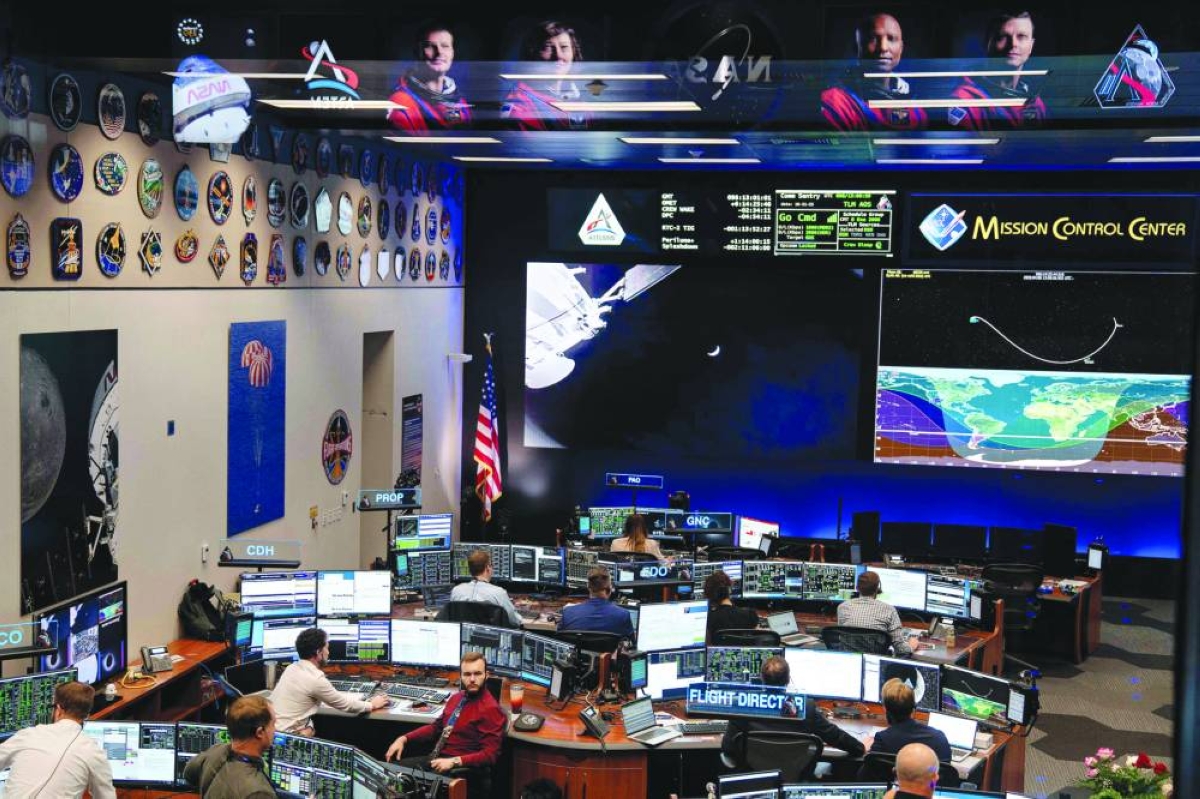
As Nasa’s record-breaking Artemis mission bolsters the US path back to the moon, China’s bid to land astronauts there by 2030 is taking on greater geopolitical significance and putting ‌pressure on Beijing to meet or beat its timetable. Four US astronauts on the Artemis II mission this week flew ​past the moon’s shadowed far side, travelling ‌deeper into space than any humans before them and setting the stage for Artemis IV to land on ‌the moon in 2028. The planned US return after more than ‌half a century is being closely watched in China, which ‌is developing the full architecture for its first crewed landing on the moon, from the Long March-10 rocket to the Mengzhou spacecraft and Lanyue lunar lander. Beijing has made significant advances in recent years by becoming the first country to return robot-taken samples from both the near and far sides of the moon, and its crewed spaceflight programme has become proficient in operating space stations and handling emergencies in orbit. “There is no bigger prize for China on the table today than landing people on the moon, this is the essential next step for China on the road to preeminence in space,” said Clayton Swope, deputy director of the Aerospace Security Project at the US-based Center for Strategic and International Studies (CSIS). Washington and Beijing are also competing in institution-building efforts in preparation ​for a future when humans have a permanent presence on the moon, with the US-led Artemis Accords on lunar exploration matched up against the Chinese and Russian-led International Lunar Research Station (ILRS). “The question now is no longer simply who gets there first, but who can stay longer and do more,” Kang ‌Guohua, an aerospace professor at the military-linked Nanjing University of Aeronautics and Astronautics, told ​China’s state-backed Global Times last week. ENTIRELY NEW HARDWAREA major hurdle for Beijing will be proving an entirely ​new lunar mission architecture within the next four years, demonstrating all of the hardware being developed for the 2030 mission, from heavy-lift rockets to spacesuits, can work reliably on first use. China’s manned space agency said in 2023 that the mission would rely on two Long March-10 rockets, one launching a crewed spacecraft and the other a lunar lander. The two vehicles would rendezvous and dock in lunar orbit. Two astronauts would descend to the surface on the lander, collect samples, then return to lunar orbit, redock with the spacecraft and head back to Earth. The Mengzhou spacecraft can carry up to seven astronauts, according to China’s manned space agency, which has not yet announced the size and members of the 2030 mission team. China’s recent robotic lunar missions have given it valuable experience in communications, rendezvous, and docking operations around the moon. But crewed missions impose far stricter safety requirements and ‌critical parts of the mission chain are still being ‌tested, including the rocket and spacecraft. In February, China carried out the first low-altitude escape test for the Long March-10 with a Mengzhou spacecraft aboard it at a launch site on Hainan Island. The vessel’s return capsule successfully separated after an abort command and splashed down safely at sea. Last year, the Lanyue lunar lander’s ascent and descent capabilities were also tested in Hebei province. While these were important milestones, the pace of testing will need to accelerate if China is to certify the system for a crewed landing by 2030. Still, CSIS’ Swope said China appeared to be making steady progress and it seemed “very plausible” it would meet its deadline. “China has a history of setting deadlines for space activities and closely meeting those deadlines, there are no public signs of any missteps or setbacks to Beijing’s ​crewed lunar landing plans,” he said. GEOPOLITICAL STAKESThe stakes are not only technical but geopolitical. As the US-China rivalry deepens across trade, technology and military power, lunar exploration has become another arena of competition. US analysts point to China’s rising defence spending, use of space diplomacy to increase its influence overseas, growing private launch sector and successful robotic lunar missions as evidence that Beijing is highly motivated to reach the moon quickly, even if it avoids race rhetoric in public. “China might avoid directly using language that suggests there is a lunar or space race, but their overall strategic goal is to be the hegemon in space,” said Kathleen Curlee, a research analyst at Georgetown University’s Center for Security and Emerging Technology. At the same time, China may be moving faster than it admits. Wu Weiren, chief designer of ‌China’s lunar exploration program, told Reuters last ​year that the 2030 goal was intentionally conservative. “Eastern peoples always leave a little room when they speak,” he said. “If I can do a 10, I tend to say eight or nine.”     

World
China bans civil aviation from large area off Shanghai

China bans civil aviation from large area off Shanghai

A woman walks along the Huangpu River as the city's skyline is seen in the background in Shanghai Thursday. (AFP) China has banned for 40 days civil aviation from a large airspace off Shanghai without specifying the reasons, according to a notice to aviators published by the US Federal Aviation Administration (FAA).The aviation notice (NOTAM) announcing the access restriction was posted online on March 27 at 1150 GMT and took effect a few hours later.It will remain in place until May 6 and affects an area twice the size of Taiwan a few hundred kilometres north of the island, covering 73,000sq km in total.China has not provided any explanation for the ban as of April 8, but "there is no possible use other than military" for this type of airspace restriction, maritime security expert Benjamin Blandin told AFP."It could be to fire missiles, carry out air exercises, etc. We don't know," he added.This is "the very first time" that China has restricted access to its airspace in a way that is "so sudden, geographically extensive, prolonged over time, and so poorly documented", according to Blandin, a researcher at Taiwan's Institute for National Defense and Security Research (INDSR).Aviation and defence consultant for Aviation NXT, Xavier Tytelman, also believes that the restriction is "out of the ordinary" in terms of its size, duration and the lack of any limits on altitude, either high or low.NOTAMs are intended to inform aviators of unusual circumstances affecting certain airspaces.They are generally issued ahead of military exercises or during exceptional events such as fires or volcanic eruptions.In this particular case, it means that "the government is reserving a zone for itself," said Tytelman.Restricted access applies to civil aviation but not necessarily to military planes, helicopters or drones.The ban covers two zones over the Yellow Sea, between China and South Korea, and three others straddling the Yellow Sea and East China Sea, between China and its neighbour Japan."Normally this is announced weeks or months in advance, and there are explanations and justifications," said Blandin, adding that the reserved airspace is limited in altitude "to allow the passage of commercial aircraft".The areas closed to civil aviation are separated by an air corridor about 100 kilometres wide, allowing access to Shanghai from the Yellow Sea."Access denials"According to a Taiwan senior security official, China is taking advantage of the United States being distracted by the Middle East war to expand its active military presence and conduct harassment in the Indo-Pacific.China aims to deter the US's allies in the region and weaken the US's military influence in the Indo-Pacific, he said.For Blandin this NOTAM is part of a "continuing series of access denials" and "bolsters China's strategy of nibbling away at the land and sea borders of its neighbours" over the past 15 years.Tytelman, a former flight navigator for the French navy, expects this type of operation to be repeated in the months and years to come, in order to "lower our guard before an aggressive action."  Related Story

World
Chinese foreign minister visits Pyongyang to advance relations

Chinese foreign minister visits Pyongyang to advance relations

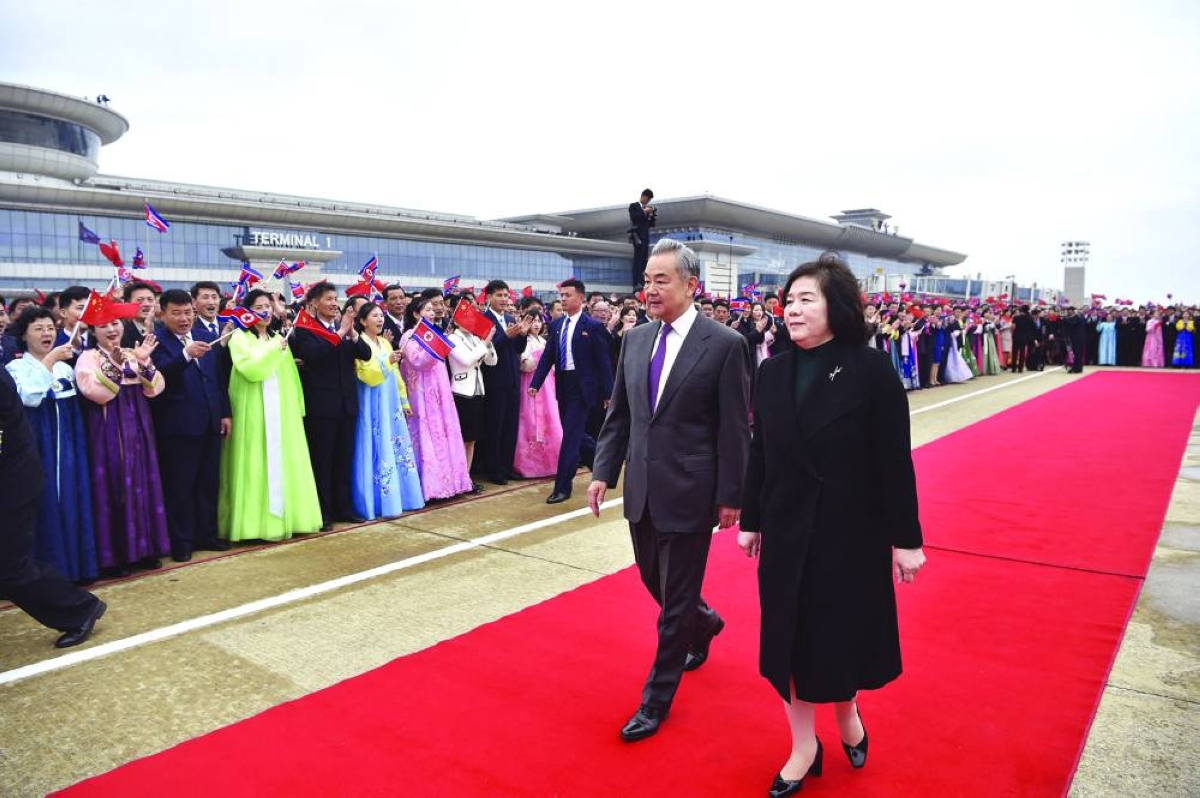
Chinese Foreign Minister Wang Yi (left) is welcomed by North Korean Foreign Minister Choe Son-hui upon arriving on a two-day visit at Pyongyang International Airport Thursday. (AFP) Beijing stands ready to work with ​North Korea to further ‌improve ties, Chinese Foreign Minister Wang Yi said during a ‌meeting with ⁠his North ‌Korean counterpart on a visit to Pyongyang, ‌China's state-run Xinhua news agency reported.Beijing has been trying to draw ⁠Pyongyang back into its orbit after ties cooled following the Covid pandemic, which froze exchanges, and as North Korean President Kim Jong-un shored up relations with Moscow by sending troops and weapons in support of Russia's war in Ukraine.China is ready "to continue consolidating the positive momentum in the development" of bilateral ties, Wang said ​in a meeting with North Korea's Foreign Minister Choe Son Hui, according to Xinhua.Wang's last publicly known visit to North Korea as China's foreign minister was in ‌late 2019, following reciprocal ⁠visits by the two ​countries' top leaders earlier that year.Chinese ministry spokesperson, Mao ​Ning, said Wang's visit — scheduled from April 9-10 — was an important move to advance relations.Wang's Pyongyang visit also comes ahead of an expected summit between Chinese President Xi Jinping and US President Donald Trump next month.Trump has repeatedly expressed an interest in resuming direct talks with the North Korean leader in his second term, but no meeting has materialised.Political momentum between China and North Korea gained pace last year, when Kim travelled ‌to Beijing in September on board ‌an armoured train to ⁠join Russian President Vladimir Putin and other leaders for a military parade ⁠in the Chinese capital, where ⁠Kim met with Xi.That meeting was followed by a visit to Pyongyang in October by China's No 2 official, Premier Li Qiang.China's exports to North Korea reached a six-year high of $2.3bn last year, a 25% annual increase, and North Korea in October explicitly endorsed Beijing's ​position on Taiwan, shortly before China's arms white paper dropped calls for "denuclearisation" of the Korean Peninsula.Passenger train services between Beijing and Pyongyang resumed in March after being suspended for six years since the onset of the pandemic in 2020.China's flag carrier Air China has also restarted flights between the two capitals. However, the reopened links have not benefited Chinese tourists so far, with bookings available only for some business travellers ‌and exchange students.  Related Story

World
Philippines unveils new coast guard command in disputed South China Sea

Philippines unveils new coast guard command in disputed South China Sea

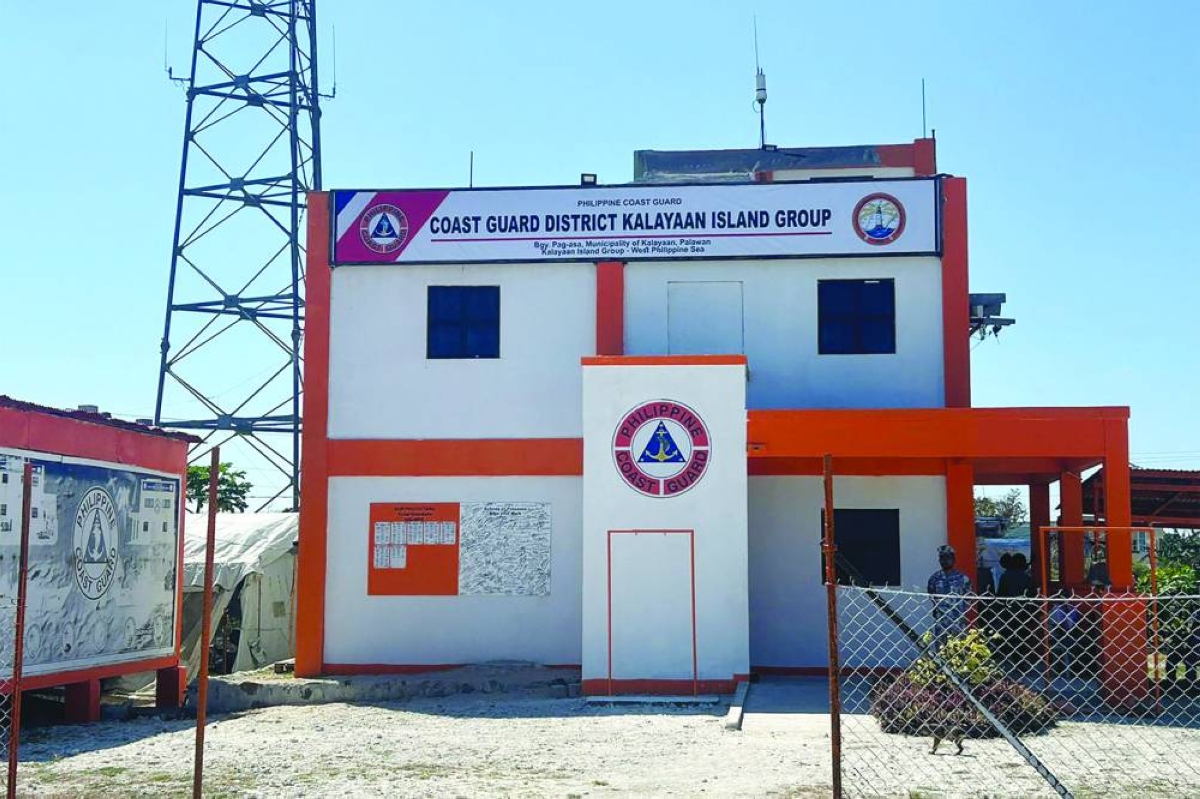
The Philippine Coast Guard command centre on Thitu Island in the South China Sea Thursday. (AFP) The Philippine Coast Guard unveiled Thursday its first dedicated command centre in the Spratly island chain, a flashpoint in the disputed South China Sea that has been the site of repeated confrontations with Chinese vessels.The headquarters of a newly established coast guard district, formerly overseen from neighbouring Palawan, will cover an area of about 68,000sq km (26,000 square miles).An AFP journalist travelling to the new command centre on Pagasa Island, known as Thitu in the Philippines, saw multiple Chinese Coast Guard vessels patrolling nearby waters. The vessels issued radio warnings to the plane carrying the journalist.Beijing claims the South China Sea in nearly its entirety, despite an international ruling that its assertion has no legal basis.Pagasa will now have a commodore-level commander on site, Philippine Coast Guard Commandant Ronnie Gil Gavan told reporters after "activation" ceremony Thursday, along with a permanently stationed ship, more response vessels and an unspecified number of specialists."The establishment of the coast guard district here will also enhance the psyche, the mindset of each and every coast guard member, that... the defence of Kalayaan island group is a top priority," Gavan said, using the Filipino name for the Spratlys.The move will also include the dredging of a deeper port that will allow for the docking of coast guard vessels, which must currently ferry personnel to and from Pagasa on small boats.The far-flung Kota and Parola islands will also see their substations raised to full station status, coast guard spokesman Jay Tarriela said.The Pagasa upgrade, meanwhile, will mean a bigger budget for greater community assistance to the island's inhabitants, including more teachers and doctors, he said.Pagasa Island is home to about 400 Filipinos, mostly fishermen and their families, who China accuses of living there illegally.The Chinese Embassy in Manila did not immediately reply to a request for comment on Thursday.The Philippines last month revealed plans to rename more than 100 island features in the Spratlys in a bid to reinforce its "sovereignty" in the South China Sea.China subsequently accused Manila of breaking international law while threatening unspecified measures to protect its own claims. 

World
Trump threatens 50% tariffs on countries supplying Iran with weapons

Trump threatens 50% tariffs on countries supplying Iran with weapons

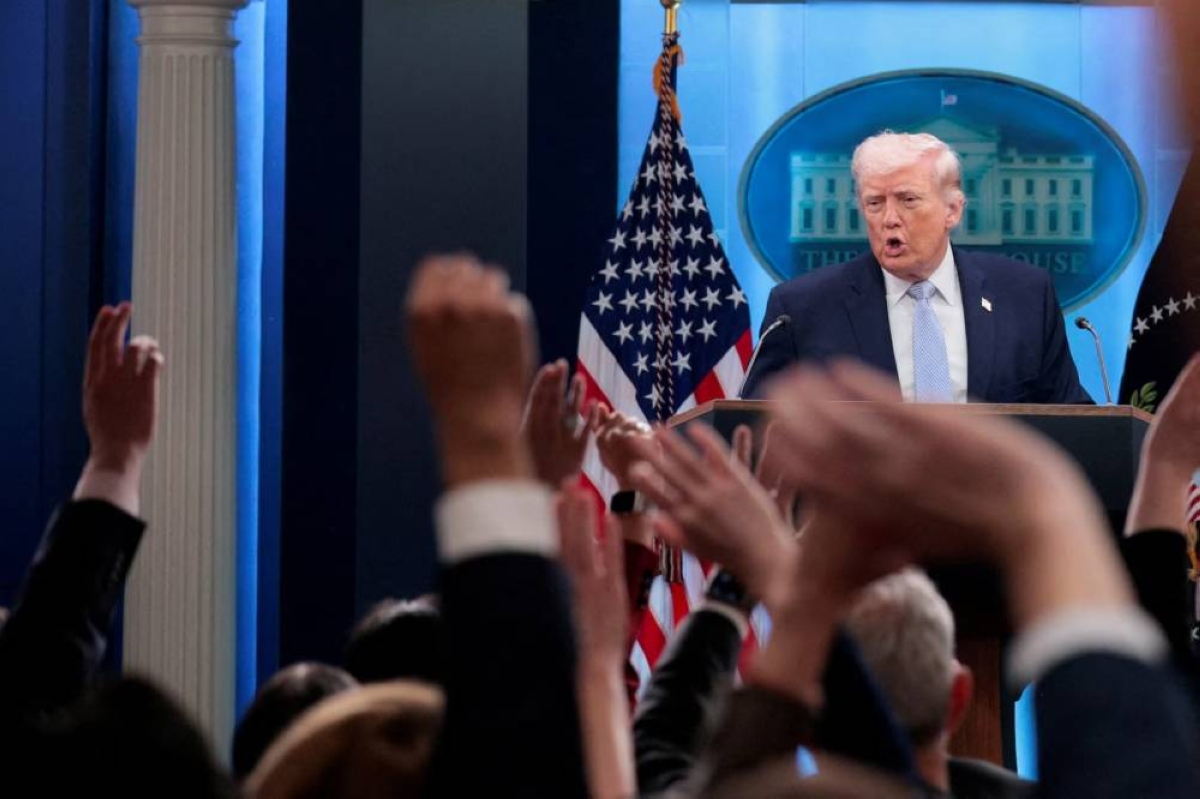
 US President Donald Trump said yesterday that ‌imports from countries supplying Iran with military weapons will face immediate 50% tariffs with no exemptions, ​threatening the new duties just ‌hours after agreeing to a two-week ceasefire with Tehran. After more than five weeks of air ‌strikes against Iran’s missile launchers, military installations and ‌weapons industry, Trump returned to a favourite foreign policy ‌pressure tool — tariffs — effectively warning China and Russia in a social media post against restocking Tehran’s military inventories. But the US Supreme Court stripped the US president of his fastest and broadest tariff authority, the International Emergency Economic Powers Act, in February when it ruled that his broadest global tariffs imposed under the 1977 law were illegal. “A Country supplying Military Weapons to Iran will be immediately tariffed, on any and all goods sold to the US of America, 50%, effective immediately, There will be no exclusions or exemptions! President DJT,” Trump wrote on the Truth Social site, without naming any countries. China and Russia have helped Iran ​build military capacity to counter US and Israeli pressure, supplying missiles, air-defence systems and dual-use technologies intended to bolster deterrence. That support appeared capped during the U.S.-Israeli attacks on Iran. Both Beijing and Moscow have denied supplying any weapons recently, although allegations against ‌Russia have persisted. Reuters reported in February, prior to the first ​U.S. and Israeli strikes on Iran, that Tehran was considering a purchase of supersonic anti-ship ​cruise missiles from China. Reuters also reported in March that China’s top semiconductor maker, SMIC , has sent chipmaking tools to Iran’s military, according to two senior Trump administration officials. “This is a China-related threat, the way I read it. And China will read it that way,” said Josh Lipsky, vice president and chair of international economics at the Atlantic Council. Although drone and missile parts routinely flow from Chinese entities to Iran, evading US sanctions, Lipsky said Trump was unlikely to follow through with new tariffs in the near term because that would derail his planned trip to Beijing to meet with Chinese President Xi Jinping. On Tuesday, US Trade Representative Jamieson Greer said Trump would seek to maintain the current ‌stability in the US-China relationship, to preserve US ‌access to Chinese-produced rare-earth minerals and magnets while maintaining prior tariff levels. Greer said Trump wanted to avoid a “massive confrontation” with Xi. Of Trump’s still available trade tools, an active “Section 301” unfair trade practices action against Chinese goods from his first term would be the most likely vehicle for adding new tariffs quickly, Lipsky said.A more limited tool would be Section 232 of the Cold War-era Trade Expansion Act of 1962, aimed at protecting strategic domestic industries on national security grounds, but it would limit duties to specific sectors, lacking the broad economy-wide impact of the prior IEEPA-based tariffs. Trump’s tariffs on Chinese goods over nearly eight years already have ​cut US imports from China sharply, from a peak of $538.5bn in 2018 to $308.4bn in 2025, with further declines recorded in January and February of 2026. Russia has been another source of arms technology for Iran, but US imports of Russian goods also have shrivelled since the invasion of Ukraine in 2022 and the wave of financial sanctions imposed on Moscow as a result of that move. US imports from Russia, one of the only countries not subject to Trump’s now-cancelled “reciprocal” tariffs, jumped 26.1% to $3.8bn in 2025. These imports are dominated by palladium, which is used in automotive catalytic converters, fertilisers and their ingredients, and enriched uranium ‌for nuclear reactors. The Commerce ​Department already is moving to impose punitive tariffs on Russian palladium after an anti-dumping investigation. 

World
‘Trump meeting with Rutte to decide on Nato withdrawal’

‘Trump meeting with Rutte to decide on Nato withdrawal’

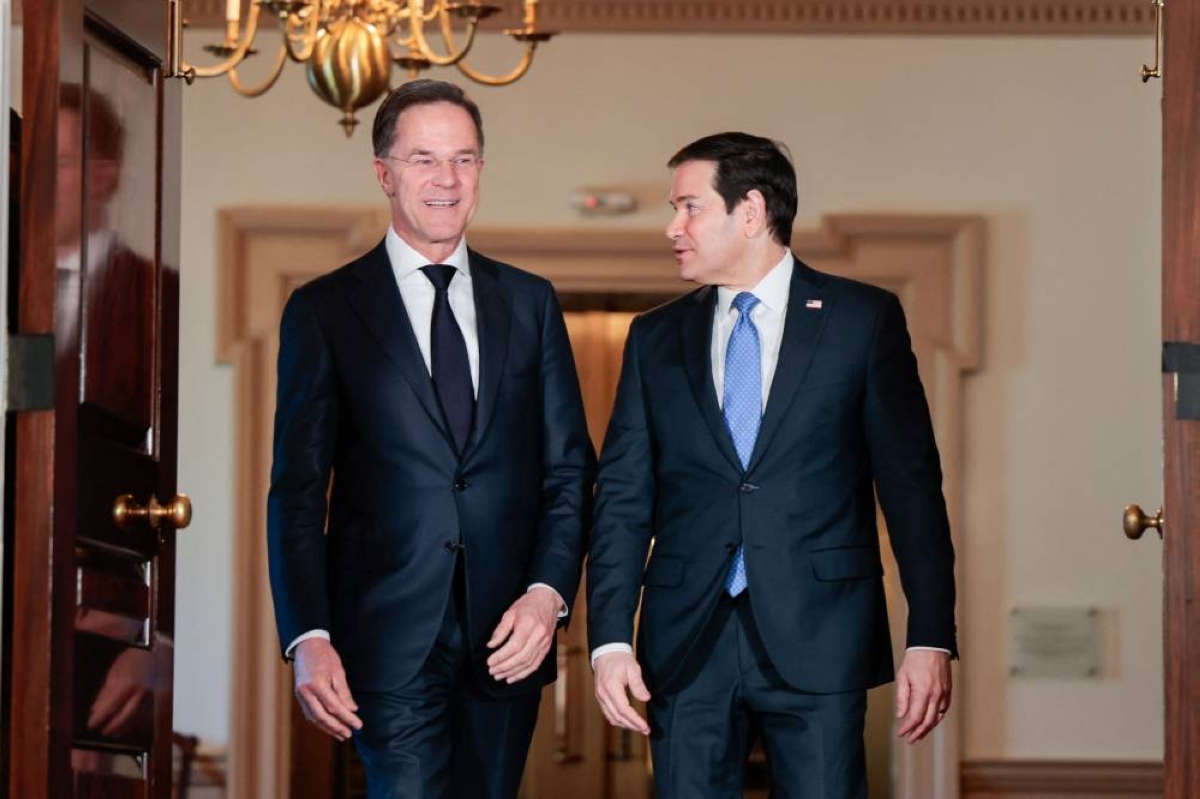
Nato Secrertary-General Mark Rutte (left) and US Secretary of State Marco Rubio speak with each other as they meet at the State Department in Washington, DC, yesterday. (AFP)  US President Donald Trump will discuss the possibility of leaving Nato when he meets with the alliance’s chief Mark Rutte on Wednesday, the White House said, accusing Washington’s partners of “turning their back” on the American people. The meeting comes one day after the US and Iran agreed to a two-week ceasefire. Trump has expressed anger at Western partners’ refusal to back his war on Iran, rocking the 77-year-old transatlantic alliance.“It’s quite sad that Nato turned their backs on the American people over the course of the last six weeks when it’s the American people who have been funding their defence,” White House Press Secretary Karoline Leavitt told reporters. When asked if Trump would discuss a possible withdrawal from Nato, Leavitt said: “It’s something the president has discussed, and I think it’s something the president will be discussing in a couple of hours with Secretary-General Rutte.” “Perhaps you’ll hear directly from the president following that meeting,” she added. Trump has branded Nato partners “cowards” for limiting US forces’ access to bases on their territories and for refusing to lead efforts to open the strategic Strait of Hormuz. But Nato’s secretary-general touts a record of pulling Trump back onside — and will be looking to do so again when he meets the president, as well as US Secretary of State Marco Rubio and Pentagon chief Pete Hegseth. Ahead of the White House visit, Rutte met with Rubio to talk about Iran, Russia’s war against Ukraine and Nato responsibilities. “The two leaders discussed Operation Epic Fury, ongoing US-led efforts to bring a negotiated end to the Russia-Ukraine war, and increasing coordination and burden shifting with Nato Allies,” said State DepartmentPrincipal Deputy Spokesperson Tommy Pigott. Nato has been thrust repeatedly into crisis since Trump returned to power last year — most acutely by his threat to seize the vast Arctic island of Greenland from alliance member Denmark. That followed him pulling the rug out from under Ukraine in its war against Russia, his threats not to protect allies unless they don’t spend more on defence, and warnings that Washington could pull troops from Europe. Dubbed a “Trump whisperer”, Rutte, a former Dutch prime minister, has been central to allied efforts to mollify the US leader, often by means of flattery.On Iran, he has sought to thread the needle by calling US efforts to degrade Tehran’s military capability something to “applaud.” Trump has warmed to Rutte’s praise, describing the secretary-general as “a wonderful guy” — even while claiming that fellow Nato countries had “gone out of their way not to help” in the Middle East. Speaking as Rutte headed to Washington, a Nato official said he planned to “discuss current security dynamics including in the context of Iran as well as Russia’s ongoing war against Ukraine” in his talks with Trump.And he would “seek to build on the success” of last year’s Nato summit in The Hague at which allies agreed to Trump’s demand to ramp up their defence spending target, the official said. Trump has long railed against Nato, calling it “obsolete” in 2017 and mulling withdrawing.Compounding the worries this time, however, Trump has been joined by traditional Nato supporters including Rubio, who warned last week the US was “going to have to reexamine” the relationship in light of the rift over Iran. 

Sports
Dominant PSG beat Liverpool to seize advantage

Dominant PSG beat Liverpool to seize advantage

UEFA Champions League - Quarter Final - First Leg - Paris St Germain v Liverpool - Parc des Princes, Paris, France - April 8, 2026 Paris St Germain's Desire Doue celebrates scoring their first goal

Sports
Shagraan claims Msheireb Cup in emphatic style

Shagraan claims Msheireb Cup in emphatic style

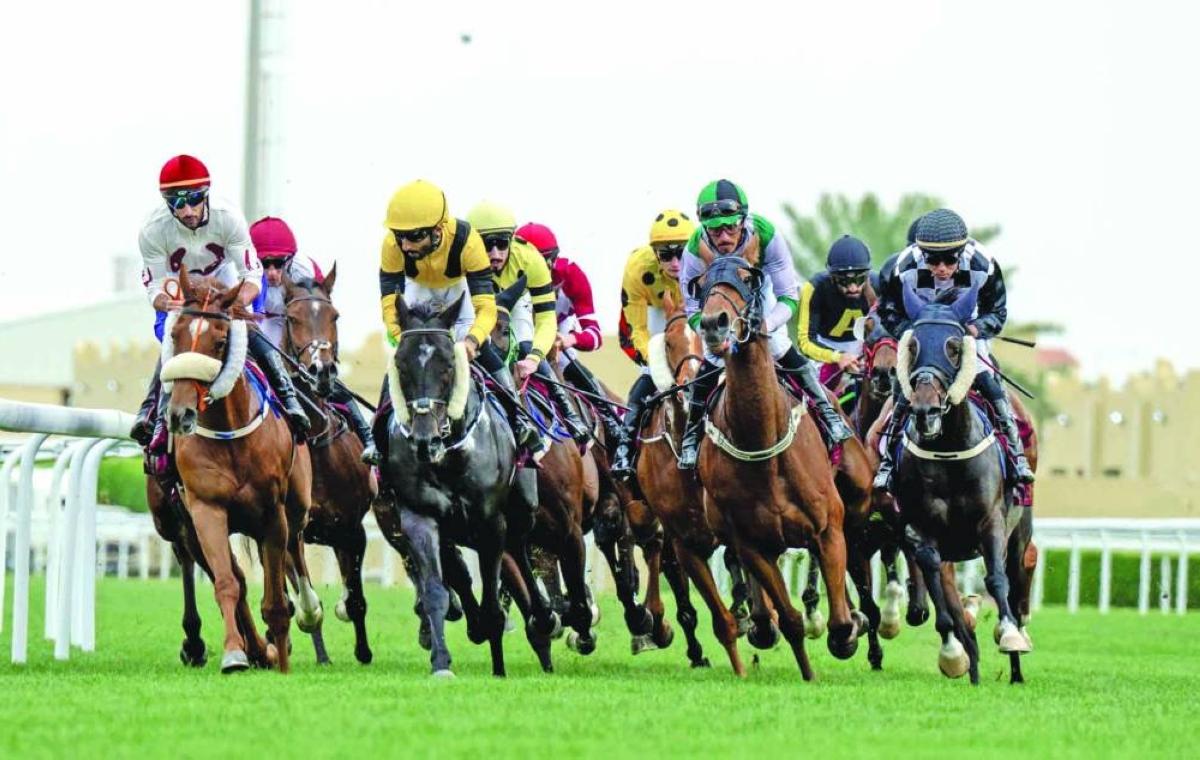
Shagraan bounced back to winning ways in style, landing the Msheireb Cup for owner-trainer Saeed Mohammed Shafi al-Shafi at the Al Rayyan Racecourse Wednesday.Positioned comfortably in midfield for most of the race, he unleashed a powerful turn of foot in the home straight, surging past his rivals to secure an emphatic two-and-a-half-length victory in the day feature - the 1400m Purebred Arabian Handicap. PICTURES: Juhaim The six-year-old bay gelding was expertly partnered by Saleh Salem al-Marri, who went on to complete a notable double on the card.Settled in midfield through the early and middle stages, Shagraan travelled comfortably as Waseelh set the pace from the outset, tracked by Posuelo Py before the latter was gradually eased back, with Al Zwair and the eventual winner also positioned off the tempo. Approaching the home straight, Nah’ash Al Shahania moved up to challenge and briefly took the lead, but the race quickly turned as the closers began to emerge. Inside the final 200m, Shagraan unleashed a decisive turn of foot, sweeping past his rivals and asserting with authority to put the result beyond doubt. Al Zwair, representing Al Shaqab Racing and prepared by Jean de Mieulle, finished second with Pierre Charles Boudot aboard, a quarter of a length ahead of Posuelo Py, who stayed on for Ibrahim Mohammed al-Fadala, from the Hamad al-Jehani yard and with Szczepan Mazur in the saddle to take third, both having come from off the pace with strong late runs.RESULTS63st Al Rayyan Race Meeting –Msheireb CupWINNERS: (Horse, Trainer, Jockey)1. Msheireb Cup, Purebred Arabian Handicap (85-105), 4yo+, 1400mShagraan, Saeed Mohammed Shafi al-Shafi, Saleh Salem al-Marri2. Thoroughbred Handicap (0-90), 3yo, 1400mJungle Monarch, Jassim al-Ghazali, Marco Casamento3. Thoroughbred Handicap (65-85), 4yo+, 2000mByblos, Bader al-Balushi, Soufiane Saadi4. Purebred Arabian Novice Plate, 3yo, 1400mAl Wazeer, Alban de Mieulle, Soufiane Saadi5. Thoroughbred Handicap (55-75), 3yo+, 2000mLucentio, Ahmed Kobeissi, Jefferson Smith6. Local Thoroughbred Novice Plate, 3yo, 1400mAfran, Ibrahim Saeed Ibrahim al-Malki, Marco Casamento7. Purebred Arabian Premium Maiden Plate, 4-7yo, 2000mAl Murqab, Ibrahim Saeed Ibrahim al-Malki, Jefferson Smith8. Thoroughbred Maiden Plate, 4-7yo, 2000mAtlantic Convoy, Ibrahim Saeed Ibrahim al-Malki, Saleh Salem al-Marri  Related Story

Sports
Rashid the hero as Gujarat beat Delhi by one run

Rashid the hero as Gujarat beat Delhi by one run

Gujarat Titans’ Rashid Khan celebrates after taking the wicket of Delhi Capitals’ captain India’s Axar Patel during the IPL match in New Delhi Wednesday. (AFP) England’s Jos Buttler struck form with a fluent 52 to help Gujarat Titans to their first win of the 2026 IPL as they beat Delhi Capitals in a last-ball thriller Wednesday with David Miller falling just short of guiding his new side home.The South African looked set to take Delhi over the line but elected to turn down a single on the second last ball with his side needing two to win.Bowler Prasidh Krishna then outfoxed Miller with a slow delivery with the last ball of the match which the batter missed with a big swing as wicketkeeper Buttler hit the stumps to run out Kuldeep Yadav, who was desperately scrambling for the single that would have forced a super over.Earlier, Buttler raised his first T20 half-century after a dismal run, which included a disappointing T20 World Cup in India and Sri Lanka.His knock laid the foundations for Gujarat’s 210-4 and in reply Delhi finished on 209-8 in 20 overs despite an explosive 41 not out by Miller and KL Rahul’s 92.Gujarat won by one run to bounce back from two defeats. Delhi suffered their first loss after two wins.Buttler found his groove with a fourth-ball six off Mukesh Kumar and there was no looking back as he smacked four more hits over the fence in his 27-ball knock.Buttler, 35, told AFP at the start of the T20 tournament that “he still has the hunger for runs” and still has the energy and motivation to play at the highest level.But his knock for Gujarat seemed to have inspired the team’s batting as skipper Shubman Gill also struck form with a 70 after he missed the previous game. Gill was involved in a 60-run stand with Buttler and then put on 104 runs with Washington Sundar, who scored 55 for his first IPL fifty. Delhi started their reply strongly courtesy of Pathum Nissanka, who made 41, and Rahul as the pair put on 76 runs for the opening wicket but the chase wobbled as wickets fell. Nissanka missed out on a fifty and leg-spinner Rashid Khan struck twice on successive balls in the 10th over. BRIEF SCORESGujarat Titans 210 for 4 (Gill 70, Washington 55, Buttler 52, Mukesh 2-55) beat Delhi Capitals 209 for 8 (Rahul 92, Miller 41*, Nissanka 41, Rashid 3-17) by one run  Related Story

Opinion
Amid fragility of process, all eyes riveted on Islamabad

Amid fragility of process, all eyes riveted on Islamabad

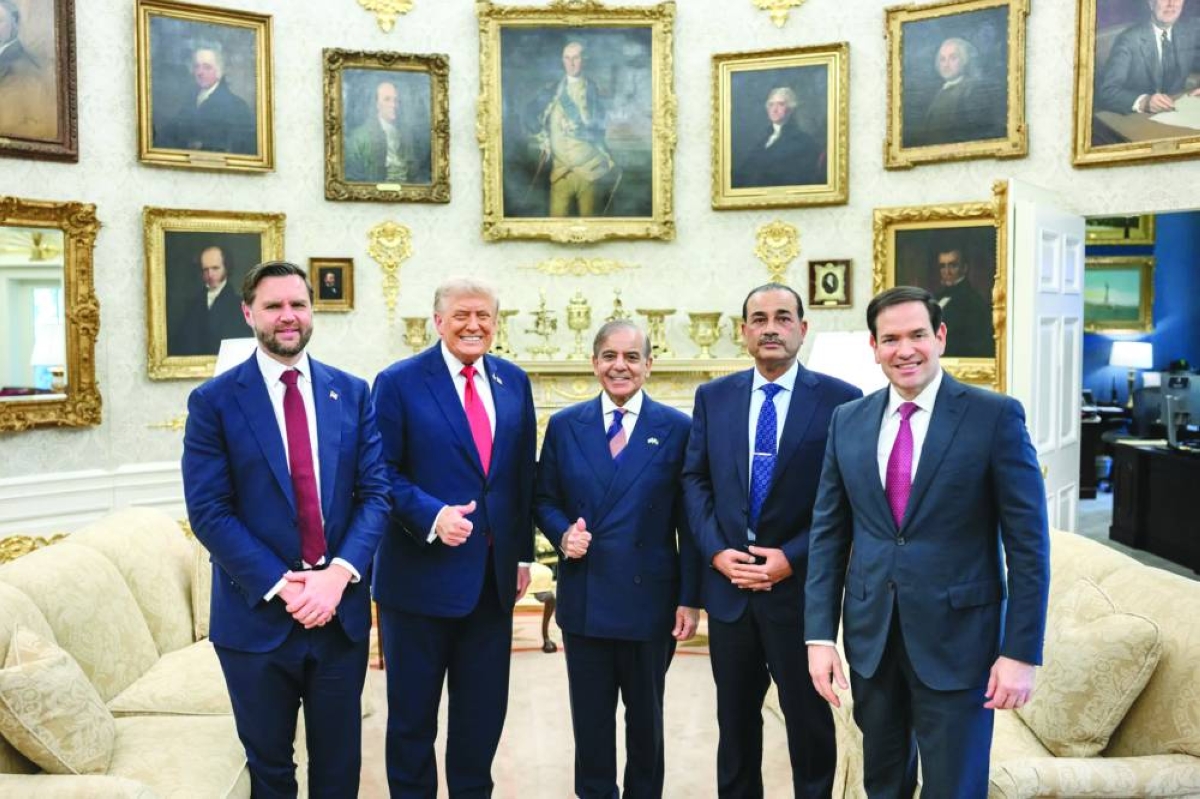
From L-R: US Vice-President JD Vance, President Donald Trump, Pakistan Prime Minister Shehbaz Sharif, Pakistan Army Chief Field Marshal Asim Munir, and Secretary of State Marco Rubio at the White House last September. Kamran Rehmat,