World
Malaysia, Australia leaders vow closer energy ties

Malaysia, Australia leaders vow closer energy ties

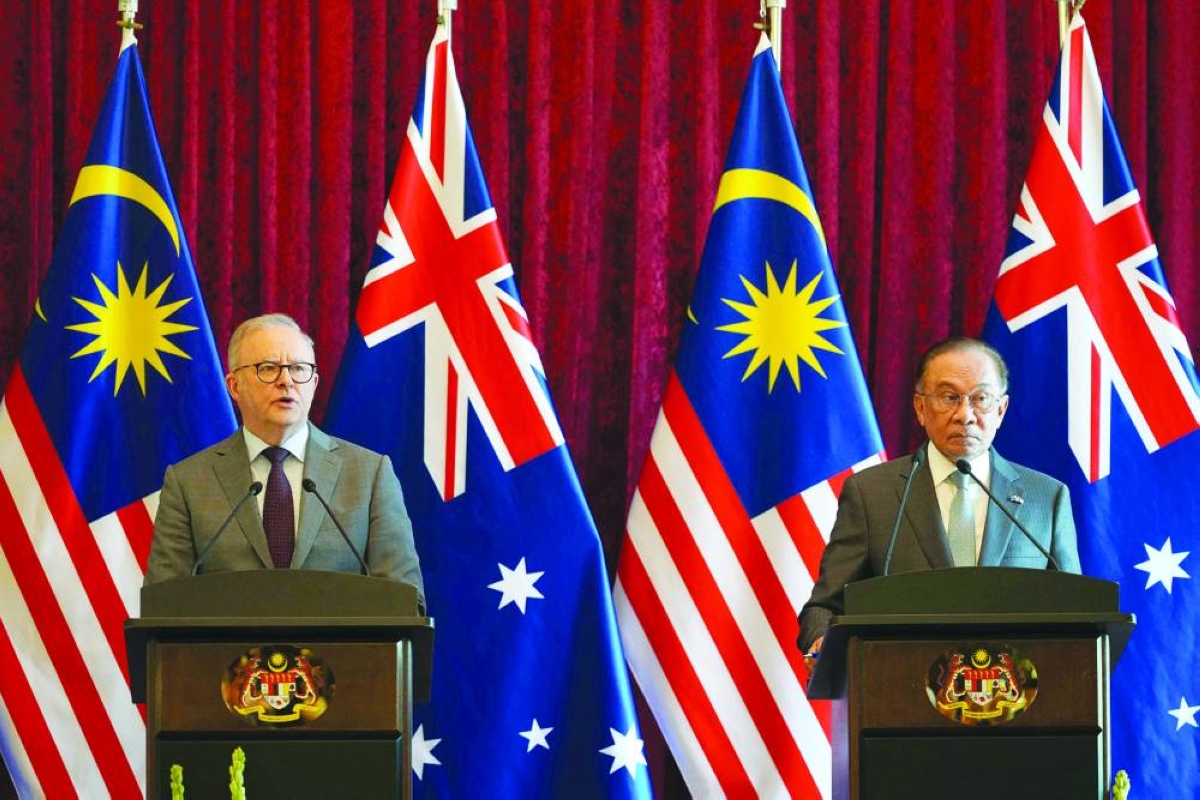
Malaysia Prime Minister Anwar Ibrahim said Thursday that ‌state energy firm Petronas would give priority ​to providing Australia with ‌its excess fuel supplies, as the two ‌countries sought to ⁠bolster ‌energy security following the ‌disruptions caused by the Middle East conflict.Anwar said he had ⁠obtained an assurance from Petronas on the matter following discussions with his Australian counterpart Anthony Albanese on boosting agricultural and fuel trade."The priority is for domestic requirements... but here is where negotiations among friends are critical," Anwar said at a press ​conference after the meeting at his office in Malaysia's administrative capital Putrajaya.Malaysia also requires mineral phosphates from Australia, which it ‌could offer in exchange ⁠for urea ​supplied to Canberra, Anwar said.Malaysia is Albanese's third ​stop in Southeast Asia in the past week, following trips to Singapore and Brunei, as Canberra looks to shore up food and energy supplies.Albanese said his government had secured an additional 100 million litres of diesel from two shipments, one from Brunei and one from South Korea."This is the first of many expected shipments secured ‌under the government's new ‌strategic reserve powers with ⁠the support of Export Finance Australia," he said.Australia also ⁠pledged to ⁠honour existing contracts with Malaysia, despite disruptions, Albanese said.Australia is a major supplier of natural gas to Malaysia, which imports about 20% of its domestic supplies, as well as a provider of wheat, lamb and beef ​products.Anwar and Albanese also witnessed the signing of a memorandum of understanding between the two countries on halal meat trade, a deal that the Australian leader said would boost the country's red meat exports and support Malaysia's food security.Majority-Muslim Malaysia is widely considered as a global leader in halal processing due to its ‌established certification standards.  Related Story

World
Pope decries ‘handful of tyrants’ ravaging the world

Pope decries ‘handful of tyrants’ ravaging the world

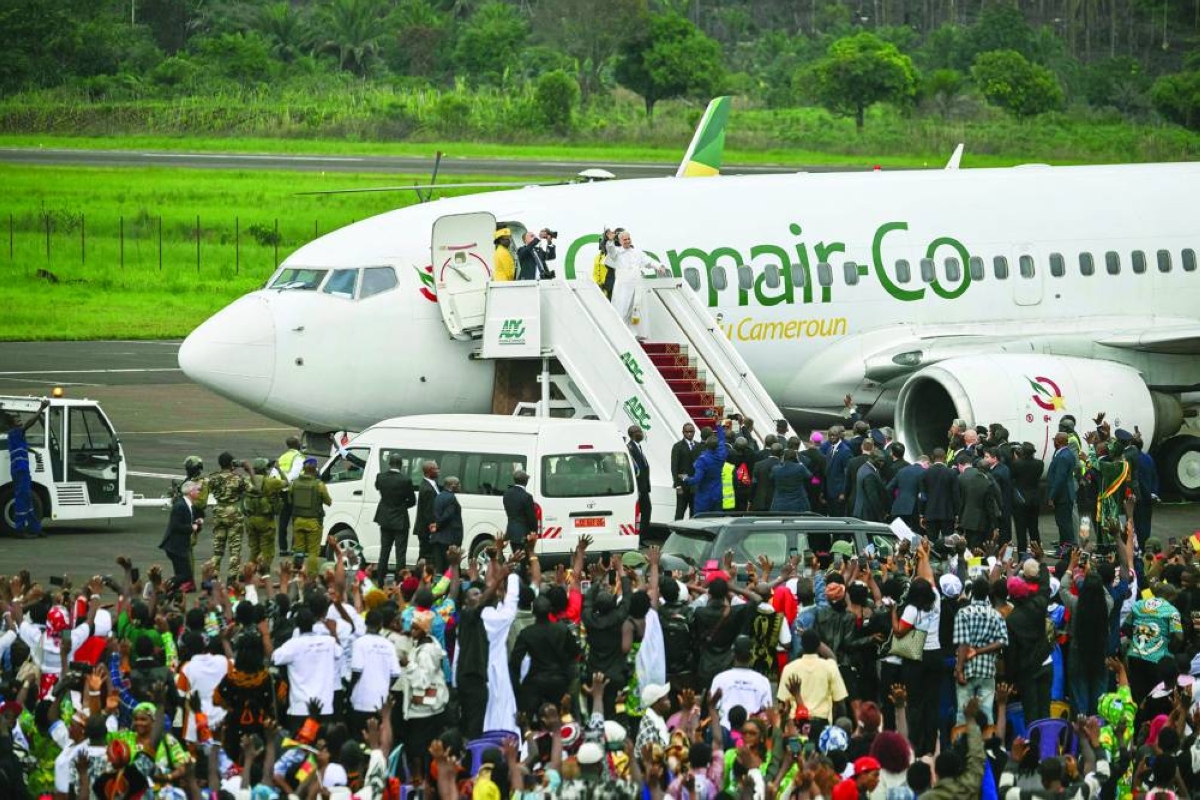
Pope Leo XIV criticised the "tyrants" ransacking the world, on a high-security visit Thursday to a "bloodstained" region of Cameroon following a war of words with US President Donald Trump.Since his landmark four-nation African tour kicked off earlier this week – after Trump lashed out against the Pope's criticism of the Middle East war – the Pope has abandoned his previous restraint in speaking out in favour of world peace. Pope Leo XIV waves as he boards a plane bound for Bamenda, at Yaounde Nsimalen International Airport, Cameroon. – Reuters "Woe to those who manipulate religion and the very name of God for their own military, economic and political gain, dragging that which is sacred into darkness and filth," Leo said in the northwestern city of Bamenda, the epicentre of a nearly decade-long English-speaking separatist insurgency that has killed thousands."The world is being ravaged by a handful of tyrants, yet it is held together by a multitude of supportive brothers and sisters," the Pontiff warned, in a solemn speech at Bamenda's Saint Joseph's Cathedral.Coming after US Vice-President JD Vance – a Catholic – urged the Vatican to "stick to matters of morality", the remarks could deepen the rift between the Trump administration and the Chicago-born Pontiff.Leo, who kept a relatively low profile for most of his first year as leader of the 1.4bn-member church, has emerged as an outspoken critic of the war that began with US-Israeli strikes on Iran.The Archbishop of Canterbury, Sarah Mullally, spiritual leader of 85mn Anglicans worldwide, said Thursday that she stood with the pope in his "courageous call for a kingdom of peace".The Pope made similar remarks last month, saying that God rejected prayers from leaders with "hands full of blood", in comments widely interpreted as aimed at US Defence Secretary Pete Hegseth, who has invoked Christian language to justify the Iran war.Trump began his criticism of Leo on Sunday, when he called the Pope "WEAK on Crime, and terrible for Foreign Policy" in a post on Truth Social.The US president attacked Leo again on social media late on Tuesday.On Wednesday Trump posted an image of Jesus embracing Trump, after an earlier image he posted that portrayed him as a Jesus-like figure prompted widespread criticism.Leo told Reuters on Monday that he would not stop speaking out about the Iran war and has avoided responding to Trump directly since then.In Bamenda, the mood was joyous as the Pope arrived under a military escort in a popemobile with bulletproof windows, blessing the worshippers who had gathered, many singing and blowing vuvuzela horns, to welcome him.As he left the cathedral, Leo released white doves, a symbol of peace in a region of the central African country he called a "bloodstained yet fertile land that has been mistreated"."Those who rob your land of its resources generally invest much of the profit in weapons, thus perpetuating an endless cycle of destabilisation and death," he said."They turn a blind eye to the fact that billions of dollars are spent on killing and devastation, yet the resources needed for healing, education and restoration are nowhere to be found," Leo added.Later at Bamenda airport – which was renovated for the Pope's visit after being shut since 2019 due to the separatist insurgency – Leo criticised the ongoing exploitation of Africa in a mass to worshippers.In an address with a strong social message, the Pope bemoaned "those who, in the name of profit, continue to lay their hands on the African continent to exploit and plunder it".Cameroon is rich in natural resources such as oil, timber, cocoa, coffee and minerals, which have attracted both foreign firms and local elites for decades.On arrival in the country on Wednesday, the Pope appealed to Cameroon's leaders to examine their "conscience" and tackle corruption and rights abuses, in an uncharacteristically pointed speech at the presidential palace attended by President Paul Biya.Leo's trip, the fourth to Cameroon by a pope and the first since pope Benedict XVI in 2009, comes six months after the authorities violently put down protests against 93-year-old Biya's disputed re-election for an eighth term.Security measures had been stepped up on the main routes through Bamenda for the visit.Cameroon's two anglophone regions have suffered almost a decade of armed violence following attempts to secede from the rest of the mostly French-speaking central African country.Cameroon, a former German colony, was partitioned by Britain and France after World War I.The French part won independence in 1960 and was joined a year later by the smaller English-speaking British area to the west.Teacher Vivian Ndey, 60, from Bamenda, welcomed the Pope carrying a "plant of peace" as a symbol of hope.She spoke at the cathedral of the difficulty of teaching during the crisis, saying that teachers were afraid to come to class and students had vanished.Conflict erupted after Biya, who has ruled since 1982, violently repressed peaceful demonstrations in 2016 by English speakers who felt marginalised.Civilians have been targeted with killings and kidnappings.At least 6,000 people have been killed since 2016, according to the United Nations.Separatist fighters declared a Republic of Ambazonia in the two regions, which account for around a fifth of the population.On Monday, separatist groups announced a three-day truce to allow for a safe welcome for the Pontiff.The separatists also have high hopes for the visit.The Unity Warriors of Ambazonia told AFP that it hoped Leo would press the government to restart talks "where the origins of the conflict could be discussed".After the Bamenda trip, Leo is to hold a mass at a stadium in the economic capital Douala Friday, before leaving Cameroon for Angola Saturday.He then travels on to Equatorial Guinea.  Related Story

World
Australia to boost defence spending citing growing threats

Australia to boost defence spending citing growing threats

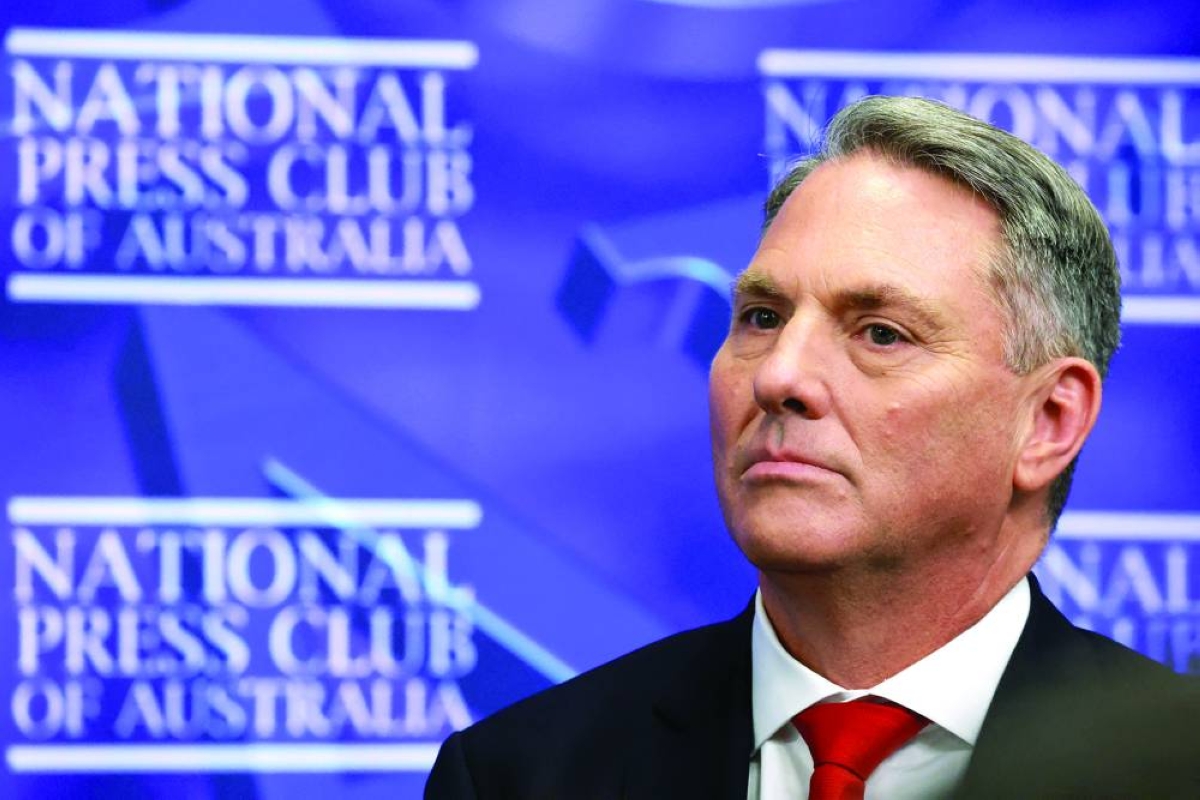
Australia's Defence Minister Richard Marles speaks at the National Press Club in Canberra Thursday. (AFP) Australia will raise defence spending to 3.0% of GDP by 2033 as armed conflicts flare worldwide, Defence Minister Richard Marles said Thursday.The new commitment follows pressure from US President Donald Trump's administration for Canberra to boost military expenditure as a share of total annual economic output."International norms that once constrained the use of force and military coercion continue to erode," Marles said in a speech in Canberra, outlining a boost to spending on missile defence, drones and guided weapon stockpiles."More countries are engaged in conflict today than at any time since the end of World War II, and this is occurring across every region of the world."Australia's defence spending had previously been forecast to rise to 2.3% of GDP by 2033.But the country will spend an additional AU$53bn ($38bn) over the next decade when compared to its 2024 defence strategy, Marles said.In the shorter term, spending would climb by an extra AU$14bn over four years.To reach the 3.0% figure, Australia changed how it calculates the defence budget to match a Nato definition that includes factors such as military pensions and defence intelligence.Marles said Thursday this allowed better comparisons with other countries and put Australia ahead of comparable European and Asian nations with a defence spend this year of 2.8%.But the new spending still falls short of the 3.5% of GDP that US Defence Secretary Pete Hegseth demanded Australia shell out last year.Wary of China's navy build-up, US ally Australia has reshaped its defence force in recent years to focus on its missile strike capability and deterring an adversary from its northern approaches.It has also embarked on its largest-ever military spending project to build nuclear-powered submarines next decade under the AUKUS agreement with the US and the UK.Marles emphasised Australia would focus in 2026 on building greater military self-reliance but was not jettisoning its US security alliance, which he said remained "fundamental"."There is no effective balance of power in the Indo-Pacific absent the continued presence of the US," he said.Spending to build a missile defence system will accelerate — up to AU$30bn over the next decade.Another AU$36bn will be spent to build guided missiles locally.Australia's vast coastline and small population have also spurred a focus on developing large autonomous submarines and fighter jets, dubbed the Ghost Shark and Ghost Bat.This week, Canberra said it would boost spending on drones by up to AU$5bn in response to shifts in warfare tactics in the Middle East and Ukraine.Under the AUKUS agreement, the US will sell Australia two nuclear-powered submarines from 2032.Australia and Britain will then build a new class of submarine in the 2040s.Critics have alleged the deal does not guarantee that Australia will ever receive the submarines. 

World
Fuel supply fears after blaze tears through crucial Australian refinery

Fuel supply fears after blaze tears through crucial Australian refinery

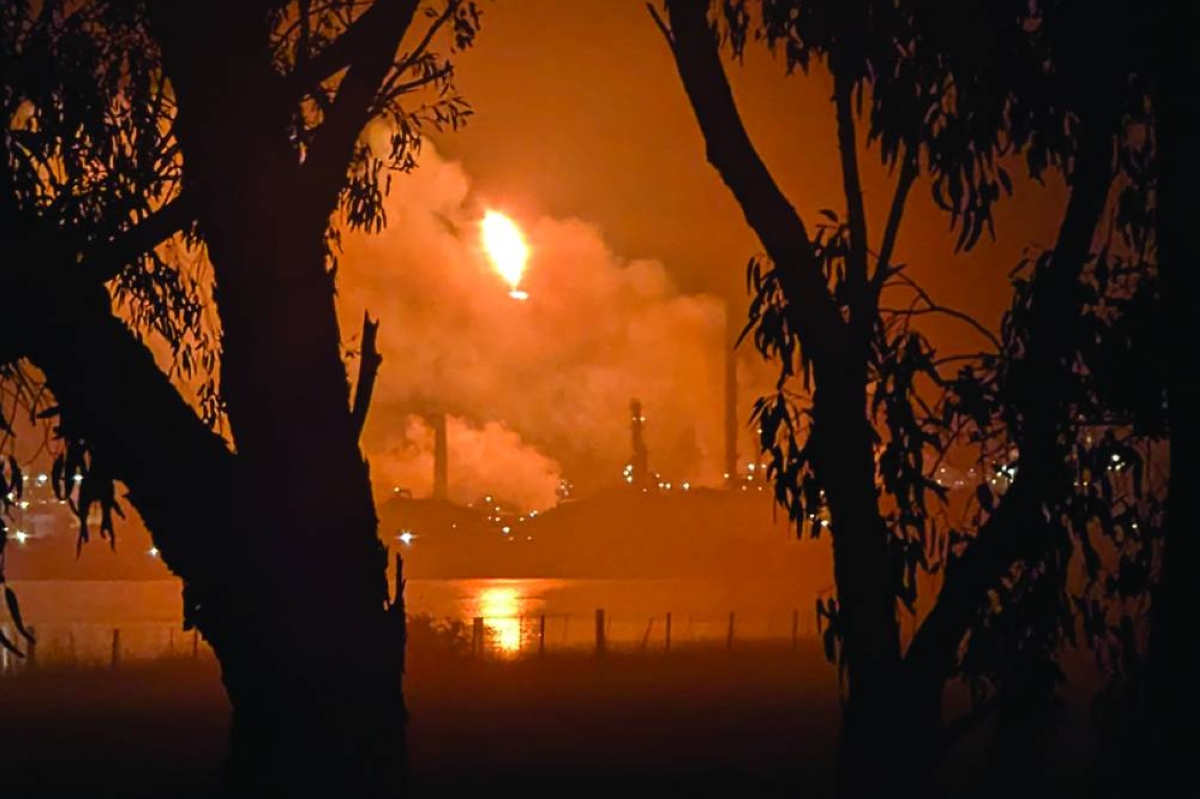
Columns of fire engulfed a crucial Australian oil refinery after a chain of explosions, authorities said Thursday, as they warned of disruptions to domestic fuel supply.Flames as high as 60m (200 feet) erupted late Wednesday after a gas leak ignited at the Viva fuel plant in Victoria state, firefighters said, one of only two working oil refineries in Australia.The refinery, about an hour's drive southwest of state capital Melbourne, pumps out about 10 percent of Australia's fuel, according to energy company Viva.Fire Rescue Victoria said Thursday the blaze had been contained, although it could smoulder throughout the day.'The whole sky was lit up with the bright flame,' Geelong resident Wayne Gardiner told AFP.The refinery is capable of processing up to 120,000 barrels of oil each day, company figures stated.Analysts said that, together with the Ampol refinery in Brisbane, it produces about 10-20 percent of Australia's total fuel supply.'This is not a positive development,' Energy Minister Chris Bowen said as the nation's fuel supplies are under pressure due to war in the Middle East.Bowen said he had spoken to Viva and the firm was 'very confident they can replace the petrol with imports'.Prime Minister Anthony Albanese, currently visiting Malaysia, said Australia had secured an additional supply of some 100 million litres of diesel from Brunei and South Korea.'This is the first of many expected shipments secured, under the government's new strategic reserve powers,' he told a news conference.The fire ripped through a section of the refinery responsible for the production of high-octane petrol, Bowen earlier said.By triggering isolation valves, other parts of the plant producing jet fuel and diesel had been spared the worst of the blaze.Geographically isolated and with only two oil refineries, Australia is heavily exposed to disruptions in global fuel supply and imports most of its petrol.Canberra urged Australians to ignore the impulse to rush out and panic buy more fuel.'It's important that people buy as much fuel as they need. But no more, no less,' Bowen said.Incident controller Mark McGuinness said a 'significant leak' of highly flammable gases and liquid hydrocarbons had triggered the inferno.'It was quite ferocious. It went from a small fire through several explosions to a large, intense fire,' he told reporters.Images taken Thursday morning showed thick clouds of smoke billowing over the industrial complex.Viva Energy boss Scott Wyatt said it was a 'very challenging incident'.'Production is not our primary priority today,' he told reporters. 'Today it is getting the site safe.'Australia holds roughly 38 days' worth of petrol in reserve, according to government figures, far below the 90-day minimum dictated by the International Energy Agency.While the government has so far resisted moves to ration fuel, it has urged drivers to conserve petrol where they can and to favour public transport if possible.Like most nations in Asia and the South Pacific, Australia is heavily reliant on oil shipped through the Strait of Hormuz, which at one point carried one-fifth of the world's oil and gas.Shipping traffic through the vital waterway has essentially ceased since the United States and Israel launched strikes against Iran on February 28. 

Opinion
Qatar a model of stability, adaptation as conflicts reshape insurance industry

Qatar a model of stability, adaptation as conflicts reshape insurance industry

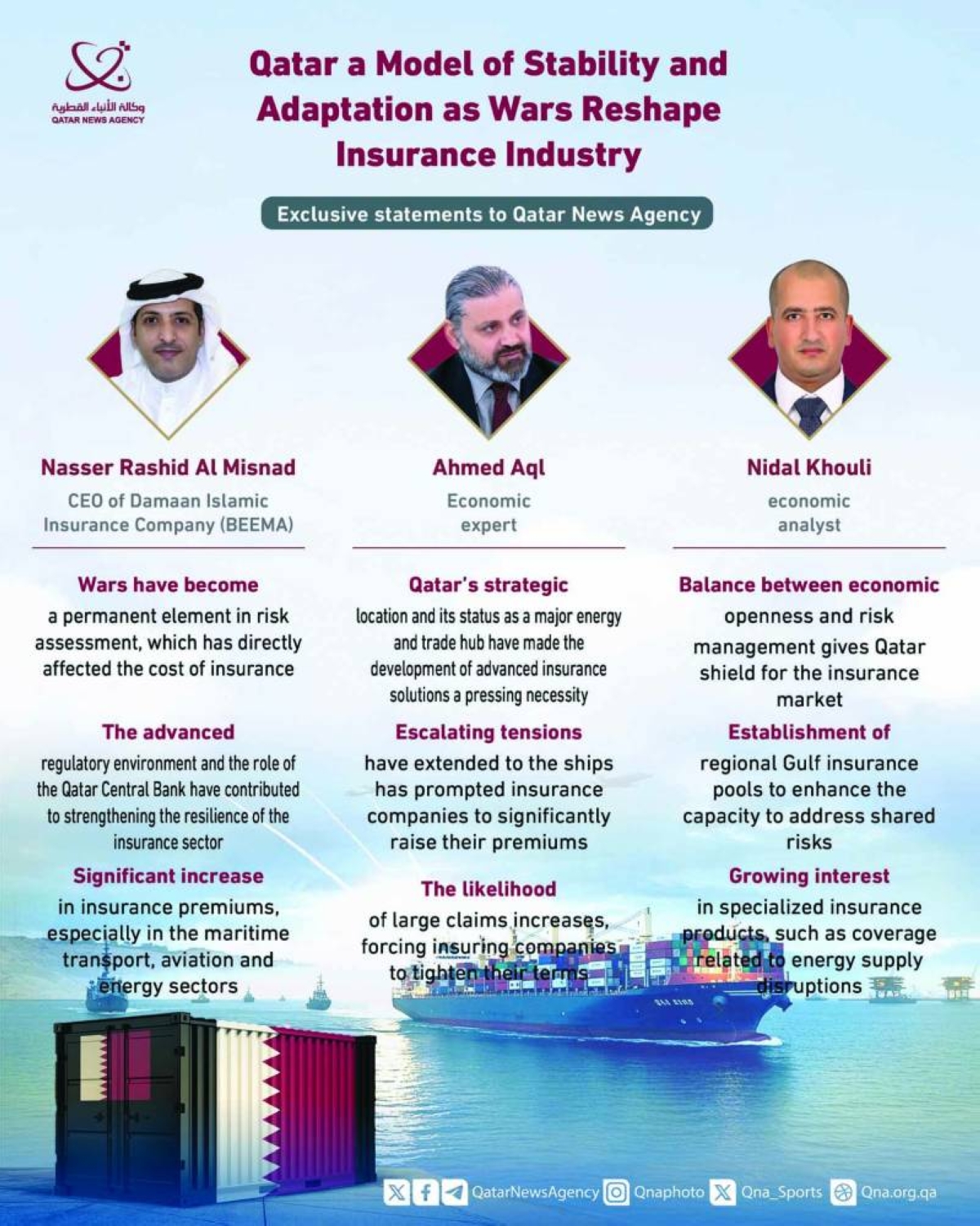
The insurance sector is facing one of the most complex challenges in its history as geopolitical conflicts escalate and wars are no longer exceptional events but a permanent element in the global risk equation, all of which are forcing companies to reformulate their models and methods of operation. Amidst escalating tensions, there is a growing demand for specialised insurance solutions to address unconventional risks, including attacks on infrastructure, disruptions to supply chains and transport , and damage to goods. As these risks persist, insurance costs rise significantly. Increases in transport, energy, and basic commodity premiums are reflected in the prices of products and services, making the consumer part of the risk equation. Meanwhile, insurance companies bear the responsibility of managing compensation in an unstable environment. International reports from Swiss Re and Lloyd’s of London revealed a radical shift in the sector, characterized by an almost complete exclusion of damages resulting from armed conflicts from traditional policies, in contrast to the growing reliance on war risk insurance. Sensitive sectorExperts point out that the insurance sector has become one of the most sensitive sectors to the developments of wars, with a significant increase in the cost of coverage and a widening scope of risks to include supply chains, business disruption, transport and global trade. In contrast, reinsurance companies play a pivotal role: undertaking the task of distributing risks on a global scale, thereby reducing the likelihood of local insurance companies collapsing in the event of large losses. In a special statement to Qatar News Agency (QNA), CEO of Damaan Islamic Insurance Company (BEEMA) Nasser Rashid al-Misnad confirmed that the insurance sector is facing increasing challenges that have forced it to reformulate its business models and risk management mechanisms. He pointed out that wars are no longer exceptional events, but have become a permanent element in risk assessment, which has directly affected the cost of insurance and the nature of the coverage provided. Risk management within insurance companies is no longer limited to monitoring traditional indicators, al-Misnad pointed out, adding that it has become a pivotal function that drives the decision-making process through the continuous evaluation of possible scenarios and preparation for developments that may be unexpected in a highly volatile environment. The BEEMA CEO explained that the recent period witnessed a significant increase in insurance premiums, especially in the maritime transport, aviation and energy sectors, as a result of the increased likelihood of losses and the complexity of the risk environment. He pointed out that the impact of these increases extended to the cost of goods and services, making the consumer part of this equation. Al-Misnad referred to the emergence of a need for insurance products that were previously of limited use, most notably insurance against the risks of war, business disruption, and supply chains, in addition to insurance against cyber risks, which have become one of the dimensions of modern wars. Reinsurance companies form a key pillar in supporting the stability of the sector by distributing risks on a global scale, which limits the impact of large losses on local insurance companies, especially in light of the high volume of potential claims, he added. Al-Misnad noted that insurance companies today increasingly rely on scenario analysis, where different developments of conflicts and their impact on supply chains, energy and transportation are envisioned, and then the financial and operational impact of each scenario is measured, which helps to make more flexible and proactive decisions. He explained that stress tests have become an essential tool, where companies simulate harsh conditions such as a sudden surge in claims or widespread market disruptions, with the aim of ensuring their ability to continue and meet their obligations even in the most difficult circumstances. Some companies resort to what is known as reverse testing, which begins with the assumption of a severe scenario that could lead to the company’s failure, and then work backward to understand how this could happen, which helps to discover weaknesses before they occur, he added. Al-Misnad pointed out that insurance companies are moving towards developing more specialized solutions that rely on advanced data analysis and real-time risk management, enabling them to respond quickly to changes, adapt, and improve their ability to accurately price risks. On the local level, the BEEMA CEO noted that Qatar stands out as a model of economic and financial stability. The advanced regulatory environment and the role of the Qatar Central Bank have contributed to strengthening the resilience of the insurance sector, enabling it to deal with regional and international challenges efficiently. This stability is not limited to economic factors alone, but also reflects the development of risk management practices within institutions, and the keenness of regulatory bodies to promote a culture of proactive preparedness, not just crisis response. Concluding his statement to QNA, al-Misnad confirmed that the next phase will witness further expansion in specialized insurance products, and perhaps a move towards group or regional solutions to cover high risks, in light of the increasing reluctance of reinsurance companies to cover some types of risks. Economic expert Ahmed Aql supports this view, stating in an interview with the Qatar News Agency (QNA) that the Qatari model for achieving economic security relies on diversifying production sources and enhancing self-sufficiency, particularly in vital sectors such as food and water. Within the framework of Qatar National Vision 2030, the country has succeeded in increasing self-sufficiency rates in several areas, including dairy, meat, poultry, fish, eggs, and vegetables. This reduces its direct vulnerability to disruptions in global supply chains, alleviates pressure on the insurance sector, and ensures the uninterrupted supply of essential goods to the local market. Aql added that Qatar’s strategic location and its status as a major energy and trade hub have made the development of advanced insurance solutions a pressing necessity, especially in the areas of energy and critical infrastructure insurance, marine insurance related to natural gas exports, and insurance for major projects and infrastructure. He pointed out that despite this stability, the Qatari market is not without its challenges, as it remains linked to regional and international developments. The rise in global reinsurance costs is reflected in the local market, and reliance on foreign markets to cover some major risks presents an additional challenge. Marine transportAql explained that insurance for transport operations, particularly marine transport, has become more important than ever, given the length of supply chains and the increased likelihood of risks related to cargo damage or loss, or geopolitical risks. With escalating tensions in the region, risks are no longer limited to cargo alone, but have extended to the ships themselves and their crews. This has prompted insurance companies to significantly raise their premiums, in some cases by three or four times, reflecting a fundamental principle in the insurance sector, which is the cost of coverage increase with the probability of risk. Aql concluded by saying that insurance companies today operate in a complex environment, where the likelihood of large claims increases, forcing them to tighten their terms and impose additional restrictions on transport operations, especially in areas classified as high-risk. However, these challenges also open up the field for the development of more accurate and advanced insurance options, based on digital data analysis and real-time risk tracking, making the insurance industry better equipped to deal with unforeseen events. In the same vein, financial and economic analyst Nidal Khouli affirmed that the insurance sector was among the most affected by the military escalation in the Middle East. He pointed out that the Gulf region in general, and Qatar in particular, had enjoyed long periods of regional and local stability, which meant that insurance risks were primarily concentrated in areas related to natural factors and economic activities. Khouli added that the outbreak of war led to a renewed need for insurance coverage that was previously excluded or considered less important, most notably war risk insurance, maritime disruption insurance, and business interruption insurance. He explained that these products were not among the priorities of customers or even insurance companies before the war, but they have now become central to the concerns of all parties. He added that the coming period will witness a growing interest in specialized insurance products, such as business interruption insurance during conflicts, supply chain insurance, coverage related to energy supply disruptions, and insurance related to radioactive or environmental pollution, reflecting the expanding scope and increasing complexity of risks. Khouli also pointed out that if the conflict is prolonged, the need may arise to establish national insurance or funds to provide partial or compensatory coverage for sectors that may be unable to obtain coverage from international reinsurance companies, given the potential reluctance of these companies to assume high risks. He also suggested that the current phase might necessitate the establishment of regional Gulf insurance pools to bridge the coverage gap and enhance the capacity to address shared risks. On the other hand, he pointed out that cyber risk insurance has become an increasing priority, given the transformation of modern warfare into multidimensional conflicts that include cyberspace. He emphasized that this type of coverage will witness significant growth in the coming period.    

Opinion
Relaxation of US day-trading rules opens door to YOLO trading, higher risk

Relaxation of US day-trading rules opens door to YOLO trading, higher risk

A regulatory move allowing smaller, everyday investors to engage in more day trading could spur ‌impulsive, high-risk “YOLO”, or “you-only-live-once,” trades and allow eager individual traders to take an even bigger role in driving markets. The ​US Securities and Exchange Commission late ‌this week approved a proposal to remove restrictions that limited accounts under $25,000 to three day trades — defined as the ‌buying and selling of the same security within the same ‌trading day — within five business days, known as the “pattern day ‌trader” rule. The decision was a win for brokerage firms like Webull and Robinhood and retail traders who now have a much greater ability to buy and sell frequently — but may also take on higher risk with YOLO trades driven by conviction or impulse rather than by research and careful portfolio planning. “Removing the restriction makes it easier for undercapitalized traders to take more ‘YOLO’ shots intraday,” said Ophir Gottlieb, chief executive of Los Angeles-based Capital Market Laboratories. “That can mean more freedom to lose money faster,” Gottlieb added. Gottlieb noted that there will still be some guardrails on retail trading under the new rules, where instead of the $25,000 minimum account size, customers would need to meet certain margin requirements based on their market exposure. “Retail traders have been a large part of this market ​since Covid and it’s time to allow more flexibility rather than a hard gate,” he said. Prior to 2020, individual investors with small accounts at brokerages like Charles Schwab, Fidelity Investments and other firms accounted for about 15% of trading on US exchanges daily, according to several ‌academic studies. But the Covid-19 pandemic, together with big leaps in technology and the ​advent of new trading platforms, helped retail traders to boost that share as high as 25%, and ​become key players on particularly volatile days. Retail investors have especially been drawn to trading as markets rallied from their recent slump, and there has been heightened buzz around stocks that attracted retail interest such as footwear-to-AI firm Allbirds, which saw a surge of buying. “The pattern day trader rule really still restricted the ability of our smaller clients to participate in the markets and reduced their opportunities to take advantage of big market moves,” said Anthony Denier, group president and US CEO at Webull, whose stock soared 11% on Wednesday. Denier said the average Webull client has about $5,000 in their trading account, far below the $25,000 in assets that, under the pattern day trader rule, would entitle them to engage in more than three day trades within a five-day period. The Financial Industry Regulatory Authority, or FINRA, created the PDT rule following the popping of the dot-com bubble in 2000, ‌as a way to rein in speculation and ‌limit losses for traders with brokerage accounts that allow them to buy stocks on margin. Denier and others who have pushed for overturning the rule argued that imposing a $25,000 minimum balance requirement was arbitrary and tilted the playing field in favour of wealthier investors. The new rules will come into effect 45 days after they are posted on FINRA’s website. FINRA did not immediately respond to a Reuters query on the precise timing. “This is certainly going to open up opportunities for our smaller customers and democratize access to the markets,” Denier said. Still, some analysts were wary that the move would nudge investors into taking on more risk. “I think it will push some of these traders toward riskier bets,” said Garrett DeSimone, head quantitative analyst at OptionMetrics, adding that it would be logical for small investors ​with limited capital to seek out more bang for their buck. Higher transaction volumes, particularly among retail investors, tend to translate into greater losses, DeSimone said. “Someone with a few thousand dollars won’t just be able to open up a brokerage account and start day-trading options contracts,” he said, noting that traders will still have to meet certain thresholds in terms of ‌knowledge or skills. “It just wouldn’t be ​Big Brother saying, ‘You’re not rich enough,’ anymore.”    

Sports
Rayyan lift QSL Cup to claim first title since 2018

Rayyan lift QSL Cup to claim first title since 2018

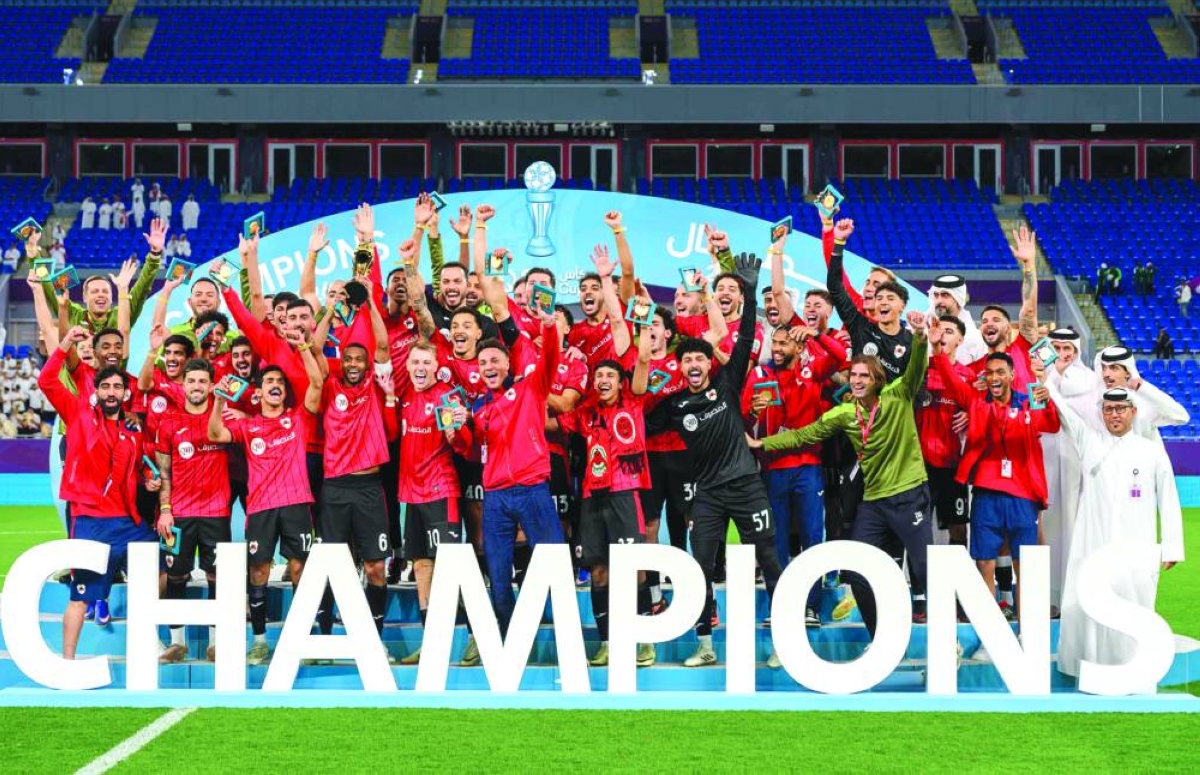
Al Rayyan player celebrate after winning the QSL Cup at Stadium 974 Wednesday. PICTURE: Noushad Thekkayil Favourites Al Rayyan prevailed over Second Division rivals Muaither 2-0 in the final to lift the QSL Cup at Stadium 974 Wednesday. The triumph also meant The Lions claimed their first trophy since winning the Sheikh Jassim Cup in 2018, delivering immediate success under new coach Vicente Moreno. Roger Guedes struck in first-half stoppage time (45+1 minute) before Aleksandar Mitrovic added a second in the 53rd minute to seal victory for the champions. Muaither, who enjoyed an impressive tournament run, made strong early efforts to find a breakthrough but were held back by a resolute Al Rayyan defence. Their inexperience showed at a crucial moment when they squandered a promising chance inside the box. Al Rayyan were also tested by Muaither’s disciplined backline despite creating several opportunities. The deadlock was eventually broken when Brazilian forward Guedes capitalised on a clever assist from Khaled Ali Binsabaa, breaking into the box before beating both defender and goalkeeper to slot the ball into the right corner of the net. Al Rayyan doubled their lead early in the second half when Mitrovic headed home a long free kick that bounced into the net. The assistant referee initially raised the flag, but the goal was awarded following a VAR review. Moreno has been in charge for just two weeks after replacing Artur Jorge, and the victory provides a timely boost as The Lions continue their pursuit of further silverware. Al Rayyan remain in contention in both the Amir Cup and the Gulf Club Champions League. Al Rayyan centre-back Jassim Jaber expressed his delight at securing the title. “We performed well in the final against Muaither and crowned our efforts by winning this championship, which we hope will be an important motivation for us in the future,” he said. “Winning this title will give us confidence ahead of the semi-finals of the Gulf Champions League next Sunday. We thank Al Rayyan fans for their support, as they always have a great impact on raising the morale of the players,” Jaber added.  Related Story

Entertainment
Luke Gulbranson Says Voters Care About Gas Prices, Not Reality TV Past

Luke Gulbranson Says Voters Care About Gas Prices, Not Reality TV Past

Luke Gulbranson Voters Don’t Care About My TV Past ... They’re Broke!!! Published April 15, 2026 1:45 PM PDT Play video content TMZ.com Luke Gulbranson is brushing off his reality TV past as he dives

Entertainment
Clavicular to Make Club Appearance After Suspected Overdose

Clavicular to Make Club Appearance After Suspected Overdose

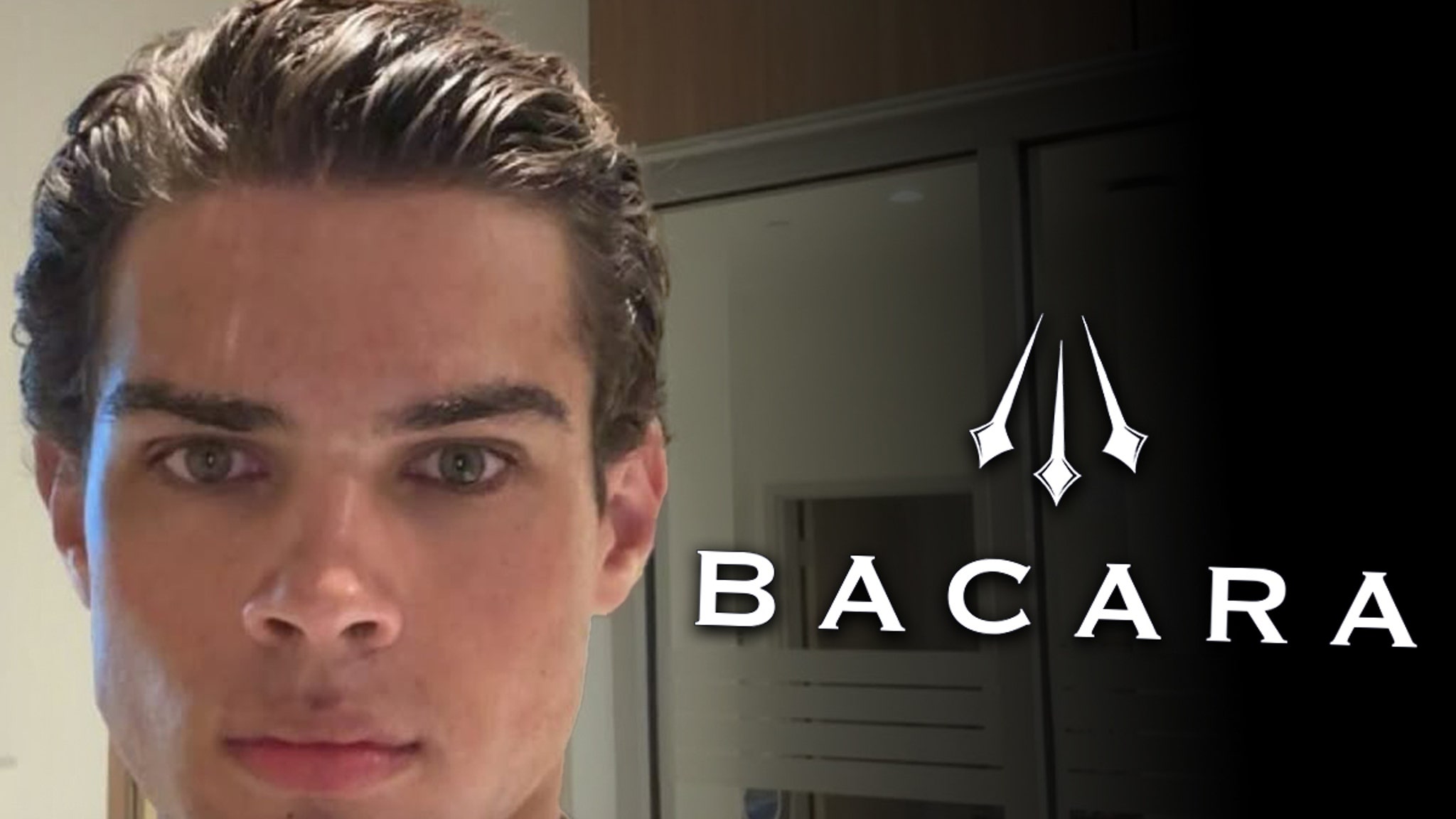
Clavicular Show Must Go On!!! Not Scrapping Club Gig After OD Scare Published April 15, 2026 12:48 PM PDT Clavicular isn't hitting pause after a frightening medical scare ... 'cause TMZ has learned he still

News
Samrat takes oath as Bihar’s first BJP chief minister

Samrat takes oath as Bihar’s first BJP chief minister

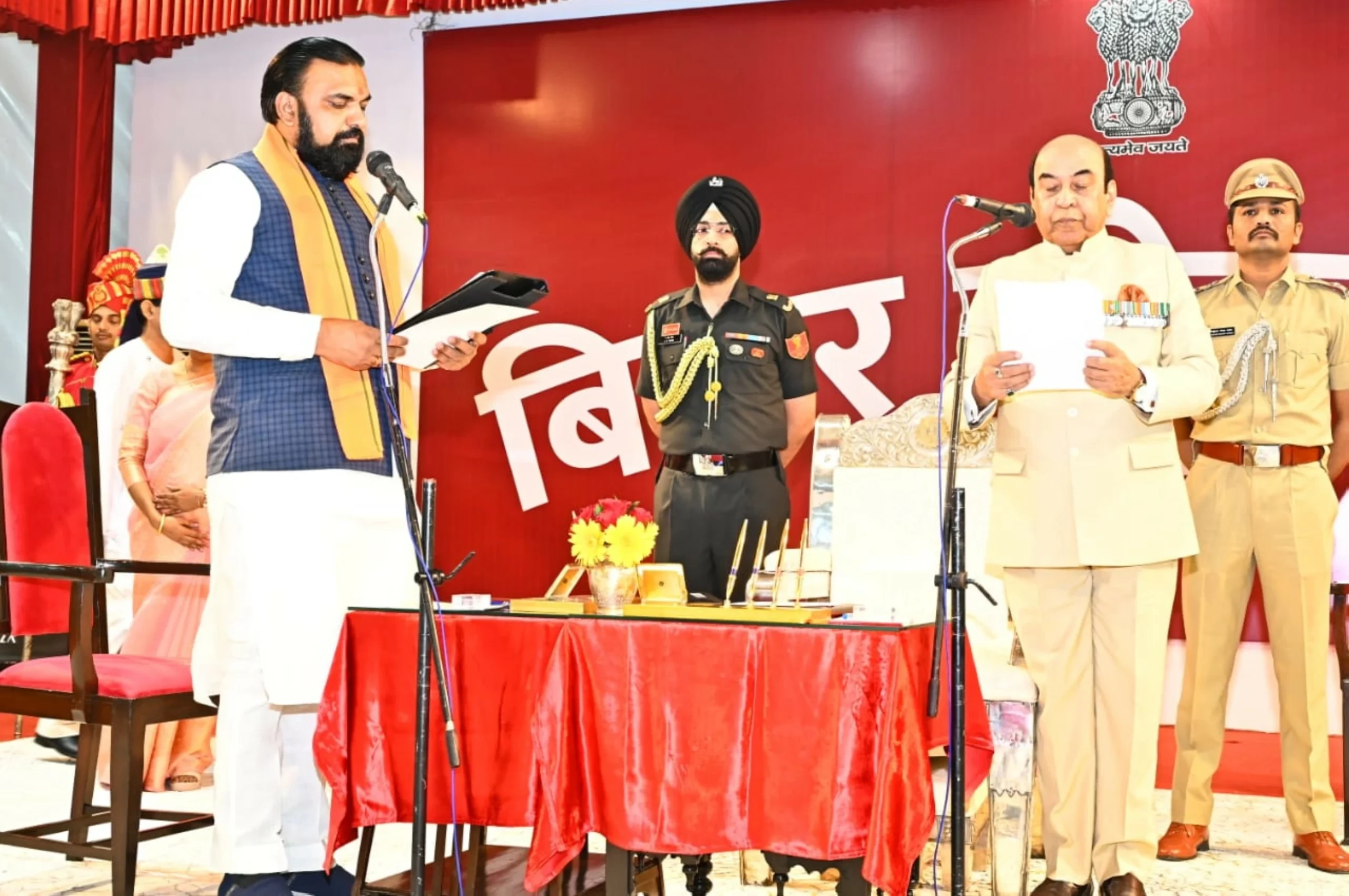
A historic political shift has taken place in Bihar with Samrat Choudhary taking oath as the 24th chief minister of the state, marking the first time a Bharatiya Janata Party (BJP)-led government has been formed