admin
admin 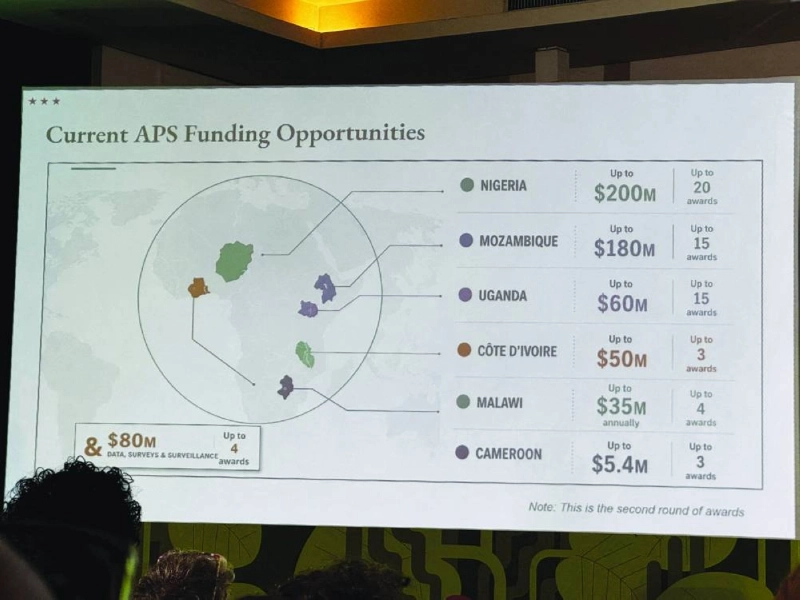
A screen shows a US government map of Africa with mislabeled countries during a State Department presentation at a global conference on Sunday in Rio de Janeiro. Reuters
A US government map of Africa mislabeled every country during a State Department presentation at a global conference taking place in Brazil this week, causing a stir among attendees who took screenshots and posted them online.
Reuters viewed a video of the presentation given at the Aids 2026 conference in Rio de Janeiro, which shows the errant map displayed halfway during a presentation about the US State Department’s new health agreements.
A Reuters analysis found the image of the map included in the presentation contained an artificial intelligence watermark that signals it was made with OpenAI tools.
The company said it was investigating the report.
The State Department said it took “full responsibility” for the confusion caused and that the map had been produced by a team member who hastily changed the slide deck before the event.
The map showed Nigeria, where the US currently has several hundred troops deployed, as landlocked in the Sahara Desert.
Mozambique, which is in southeastern Africa, was relocated to the Horn of Africa, while Ivory Coast in West Africa was placed on the other side of the continent.
Screenshots of the map first appeared in a Substack post by Aids expert Emily Bass and were widely shared on LinkedIn, with one post garnering some 40,000 views.
“Whoever created and approved this slide did not know where countries in Africa are and did not care to check their work,” wrote Matt Petit, who focuses on AI and geopolitics at the Atlantic Council, in the post.
In a statement, the State Department said: “We take full responsibility for the confusion and misrepresentation it caused for attendees, including our African partners.”
The speaker at the conference was Jeff Graham, the top US health envoy who oversees an initiative known as the President’s Emergency Plan for Aids Relief, or PEPFAR.
He did not reply to requests for comment.
The State Department said the discussions at the conference were “substantive and constructive” despite the map and that it remains committed to fighting Aids with real results.
The Trump administration’s decision last year to pause funding pending a review disrupted aid programmes worldwide but PEPFAR’s core work such as the provision of life-saving drugs has largely resumed.
The US is scaling back other areas of its spending including on prevention and surveillance, and plans to fully phase out the programme in South Africa.
Related Story