admin
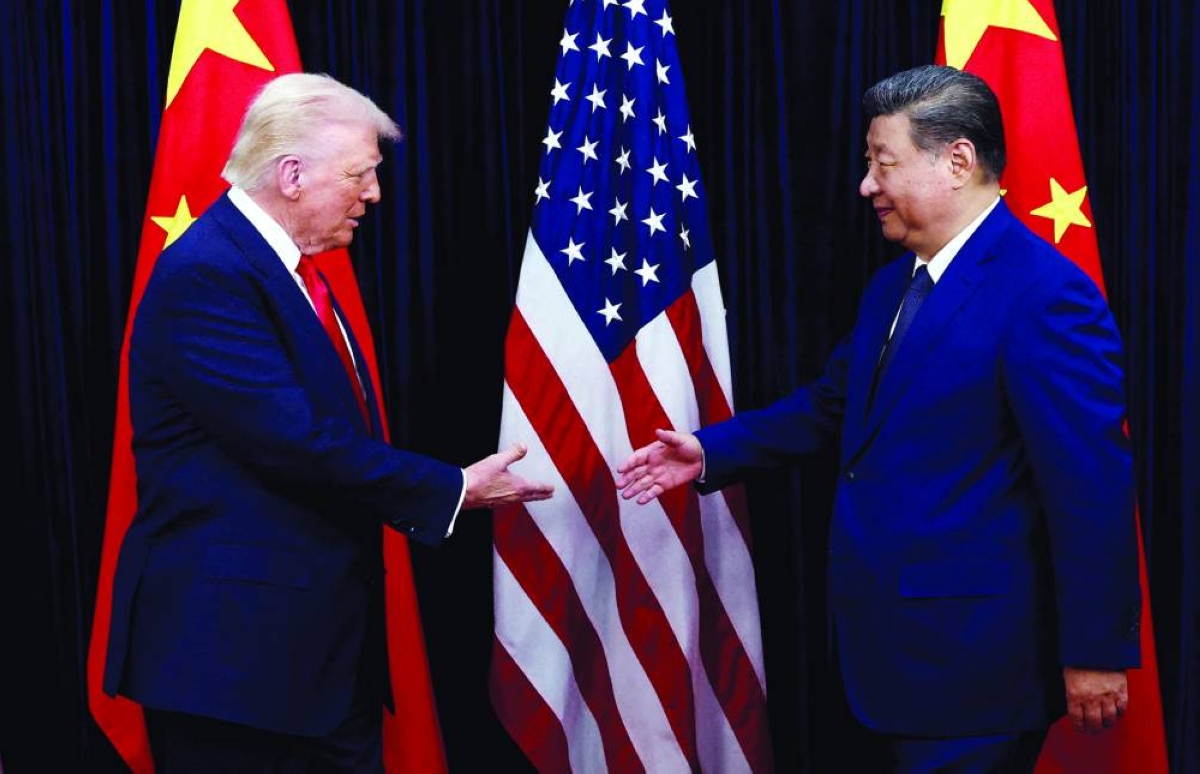
admin US President Donald Trump landed in Beijing on Wednesday for a high-stakes summit with Chinese leader Xi Jinping aimed at easing deep tensions between the rival superpowers.
Beginning the first visit to China by a US president in nearly a decade, Trump touched down on Air Force One at Beijing Capital International Airport at 7:50 pm (1150 GMT) after the long flight from Washington.
Ructions over Iran, trade and Taiwan loom over the highly anticipated meeting between the leaders of the world’s largest economies, which Trump had already delayed from March because of the war in the Middle East.
But Trump appeared firmly focused on business deals, with Nvidia chief Jensen Huang boarding the plane at the last minute in Alaska and Tesla’s Elon Musk also travelling on the presidential jet.
As the global AI race hots up, China is currently banned from purchasing the cutting-edge chips that Huang’s company produces under US export rules that Washington says are to protect national security.
Trump said in a social media post en route that he would be “be asking President Xi, a Leader of extraordinary distinction, to ‘open up’ China so that these brilliant people can work their magic”.Visiting China for the first time since 2017 during his first term, Trump is expected to receive a lavish welcome from Chinese authorities and will have a packed itinerary.
Trump and Xi will hold talks at 10:00 am (0200 GMT) on Thursday in Beijing’s opulent Great Hall of the People, where they will also enjoy a state banquet in the evening.
On Friday, they are set to have tea and a working lunch before the US president heads home.
As he departed the White House, Trump said he expected a “long talk” with Xi about the joint US-Israeli war with Iran, which sells most of its US-sanctioned oil to China.
But he also downplayed disagreements, telling reporters that “I don’t think we need any help with Iran” from China and that Xi had been “relatively good” on the topic.
The Chinese foreign ministry said Wednesday it “welcomes” Trump’s visit and that “China stands ready to work with the United States… to expand cooperation and manage differences”.
Yet Beijing is growing impatient for peace, with Foreign Minister Wang Yi urging his Pakistani counterpart on Tuesday to step up mediation efforts between Iran and the United States.
Related Story