admin
admin 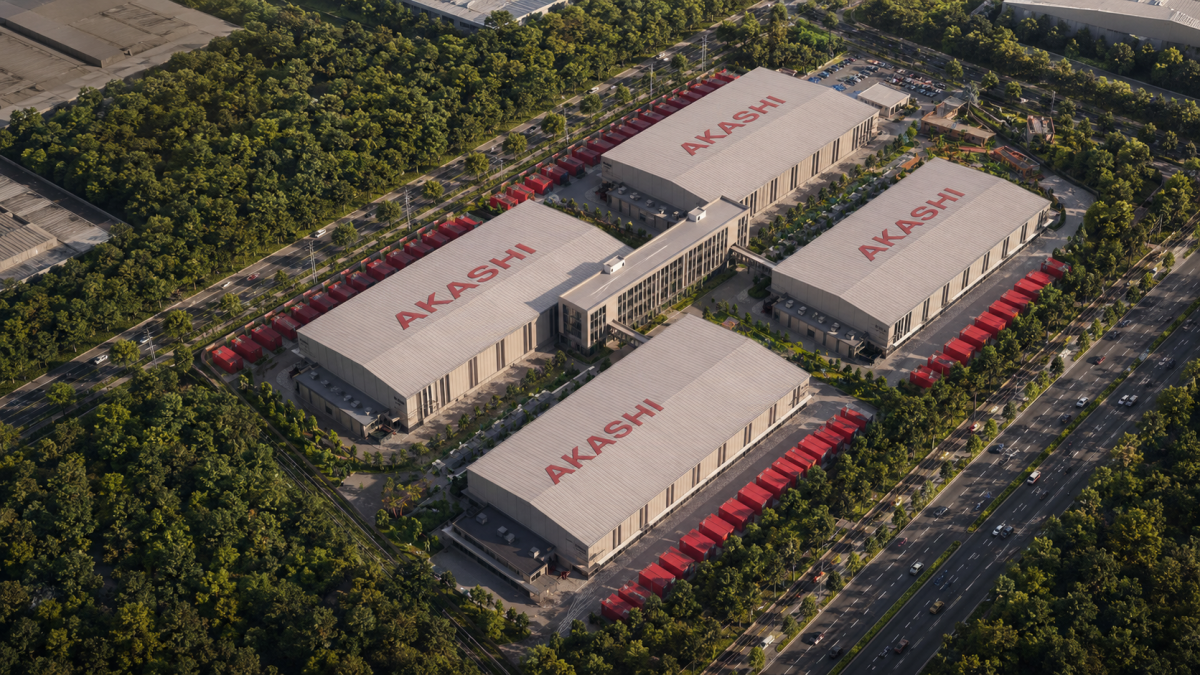
Artificial intelligence has turned data centres into one of the most important asset classes of the next decade. For years, data centres were viewed simply as specialised real estate for cloud, enterprise IT and content delivery. Data center clusters are now recognized as core pillars of economic competitiveness. AI workloads demand unprecedented power densities, specialized high-voltage grid interfaces, advanced liquid cooling topographies, and engineering competencies more similar to heavy industrial manufacturing rather than traditional real estate.
The International Energy Agency has validated this structural bottleneck from the energy point of view. It estimates that around 20 percent of planned data centre projects could face delay risks if electricity grid constraints are not addressed. In advanced economies, the lead time for constructing new transmission lines can take four to eight years, while waiting times for critical components such as transformers and cables have doubled in recent years.
For institutional infrastructure allocation, this supply-demand asymmetry poses an urgent question: which emerging geographies can deliver the full physical stack required to host the global AI economy?
This is why Central Asia is beginning to attract more attention.
The region is not yet a mature hyperscale market on the level of Northern Virginia, Frankfurt, London, Singapore or Tokyo. But that is precisely why it is becoming interesting, global institutional investors increasingly favor geographies that combine strategic location, land availability, energy generation potential, growing digital demand and the ability to build new infrastructure without being dragged down by legacy constraints.
Kazakhstan is pivotal to that discussion.
Geographically, the country sits between Europe and Asia, while maintaining natural links to the Middle East, China, Russia, the Caucasus and South Asia. Economically, it is the largest market in Central Asia and has spent years positioning itself as a logistics, finance and digital bridge in the region. Crucially for foreign capital, the Astana International Financial Centre (AIFC) provides international investors with a trusted, familiar legal framework based on English common law, neutralizing the regulatory friction often associated with frontier markets. Strategically, the country has a clear incentive to localise more of its digital infrastructure and reduce dependence on external compute capacity.
For Gulf readers, the story should feel familiar. The GCC’s rise as an infrastructure powerhouse was built on the exact same formula: leveraging abundance of energy, unparalleled geographic positioning, and long-horizon sovereign capital to reshape global trade and data flows. Central Asia is now executing a parallel transition, translating its massive industrial capacity and geographical positioning into digital sovereignty.
The primary missing element in this strategy was a concrete institutional-grade reference project capable of validating Central Asia’s engineering capability. The AKASHI Data Center in Astana serves as that definitive anchor.
Built on an 11-hectare site, AKASHI Data Center features four autonomous buildings, 4,224 server racks and up to 100 MW of capacity in its current configuration. It has completed Uptime Institute certification and received its Tier IV certificate, confirming strong redundancy, physical security and operational resilience. Furthermore, the localized climate allows for ambient free-cooling for a significant part of the year, an important advantage as energy efficiency becomes one of the decisive issues in data centre development.
Its importance goes beyond its technical specifications. AKASHI changes the investment conversation because it gives the region a reference asset. Before such projects existed, a region was often described as ‘promising.’ Now global players can evaluate real capacity, real engineering and real demand.
AKASHI has already shown signs of that transition. The company signed a strategic memorandum with China Mobile International in July 2025. Focused on intelligent infrastructure development, cross-border digital ecosystems, and AI compute deployment, this partnership confirms that global telecom and technology players are formally integrating Central Asia into their long-term infrastructure mapping.
The winners will be the regions that can offer a complete package: reliable power, abundant land, favorable cooling conditions, fiber connectivity, legal clarity, security, skilled operations and political commitment to digital growth.
The broader conclusion is clear. AI is creating a new infrastructure geography. It is pushing investors to look beyond the traditional map and to identify locations where execution is still possible at scale.
With projects like AKASHI establishing the baseline for hyper-scale execution, Kazakhstan has successfully signaled its readiness to host the global AI economy. For global infrastructure players and GCC sovereign investors seeking to deploy liquidity into high-conviction, cross-border digital corridors, the Central Asian tech frontier represents a rare window to capture first-mover premiums before the market becomes obvious.