admin
admin 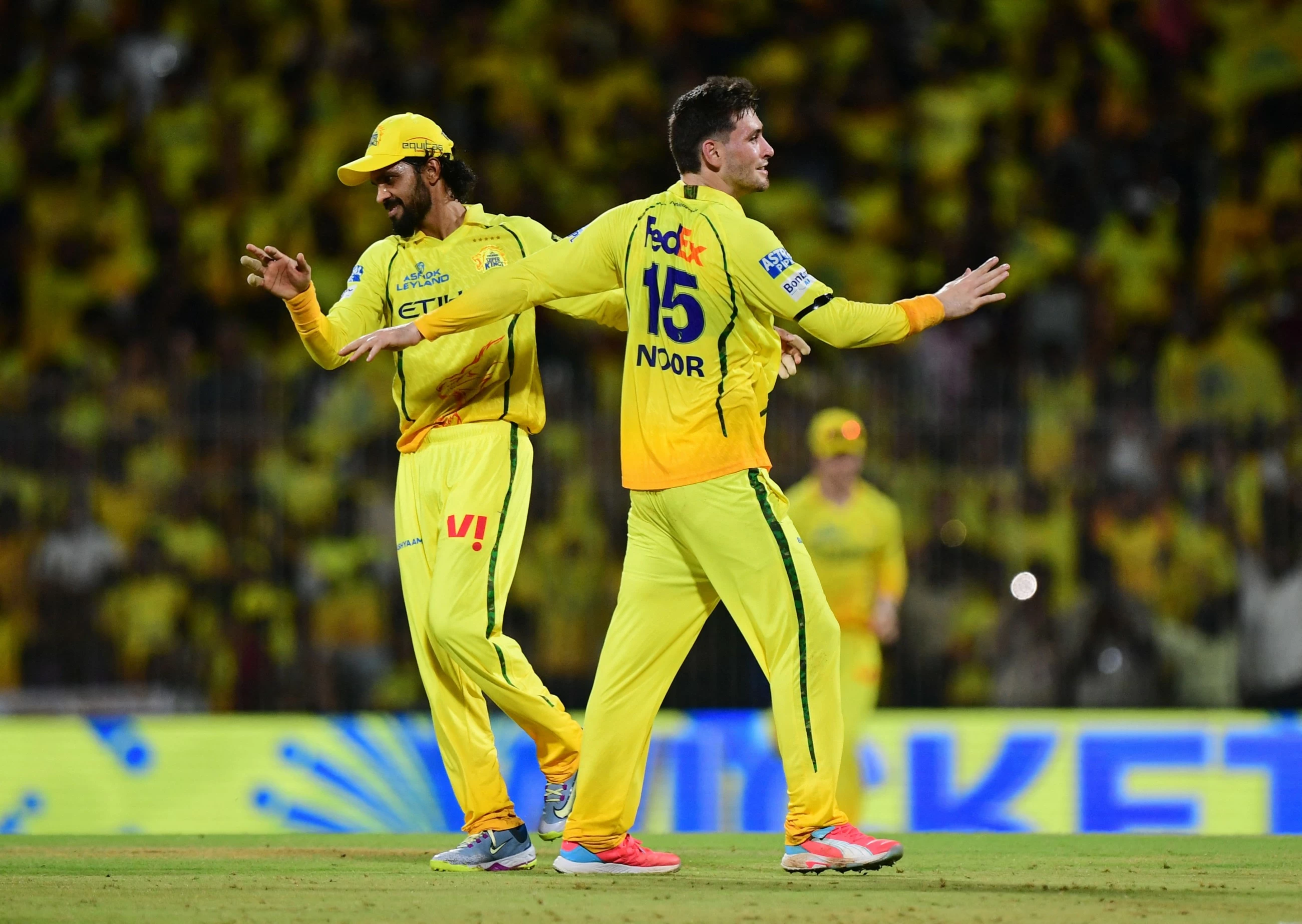
Afghan spinner Noor Ahmad returned impressive figures of 3-21 as Chennai Super Kings beat Kolkata Knight Riders by 32 runs for their second straight IPL win on Tuesday.
Five-time winners Chennai posted 192-5, riding on knocks from Sanju Samson, who hit 48, and Dewald Brevis (41) after being invited to bat first at their home M.A. Chidambaram Stadium.
Noor then turned on the heat with his left-arm wrist spin to keep Kolkata down to 160-7 in reply as they remain winless in their five outings.
Kolkata sit last in the standings with one point, which came courtesy of a washed-out game.
Chennai kept up their momentum after starting the season with three consecutive defeats, and now with back-to-back victories move to eighth place.
One of the most successful franchises in the T20 tournament, Chennai are still awaiting the return of M.S. Dhoni, who is recovering from a calf injury and is yet to play a game in this edition.
Three-time champions Kolkata lost three early wickets in their chase, including Finn Allen (one) and Sunil Narine (24), but were in the hunt before Noor struck.
Noor took down skipper Ajinkya Rahane for 28 and Australia’s Cameron Green for a golden duck on successive balls but the hat-trick was avoided by Rinku Singh in his next over.
But Rinku did not last long and was caught out at long-on for six as Kolkata slipped to 90-6.
Rovman Powell, who hit an unbeaten 31, and Ramandeep Singh (35) attempted to revive the chase but could never keep up with the asking rate.
Earlier, Samson, who hit a century in the previous match, kept up his form to hand the team a quick start in his 32-ball knock laced with four fours and three sixes.
Ayush Mhatre’s 17-ball 38 and crucial runs by Brevis and Sarfaraz Khan (23) allowed Chennai to post a challenging total despite tidy bowling by Kolkata at the backend.
Earlier, Graeme Smith, the former South Africa captain, thinks that the growth of franchise cricket has significantly changed the global cricket scene. He notes that the Indian Premier League remains the standard for other leagues around the world.
Now serving as the SA20 commissioner, Smith has observed the sport’s development firsthand, from the classic challenges of Test cricket to the booming commercial industry and worldwide popularity of T20 franchise leagues.
Smith reflected that the Indian Premier League served as the key driver of cricket’s contemporary development.
“The IPL changed everything. It showed how big franchise cricket could become commercially, in terms of fan engagement, and also in the quality of cricket being played. Every new league that has emerged since then has learned something from the IPL model,” Smith told Olympics.com.
Sinc starting in 2008, the IPL has become a worldwide force, shaping not just the game itself but also its marketing and consumption. As Smith notes, its influence reaches far beyond India, inspiring leagues in other countries to adopt comparable models. “Leagues around the world have taken inspiration from the IPL,” Smith said. “Whether it’s the structure, the player auction system, or the way the tournament connects with fans, it has become the template for modern franchise cricket.” Smith observed that the swift growth of franchise tournaments is a natural development, fueled by rising broadcast audiences and higher private investments in cricket. Additionally, he discussed potential changes to the future cricket calendar to incorporate several premier leagues.
“It’s always difficult to predict exactly how things will unfold. But if you look at the direction cricket is heading, the game will probably settle with four or five tier-one leagues globally, each occupying its own window in the international calendar,” he observed.
Even within that framework, Smith asserted that the IPL would still lead the ecosystem, saying, “The IPL sits at the top of the pyramid. It attracts the best players in the world and generates enormous interest. Other leagues can thrive as well, but the calendar will have to be structured carefully so that these competitions complement each other.” Looking ahead, Smith also floated the possibility of a global club competition featuring top franchise teams from different leagues. “You could easily see a Club World Cup-type tournament emerging. Imagine the champions of the IPL, SA20, Australia’s Big Bash, and other major leagues competing against each other,” he noted.
Agencies