admin
admin Garfield St Aubrun Sobers has taken leave of the world like all humans must. But can a once-in-a-century force of nature only be about achievements of a single lifetime? No. Sir Gary the cricketer went way, way beyond numbers. Gary Sobers was the undisputed King of Cricket if there ever was one. Even as the West Indies struggle to regain their lost glory, Sobers’ legacy lives on. He was no ordinary mortal, no slave to statistics. He played the game with an authority that stemmed from natural and immeasurable talent. It expressed itself in ways that nobody has ever emulated.
Sir Gary was a Miracle – yes, a Miracle with a capital M – who walked the earth in flesh and blood and gave cricket, which he mastered more comprehensively than anybody else, a tinge of magic, the sort that elevates a sport to an art form. Let us cast our minds back to 1972. An unofficial Test match – the third of a five-match series – is on at the Melbourne Cricket Ground. Australia versus World XI, captained by Gary Sobers. The latter’s team are bowled out cheaply with Dennis Lillee at his very best. The Aussies take a 101-run first innings lead.
West Indies and world cricket will always be indebted to the man who made miracles happen, says Saibal Chatterjee
In the second innings, when Sobers walks out to bat, his team is 146 for 3, with Sunil Gavaskar (27) and Zaheer Abbas (86) back in the hut. What the left-hander does in the next six hours and a bit – he hits 254 off 326 balls to set World XI on the path to victory – becomes part of cricketing folklore. The innings shows the world that 18 years into his international career, Sobers is still a phenomenon. One particular stroke – a memory that has endured in this writer’s mind – distils the genius, skill and imperious audacity of a cricketer who was born to reign.
Lillee bowls a bouncer. In a flash, Sir Gary stands up on his toes, meets the ball even as it is climbing and square cuts it over the point boundary for a six. The MCG crowd gasps in disbelief. That incredible innings was studded with many other stunning strokes that sent the Aussies led by Ian Chappell scurrying for cover. Sir Donald Bradman described the knock as “one of the most magnificent ever seen in Melbourne.”
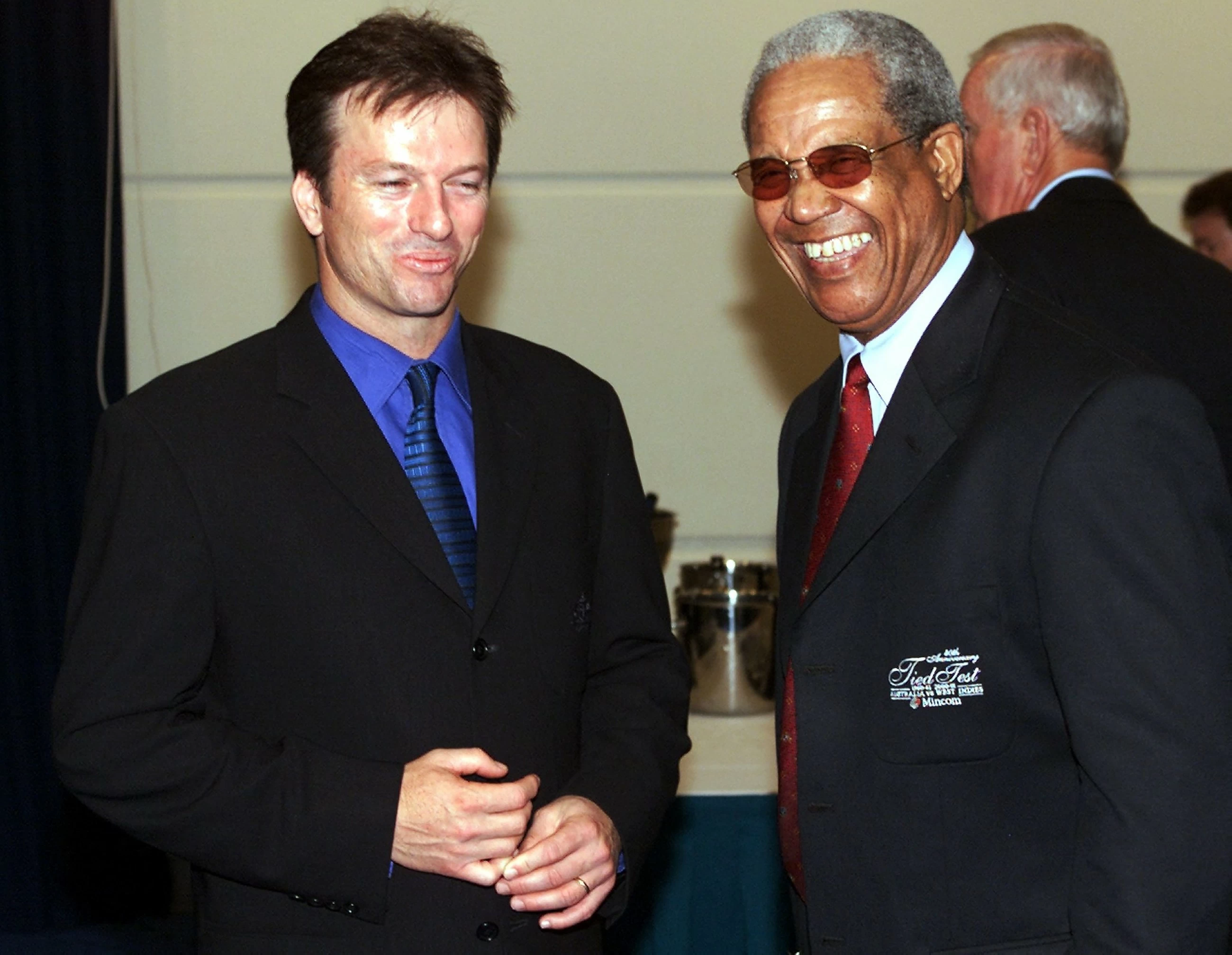
Sir Garfield Sobers (right) shares a joke with Steve Waugh at a function in Brisbane. File/Agence France-Presse
Hyperbolic praise was commonplace all through Sobers’ fabled career. Every accolade was unquestionably deserved. The world had never seen anybody quite like him. He could bat, bowl and field with equal proficiency. He could walk into any team on the strength of any one of his all-round abilities. He was to boot a tactician with an always ticking cricketing brain. The instincts were put to use not only when the great Barbadian captained the West Indies between 1965 and 1972 – he took over from Frank Worrell and was succeeded by Rohan Kanhai – but also on almost every occasion that his team needed him for a rescue act.
Sobers does not have a meteoric rise as a global force. He took his time but once the floodgates opened, he quickly became West Indies’ go-to man in a crisis. Making his Test debut in 1954 aged 17 – he was selected mainly as a bowler and batted at No. 9 – he spent the first four years of his international career as a useful journeyman whose contributions were meaningful but never extraordinary.
And then came his first Test century. Like much else that Sobers would do from this point on, it was a record-breaking performance. In the third Test against Pakistan at Sabina Park, Kingston in 1958, he converted his first three-figure Test score into an unbeaten 365.
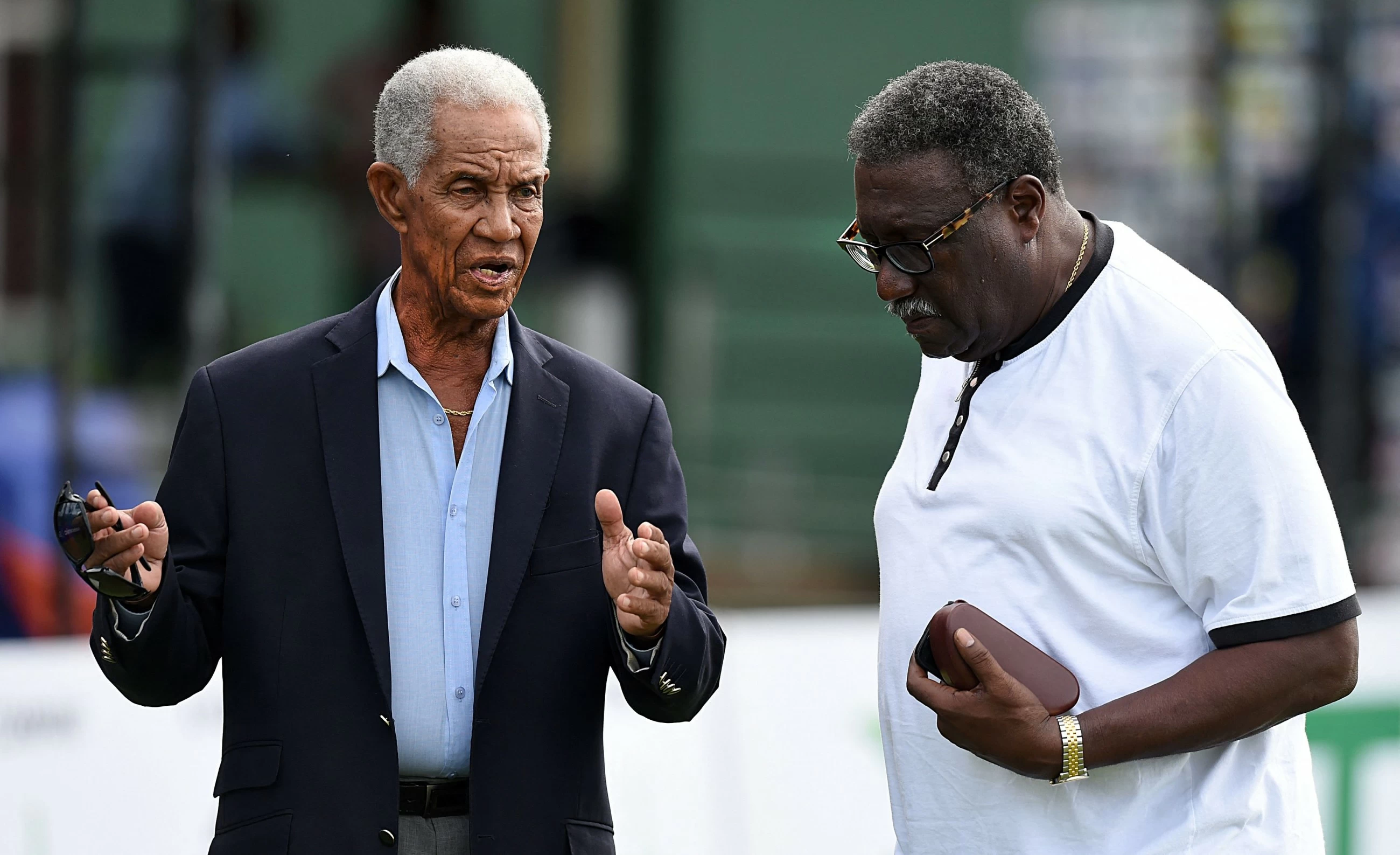
Clive Lloyd (right) speaks with Sir Garfield Sobers during a West Indies practice session at the P. Sara Oval Cricket Stadium in Colombo. File/Agence France-Presse
It was the highest ever individual Test score. It went past Len Hutton’s 364, scored 20 years earlier. The record stood in Sobers’ name for 36 years until Trinidadian Brian Lara broke it with a knock of 375.
Although his feats as a Test batsman – 8032 runs in 93 matches at an average of 57.78 with only two West Indies batsmen, George Headley and Everton Weekes ahead of him in consistency – are phenomenal, his numbers as a bowler are not quite that impressive.
With both pace and spin – he could bowl orthodox left-arm spin as well as wrist spin – Sobers took 235 wickets at 34.93 apiece, which is a little baffling but perhaps easy to explain. His bowling average is on the higher side because the variety of stuff that he peddled made him less consistent than bowlers who stay focussed on a single craft.
Clive Lloyd took over the West Indies captaincy in 1974. That was the year Sobers played his last Test.
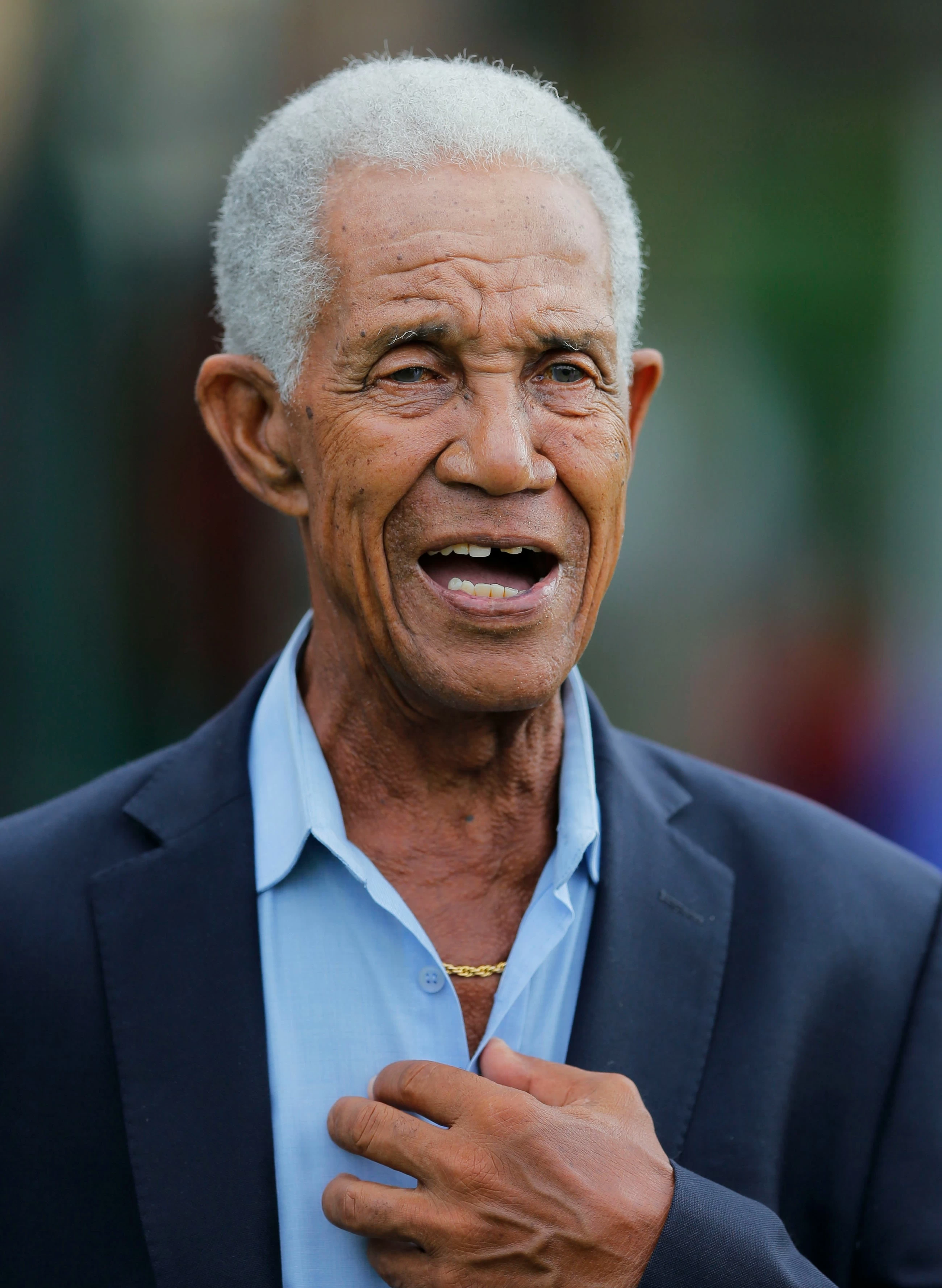
Garfield Sobers, reacts as he watches West Indies team members during a training session ahead of their second test cricket match against Sri Lanka in Colombo, Sri Lanka. File/Associated Press
The Caribbean domination of world cricket over the next decade and a half had a lot to with the confidence, self-belief and spirit of adventure that the greatest all-rounder the world has ever seen instilled in the boys he played with and, more important, in the boys who followed him into the sport. West Indies and world cricket will always be indebted to the man who made miracles happen.