admin
admin 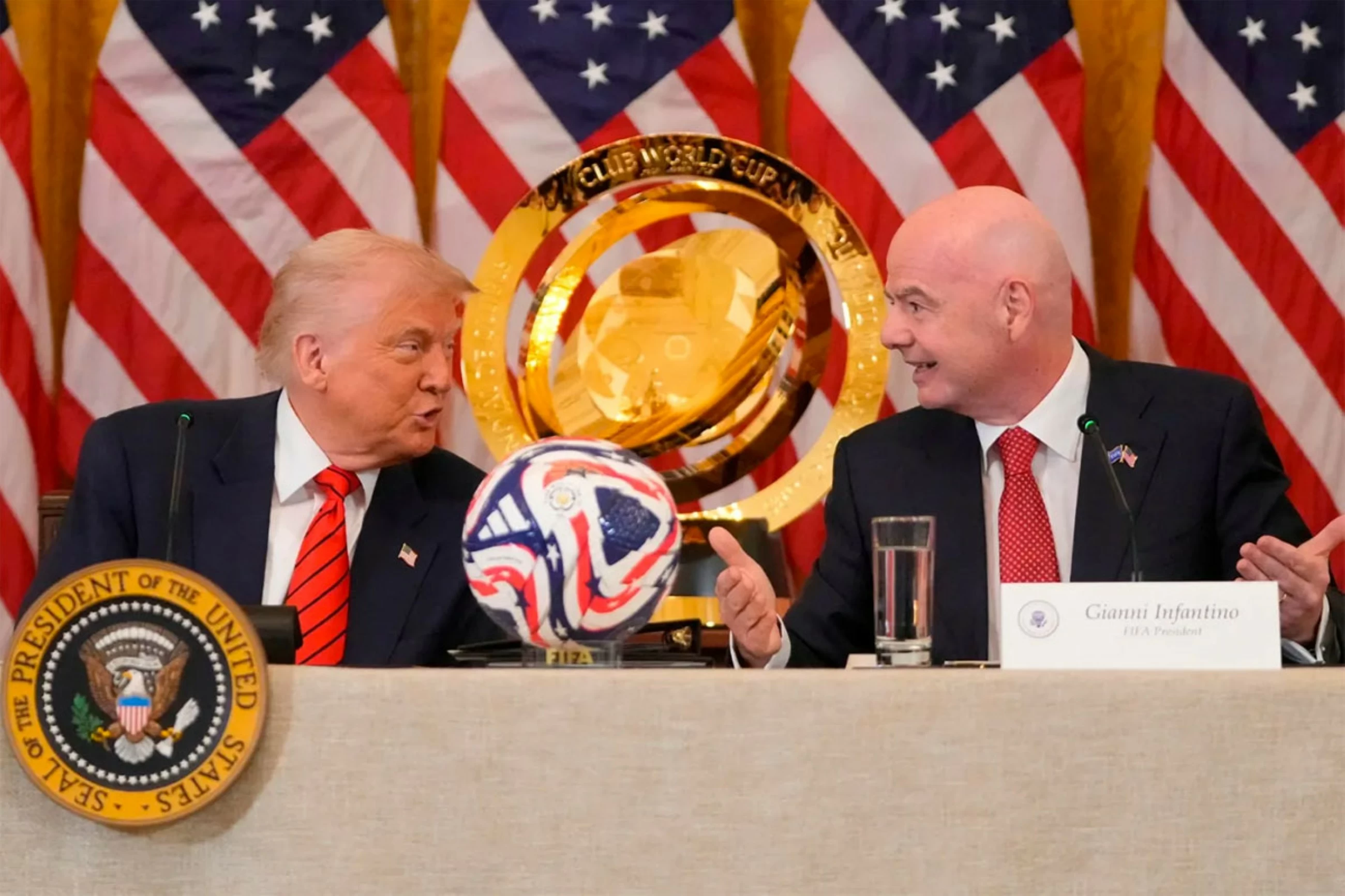
The US along with Canada and Mexico is hosting the 2026 World Cup although soccer/football had been neither widely played or not a great favourite in the US. However, soccer’s star is rising. A very different game from US football, soccer has, in recent years, become the third most popular sport in the US, overtaking baseball, once the national pastime. About 12 per cent of US sports fans call soccer their favourite sport; US football is ranked tops by 36 per cent and basketball by 17 per cent.
This contrasts with Canada where soccer is the chief youth sport and there are a million registered players. As a spectator sport, however, it ranks behind ice hockey, basketball, and Canadian/US football. The most popular sport in Mexico, soccer was imported in the late 19th and early 20th centuries by European immigrants and British miners. An estimated 73 per cent of Mexicans are football fans and almost the entire population watches broadcasts of the country’s team during major tournaments. Mexico hosted the FIFA World Cup in 1970 and 1986.
“Soccer” is the short form of the sport’s full title: “association football,” a name given to the game in England in 1863 when the newly-founded national Football Association wrote down the rules of the game. US “football” is an offshoot of association football combined with rugby, a contact sport.
FIFA stands for Fédération Internationale de Football Association, which translates from French to English as the International Federation of Association Football. Founded in Paris in 1904 and headquartered in Zurich to oversee competition among the national associations of Switzerland, Belgium, Denmark, France, Germany, the Netherlands, Spain, and Sweden, its membership now comprises 211 national associations. They are members of six regional confederations located in Africa, Asia, Europe, North and Central America and the Caribbean, Oceania and South America.
Nineteen countries have hosted the World Cup in the 23 tournaments since the inaugural World Cup in 1930 in Uruguay at a time South America and Europe were the world’s chief centres of football and the journey between the continents took three weeks. Consequently, it was decided to rotate the World Cup between them. However, this caused controversy and prompted boycotts. Three teams drew from the first cup to be staged after World War II took place in Brazil in 1950 due to financial stringencies or disagreements with FIFA.
The three-nation bid for the 2026 World Cup took place on June 13, 2018. This was decided by a vote of 134 against 55 for Morocco. This was the first time ever three states were chosen to host the tournament. Although there has been considerable time to prepare for the events, this year’s World Cup has been characterised by chaos, confusion and consternation. Donald Trump has been one of the authors of this situation. His administration’s denial of entry visas to 39 countries is interfering with who can take part in or attend the games. This was demonstrated and publicised when acclaimed Somali referee Omar Abdulkadir Artan was refused entry although he was chosen by the Confederation of African Football to take part in this year’s World Cup. Despite appeals from FIFA, Trump has done nothing to issue visa waivers for citizens of countries on the US exclusion list which consists of 15 countries from Africa, eight from Asia and the Middle East, three from the Americas and the Caribbean, two from Europe and one from Oceania.
Due to the US war on Iran, Mexico-based Iranian sportsmen but not managers have been permitted to enter the US on a daily basis to perform in games in Los Angeles. Iraq’s champion striker Ayman Hussein was detained and questioned for nearly seven hours at Chicago’s O’Hare airport after arriving with the country’s team. Team photographer Talal Salah was interrogated for more than 10 hours before being denied entry. Iraq had returned to the World Cup for the first time in 40 years.
Play has been guided by temperatures rising to 32-36C. FIFA decreed that all matches during this World Cup observe a mandatory three-minute hydration break in each half to ensure players’ recovery from exertion. Climate activists have expressed concern about the environmental impact of the expansion to 48 teams and air travel among host cities, which will nearly double average carbon emissions for the last four games.
Nationalism is the motivator and provides context for the games, but individual sporting commitment and prowess determine national success. Meanwhile, protests and boycotts have been staged by opponents of US policies who cite visa restrictions as an example of bad faith at a time all comers – sportsmen, managers, and fans – should be made welcome. Activists have criticized FIFA for succumbing to the exclusionary US administration by awarding Trump an invented peace prize in December 2025 after he complained he was not honoured with the Nobel Peace Prize.
Earlier World Cups have been confronted with state-led team boycotts, but the ongoing boycott is mainly grassroots, staged by individual fans, activist groups, and spectators protesting the policies, economics, and geopolitics surrounding the tournament. Israel’s war on Gaza is an outstanding example of double standards: while Russia has been banned from the games due to its invasion of Ukraine, Israel has not been sanctioned or excluded. Although a member of FIFA and its flag will fly from the World Cup venues, Palestine has not, so far, qualified to play.