admin
admin 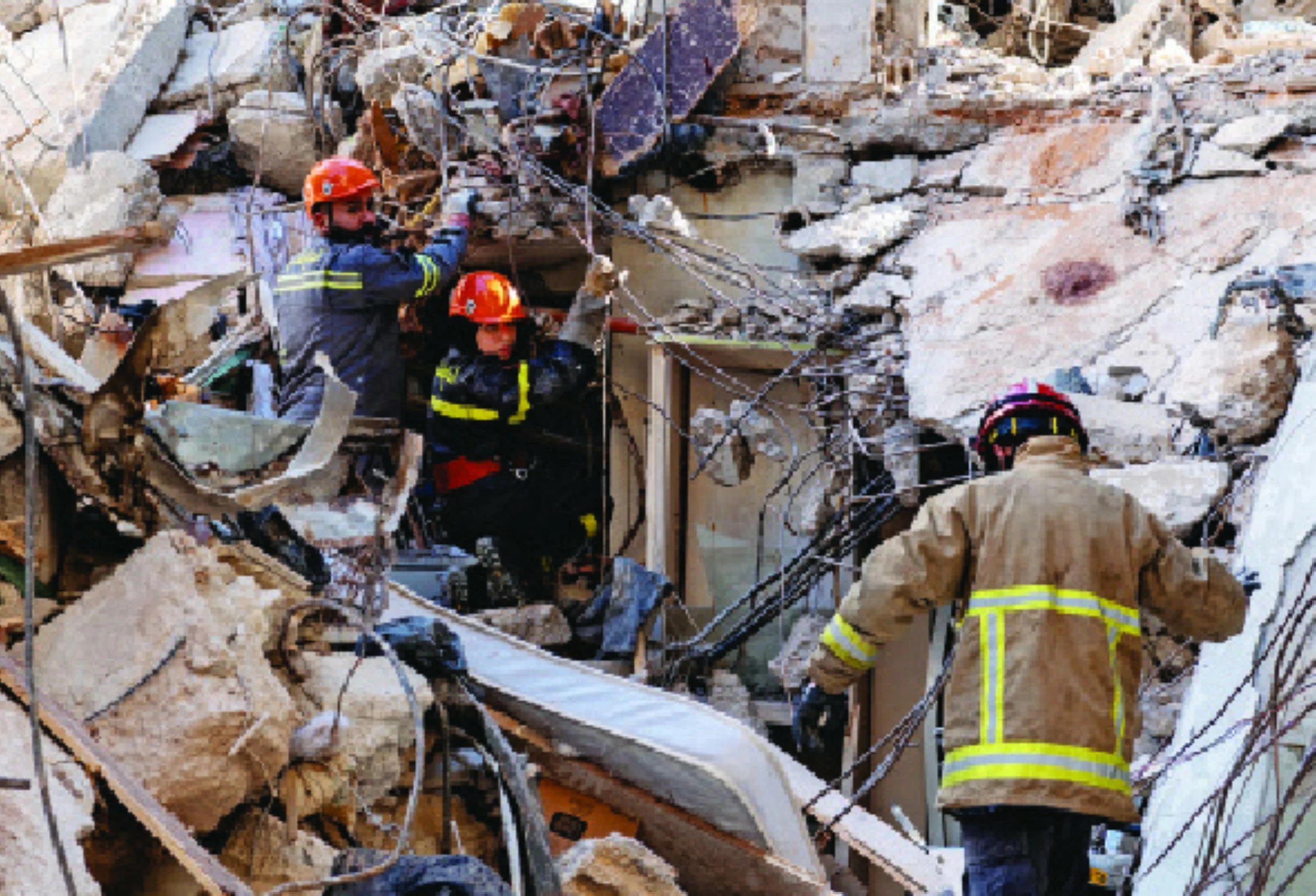
The failure of the weekend’s US-Iran talks to end the six-week war has left the ceasefire in limbo and exposed war-ravaged Lebanon to Israeli attacks. Israel’s arrogant assertiveness knows no bounds. On Sunday, Israeli Prime Minister Binyamin Netanyahu and other officials visited occupied southern Lebanon.
Their aim was to make the point that Israel remains in charge ahead of Tuesday’s talks on the disarmament of Hezbollah and a potential peace deal between the two countries. Both are impossible tasks for the weak Lebanese government to assume. Well-armed Hezbollah cannot be disarmed by the fragile Lebanese state and the undermanned and outgunned army. Moreover, any peace deal negotiated while Lebanon is divided and weak would not be viable or lasting.
The current situation mirrors that after Israel’s 1982 invasion of Lebanon and occupation of the south. Under pressure from Israel and the US, hardline right-wing Kataeb party leader Bashir Gemayel was elected president in August 1982 but was assassinated three weeks later and was succeeded by his more moderate brother Amin Gemayel. Under US pressure, Lebanon signed a peace treaty with Israel on May 17, 1983.
This called for Israeli withdrawal, normalisation of relations, and the creation of an Israeli security zone. This treaty collapsed in March 1984 due to intense popular opposition and Syrian counter-pressure.
Furthermore, Israel’s invasion and occupation of the south gave birth to Hizbullah, Lebanon’s Shia resistance and socio-economic movement, which was initially backed by Iran, retains close ties to Iran, and remains the strongest member of its “Axis of Resistance” which includes Palestinian Hamas and Yemeni Houthis. Hizbullah paramilitaries attacked and harassed Israel’s occupation army until it was compelled to withdraw from Lebanon in 2000.
This victory, instantly hailed across the region, made Hizbullah the first resistance movement to compel Israel to pull its armed forces out of occupied territory. However, after Hamas’ attack on Israel on Oct.7, 2023, Hizbullah resumed missile and drone attacks into northern Israel, drawing Israeli retaliation and reoccupation. The conflict restarted in earnest after the US and Israel launched their war on Iran on Feb.28.
The ancient port city of Tyre is in the area – 10 per cent of Lebanon – that Israel says it plans to occupy and depopulate. Tyre municipality has a population of 95,000 while the wider area hosts 160,000-200,000, including Palestinian refugee camps. Residents fear that if they leave their homes, they may never return. Israeli Defence Minister Israel Katz, has said that Israeli forces will not allow Shia evacuees (who might back Hizbullah) to return to the south until the “security of northern Israeli residents is ensured.”
Since 2024, Israel has systematically depopulated and demolished scores of homes in towns and villages in Lebanon south of the Litani River while declaring the region an exclusion zone. This campaign intensified recently after Katz ordered the destruction of “all houses” in border villages “in accordance with the model used in Rafah and Beit Hanoun in Gaza,” where Israel destroyed 90 per cent of Palestinian homes. Rights groups, including Amnesty International, have ruled that this campaign has been carried out without “imperative military necessity,” violated international humanitarian law and could be investigated as war crimes. However, since its creation in 1948, Israel has enjoyed the full support of the United States and has been able to act with impunity. The behaviour of the current Netanyahu government in Gaza has, however, undermined Israel’s impunity, its most valuable traditional asset.
Photo: TNS