admin
admin 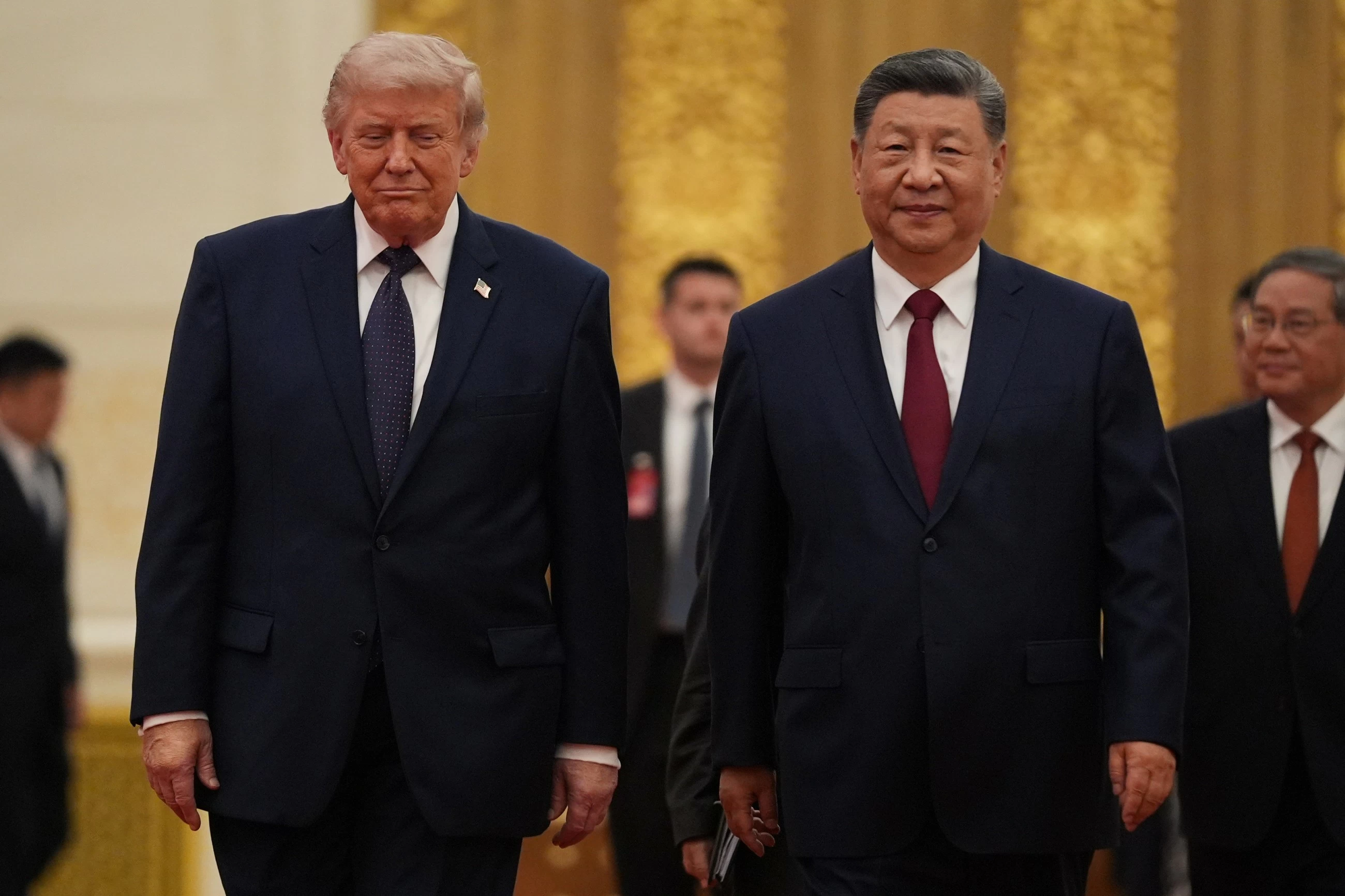
All roads lead to Beijing these days. Abu Dhabi Crown Prince Sheikh Khaled Bin Mohamed bin Zayed Al Nahyan visited China in April, meeting with President Xi Jinping and Premier Li Qiang. During this trip two-dozen landmark agreements were signed covering comprehensive strategic cooperation across trade, energy, and technology.
The Arab League and its members have adopted the “One China” principle and recognise the government of the People’s Republic of China as the sole legal government representing the whole of China and Taiwan as “an inalienable part” of China. Iran regularly dispatches trade delegations to China, which is its main overall trading partner and primary client for its oil. High-level diplomatic visits and commercial missions occur frequently to implement the 25-year Comprehensive Strategic Partner- ship. This month Iranian Foreign Minister Abbas Araghchi travelled to Beijing to discuss economic cooperation and regional security. Iran’s parliamentary speaker Mohammad Baqer Qalibaf was appointed as Tehran’s special envoy to China.
US President Donald Trump and Russia’s Vladimir Putin were also among the global leaders to take this road. However, Trump may have blotted his copybook as far as Beijing is concerned. This week he said he could consider speaking to Taiwan’s President Lai Chingte which would be an
unprecedented departure from diplomatic norms. The US and Taiwanese presidents have not spoken directly since 1979, when Washington shifted diplomatic recognition to Beijing.
In January, Ireland’s Prime Minister Micheál Martin and Finnish President Alexander Stubb were followed by British Prime Minister Keir Starmer. While all seek to expand trade with China, which has the world’s second largest economy after the United States, Martin is seen as a pivotal persona as in July Ireland assumes the six-month presidency of the European Union. Germany’s Chancellor Friedrich Merz made his first trip to China in February. Although China’s closest political ally is Russia, the Chinese have done a great deal to cultivate Western countries which provide the main markets for its goods.
While visiting European leaders have sought to boost economic exchanges with China, a trade war looms as the European Commission has put forward revisions to a standing cyber-security deal by regulating, reducing and phasing out bloc dependence on Chinese mobile phones, computers, mobile networks, software and hardware and other security-sensitive equipment. Adoption will take time, as all 27 European parliaments have to consider and adopt the measure, giving China time to secure amendments and press for revocation.
About 30 to 32 per cent of all EU high-tech imports originate from China. Chinese firms supply about one-third of European mobile infrastructure, nearly one in three smartphones, and the majority of consumer computers.
China provides around 22 per cent of all goods imported into the EU. This amounts to about 17 per cent of China’s total global exports, placing it alongside the US as one of China’s top two export customers.
In 2013, China adopted the “Belt and Road” (BRI) initiative as a means to assume global leader- ship and promote its infrastructure and economic development strategy. Dubbed the 21st century version of the historic “Silk Road,” China aims to invest in over 150 countries and international organisations through six overland economic corridors. As of 2025, participating countries accounted for nearly 75 per cent of the world’s population and over half of global GDP.
Determined to revive its centrality in world political and economic affairs, China has turned to its own multi-millennial history. The ancient Silk Road was a network of land and sea trade routes connecting East Asia with the Mediterranean from the 2nd century BC to the 15th century.
Spanning over 6,400 km, the Silk Road carried silk, spices, religion, and technology until the Ottoman Empire closed it down. A paved highway along sections of the Silk Road still connects Pakistan and the Uyghur Autonomous Region of Xinjiang in China.
Thirteenth-century Genoa merchant, explorer and writer, Marco Polo documented his travels along the Silk Road in his book “Livres des Merveilles du Monde,” published in 1300. He wrote of his friend Kublai Khan (1215–1294) who was the founder and first emperor of the Mongol-led Yuan dynasty which tamed, united, and expanded China until it reached the borders of Europe via the Islamic world.
China introduced papermaking, which replaced parchment and movable type and the printing press which led to mass literacy and Europe’s Renaissance. China invented the compass and sold it to Europe in the 12th century, launching the Age of Exploration. Gunpowder reached Europe in the 13th century and revolutionised European warfare. In the 17th and 18th centuries Catholic Jesuit missionaries introduced translations of Chinese Confucian classics, which contributed to the European Enlightenment, trans- formed the continent and spread to the Americas and Oceania. The Enlightenment promoted individual liberty, religious tolerance, separation of church and state, constitutional governance, advancement according to merit and inspired the scientific revolution of the 17th century.
The Islamic world gave China seminal advancements in astronomy, mathematics, medicine, and cartography while Europe provided silver and furs and plagued China with the scourge of opium which led to US-European warfare and con- quest. The 1948–1949 revolution led by Communist Mao Zedong took over the mainland and drove Western-backed nationalists to Taiwan. The US recognised China and established relations with the government in Beijing in 1979 but maintained relations with Taiwan. Although claimed by mainland China, Taiwan maintains diplomatic relations with 11 out of 193 UN member states and the Vatican.