admin
admin 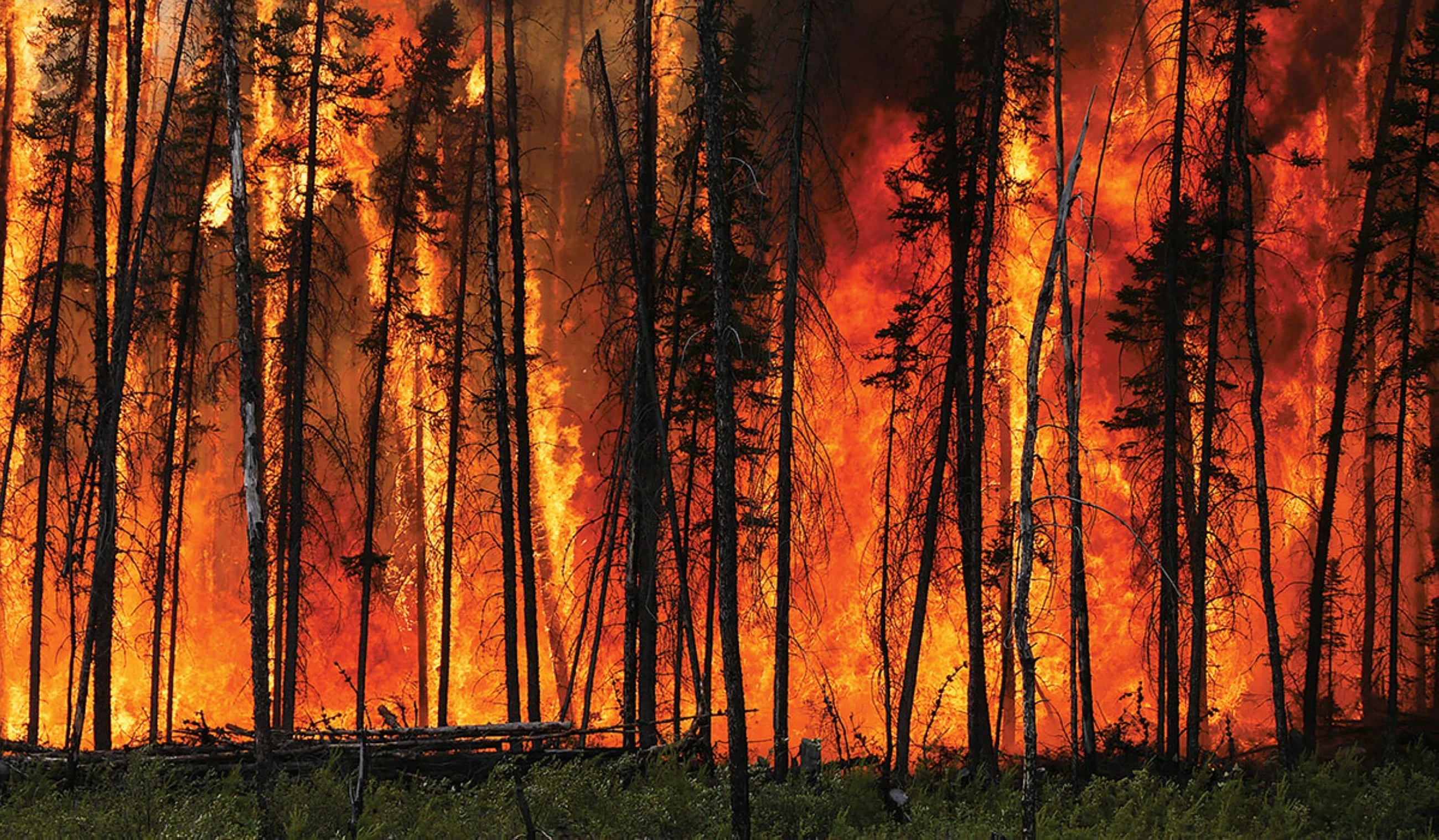
Spain’s firefighters have given up the idea of bringing the wildfires blazing across large tracts in the vicinity of Madrid, covering an estimated area of more than 590 square kilometres, under control. One of the officers confessed that it is not possible to control the forest blaze. The focus is now on saving the lives of thousands of people in the region of Avila near Madrid by evacuating them from their homes and villages. So far, nearly 79,000 people have been evacuated. In neighbouring France, where similar forest fires have been raging and spreading with equal ferocity, over 200,000 people fled their homes and villages and towns. Europe has been facing the most extreme heatwave this year. The forest fires, which are common in dry and hot summers, have been drastically wider and intense than ever before.
The accusing finger of course points to climate change and the rise in temperatures above the pre-industrial levels. This has a drastic impact on the famed vineyards of Bordeaux in France, where the increase in heat has impacted the grape harvests. It has also led to the easy spread of the forest fires which, once they get kindled, grow to a monstrous proportion, and the vineyards become an easy prey.
In Spain, the reasons for the spread of forest fires beyond the forested areas is now attributed to the dry grassland and shrubs that reach up to the edge of towns and villages because there is a huge decrease in farms and farmsteads. They serve as a tinderbox to the fires spreading in a relentless blaze from forests into the shrub land and into towns and villages.
Forest fires are a common phenomenon across the world. But what has made these fires uncontrollable is the very high summer temperatures. Days of extreme heat used to be around 15 days during the hot season. But now the fire-fighting department in Spain reckons that it has now risen to 40 days, that is for more than a month in the summer.
As the number of extremely hot days become more frequent than before, the forest fires spread faster and wider. It becomes easier to deal with forest fires if the summer temperatures are normal, that are not too high. Then the forest fires will not spread too fast, and it also becomes relatively easier to douse the forest blaze. The difficulty, the challenge, for Europe, and to the rest of the planet itself: the dramatic and drastic increase in temperatures because of increased greenhouse gas emissions which in turn can be traced to the fossil fuel-run large industrial economies.
Most European governments are acutely conscious of the challenge of climate change, and they have been trying to move towards more environmentally friendly economies in terms of manufacturing, transport, urban habitations including offices and homes. And the European Union (EU) had been pushing for turning the economies of many developing countries to adopt green technologies. But at the practical level, European governments and industries have not been willing to share green technologies and give financial aid to developing economies to adopt green measures.
Europe will find that it cannot build a green oasis because the rise in global temperatures cannot be confined to Asia, Africa and Latin America. European leaders will be able to safeguard the continent’s temperate climate only through helping the tropical countries with developing economies to contain CO2 emissions effectively. The climate change issue is a global one. It is not confined to individual countries and regions. It requires the collective efforts of all the countries to keep in check the rising temperatures.