admin
admin 
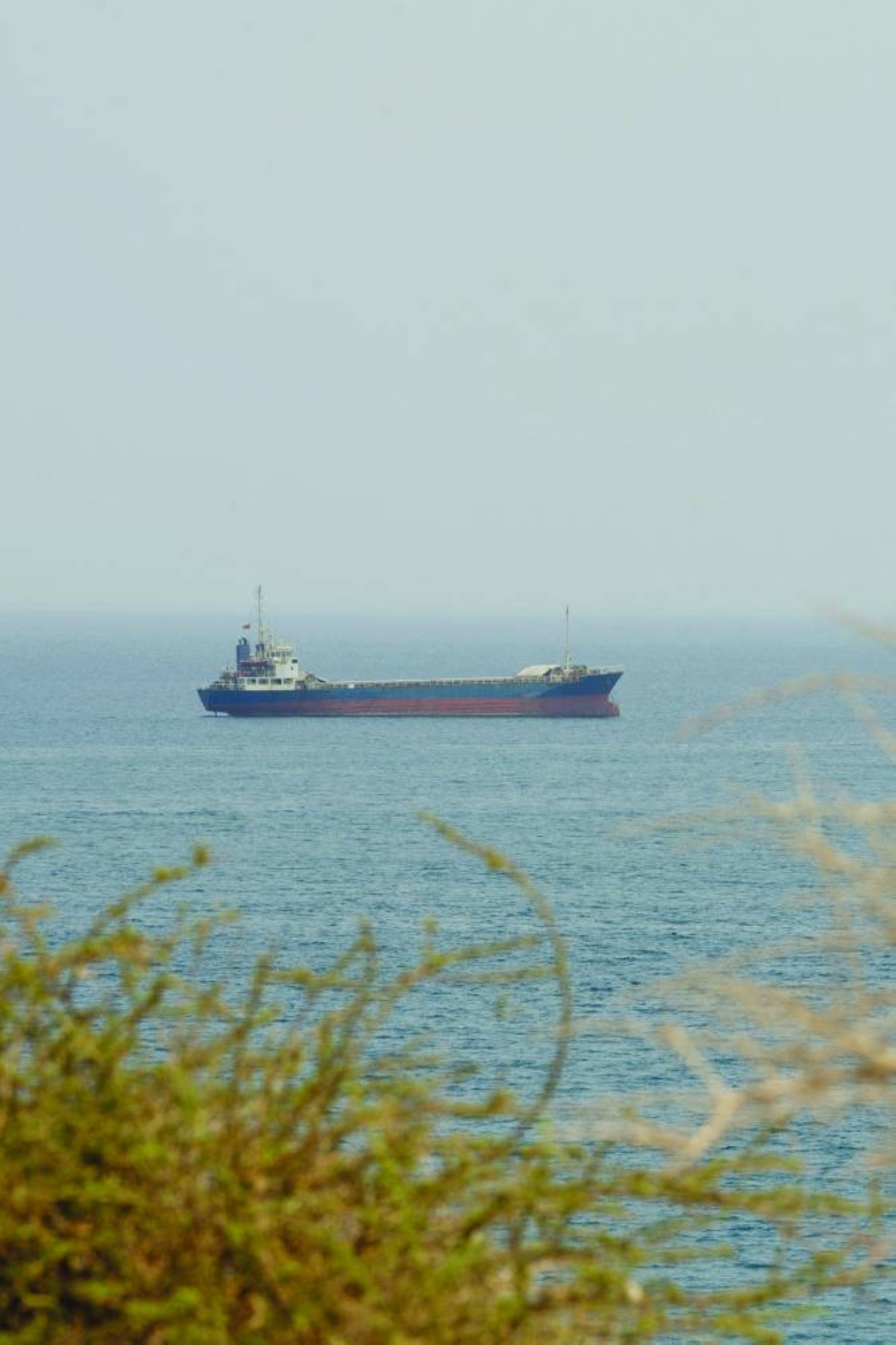
A vessel near the Strait of Hormuz, as seen from Musandam, Oman. (Reuters)
 Even before this year’s war between Iran and the US, the maritime domain was increasingly central to the long-term strategic planning of the GCC states. This is not solely due to the need to transport oil and gas exports by sea. In recent years, all six, to varying degrees, have also developed their non-energy maritime sectors to capitalize on their location at the heart of a maritime space that connects the Middle East, Africa and East Asia with Europe and the Americas.
They have built commercial fleets to complement their oil and gas tankers. They have established themselves as increasingly influential players in maritime sustainability programs and next generation maritime technologies. Most importantly, they have invested heavily in state-of-the-art port facilities and infrastructure at home and in commercial and dual-use ports in the wider region and beyond, including the integration of AI into operations to enhance port safety, efficiency and competitiveness.
At the same time, the Gulf states have traditionally lacked the hard power capabilities required to ensure the safety and security of maritime trade routes or to resolve maritime security challenges on their own. Yet even before the current war, GCC states were increasingly looking to become more self-reliant in providing for their own maritime security. This was evident during the Yemen War from 2015, when the Saudi-led coalition naval forces blockaded the Yemeni ports of Hodeidah and Al Salif. During that conflict, and since, the UAE has deployed warships in the waters between the Gulf and Africa where it has expanded greatly its presence, including building a base on the strategically important Yemeni island of Socotra.
In 2017, Saudi Arabia established both the General Authority for Military Industries (GAMI) and the Saudi Arabian Military Industries (SAMI). Since then, the kingdom has invested heavily in local production and has the goal of one hundred percent localization of naval shipbuilding and combat system integration by 2030. This endeavour – which is being supported by leading naval tech players from France, the US, South Korea and Spain – is taking place under programs like the Saudi Naval Expansion Program II (SNEP-II), a multi-billion-dollar initiative to modernize the Royal Saudi Naval Forces. This is focused on the procurement and local construction of advanced frigate-sized warships that carry sophisticated radar and combat systems.
The UAE, a global leader in civilian port acquisition and management, is also deeply committed to building-up its hard power naval assets. Much of this is done through the purchase of external systems and hardware. Between 2018 and 2024, the UAE ordered a frigate (2019), anti-ship missiles (2019) and anti-submarine torpedoes (2023) from France, naval weapons (2019, 2021) from Italy, a patrol craft (2019) from the Netherlands, a corvette (2021) from Singapore and an amphibious assault ship (2023) from Indonesia.
The UAE can also claim the most advanced indigenous naval industrial program of any GCC state. Abu Dhabi Ship Building (ADSB, part of EDGE Group) has produced offshore patrol vessels for the UAE Navy. It has also signed a contract with the Omani navy to supply it with high-speed assault boats, signaling the UAE’s ambitions to establish itself as an exporter as well as a producer of domestically produced naval assets.
ADSB and its parent company EDGE Group has also developed – at times in cooperation with overseas partners including Italy’s Fincantieri – a range of unmanned anti-mine and anti-submarine warfare (ASW) vessels as well as other types of underwater drones and submersibles. It has also unveiled the design plans for a sophisticated stealth corvette that will be built locally in the UAE.
Like Saudi Arabia and the UAE, Qatar has also embarked on a major naval expansion in recent years, primarily in cooperation with Italy’s Leonardo (anti-submarine warfare helicopters and a Naval Operations Center), and Fincantieri (corvettes) as well as anti-ship missiles with MDBA (the France-based European multinational defense company). More recently, in line with rising bilateral relations more generally, Turkiye has also become an increasingly important naval supplier for Qatar. Its ARES Shipyard has delivered a new fleet of over 30 patrol craft to Qatar’s Coast Guard. The Yonca-Onuk Shipyard was commissioned to produce high-speed missile boats and the Dearsan Shipyard won an order for fast-attack naval craft.
Like Qatar, Oman has, in recent years, also looked to Turkiye as a key supplier of naval tech. Most notably, in February 2025, Turkiye’s HAVELSAN was commissioned to modernize the command-and-control systems of the entire Omani fleet. This includes a contract to integrate and maintain the advanced Turkish combat management system for the next twenty years. For their part, Bahrain and Kuwait are both gradually enhancing coastal capabilities primarily through collaborations with external partners. This includes the development of surveillance systems to monitor coastal waters and to improve early warning capabilities.
The current war has underscored more than ever the need for Gulf states to be able to contribute to a functioning maritime order by building up their hard power naval capabilities. Regardless of what happens in the conflict between the US and Iran, the Gulf states will continue to face a variety of maritime safety and security threats going forward – not just the militarisation of disputes between states as is currently occurring but also piracy, terrorism, organised crime, smuggling and the trafficking of illicit goods. These states will also continue to view the maritime domain as a key component of their economic diversification programs and as an increasingly important opportunity to grow their interdependence with overseas partners and customers.
For all these reasons, and as part of their wide-ranging efforts to assert more security autonomy in an increasingly multicomplex world, going forward we can expect all the Gulf states to continue to prioritise the development of their naval fleets and indigenous naval industrial sectors.
- The writer is Professor of International Politics and Director of the Small States and Energy Studies Programs at Georgetown University in Qatar@RoryDavidMiller