admin
admin 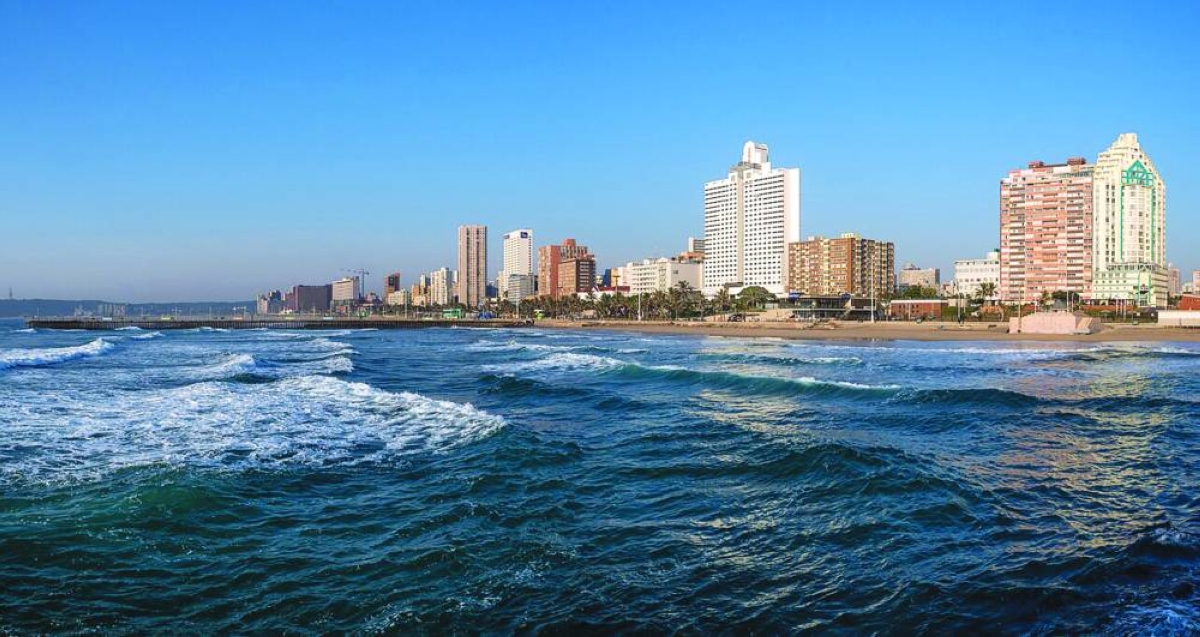
On August 17, South Africa will have the honour of hosting the 46th Ordinary Summit of Heads of State and Government of the Southern African Development Community (SADC) in Durban, KwaZulu-Natal. The summit will mark the commencement of South Africa’s tenure as Chair of SADC and provide an important opportunity for the region to reaffirm its commitment to economic transformation, regional integration and shared prosperity.
At a time when the global economy faces uncertainty, geopolitical tensions continue to challenge development pathways, and climate-related shocks are increasingly affecting vulnerable communities, Southern Africa has both an opportunity and a responsibility to chart a course towards sustainable growth.
Under the theme, ‘Resilient, sustainable and inclusive industrialisation through infrastructure development, agricultural and critical minerals transformation in pursuit of a just world’, South Africa’s chairship seeks to place development, resilience and human progress at the centre of regional cooperation. SADC remains one of Africa’s most significant regional blocs, comprising 16 member states ( Angola, Botswana, Comoros, Democratic Republic of Congo, Eswatini, Lesotho, Madagascar, Malawi, Mauritius, Mozambique, Namibia, Seychelles, South Africa, Tanzania, Zambia, and Zimbabwe) united by a common vision of peace, stability, economic growth and improved living standards for their citizens.
Since its establishment, the organisation has built a strong institutional and legal foundation through numerous protocols, policies and strategic frameworks that guide cooperation across political, economic and social spheres. The SADC region’s greatest strength lies in its people, its abundant natural resources and its strategic geographic position connecting African and global markets.
Yet significant challenges remain. While Southern Africa has maintained relative peace and stability, economic transformation has not advanced at the pace required to create sufficient jobs, reduce poverty and unlock the full potential of regional value chains. Manufacturing output remains below regional targets, intra-regional trade has room for expansion, and food insecurity continues to affect millions across the region.
Addressing these challenges requires moving beyond the export of raw materials and embracing a developmental model centred on industrialisation, value addition and regional production networks. This has become particularly important as the world transitions towards a greener economy, driving increased demand for critical minerals that are abundant across Southern Africa. The SADC region possesses significant reserves of minerals essential to modern industries, including those required for renewable energy technologies, electric vehicles and advanced manufacturing.
The question is no longer whether these resources will be utilised, but rather how they can be leveraged to generate greater value within Africa. Beneficiation and local processing must become integral components of our development agenda, creating jobs, transferring skills and building competitive industries that can participate effectively in global value chains.
Infrastructure development will be central to this transformation.
Efficient transport corridors, reliable energy systems, modern digital infrastructure and improved logistics networks are critical enablers of industrial growth and regional competitiveness. They also strengthen regional connectivity, facilitate trade and enhance economic opportunities for businesses and communities alike.
Sustainable growth
South Africa’s chairship will therefore place significant emphasis on accelerating infrastructure investments that support integration and unlock economic potential across borders. Agriculture represents another strategic pillar of our regional agenda. Southern Africa possesses vast agricultural potential, yet recurrent droughts, climate-related disruptions and structural constraints continue to impact food production.
Strengthening agricultural value chains, investing in resilience and expanding agro-processing industries can help improve food security while creating employment opportunities, particularly for young people and rural communities. It is essential to acknowledge that economic development is deeply interconnected with the principles of peace, security, and good governance. These elements are not isolated; rather, they are mutually reinforcing and critical for achieving sustainable growth.
A stable and peaceful environment is foundational, as it fosters the conditions necessary for investment and entrepreneurship to flourish. Additionally, security plays a key role in ensuring the safety of individuals and businesses, while strong governance provides the necessary institutional framework that encourages accountability, transparency, and equitable practices.
Thus, a comprehensive understanding of the relationships among these factors is vital for formulating effective strategies aimed at promoting long-term economic prosperity.
Sustainable investment and industrial growth flourish in environments characterised by stability, democratic governance and the rule of law. South Africa’s chairship will therefore continue to prioritise conflict prevention, mediation, democratic institutions and regional security cooperation.
Peace remains the foundation upon which lasting development is built. The success of SADC’s regional ambitions will ultimately depend on the participation of all stakeholders. Governments alone cannot drive industrialisation. The private sector, development finance institutions, academia, researchers and civil society all have indispensable roles to play. This is why the 2026 SADC Industrialisation Week, which South Africa hosted in Durban from July 27 to 31, assumed particular significance.
As the largest public-private engagement platform dedicated to industrial development in the SADC region, Industrialisation Week brought together policymakers, investors, entrepreneurs and development partners from across Africa and beyond. Discussions focused on strengthening regional value chains in agro-processing, pharmaceuticals, consumer goods and critical minerals beneficiation, while also advancing investment in key sectors such as energy, transport, logistics, water and information and communication technologies.
Importantly, the event sent a clear message that Southern Africa is open for business.
Exciting possibilities
Through the SADC Free Trade Area and the broader Tripartite Free Trade Area linking COMESA, EAC and SADC, investors can access an integrated market encompassing hundreds of millions of consumers. These frameworks create opportunities not only for trade expansion but also for investment partnerships that can accelerate industrial development and economic growth.
For countries in the Gulf region, including Qatar, this presents exciting possibilities. As Qatar continues to diversify its economy and deepen its engagement with Africa, opportunities exist for mutually beneficial partnerships in infrastructure, logistics, food security, renewable energy, mining beneficiation and advanced manufacturing.
Southern Africa offers significant investment prospects, while Gulf investment can contribute meaningfully to regional development and shared prosperity. South Africa approaches its SADC chairship with humility but also with determination. Our objective is not to introduce new frameworks, but to accelerate implementation of existing regional commitments and ensure that they deliver tangible benefits for ordinary citizens.
The ultimate measure of our success will be whether the lives of people across Southern Africa improve through greater economic opportunity, enhanced connectivity, increased food security and sustainable employment. The Durban Summit will be more than a diplomatic gathering.
It will be a call to action for governments, businesses and partners to work together in building a region that is resilient, industrialised, inclusive and globally competitive. Southern Africa has the resources, the talent and the vision. The task before us is to transform that potential into shared prosperity for current and future generations. South Africa stands ready to lead that collective effort.
- Ghulam Hoosein Asmal is the ambassador of South Africa to Qatar