admin
admin 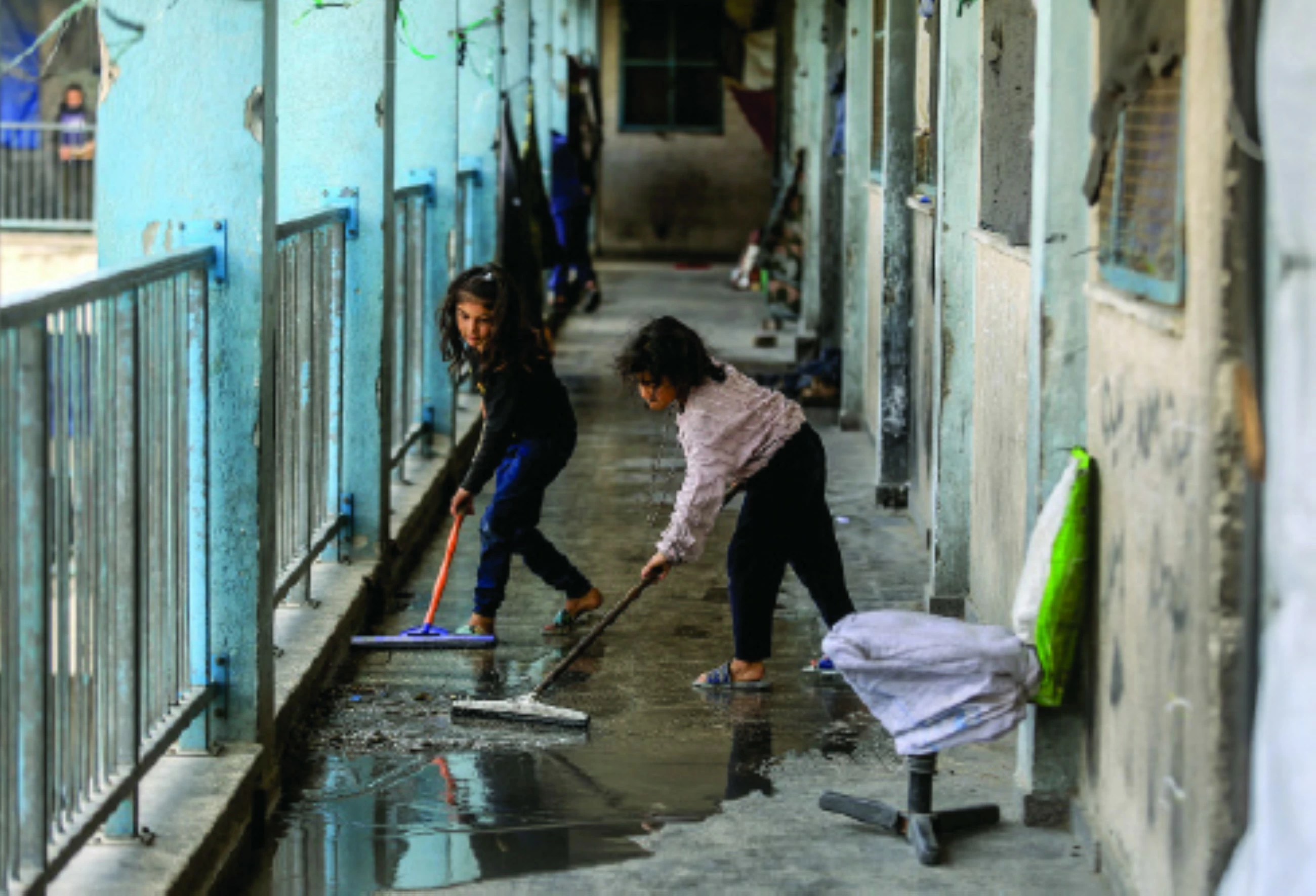
United Nations Secretary-General Antonio Guterres has called on donors to fill the $100 million gap in funding for the UN agency for Palestinian refugees, UNRWA, arguing that 2.5 to 3 million out of a total of 5.9 million registered refugees could lose existential support. On the basis of need, UNRWA provides refugees with rations, shelter, education, and health care in Jordan, Lebanon, Syria, and the Israel-occupied Gaza Strip, West Bank and East Jerusalem. Since Israel and the US launched their war on Iran and Hamas in Gaza, UNRWA has met fresh security and access challenges while providing 1.4 million Palestinians with potable water, medical consultations and treatments, basic learning, and waste collection to prevent rat and insect infestation and disease.
UNRWA’s income for 2026 should total $500 million for the core programme budget, down from $700-800 million in 2025 and 2024. This has compelled staff cuts, suspended programmes, and forced reliance on emergency flash appeals to sustain services. In 2025, pledges reached $878 million, but UNRWA received only $839 million, a pattern established in 2024. In addition to the latest shortfall in funding, Guterres said the agency’s operations were curtailed by Israeli restrictions and interference.
During Israel’s 1948 war of establishment, 750,000 Palestinians were driven from their towns, villages and lands and became refugees in the West Bank, and neighbouring countries. UNRWA was established by a General Assembly resolution in December 1949 to provide food, education and health care to the refugees. UNRWA’s mandate was intended to be temporary until Israel permitted them to return home and provided compensation for the losses of returnees and Palestinians choosing not to return. Having conquered 78 per cent of their homeland at the time of its emergence, Israel has refused to do both in compliance with General Assembly resolution 194.
Claiming the agency not Israel perpetuates the Palestinian refugee problem, Israel and its US ally have opposed and sought to defund UNRWA for decades, arguing that Palestinians should settle and seek naturalisation and normalisation in Jordan, Syria, and Lebanon. The expectation is this would eradicate the Palestinian identity which has survived and remained strong since before and after Israel’s creation. However, decades ago, former UNRWA director John Davis made the point that the agency has helped to stabilise the situation in this region and could not be abolished safely.
Although Jordan – which occupied East Jerusalem and the West Bank from 1948-1967 – has granted citizenship to resident Palestinians, Syria and Lebanon have not. In Syria, Palestinians maintain their identity and are permitted to work and access state services while in Lebanon they are not as this could upset the delicate communal balance between Lebanese Christians, Muslims, and Druze.
For many if not most Palestinians, education is UNRWA’s most important activity. A dignified Palestinian patriarch told me that of his seven children – six girls and one boy – who had attended UNRWA schools, five had BA degrees and two had MA degrees. “Education is the gateway to their future,” he said. During the 1950s, 1960s and 1970s, educated young Palestinians found employment in schools, administrations, and commercial enterprises in Saudi Arabia and the Gulf states. Their presence was essential as these countries had attained independence and launched economic and social development plans. My American University of Beirut classmate who studied in UNRWA schools, the late Ibrahim al-Abed settled in the Emirates, made a major contribution to the emergence of its media, and founded the news agency WAM in 1977. After Ibrahim occasionally fell asleep in our economics class, I asked him if he was all right. He replied that he worked at a restaurant at night and slept there after it closed as it was difficult for him to return home to the refugee camp where his family lived on the outskirts of Beirut.
On Oct. 28, 2024, the Israeli Knesset adopted two laws intended to secure its longstanding objective of dismantling UNRWA. The Israeli authorities claimed that a dozen UNRWA staff had taken part in the Oct. 7, 2023, attacks on southern Israel mounted by Hamas from Gaza. Israel accused hundreds of UNRWA employees of being members of Hamas and other militant groups and claimed that Hamas had infiltrated UNRWA facilities. An independent investigation found nine staff members may have been involved and fired them. Last month, UNRWA terminated 70 employees in Gaza “to mitigate safety and security risks for the refugees” at a time Israel continued to claim many of its staffers belonged to Hamas. The agency’s temporary head Christian Saunders responded in a statement that the firings took place with “immediate effect” and “were taken further to an assessment of the safety and security of UNRWA operations in Gaza.”
The statement, which did not mention Hamas, said “the dismissal of the staff is not part of a disciplinary process and does not constitute in any way a validation of the [Israeli] claims made against them.” He pointed out, “UNRWA has repeatedly asked the Israeli authorities to provide information and evidence to substantiate allegations against individual UNRWA staff members in Gaza, but has received no response to date.”
Photo: TNS