admin
admin 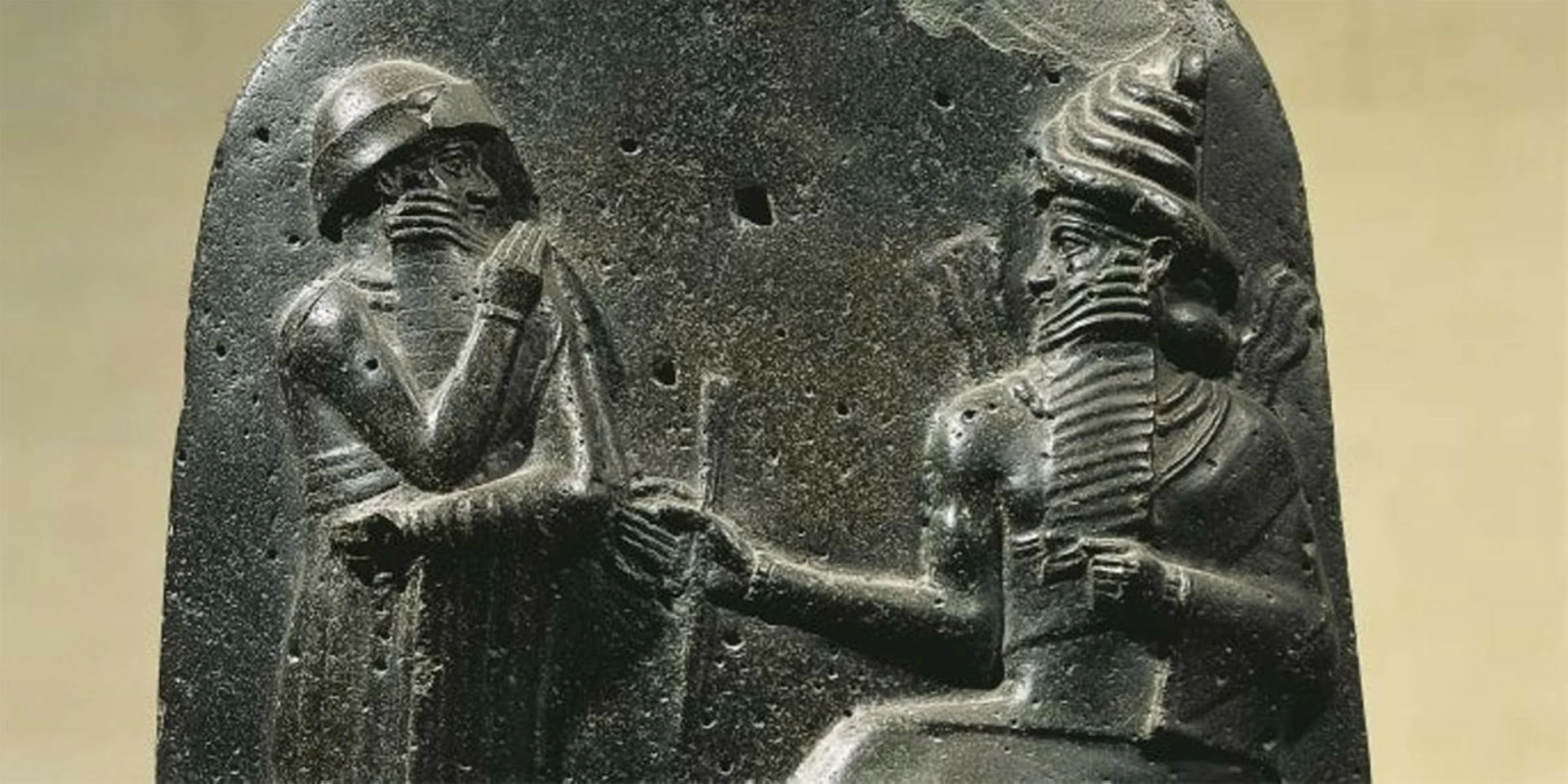
Western civilisation is deeply rooted in the ancient Middle East where agriculture, writing, law, medicine, philosophy, and three monotheistic faiths arose, transforming nomadic societies into populations settled on the land and in urban centres where Western thought emerged. A recent BBC broadcast revealed the relevance to our times of the nearly 3,800-year-old Code of Hammurabi, the sixth king of the first dynasty of the Babylonian empire. The code was inscribed on a basalt stele which was discovered by archaeologists in Iran in 1901 and translated from the Babylonian dialect of Akkadian. While re-examining the stele in the Louvre museum in Paris, historians and experts focused on the code’s dictates against corruption and provisions for the defence of vulnerable persons and populations. The code laid down the first known framework requiring evidence-gathering, proof of guilt, and transparency in judicial proceedings. Earlier Mesopotamian rulers used Sumerian for official decrees, but Hammurabi and the Babylonians adopted Akkadian for the code. This meant the laws were written in the everyday, spoken language of the region, making them accessible to literate citizens rather than experts. Copies were made during Hammurabi’s reign and afterwards and the text was adopted for scribal training at a time of mass illiteracy. Copies have been found dating from 1,000 years following the stele’s creation.
The stele is topped by an image of Hammurabi with Shamash, the Babylonian sun god and god of justice. This gave the code a mandate of heaven. Below the images are 4,130 lines of cuneiform text. Twenty per cent consists of a poetic prologue and epilogue while the rest comprises the 282 “laws” which Hammurabi enacted during his god-granted rule. As in our day, the code covers criminal law, family law, property law, and commercial law. The most well-known provision is “an eye for an eye and a tooth for a tooth.”
During his rule from 1792 to 1750 BC, Hammurabi extended Babylonian dominance over the Mesopotamian plain through military campaigns, diplomacy, and treachery. In his surviving letters, he expressed concern for the welfare of his subjects and sought to improve their lives by carrying out major construction projects. These included massive irrigation canals to control the waters of the Euphrates to prevent flooding and boost agricultural production. His bridge across the Euphrates River linked both banks and enabled the capital city, Babylon, to expand. He raised and expanded Babylon’s city walls to protect against regional invasions. The city served as the cultural and administrative capital of Babylon. Today its extensive ruins are located along the Euphrates about 88km south of Baghdad.
He decreed the cancellation of civilian debts to relieve impoverished citizens. He commissioned opulent temples and shrines to glorify Babylonian deities, particularly Babylon’s deity Marduk. He was a dictator who exerted tight control over his empire and his subjects while he was accessible to those lodging complaints or appeals. He centralised tax collection and standardised weights and measures. Babylonians had already developed a sophisticated numerical system, dividing hours into 60 minutes, minutes into 60 seconds, and circles into 360 degrees.
In 1902, German historian Friedrich Delitzsch gave a lecture in Berlin in which he contended controversially that the Old Testament Mosaic Laws were copied from the Code of Hammurabi. While this was dubbed “the earliest known code of law,” three earlier collections were found years later: the Code of Lipit-Ishtar in 1947, the Laws of Eshnunna in 1948, and the Code of Ur-Nammu in 1952. However, the Code of Hammurabi remains the longest, best-organised and most well-preserved legal text from this region.
Many of the provisions begin with the word “if” and give solutions to legal problems or prescribe retribution for false accusations and criminal actions. For instance, a surgeon should be paid in silver if he operates successfully on a patient, but corporal punishment should be inflicted if not successful. Or, if a soldier should be taken captive, escape, and return home he should take possession of his field and orchard while continuing his military service. The system of laws was not applied equally over different levels of society: fines were higher for the rich than for the poor. The laws also recognised the importance of the intentions of a defendant and the display of the code on public stelae was meant to increase access to justice. Those who could not read the law, could consult scribes or literate people.
The timing and context of the codes made them politically powerful. Since the laws were applied differently according to a person’s social class, nobles received greater protection than commoners and enslaved people. This stratification reflected the power dynamic of the society and showed how law was used not just to govern but also to preserve the existing social order.
While Hammurabi’s ancient codes contributed considerably to Western civilisation, Arab scholars also transferred Greek philosophic texts to Europe by translating into Arabic commentaries by Aristotle and Plato, elaborated on them, then translated them into Latin. This launched the 12th-century Renaissance and laid the intellectual groundwork for modern Western philosophy.