admin
admin 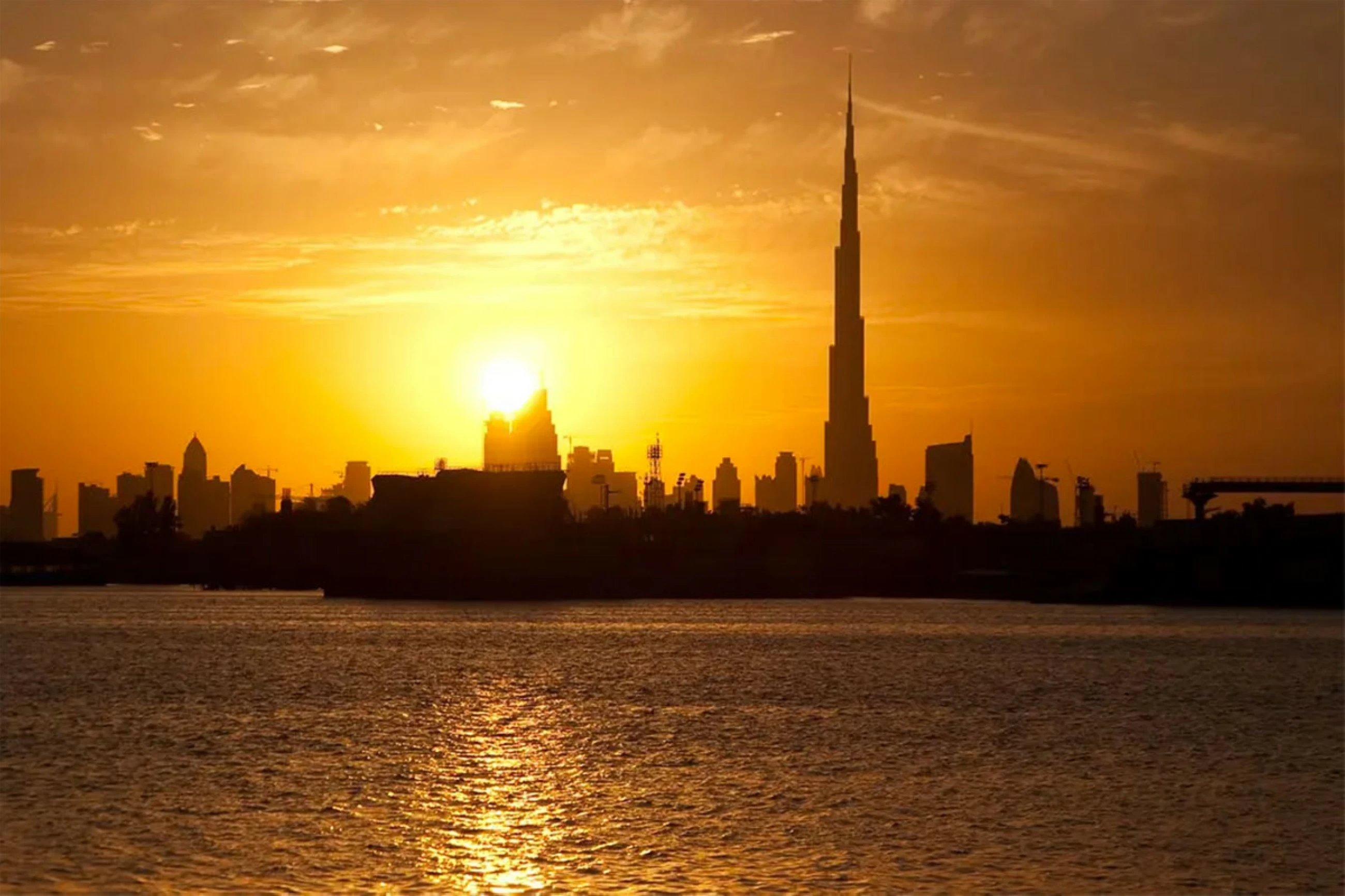
The United Arab Emirates currently faces severe challenges from global warming, caused primarily by unseasonable heat, rising sea levels, and uncertain rain. Daily temperatures rise to 36-39 degrees Celsius, but they do not drop below 30 degrees overnight when the sun has gone down. Although well prepared with air-conditioning and locally engineered architecture, the region’s warming is more rapid than the global average, threatening vital infrastructure and water security.
The UAE is joined by Europe and the United States where heatwaves have dominated June and July. Europe is the world’s fastest-warming continent where climate has increased the frequency and intensity of heatwaves, droughts and wildfires, and creating conditions for unexpected devastating storms. The heatwave was expected to peak on Thursday, July 23rd, before gradually moving eastwards during the weekend. Abnormally high temperatures and dry conditions are predicted to continue into August.
France reported more than 5,700 excess deaths between June 17th and July 2nd, an excess mortality rate of 36 per cent. Earlier this month, flames devastated about 10 per cent of the UNESCO-listed World Heritage Site Fontainebleau Forest outside Paris in a rare fire so far north.
Meanwhile, Spain battled one of the country’s largest ever wildfires, which has torched about 32,000 hectares north of Madrid, forcing the evacuation of 1,200 people from 34 small villages in the lightly populated area and confinement orders in another 14. More than 100,000 hectares had burned during this short period, the same as the annual average over the past decade.
This followed two weeks after a deadly blaze which devastated a small expatriate community in southern Spain, killing 13 people including several foreigners. High winds and 40˚C-plus temperatures have fed blazes in Greece, North Macedonia and Sicily.
In North Africa, camels are succumbing to high temperatures. Known as the reliable “ships of the desert,” camels suffer from heat stress which causes disease, a low rate of reproduction, and foot blisters from scorching sand. These factors produce a higher mortality rate. Since temperatures have soared to 50-plus, this has become a major concern in North Africa and the Horn of Africa, which is home to about 80 per cent of the world’s camels. The wind, which used to bring cool air, now carries heat, denying the temperate winds which enabled camels to survive and on which herders depend for their livelihood.
In an article on Al-Jazeera’s website, Wole Hammond and Ellen Davies argued that African communities have dealt for generations with soaring temperatures, uncertain rainfall, drought, lack of water, and poor public infrastructure. These communities have been compelled to operate without adequate funds, insurance coverage or recovery facilities available to wealthy countries. Consequently, Africa “has developed behavioural, architectural, technological and institutional approaches” that offer practical lessons for warming Europe.
Global heatwaves result from human-caused climate change, changing natural climate patterns, and certain atmospheric conditions. Burning fossil fuels and cutting down forests release greenhouse gases that trap heat in the atmosphere, creating “heat domes”: persistent high-pressure systems that hold hot air over a region, forcing the air to sink and compress and blocking clouds and cool weather while keeping hot air near the ground.
Heat combined with tinder-dry conditions, lightning, downed power lines, careless human behaviour, and arsonists cause wildfires which kill hundreds of people each year. While the number of fatalities may seem catastrophic, the death toll is far lower than from floods, which kill thousands, and from heatwaves, which kill hundreds of thousands. When smoke from wildfires is considered, the human cost rises rapidly. Air pollution produced by wildfires kills1.5 million people a year. Furthermore, toxic fumes in smoke can travel from country to country and continent to continent: from Australia to South America and Canada to Europe as well as the US.
Conditions for wildfires are expected to grow worse due to global heating. By the end of the century, optimists argue the total burned area could increase by 40 per cent even when pollution has been reduced considerably. However, if not, the overall scorched area is set to double.
Like doctors dealing with multiple patients with various ailments, firefighters can be forced to choose between homes, businesses, manufacturing facilities, schools, and other public locations. In July, French firefighters were forced to tackle simultaneously 250-300 fires in different places. Fire brigades depend on employing personnel, equipment, and aircraft between regions but when multiple large fires burn in widely spaced locations flexibility is seriously reduced.
The staffing situation becomes critical as there are fewer trained personnel available due in part to budget cuts. Marshalling resources delays or prevents firefighters from reaching blazes so that fires become out of control in and around villages, towns and cities as well as in moorland and forests.
To increase flexibility, the London fire brigade bought four specialised vehicles which can access locations that normal fire engines cannot. Local authorities and landowners have been encouraged to introduce natural fire breaks by cutting grass near homes and businesses, ploughing empty land to eliminate flammable materials, and clearing dead leaves from gutters of buildings.
The chief current and long-term contributors to climate change are China, the US, and India, which together account for over 40 per cent of global greenhouse gas emissions. The Biden administration encouraged investment in non-polluting projects, set a target for zero emissions by 2050, and rejoined international agreements exited by Donald Trump during his first term. During his second, climate change deniers have renewed their efforts to undo Joe Biden’s positive efforts.