admin
admin 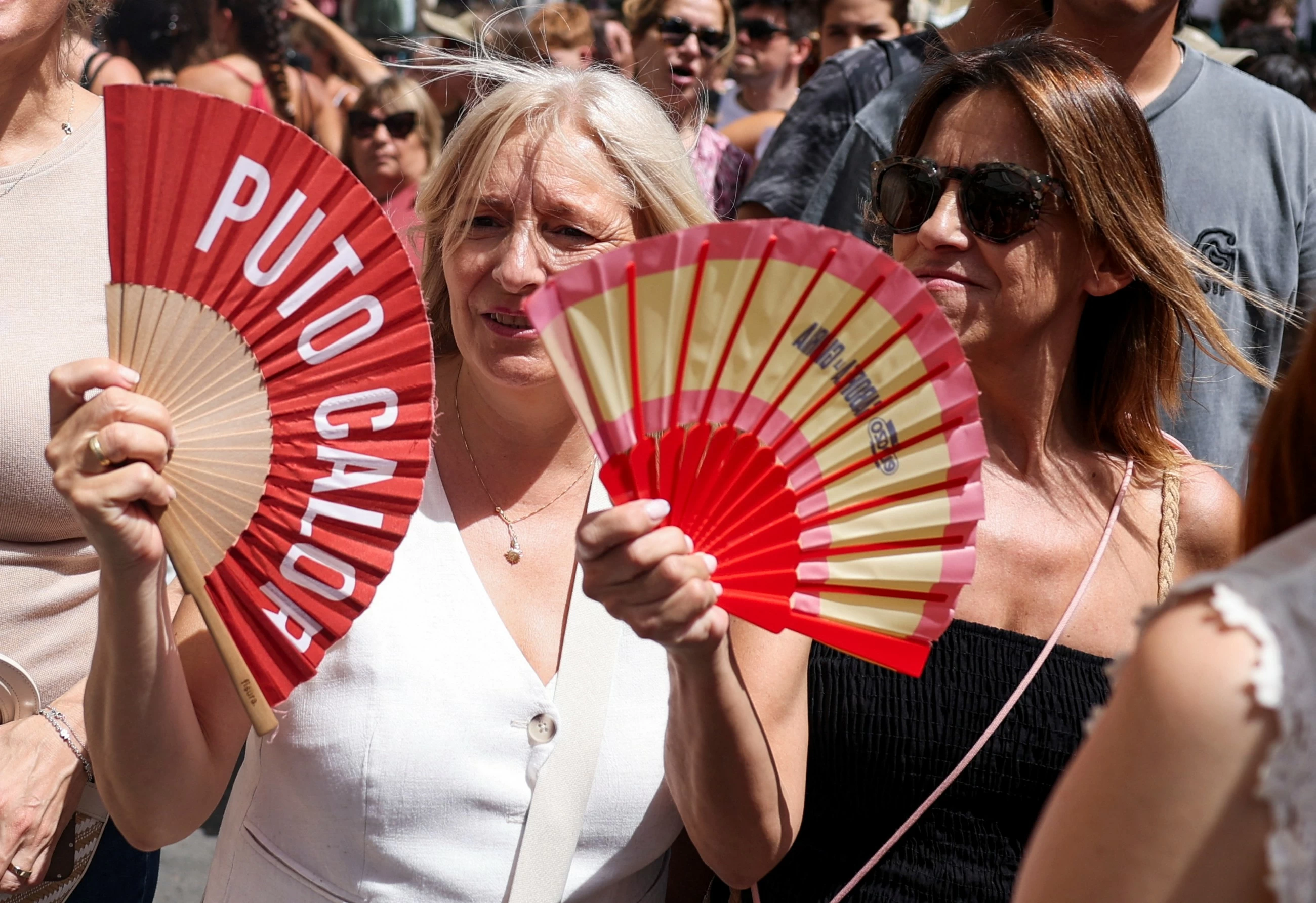
France, Italy, Germany and much of Europe are facing extremely high summer temperatures, touching 38-40˚C. There is a possibility that it would go up to 41˚C. What can be seen as normal summer temperatures in the tropics become extreme in the temperate latitudes of Europe. Mayors of cities like Paris are drawing out plans to help citizens cope with the stressful weather.
In Paris, parks have been ordered to remain open through the night. In Rome visitors unable to face the day temperatures have been taking shelter in the cool underground of the ancient Roman structure of the Coliseum, and elsewhere in the city people are seen sitting out in the shade of porticoes. People were also seen splashing their faces with water from the fountains in the city.
The high temperatures are a health hazard to the people though there is as yet no system to monitor the impact of high temperatures on people. In some of the Asian countries like India, there are instances of heatwave deaths. What officials in European countries acknowledge is that the high temperatures affect economic productivity in the medium term.
There is a deep awareness of the negative impact of climate change among Europe’s policymakers but not enough preparation is seen to help people cope with the rising heat. It is now seen that in 2003 and in 2019, the continent had experienced extreme heat conditions. Experts are of the view that extreme summer temperatures are likely to recur more often than before.
Buildings in Europe have been built with the winter temperatures in mind. They are closed interiors and no provision is made for windows and ventilation. The urban planners in the European countries would have to reckon with the changing weather patterns in constructing the buildings.
There is much debate and discussion about climate change in terms of policy and the finances needed to tackle it at the global level. Perhaps what is needed is specific responses at the local level, in cities and towns.
Most tourists flock to Europe in summer because it is considered a pleasant time compared to the wintry cold. If the summer temperatures keep rising, it could affect the tourist footfall. City officials would need to rethink a strategy to meet the heat challenge, creating more interiors with air-conditioning facilities. Generally, European homes and public buildings are equipped with the central heating systems. Now they will have to look to fix air-conditioners in these places.
The macro level response of curbing carbon emissions to keep the rise in temperature below the 1.5˚C above the pre-industrial era of 1850, and the upper limit is getting breached time and again, is a target for all countries. Each country would have to evolve a policy at the local level to meet the exigencies of extreme heat.
The fact that extreme summer tempreatures are not recurring annually but periodically pushes national and local authorities into states of complacency. They seem to wake up to the danger when it appears on the horizon every few years.
What is needed is a permanent response system which kicks into action whenever the weather lurches to the extreme end of the spectrum. Each town and city will have to find local solutions to face the vagaries of the weather. What is certain is that there is climate change.
There is no point in denying that. It is visible and perceptible all around us. The extreme summer temperatures in Europe are a reminder, if one was needed, that climate change is here. There are global responses at a certain level. But there is a pressing need for local solutions.