admin
admin 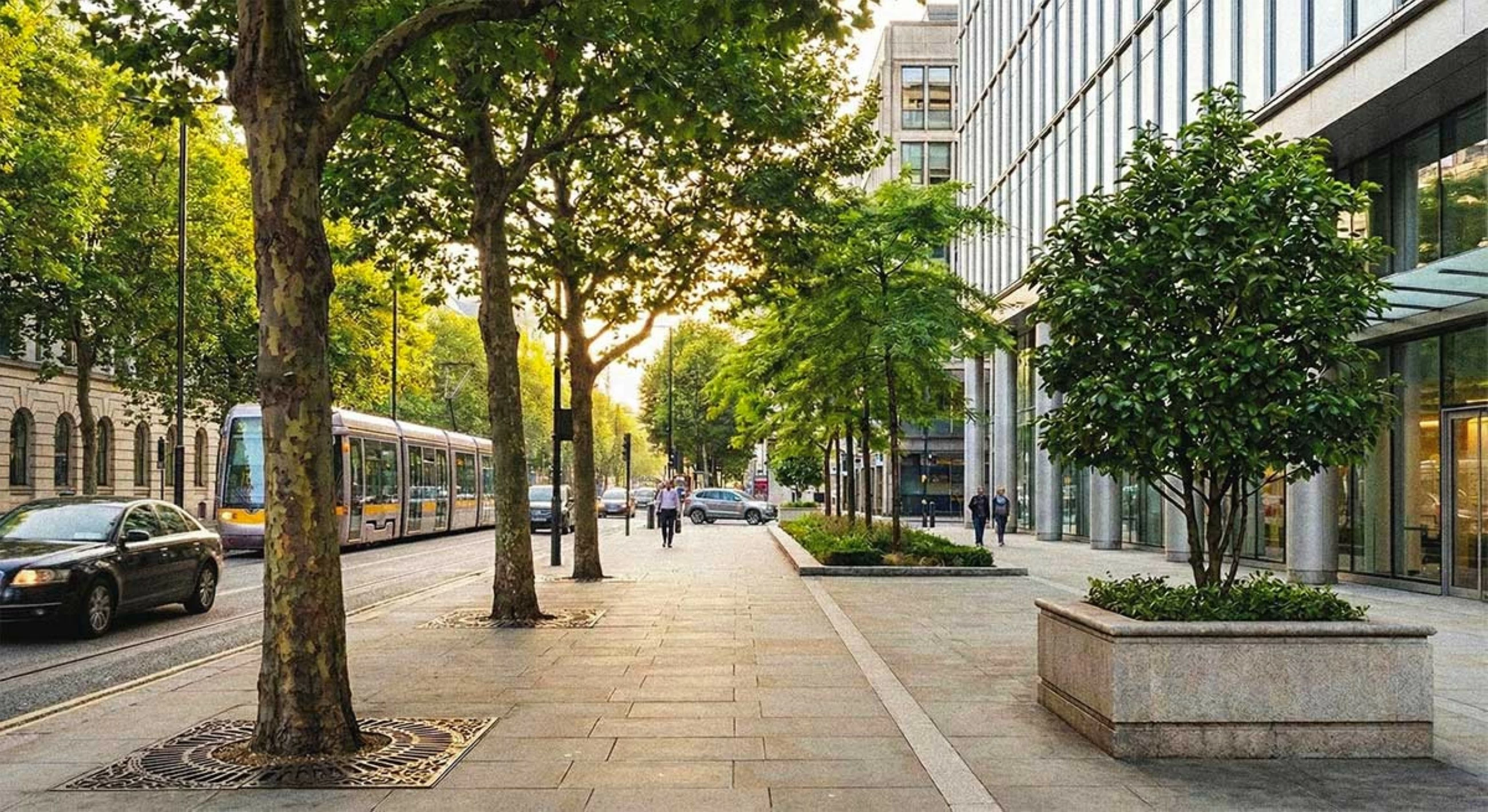
Simply increasing tree cover does not always make cities cooler. In humid urban areas, dense tree canopies can even raise the Heat Index by trapping moisture. This is according to a new study published in Nature Communications and highlighted by a Mongabay-India (MI) report.
Titled ‘Dense canopies reverse the cooling effect of urban greening in humid cities’, the study’s abstract points out that urban greening is widely promoted as an adaptation strategy to cope with rising heat stress; however, its effectiveness remains uneven, especially across rapidly warming cities of the Global South. Vegetation can cool urban environments but can also intensify humidity and thermal discomfort, raising questions about when green adaptation succeeds or backfires. The study assesses how vegetation structure and function influence the Heat Index (HI), a humidity-adjusted measure of perceived heat, across 138 Indian cities spanning diverse climates. Findings indicate that green adaptation can shift from a cooling asset to a humid-heat liability under some conditions, underscoring the need for climate-responsive and equitable design strategies in the Global South.
The cooling benefits of urban trees depend on a combination of canopy structure, photosynthetic activity, local climate, urban density and airflow, rather than tree cover alone, says the MI report. It adds that researchers argue that urban greening must be climate-smart, prioritising the right tree species, the right locations and thoughtful planting design over simply planting more trees.
Instead of looking only at air temperature or land surface temperature, the study focused on the HI which is the “feels like” temperature that combines heat and humidity because humans respond to both temperature and moisture in the air. The study finds that while urban trees generally help cool cities by providing shade, reducing incoming solar radiation, and lowering surface temperatures, these benefits vary in different cities.
In humid cities, dense tree canopies can inadvertently increase heat stress by boosting evapotranspiration, which releases more moisture into the air. Where buildings are closely packed and airflow is restricted, this extra humidity can raise the HI even if the air itself becomes cooler. On the other hand, semi-arid cities experience more consistent cooling because the drier atmosphere can absorb additional moisture without becoming uncomfortably humid.
The introduction to the study highlights that cities worldwide are warming faster than their rural surroundings, exposing growing populations to dangerous heat stress that threatens health, productivity, and livability. The combination of urbanization and global warming has intensified air temperatures, while local moisture and limited ventilation often keep humidity high, amplifying the perceived heat beyond what dry bulb temperature alone indicates and reshaping the nature of urban heat exposure. This combined burden of temperature and moisture now defines the lived experience of climate risk in cities.
Prolonged exposure to high HI has been linked to increased mortality, illness, and economic losses, particularly in South and Southeast Asia, where dense populations and humid monsoonal climates converge. The resulting exposure patterns vary substantially across climates, city forms, and vegetation regimes, making context-specific adaptation increasingly important.
The introduction adds that urban greening is widely promoted as a natural solution to mitigate heat, but its performance varies markedly between climates and city forms. On hot days, the air near the vegetation can be cooler, but still feel hotter if the added moisture is trapped by limited airflow.
This paradox means that greening can help or harm depending on the background climate, local ventilation, and which facet of vegetation is modified. Policies often assume that any additional greenery will reduce heat, but the reported outcomes differ with neighbourhood context, modelling choices, and scale of intervention.
In practice, cities make choices about trees, parks, and reflective surfaces with incomplete guidance on when shading and roughness dominate and when transpiration-driven humidity erodes comfort gains. Understanding when and where greening improves human comfort is therefore essential for designing effective and equitable adaptation strategies.
The MI report points out that the findings suggest that urban greening strategies need to move beyond simply increasing tree cover. Instead, urban planners should consider the choice of tree species, how and where they are planted, the need to maintain airflow around tree canopies, and the city’s climate when designing effective and equitable heat adaptation measures.