admin
admin Yemen’s Houthis said they attacked an oil facility on Sunday in southwestern Saudi Arabia, the latest attack by the Iranian-backed rebels on the kingdom. Meanwhile, Iran has made new demands about the reopening of the Strait of Hormuz, and the Pentagon is pressing the US defence industry to accelerate production of weapons.
Yahya Saree, a military spokesperson for the Houthis, said they targeted an Aramco refinery in the city of Jazan with a drone. The attack was in response to Saudi drones’ breaching
Yemen’s airspace over the provinces of Hajjah and Saada, he said.
Early on Sunday, the Saudi Energy Ministry reported a fire at a facility belonging to the Aramco refinery without casualties. The ministry said the fire was extinguished but it didn’t describe its cause.
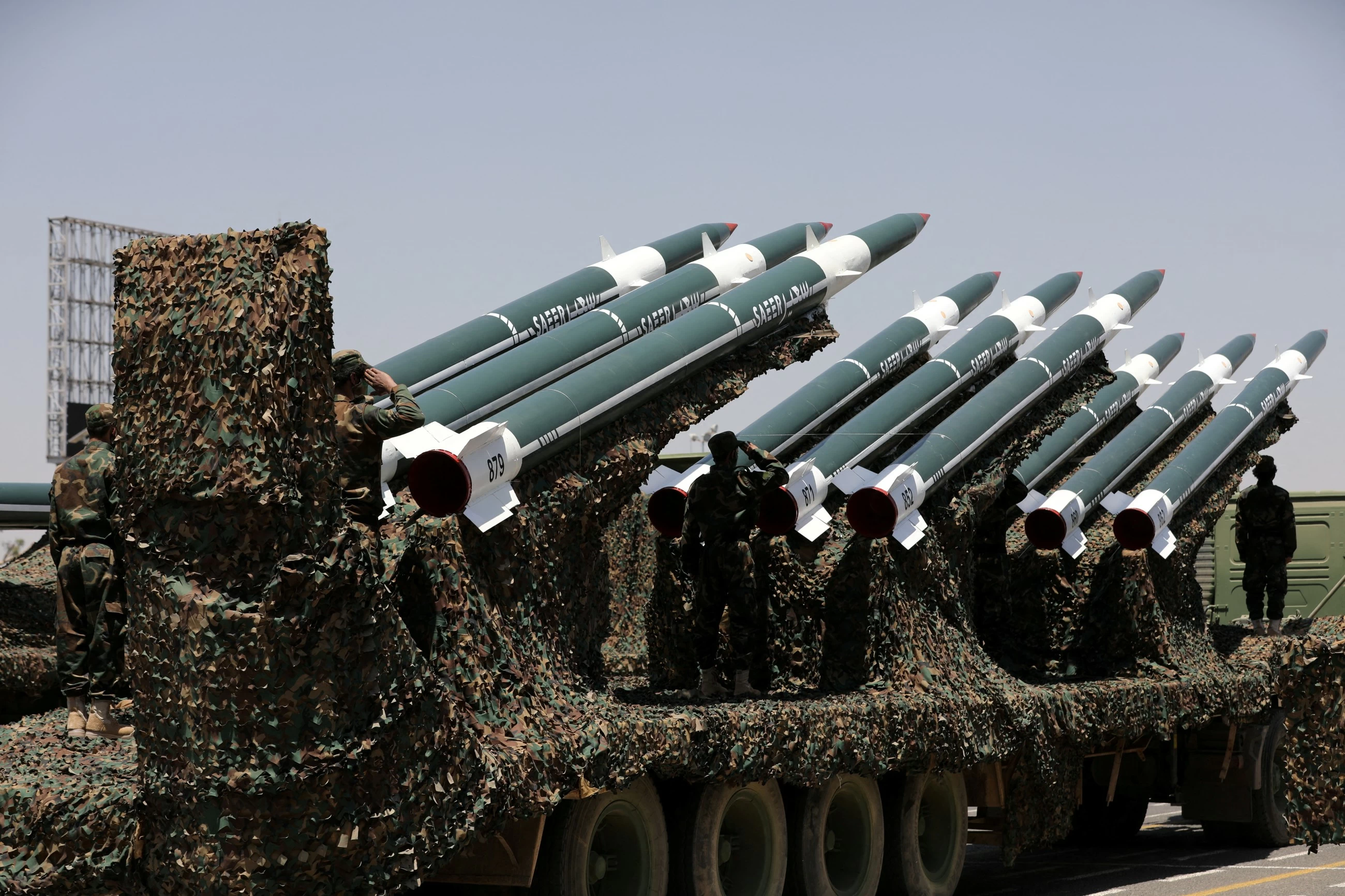
Missiles are displayed during a military parade held by the Houthis to mark the anniversary of their takeover in Sanaa, File/Reuters
Sunday’s Houthi attack is the latest in a series of missile and drone attacks that targeted Saudi Arabia and its shipping in the Red Sea. The escalation threatens to reignite Yemen’s civil war more than four years after a 2022 truce stopped major fighting in the impoverished Arab country.
Iran’s powerful Supreme National Security Council said the Strait of Hormuz will not open until the United States “corrects its behavior,” issuing new demands that could shake up talks on a deal to manage the waterway.
Iran’s state broadcaster published the statement by the council’s secretary, Mohammad Bagher Zolghadr, who is also a commander in the powerful Revolutionary Guard.
The United States must never threaten Iran again, the statement said, and must permanently end the war with Iran and its armed allies in the region. The US must lift the naval blockade of Iranian ports and withdraw its military from the area. It must “completely compensate” Iran for war damage, lift sanctions and “unconditionally” release frozen assets.
The US, which has wanted an acceptable deal first on the strait before ending the blockade, had no immediate comment. According to the interim deal signed in June, a schedule to end sanctions and plan on compensation would be part of the final deal, and negotiations would address frozen assets.
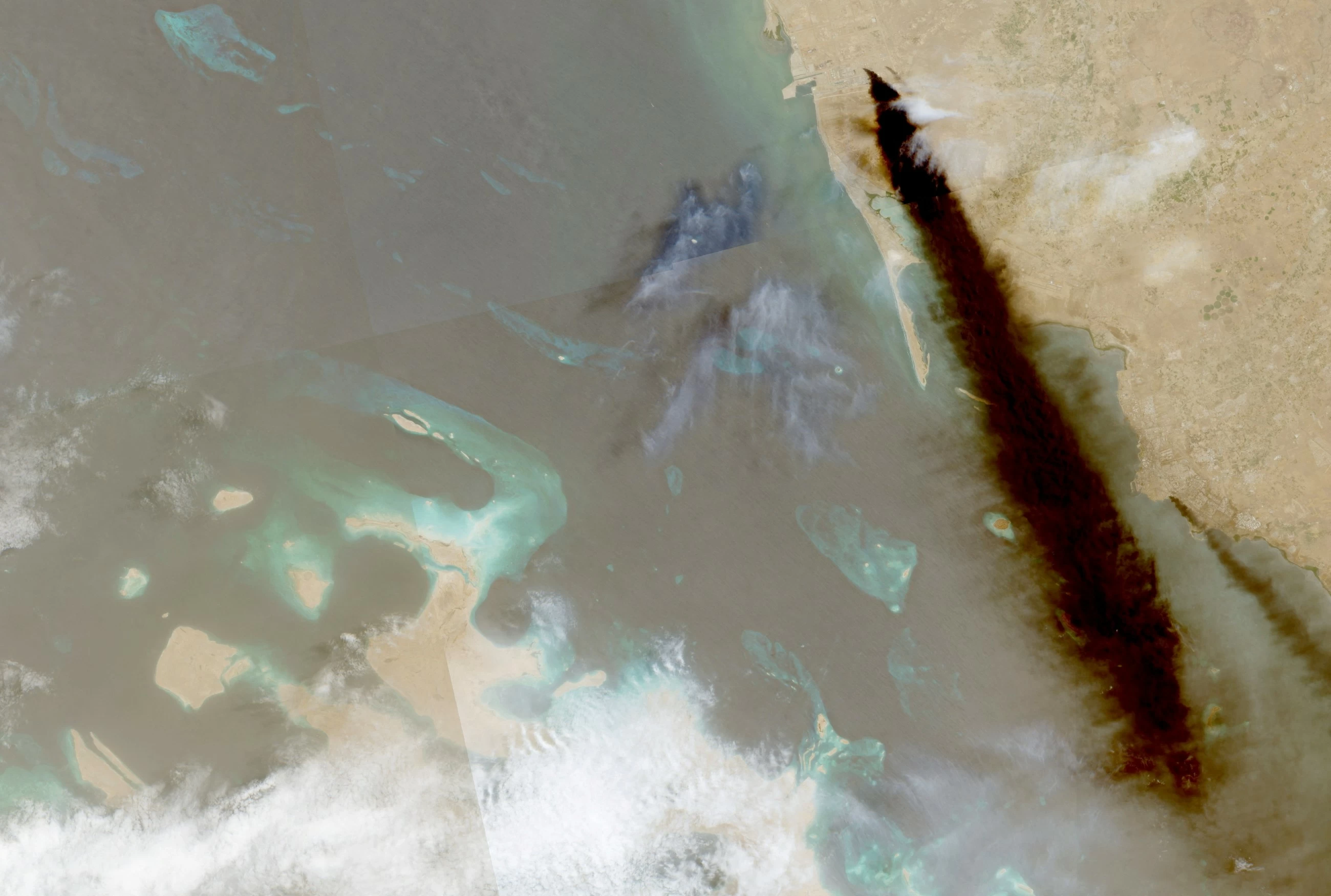
A composite satellite image shows trail of smoke rising from an oil facility, in Jizan, Jazan province, Saudi Arabia. File/Reuters
Pentagon spokesman Sean Parnell said in a statement Saturday that the department was actively focused on boosting munitions acquisitions to provide “the weapons our warfighters need at the pace the threat demands.”
The war with Iran has used up more of the US military’s already diminished stockpiles of advanced missile interceptors, says a new analysis from the Center for Strategic and International Studies, a Washington think tank.
Associated Press