
 admin
admin The Sharjah Archaeology Authority has announced the addition of the Coastal Fortified Network of South Eastern Arabia in the Emirate of Sharjah to UNESCO’s Tentative List for World Heritage, marking a new milestone that further strengthens the emirate’s presence on the global cultural heritage map while supporting its ongoing efforts to document, protect and preserve sites of historical and human significance for future generations.
Prepared by the Authority’s Sharjah World Heritage Office, the Tentative List submission file is founded on the historical and cultural significance of the serial property, which comprises three interconnected cultural heritage components: Dibba Al-Hisn, Khor Fakkan and Khor Kalba.
Together, these sites formed, across successive historical periods, a strategic maritime corridor along the Oman Sea. They preserve archaeological and architectural evidence of the vital role played by coastal communities in maritime trade, navigation, defence and coastal administration, while illustrating the transformation of maritime authority and commercial exchange across the western Indian Ocean.
The network documents a history spanning more than two millennia, beginning with its ports’ integration into Indian Ocean trade networks, continuing through the era of the Kingdom of Hormuz and the Portuguese presence during the sixteenth and seventeenth centuries, and culminating in the local administration of these sites under Al Qasimi authority as part of a regional system governing navigation, trade and coastal management.
Sharjah strengthens its presence on the global heritage map
The new addition brings another important serial property onto the United Arab Emirates’ Tentative List for World Heritage, bringing the total number of UAE sites on the list to 16, including six in the Emirate of Sharjah. This reflects the range of the emirate’s scientific and institutional efforts to showcase its archaeological and cultural significance internationally while preparing its heritage sites in accordance with World Heritage standards and requirements.

Sheikha Bodour Al Qasimi, UNESCO Goodwill Ambassador for Education and Book Culture and Ambassador of the Faya World Heritage Property.
Sheikha Bodour Bint Sultan Al Qasimi, UNESCO Goodwill Ambassador for Education and Book Culture and Ambassador of the Faya World Heritage Property, said: “The inclusion of six sites from the Emirate of Sharjah among the UAE’s 16 sites on UNESCO’s Tentative List reflects an integrated cultural project that views heritage not merely as evidence of the past, but as knowledge and a responsibility that extends into the future. Every site we study, document and preserve adds a new chapter to our understanding of the history of this land, while offering the world a broader window into the region’s role in trade, connectivity and cultural exchange across the centuries. This standing is rooted in the long-term vision of His Highness Sheikh Dr Sultan Bin Mohammed Al Qasimi, Supreme Council Member and Ruler of Sharjah, who established scientific research and heritage conservation as integral pillars of the emirate’s cultural project.”
Her Highness added: “The significance of this achievement goes beyond the number of sites included on the Tentative List. It lies in building a sustainable system capable of studying, protecting and presenting our heritage to the world according to the highest scientific standards, ensuring that these sites remain part of humanity’s shared memory and that their knowledge and value are passed on to future generations.”
Dibba Al-Hisn: A testament to thousands of years of settlement and exchange
Dibba Al-Hisn forms the northern component of the proposed serial property, occupying a strategic location on Dibba Bay at the southern edge of the Musandam Peninsula. Archaeological excavations at Dibba Fort have revealed successive archaeological layers documenting settlement from the Neolithic period through to the twentieth century, alongside the remains of fortifications and structures associated with production, trade and coastal life. These include glass-working workshops where imported Roman and Mesopotamian ingots were re-melted to produce local vessels, twelve madābis used for date processing, pearl-processing installations, and a nineteenth-century fish-salting facility. These discoveries demonstrate Dibba’s historical significance as an inhabited and productive settlement that was deeply connected to long-distance trade networks.
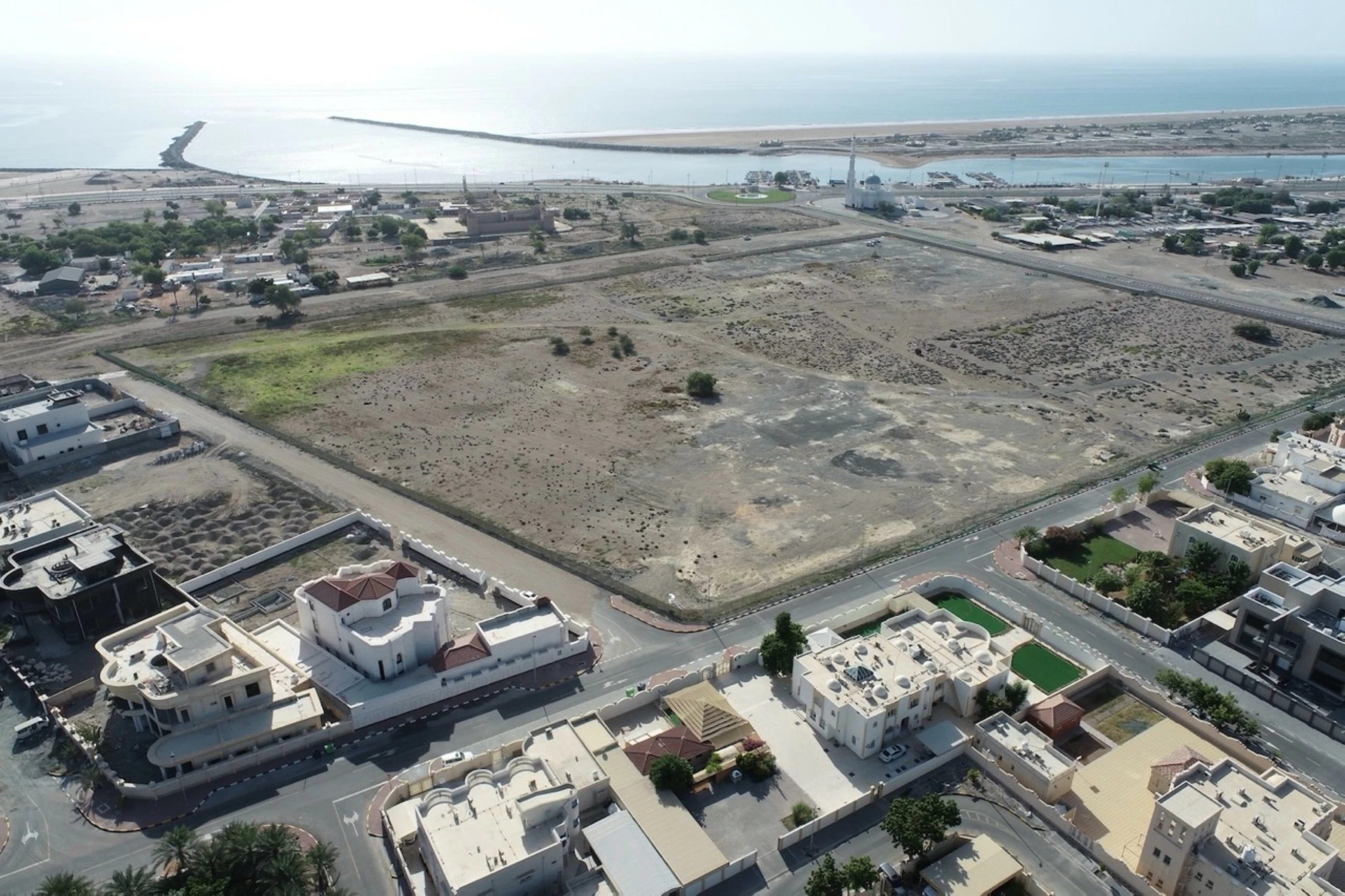
Kalba Creek. Kalba was a strategic provisioning, trading and defensive point along the Sea of Oman.
Historical and archaeological evidence further points to Dibba’s early importance within Indian Ocean exchange networks and its role in trade routes linking the Arabian Peninsula with Persia, India, East Africa and the Mediterranean, before later becoming one of the principal components of the fortified coastal system reorganised under Al Qasimi authority.
Khor Fakkan… A fortified maritime gateway on the Oman Sea
The central component of the serial property, Khor Fakkan occupies one of the most naturally sheltered harbours along the eastern coast of the Arabian Peninsula, where the Hajar Mountains descend directly to the sea to create a protected bay that played a pivotal role in maritime navigation and trade.

Archaeological investigations have identified two principal fortified sites in Khor Fakkan: the East Fort and the West Fort, together with settlement layers and stone-built houses dating to the fifteenth and early sixteenth centuries, as well as a surviving section of the historic town wall extending for more than 155 metres. The West Fort preserves three superimposed phases of fortification that reflect successive periods of maritime control. The earliest is distinguished by its triangular plan and is interpreted as a seventeenth-century Portuguese fortification. This was followed by a rectangular structure dating to the latter half of the eighteenth century, corresponding to a period of Arab consolidation, and subsequently by a square fort with a round tower dating to the nineteenth century under Al Qasimi rule. Together, these successive phases document Khor Fakkan’s changing strategic role and its development into a principal harbour under Al Qasimi rule, linking maritime traffic along the Oman Sea with inland routes across the Hajar Mountains.
Khor Kalba: A Fortified Coastal Site Documenting Shifts in Maritime Power along the Gulf of Oman
Khor Kalba represents the southern component of the serial property and is situated on a sandy coastal plain at the mouth of Kalba Creek, within a broader coastal environment comprising the creek, shallow water bodies, and surrounding mangrove forests.
Historical sources indicate that Kalba was a fortified settlement belonging to the Kingdom of Hormuz before it was taken by the Portuguese in 1624. The Portuguese subsequently constructed a rammed-earth fortification on stone foundations, designed to support navigation, trade, and maritime supply operations.
Archaeological excavations have revealed the remains of this fortification, which consists of a quadrangular enclosure wall, two circular corner towers, and a main entrance on the southern side.
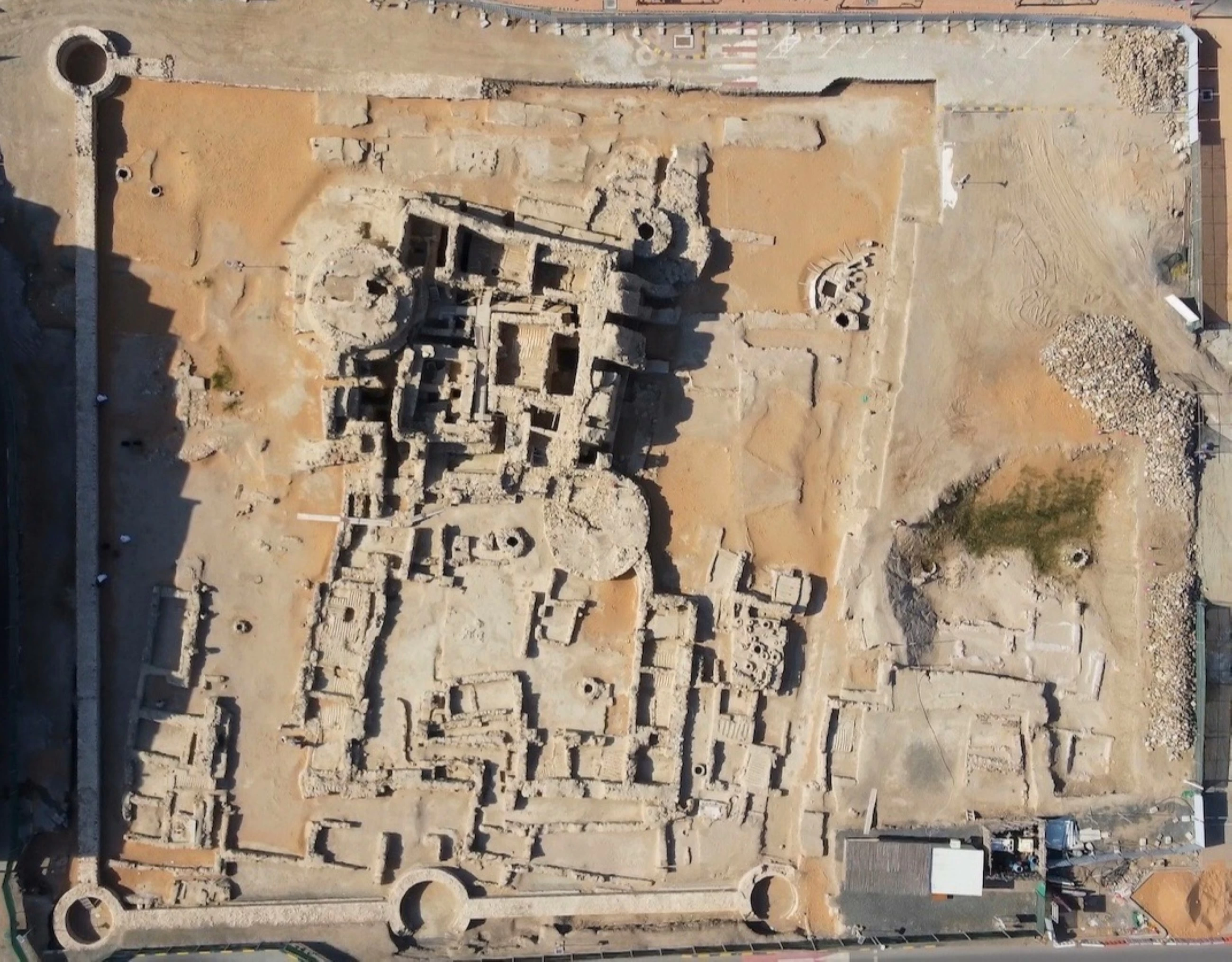
The archaeological site of Dibba Al-Hisn, the northern component of Sharjah’s Coastal Fortified Network of South Eastern Arabia.
Following the decline of Portuguese influence, Kalba became part of the maritime sphere of the Al Qawasim and played a pivotal role in supply operations, defence, and the regulation of maritime movement along the coast of the Gulf of Oman.
Despite the transformations witnessed across the centuries, all three sites continue to preserve key evidence of this shared history, from fortifications and settlement remains to harbours and the surrounding coastal landscapes. The survival of these features, and the relationships between them, provides a clear understanding of the network’s historical development, demonstrating how ports, defensive structures and coastal communities operated together as a single integrated system along the Oman Sea.
Strengthening the scientific foundation for future World Heritage nominations
For his part, Eisa Yousif, Director-General of the Sharjah Archaeology Authority, said: “This inclusion marks an important milestone in a long journey of research, documentation and protection, and reflects the value of the Authority’s sustained efforts to study and preserve the emirate’s sites according to clear scientific principles. The next phase will focus on intensifying archaeological research and studies related to these sites, deepening scientific understanding of their components and historical significance, and establishing a more comprehensive body of knowledge that can inform a future international nomination process, while safeguarding the historical value of these sites and ensuring their sustainable protection for future generations.”
He added: “Through the Sharjah World Heritage Office, the Sharjah Archaeology Authority continues to study and assess the emirate’s cultural and heritage sites, while strengthening the scientific research and archaeological documentation associated with them in line with the scientific standards and requirements of the World Heritage Convention. These studies form the foundation upon which future international nominations may be developed, by providing the evidence and scientific data needed to demonstrate the historical and cultural significance of Sharjah’s sites, enriching the record of human heritage and strengthening the emirate’s presence on the global World Heritage map, while ensuring the sustainable management and protection of these sites for future generations.”
An ongoing journey towards World Heritage
The new inscription builds on Sharjah’s long-standing commitment to archaeological research, heritage conservation and bringing its historic sites to international attention. This journey culminated in July 2025 with the inscription of the Faya Palaeolandscape on the UNESCO World Heritage List, making it the second site in the United Arab Emirates at the time to receive this global recognition, after the Cultural Sites of Al Ain (Hafit, Hili, Bidaa Bint Saud and Oases Areas), which were inscribed in 2011.



