admin
admin Early earnings reports reveal how travel companies – from hotel chains to cruise operators – have relied on resilient business and leisure demand from Americans, coupled with a short-term boost from the World Cup, to tide over the drag from the war in the Middle East.
The conflict has raised fuel costs and disrupted international travel. But earnings reports on Tuesday suggest many consumers, particularly higher-income travellers, are undaunted by the economic uncertainty and higher travel costs.
“JetBlue, Hilton, and Royal Caribbean all highlighted continued strength in higher-value products, suggesting that many travellers are still prioritising experiences even as they become more selective with discretionary spending,” said Brian Rooney, founder of travel advisory firm GetCruiseInfo.com.
“These results reinforce that we’re still seeing a K-shaped travel economy. Higher-income travellers continue booking premium experiences, while value-conscious travellers are adjusting when and how they travel rather than giving up vacations altogether.”
Hilton Worldwide Holdings raised its forecast for full-year room revenue growth, fuelled by robust demand from its luxury properties and expected third-quarter benefits from the World Cup, even as the US hotel operator’s room revenue from its Middle East and Africa region plummeted 29.5% from the year-ago period.
The World Cup boosted earnings in the quarter, but the biggest turnaround was from mid-scale hotels that benefited from business and group travel demand, Hilton CEO Christopher Nassetta said in an earnings call.
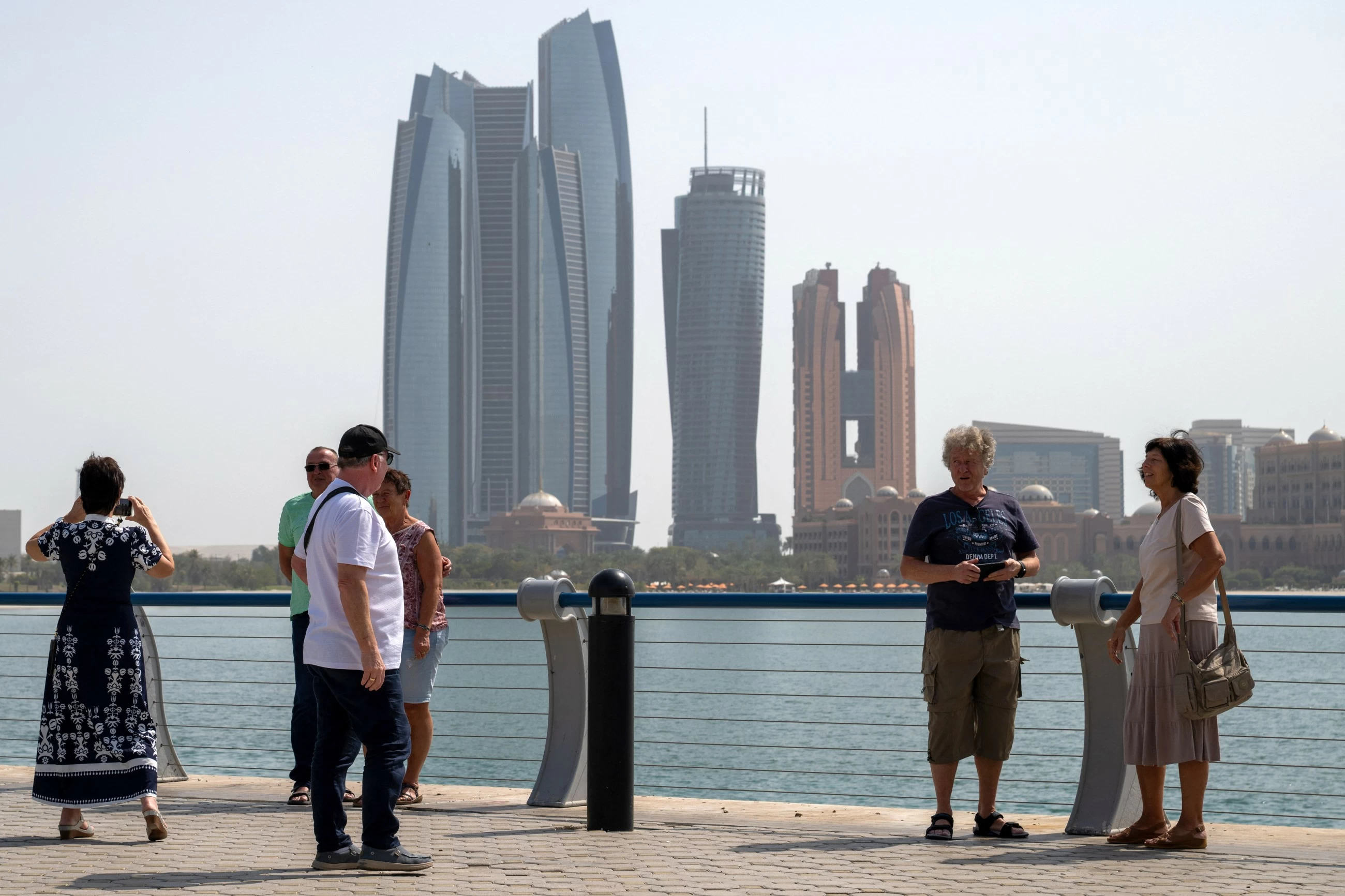
Tourists stand near Etihad Towers in Abu Dhabi. File/Agence France-Presse
The soccer event contributed about 1.7% growth in RevPAR (room revenue) in the second quarter for Hilton.
Cruise operator Royal Caribbean raised its annual profit forecast, but trimmed its revenue growth outlook as it factored in a modest hit to bookings from prolonged geopolitical tensions.
The Miami, Florida-based company reported a 27% rise in quarterly fuel expenses to $355 million from a year earlier, but slightly reduced its full-year fuel expense forecast to about $1.34 billion from $1.35 billion.
“Consumer demand for our vacation experiences is strong, and guests continue to demonstrate a desire to spend on memorable experiences with us,” said Naftali Holtz, Royal Caribbean’s finance chief.
Recovering fuel costs
The hit from the war in Iran has been most acutely reflected on airlines and although most US carriers have recovered in the second quarter close to half of the additional fuel costs since the start of the war, their visibility on profits remains mixed. Airfares, meanwhile, are expected to stay high.
JetBlue Airways said stronger demand and higher fares helped it recover more of its fuel costs than expected, even as the New York-based airline’s quarterly fuel bill ballooned nearly 81%, or roughly $407 million.
“Nobody loves fare increases, but at the end of the day, it’s the business where we have to cover our costs,” JetBlue President Marty St. George said during an earnings call.
The airline said its visibility into the back half of the year has improved as volatile fuel prices stemming from the war have moderated.
“Luxury has always been the most resilient sector and travel is the most resilient sector of luxury. It’s hard to tell your household that you’re cutting or skipping the family holiday,” said Adam Sebba, CEO of London-based luxury travel company, The Luminaire.
Reuters