admin
admin 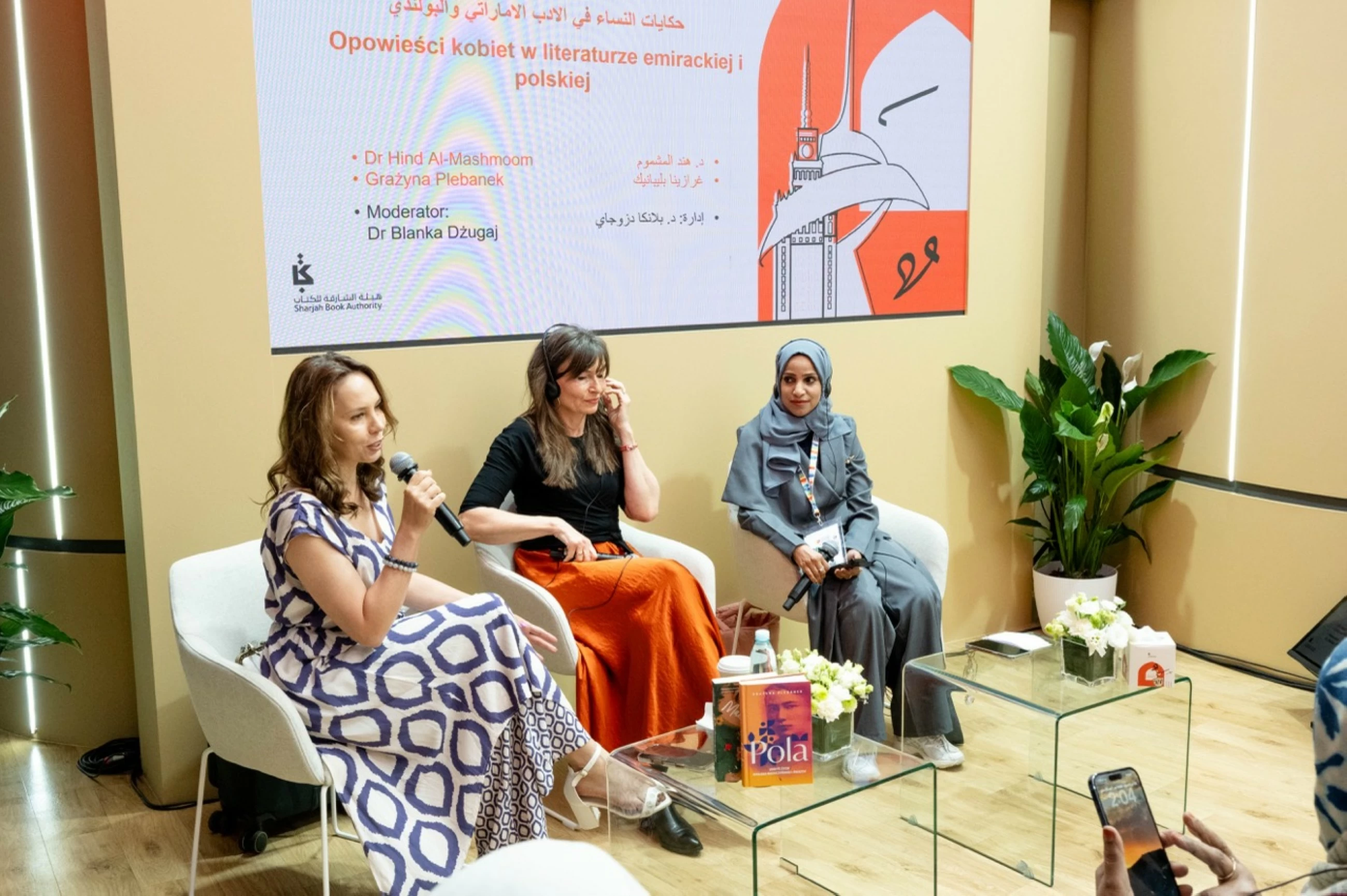
Questions of identity, authorship and the changing portrayal of women in literature took centre stage at the Warsaw International Book Fair 2026, as Emirati writer and critic Dr Hind Al Mashmoom and Polish author Grażyna Plebanek examined how female voices and experiences have evolved across literary traditions in the UAE and Poland.
Held as part of Sharjah’s Guest of Honour programme, the session, titled “Women’s Stories in Emirati and Polish Literature”, brought together perspectives from two distinct cultural contexts while revealing shared literary concerns around representation, agency and the role of storytelling in reflecting social change.
Al Mashmoom challenged the distinction often drawn between “women’s writing” and “men’s writing”, arguing that literature should be assessed not through the gender of its author but through the questions it raises and the human and artistic horizons it opens.
She noted that Emirati women’s writing has undergone significant transformation over recent decades, evolving beyond questions of visibility and self-expression to engage with broader themes of identity, belonging, family, society and the human condition. Contemporary Emirati literature, she explained, reflects a growing diversity of perspectives shaped by individual experiences and creative approaches.
Discussing the portrayal of women in Emirati fiction, Al Mashmoom observed that female characters frequently appear as mothers, wives and sisters, reflecting their place within social and family structures. At the same time, she noted that contemporary Emirati literature increasingly presents women as complex and multidimensional figures whose experiences extend beyond traditional roles.
She also challenged narrow interpretations of female strength, arguing that strength should not be measured solely through resistance or confrontation. Rather, it can be found in self-awareness, self-expression and the ability to shape one’s place within society.
For her part, Plebanek echoed the view that literature transcends gender categories, arguing that the strongest connection between writers lies in their shared commitment to storytelling rather than in questions of identity.
Drawing on her experience of living and writing across different cultures and languages, Plebanek described literature as a meeting place for human experiences rather than a space defined by fixed identities or rigid classifications.
She observed that women writers in Europe and Poland have spent more than a century seeking identities beyond the traditional roles historically assigned to them, with contemporary literature offering greater freedom for women to articulate their own experiences, aspirations and perspectives.
Plebanek also pointed to a broader shift taking place within European literary circles, noting a growing openness to perspectives beyond traditional Eurocentric frameworks. Contemporary literature, she argued, is increasingly shaped by curiosity about other cultures and a willingness to engage in dialogue across cultural boundaries.
The discussion reflected a broader theme running throughout Sharjah’s Guest of Honour programme at the Warsaw International Book Fair: the role of literature as a platform for cultural exchange and shared reflection on questions that resonate across societies, regardless of geography, language or tradition.