admin
admin 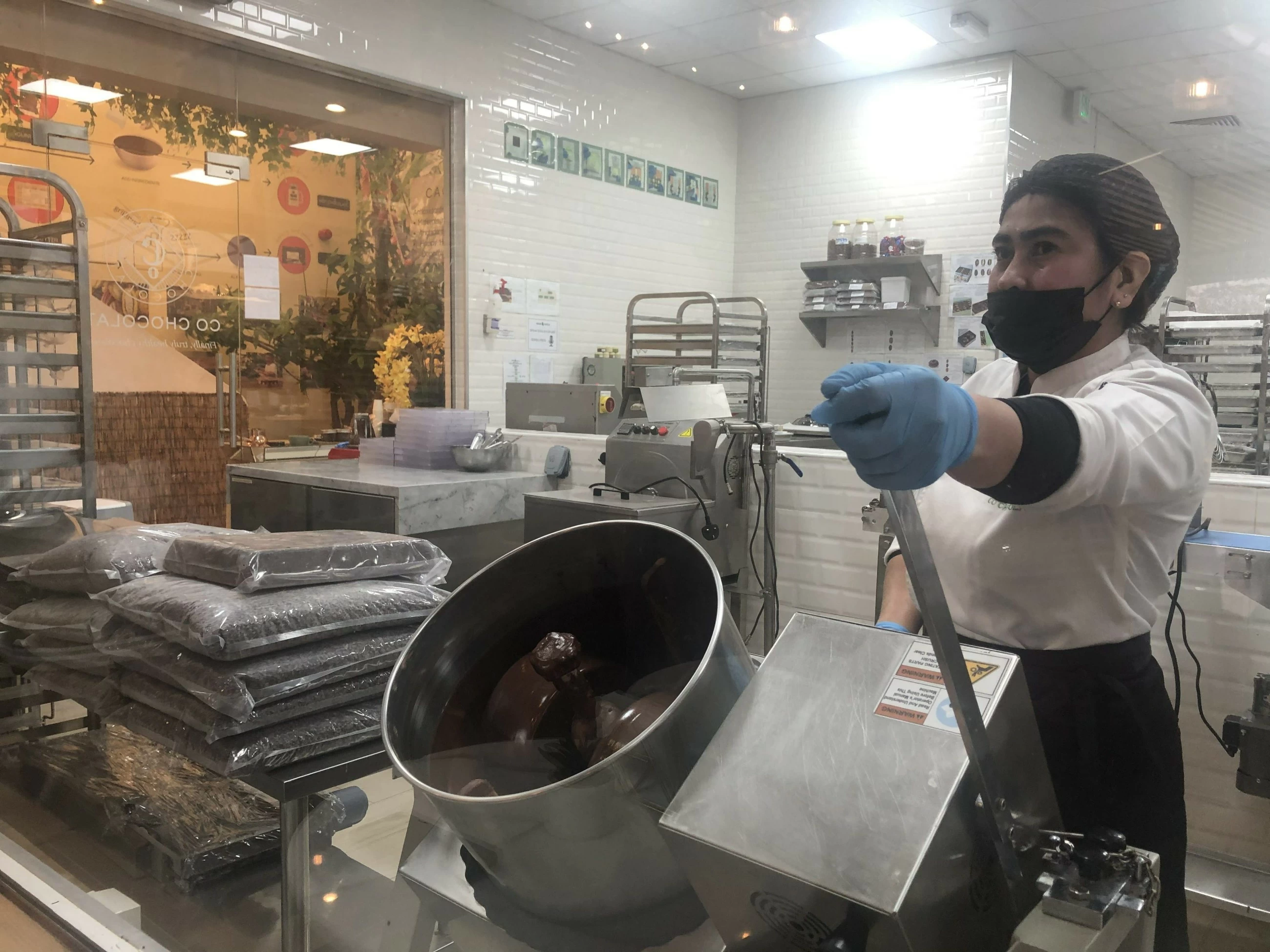
While food is basic and gastronomy unites, the fuel are the countless inter-generational agricultural clans the world over.
Over in the UAE and thousands of miles away from the archipelagic Philippines, 200 farmers and their families have helped placed tonnes of “guilt-free” cacao nibs into quality hand-crafted healthy chocolate and healthy recipes across the Middle East.
That is centuries after Spanish conquistadores, via the 1565-1815 Manila-Acapulco Galleon Trade, introduced Mexican cacao to be planted in the present-day Visayan islands.
Last week, concerning April being the “Filipino Food Month,” Manila-born Co-Chocolat founders/co-owners Iman Suguitan (chief executive officer) and her sister Luchie (chocolatier/chief operating officer), were asked for updates by Gulf Today from their 2023 inauguration of their first café and factory in the country.
Again, stressed was the vital contribution of the cacao farmers and their families which are not only concentrated now in the Northern Mindanao province of Agusan del Norte but spread across the second largest island in the Philippines.
It was in 2016 when the Suguitans formed the OFW Para sa Magsasaka (Overseas Filipino Workers for Farmers) of cacao farmers relative to their mother’s diabetic condition.
Since then, and aside from the chocolate café and factory in Dubai as well as a restaurant in Abu Dhabi, the Philippine-based farmers have built their own post-harvest facility and factory.
A check had revealed that the social enterprise had been registered at the Philippines’ Securities and Exchange Commission.
Philippine cacao-based chocolates and nibs have jumped from the UAE to Oman and Jordan while through a 2019-Philippine Government project, these were introduced in Europe by way of the Co-Chocolat participation at the “Salon de Chocolat” fair in France.
The sisters stressed that it is the farmers and the “guilt-free, homegrown, clean cacao” which are the “heroes” while “commitment to help and commitment to the community” are the Filipino values that have served as the cogwheels. “They are happy that their cacao is going places. It was a touching experience when we brought home for them the chocolates we have made here in Dubai. They said that those were their sikwates. Let us give sustainability a chance,” said Iman.
From the “Kakaw: Chocolate Factory Tour and Chocolate-Making Workshop,” Consul General in Dubai and the Northern Emirates Ambrosio Brian Enciso III told Gulf Today: “Cuisine has long been a part of cultural diplomacy. But a focused observance through the ‘Filipino Food Month’ gives us an opportunity to present Filipino food in a more intentional, sustained, and visible manner. It allows us to move beyond familiarity and toward deeper appreciation by highlighting the history, regional diversity, agricultural roots, and contemporary creativity behind Filipino cuisine.”
For the consul general who fashioned the simplest yet most eye-catching two 10-minute-baked chocolate squares from the workshop, his “favourite Fiipino dishes are Kare-Kare (Peanut Beef/Poultry/Seafood Stew) and Pancit Palabok (Garnished Rice Noodles with Shrimp Sauce): “Kare-Kare reflects the richness and depth of Filipino cuisine, with its distinct flavours and sense of warmth and familiarity.”
“Pancit Palabok, for its part, is both vibrant and comforting, and it captures the layered character of Filipino food through its texture, colour, and savory complexity,” he explained.
Sharjah resident Dinu S, married to Paulyn, picks Ginataang Alimango (Mud Crabs in Coconut Milk), a to-die-for dish by “my Filipina darling wife, who prepares it with love and care. Its creamy coconut richness wrapped around tender crabs feels like home – warm, comforting, and deeply nostalgic.”
University professor in Dubai Judhi fancies Balbacua (Beef Collagen-Rich Stew) in Clear Soup rather than the curry-flavoured: “Unfortunately, not many places offer this here. So my alternative is Bulalo (Beef Shank/Marrow Soup). These are similar to the Sop Buntut (Oxtail Soup) I love from Central Java, Indonesia where I am from, the main ingredients of which are beef and lamb feet.”
The “Buwan ng Kalutong Pilipino,” or “Filipino Food Month” began in 2018 via Presidential Proclamation No. 469 of then President Rodrigo Duterte.
Principal player was the 2015-established non-profit Philippine Culinary Heritage Movement that also considered food sufficiency and the crucial indispensable support for the main people — the farmers and their families — in the agricultural sector.