admin
admin 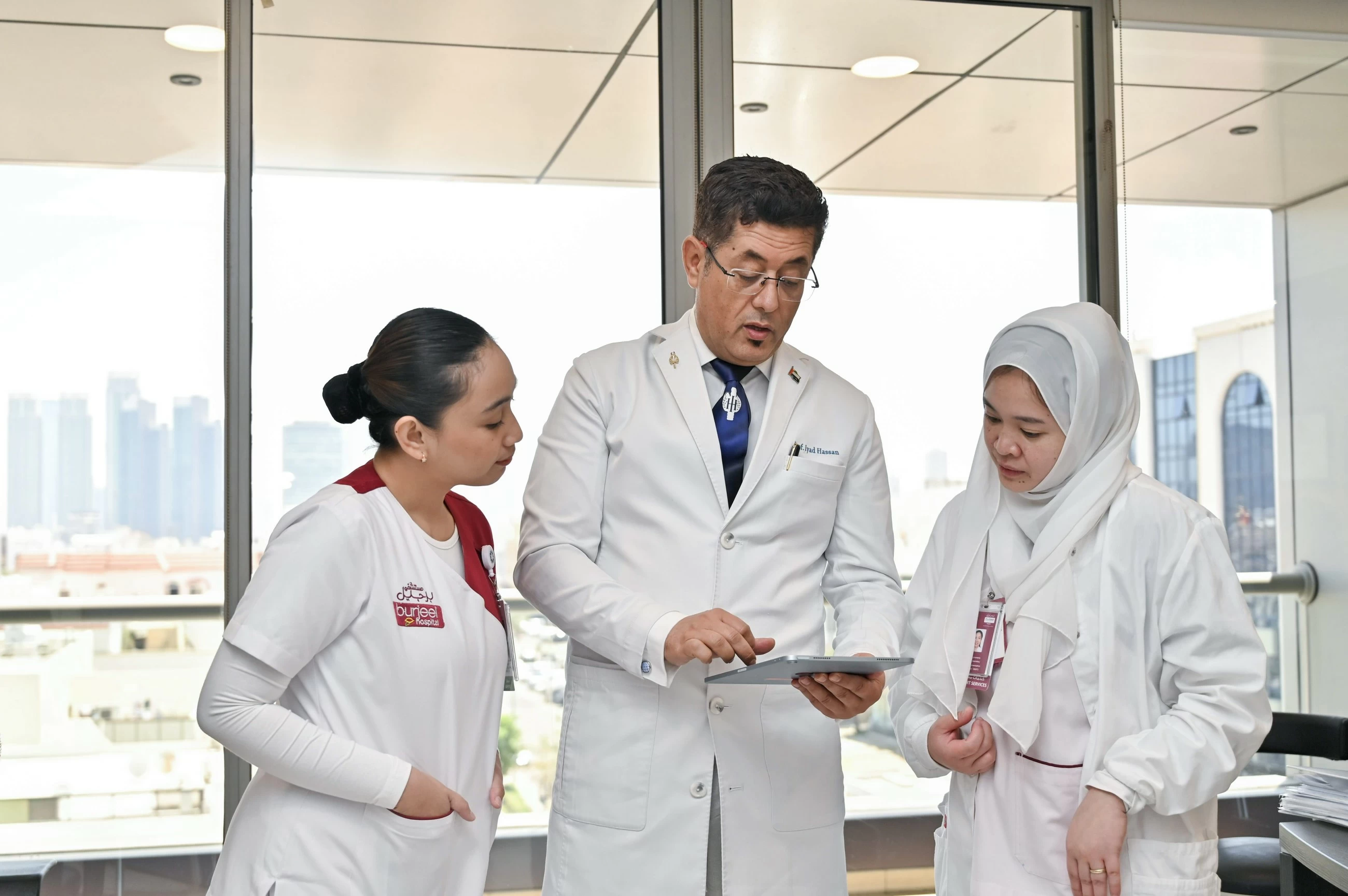
A 10-year-old Emirati girl is recuperating well after undergoing a four-hour “comprehensive” surgery, having been diagnosed with Stage 1 of a rare “aggressive” thyroid cancer.
“It was comprehensive because it involved not only the removal of the entire thyroid gland but also the meticulous removal of the affected lymph nodes from both the central and lateral neck compartments, while preserving vital structures such as the recurrent laryngeal (voice box) nerves and parathyroid glands,” Prof. Dr. Iyad Hassan told Gulf Today.
“With appropriate treatment and long-term surveillance, children with aggressive papillary thyroid have an excellent prognosis, and we expect AK to lead a normal, healthy life. After the surgery, AK experienced no permanent complications. Her voice remained normal, and her calcium levels remained stable,” he continued.
The Burjeel Hospital, Abu Dhabi General-Endocrine-Cancer Surgery Department head said that so far, the institution has administered care and treatment to over 4,000 thyroid surgeries across ages.
“Several” of these concern children, in “recent years.” With over 15 years of experience in the UAE and overseas, Hassan described AK’s case as “notable, due to its complexity, the patient’s young age, and the need for comprehensive surgery.”
The global incidence rate of paedatric papillary thyroid carcinoma is up to 95%.
It is up to three cases per million annually, compared to 70 per million in adults. Meanwhile, from the March 2021-published “Global Patterns and Trends in Incidence and Mortality of Thyroid Cancer in Children and Adolescents” over “The Lancet Diabetes and Endocrinology” portal, 11 researchers who had reviewed the 1998 to 2012 data in 76 countries, had concluded the following: The incidence rates from zero to age 19 were “0.4 (in Uganda and Kenya) to 13.4 (in Belarus) per one million between 2008 and 2012. More girls than boys were affected. “
The cases increased from 1998 to 2002 and 2008 to 2012. Deaths of those younger than age 20 were less than 0.1 per 10 million from each of the 76 countries studied.
Hassan, in-charge of the surgery with six other specialists, said that while generally, “papillary thyroid cancers grow slowly and are, highly curable;” that which hit AK – being the “aggressive form – may grow more rapidly, spread to lymph nodes at an early stage, invade nearby tissues, or show microscopic features associated with a higher risk of recurrence.”
While it is rare that “voice change or hoarseness” are observed in children suffering from aggressive papillary thyroid cancer, those in “advanced cases” experience “difficulty in breathing and swallowing.”
“In children, thyroid cancer frequently presents with lymph node involvement, yet the overall prognosis remains excellent because children generally respond very well to treatment.”
AK was hospital-admitted in Feb. 2026. A “small swelling on her neck” which “gradually increased in size,” worried her family.
A consequent biopsy, after an ultrasound exam, confirmed papillary thyroid carcinoma, “with around 10% tall cell features, a more aggressive variant associated with a higher likelihood of local spread and recurrence.”
AK has been on a “long-term follow-up.”
It includes daily levothyroxine replacement, periodic blood tests, regular neck ultrasound examinations, assessment for radioactive iodine treatment, and thyroglobulin and thyroid-stimulating hormone therapy.
On the common incidence of childhood thyroid cancer in families, as it was discovered that AK’s sibling had the same condition, Hassan replied: “Most thyroid cancers occur sporadically. These happen by chance without a family history. However, up to 10% of non-medullary thyroid cancers may occur in families. Early detection helps.”
Hassan explained that between non-medullary and medullary thyroid cancers, the latter “may be hereditary in some families.”
He emphasised, when asked if families would be able to reduce the risk of childhood cancers: “Parents should remember that most childhood cancers are not caused by anything they did or did not do. Most childhood cancers cannot be prevented because they are not caused by lifestyle choices.”
Reduction is achievable, by way of regular medical consultations; non-exposure to “unnecessary radiation” as well as non-exposure to “tobacco smoke before and after childbirth,” and the observance of healthy meals and an active lifestyle.