admin
admin Dubai Humanitarian revealed in its 2025 annual report that it carried out 1,188 relief shipments with a total value of Dhs404 million, which included transporting 14,297 metric tonnes of humanitarian aid to 101 countries around the world.
This consolidated Dubai’s position as the largest global humanitarian logistics hub and substantiated its ability to manage rapid response to humanitarian crises and disasters through a sophisticated network of partnerships and logistics services.
The report showed that the Middle East and North Africa region topped the list of destinations benefiting from aid, accounting for 48 per cent of total operations, followed by Africa at 25 per cent and then Asia at 21 per cent.
The aid varied to include shelter materials and basic needs at 60 per cent, medical and health supplies at 25 per cent and food at 10 per cent in addition to other sectors including education and development.
“These results demonstrated a qualitative shift in the concept of relief work,” said Giuseppe Saba, CEO of Dubai Humanitarian.
“Our success in reaching 101 countries would not have been possible without the integration of logistical solutions with Dubai’s humanitarian vision. We not only transport supplies but also work to reduce the operational costs of international organizations,” he said.
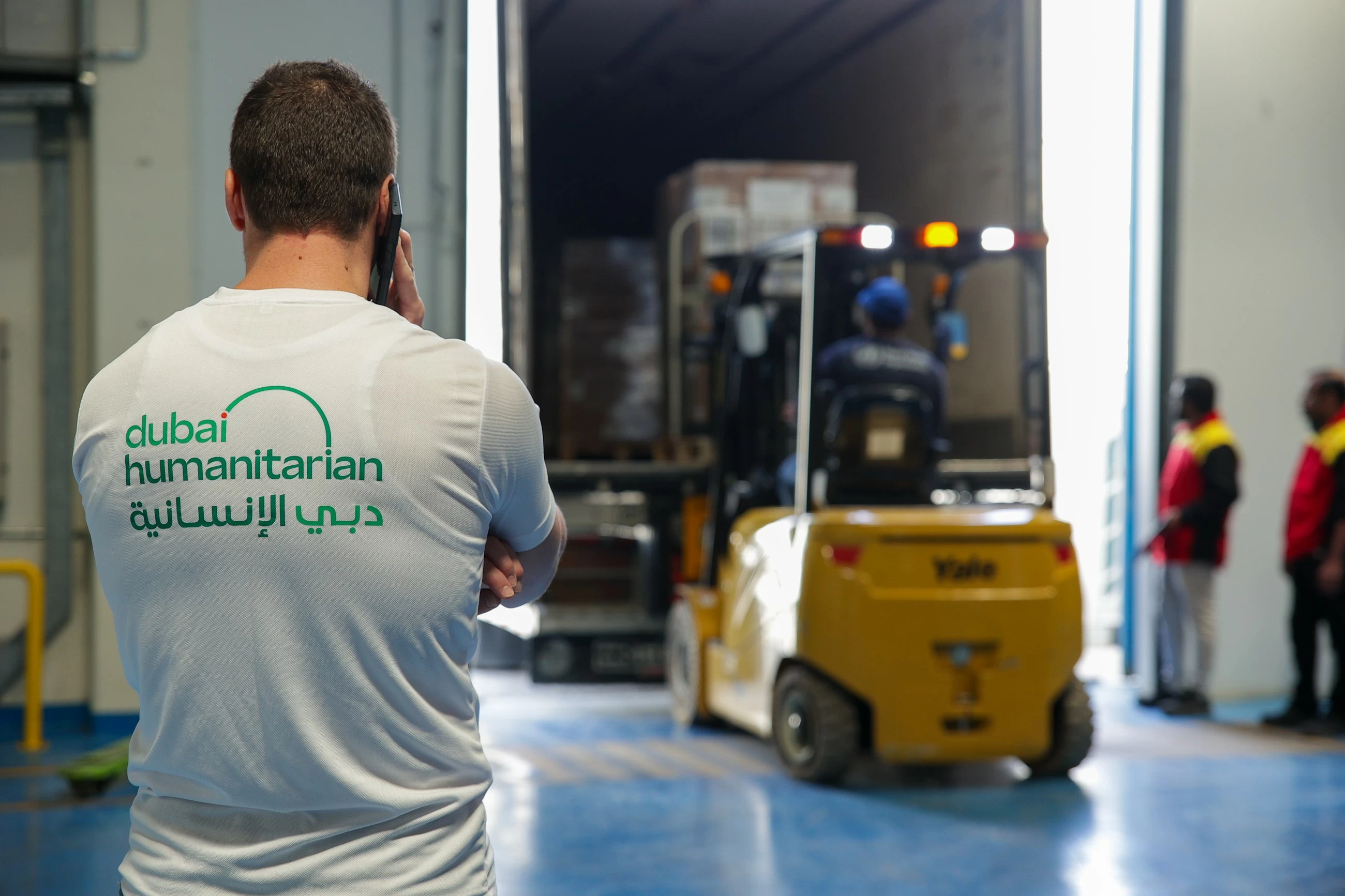
The aid varied to include shelter materials and basic needs at 60 per cent, medical and health supplies at 25 per cent and food at 10 per cent.
“By saving $6 million in operational expenses for the World Health Organisation (WHO), we ensured that these resources were directed to purchase more medicines and medical supplies to save the lives of patients in crisis areas such as Sudan and Gaza,” he added.
The Global Humanitarian Impact Fund played a pivotal role in supporting field operations by easing the transport of 790 metric tonnes of urgent aid by air, sea and land, the report said.
This contributed to providing direct support to about three million people around the world, in co-operation with Dubai Royal Air Wing and Emirates Airlines, to ensure a rapid response during the first hours of disasters, it added.
Picture used for illustrative purpose only.
The report explained that the WHO relied on its logistics hub in Dubai to distribute $25 million worth of medical supplies to 81 countries, with 41 per cent of these supplies allocated to support the humanitarian crisis in Sudan and 35 per cent to support the health sector in Gaza.
This contributed to strengthening the ability of affected health systems to cope with escalating humanitarian challenges, it added.
As far as innovation and sustainability were concerned, Saba said Dubai Humanitarian was continuing to employ technology to serve humanitarian work.
“As our goal is to provide sustainable solutions for human dignity, we have deployed solar-powered water purification units in Pakistan and Bangladesh, which provide 20 liters of clean water per hour to affected families. We have also established temporary classrooms that have benefited 24,000 students in Gaza and have provided portable sound navigation and ranging machines to support healthcare and safe childbirth in Yemen,” he added.
According to the report, Dubai continues to develop its humanitarian model based on rapid response, sustainability, innovation and mobilizing international partnerships, thereby consolidating its ability to meet the growing needs of those affected around the world and establishing its position as a global hub for humanitarian and relief work.