admin
admin 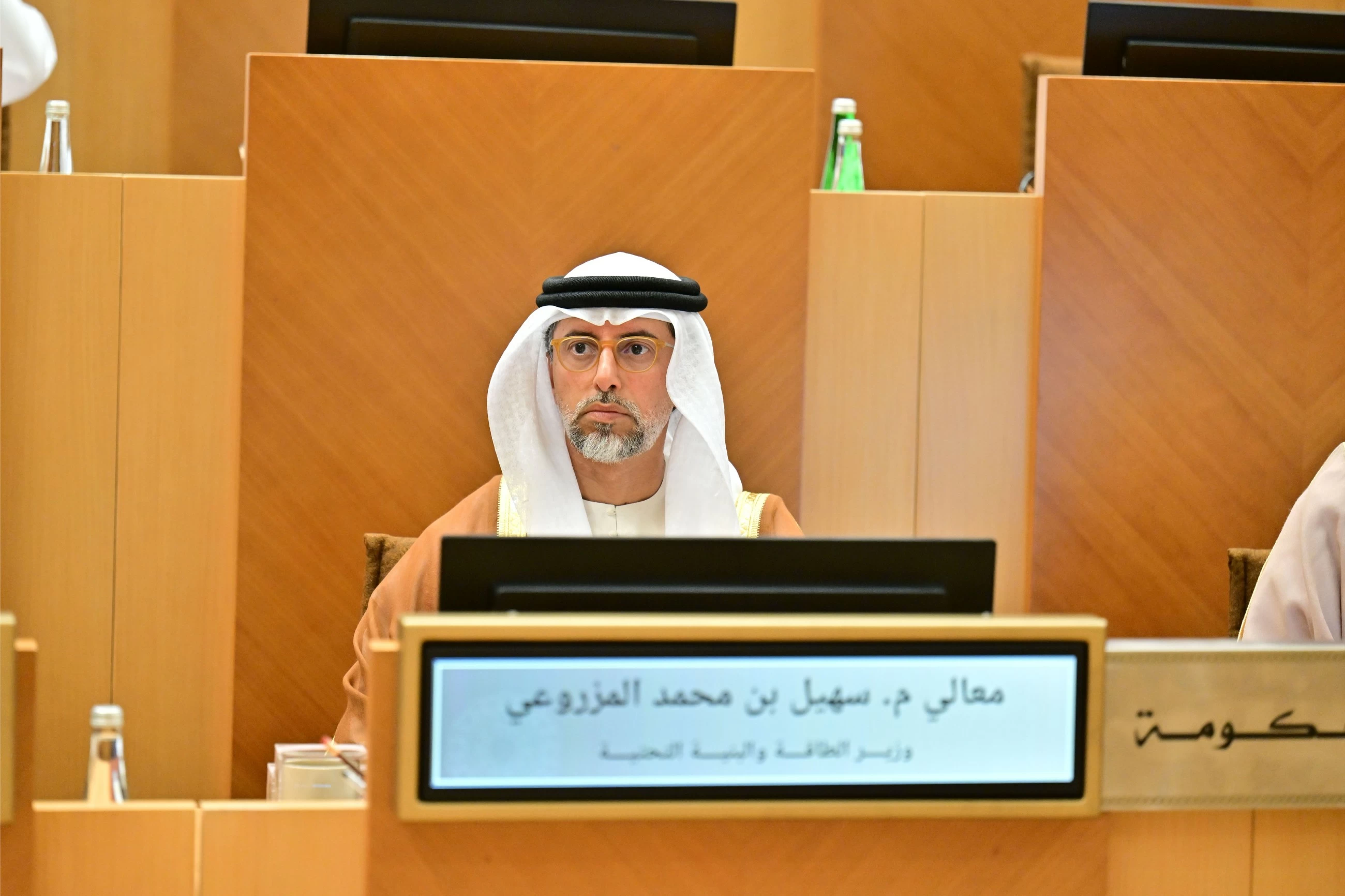
During a session of the Federal National Council (FNC), Suhail Al Mazrouei, the Minister of Energy and Infrastructure, highlighted that the traffic congestion observed in the UAE reflects the country’s robust and rapidly expanding economy.
He emphasised that the UAE is ranked among the top 10 nations globally in the Foreign Investment Confidence Index, with foreign direct investment expected to grow by around 48% by 2025, alongside an economic growth rate projected to reach 5.5% within the same period.
The Minister further noted that 90% of all registered vehicles in the UAE are concentrated in Abu Dhabi, Dubai, and Sharjah.
Additionally, the annual growth rate of vehicle registrations ranges from 8% to 10%.
He explained that the government is adopting an integrated and forward-looking strategy to ensure road safety and improve traffic management.
This approach includes leveraging proactive and smart transportation solutions while enhancing collaboration between federal and local authorities to maintain unified and efficient efforts.
The Minister outlined that the plan aims to enhance the road network and boost capacity through a series of projects valued at Dhs170 billion.
This includes Dhs11 billion allocated for federal road initiatives, Dhs95 billion for local road developments, and Dhs64 billion for Etihad Rail projects. As part of this strategy, the plan envisions expanding federal roads by increasing the number of lanes from 19 to 33, which is expected to improve the efficiency of federal roads by 73%.
Focusing on the development of the fourth federal road, estimated at Dhs6 billion, the Minister highlighted that the project entails building four overpasses, 120 kilometres of new roads, and 12 lanes linking five emirates. Once completed, the axis will accommodate up to 360,000 trips daily, significantly boosting regional connectivity.
Tackling traffic congestion across the UAE by 2030
During a presentation to the FNC in Abu Dhabi, Minister of Energy and Infrastructure Suhail Al Mazrouei outlined plans and solutions to tackle traffic congestion across the UAE by 2030.
The strategy emphasises advancements in public transportation, including the introduction of an electric high-speed rail system.
The Minister highlighted that the Etihad Rail will achieve speeds of up to 350 kilometers per hour, enabling travel between Abu Dhabi and Dubai in just 30 minutes.
Additionally, he revealed that by 2030, the rail freight system will handle an annual capacity of 60 million tonnes, cutting transportation costs by 30%. This shift will redirect approximately 5,600 daily truck trips to the railway network. Stretching over 900 kilometers, the network will also reduce commute times between Abu Dhabi and Fujairah to 100 minutes.
21,591 shared transport vehicles
The Minister highlighted the extensive infrastructure of the public transport system, which includes 21,591 shared transport vehicles, 40 marine routes, 74 stations in the public and marine transport network, 11 light rail trains and tram stations, 129 metro trains operating within the heavy rail system, 53 metro stations, and 393 dedicated bus lanes. He also mentioned plans for the development of a metro system within the Emirate of Abu Dhabi.
He further emphasised the creation of an integrated public transport network connecting Dubai, Sharjah, and Ajman through 10 key routes. Additionally, he projected a 45% rise in bus usage and a 35% increase in the role of marine transport.
The Minister outlined comprehensive solutions to tackle traffic congestion, focusing on five major aspects: improving connectivity and offering alternate routes, encouraging multimodal transportation, advancing smart transport initiatives, enhancing institutional integration and traffic management, and fostering awareness to promote responsible traffic behavior.
FNC calls for regulating vehicle ownership requirements
The FNC also focused during its eighth session held on Wednesday on the government’s policy regarding traffic safety and flow. The discussion emphasised the need to regulate vehicle ownership standards, including introducing a maximum age limit for vehicles, as a measure to manage the growing volume of traffic.
The FNC approved nine recommendations aimed at bolstering traffic management. These include examining local and global best practices in using artificial intelligence (AI) to enhance traffic safety and efficiency, leveraging AI to dynamically adjust the number of lanes on federal highways during peak hours, and fostering greater collaboration among relevant authorities to ensure seamless traffic movement and support sustainable road infrastructure planning across the nation.
The FNC emphasized the need to accelerate the creation of a unified platform to enhance collaboration between federal and local authorities.
This platform would support coordination with relevant organizations on the use of smart signs as a tool to manage traffic behavior, as well as facilitate cooperation on launching continuous awareness campaigns aimed at highlighting the dangers of aggressive and distracted driving.
Additionally, the Council advised the development of a standardized regulatory framework to define the technical standards and operational guidelines for intelligent transportation systems.
It also urged the swift issuance of executive regulations for Federal Decree-Law No. (14) of 2024 on traffic and road safety, ensuring these regulations comprehensively address all essential requirements.