admin
admin 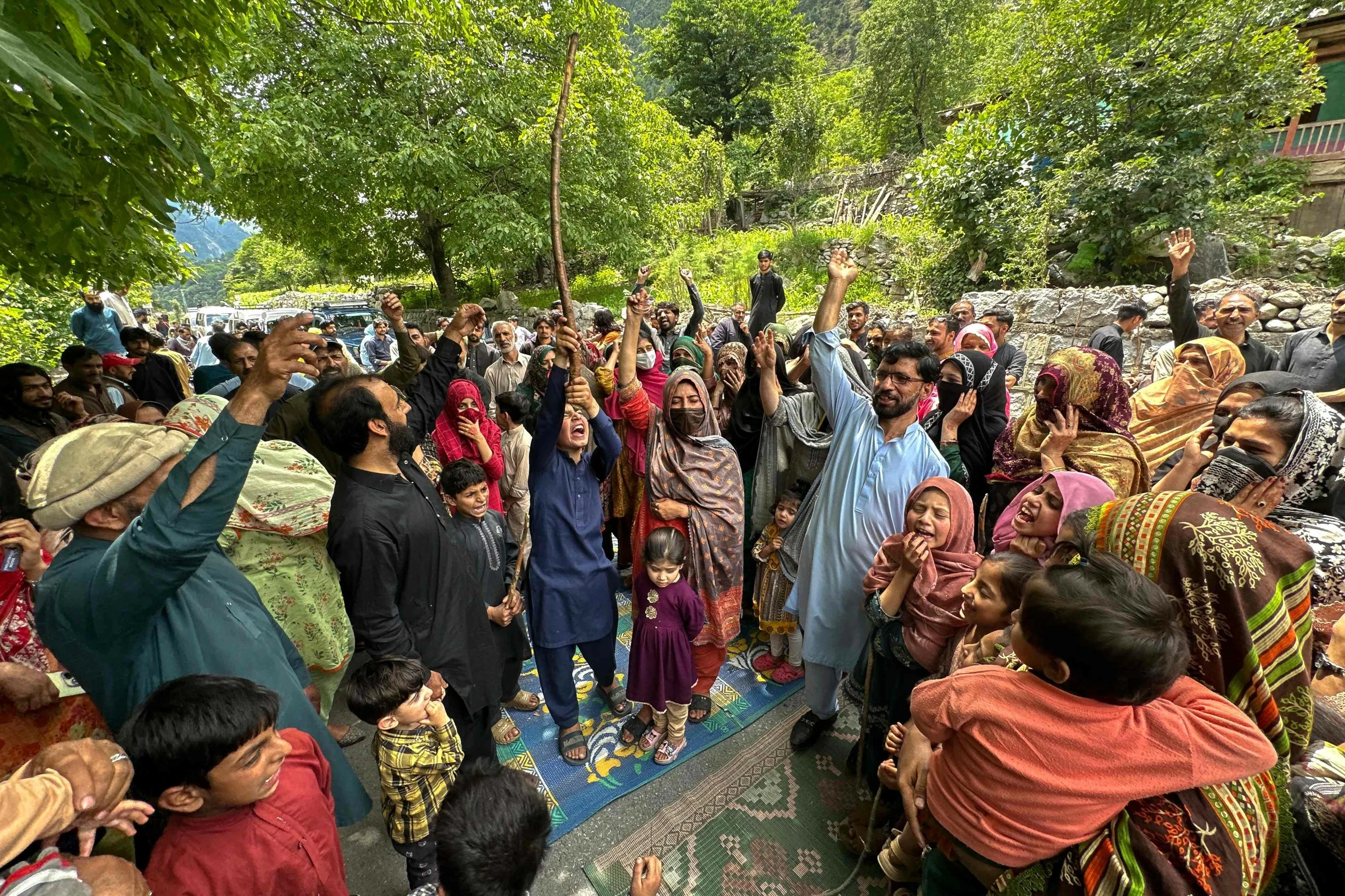
A territory-wide shutdown in Azad Jammu and Kashmir (AJk) has brought daily life to a standstill after the region’s deadliest unrest in years left at least 24 people dead in nearly two weeks of protests.
The confrontation between local authorities and supporters of the recently banned Joint Awami Action Committee (JAAC), poses a sensitive challenge for Islamabad. The unrest began ahead of a June 9 strike called by the JAAC in protest against the reservation of 12 seats for refugees in the July 27 elections to the region’s 45-seat legislative assembly. The refugees live in Pakistan after being displaced from Indian-administered Kashmir.
A nearly two-week standoff between protesters and police in AJK has left residents grappling with food shortages, while the death toll from clashes rose to 24, according to an AFP tally on Wednesday. The toll includes four law enforcement personnel. Police say 89 officers have been wounded during clashes.
Supporters of the JAAC, an anti-government movement demanding economic and governance reforms, have pressed ahead with protests despite the group being banned this month under anti-terrorism laws. Police said that 425 people linked to the JAAC have been arrested since the unrest began in early June.
Sardar Waheed, the top civilian official in the city of Rawalakot which has been a focal point of the unrest, said two more people had been killed during clashes in recent days.
Protests had already grown in the days before the shutdown, with government officials, speaking on condition of anonymity, saying at least 20 civilians were killed between June 6 and June 14 and dozens more wounded. Regional police chief Liaqat Ali Malik said four officers had been killed and 97 wounded in clashes with protesters, while 515 people had been detained. Thousands of JAAC supporters are now camped out on the outskirts of Rawalakot, about 100km south of Muzaffarabad, the regional capital.
The government has responded by shutting main roads, blocking the internet and restricting media access to much of Kashmir.
In the regional capital Muzaffarabad, streets were quiet and residents complained of difficulty accessing crucial supplies.
“I have been searching for medicine everywhere, but I cannot find it. Even big stores are closed,” 64-year-old Muzaffarabad resident Muhammad Masqeen told AFP. For shops that were open, supply disruptions were limiting stock.
“For eight days, we have been going through very difficult times. Markets are closed, and there is very little to eat except vegetables,” said Sabar Hussain, 60. Authorities said they had ordered shops to open, and local government spokesman Shoaib Javed Mir said officials were working to prevent any shortages of essential supplies.
In Muzaffarabad’s Upper Adda commercial district, menial labourers sit idle beneath a red-brick monument, waiting for work that has not come. “Since June 9, I have not earned a single rupee,” said day labourer Ikhlaq Ahmed, 27, from a remote village.
The usually busy Upper Adda, once filled with grocers by day and food stalls by night, is mostly silent.
Medical stores and some grocers have begun opening for limited hours, and fruit and vegetable sellers have cautiously returned, but other businesses remain closed. Bank notices blame the government’s suspension of internet and satellite services for the closure of ATMs and banking operations, while petrol stations are also shut due to an official order.
For workers like motorcycle taxi driver Asif Naz, the crisis is unbearable. “Those with resources may sustain it,” he said, “but for blue-collar workers like us, it is self-slaughter.”
To review in detail political and administrative situation in AJK, former PM and Pakistan Muslim League Nawaz (PMLN) President Nawaz Sharif chaired a high-level meeting in Lahore.
Appealing to the people of Jammu and Kashmir, he urged Kashmiris to maintain their ideological and emotional bond with Pakistan, remain peaceful, end protest sit-ins and engage in meaningful dialogue.
Sharif also expressed grief over the recent loss of lives in AJK, saying he was deeply saddened and shocked by the deaths of both government personnel and civilians. He said such a situation should not have arisen and stressed the need for national unity and brotherhood. “This country belongs to all of us, and we all have to live in it like brothers,” he said.