admin
admin Passengers aboard Amtrak’s Coast Starlight, the famous long-distance train between Seattle and Los Angeles, head to the upper-level sightseer car for expansive views of the scenery. Through wide windows and skylights, they can watch the ocean, mountains and forests go by.
People riding from Klamath Falls in south-central Oregon over the nearly mile-high crest of the Cascade Range to Eugene can also learn the fascinating history of this challenging section.
About once a week, volunteer docents are onboard to explain that one of Amtrak’s steepest routes first transported passengers 100 years ago.
Three years of surveying and engineering went into the project to link Klamath Falls, at an elevation of 4,105 feet, to Eugene at 426 feet. Workers armed with dynamite, scrapers, picks and shovels constructed the Southern Pacific Railroad route that replaced the steep Siskiyou Line through the southwestern towns of Ashland, Medford and Grants Pass, and reduced hill climbing by 2,875 feet.
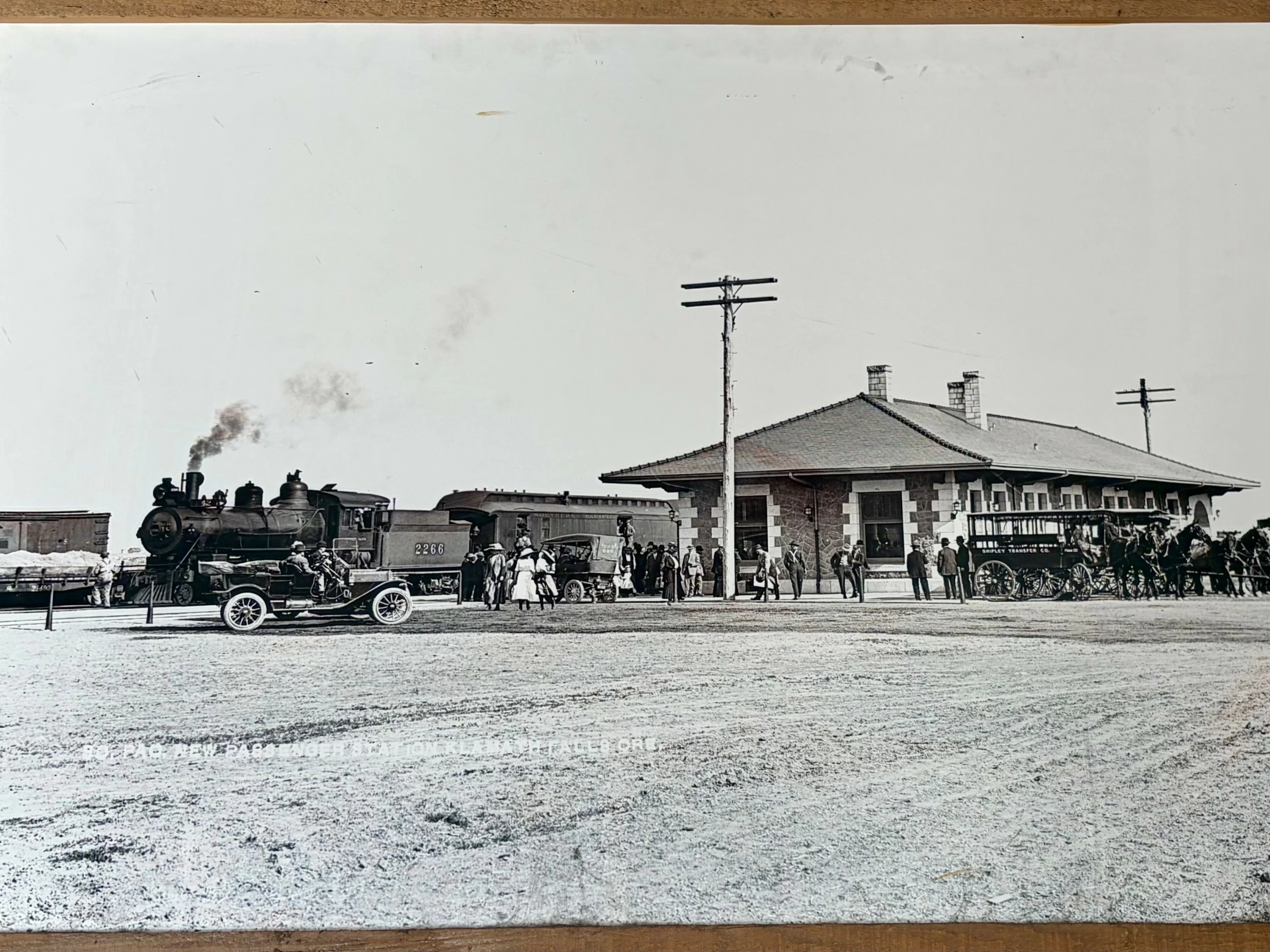
An historic photo of the Klamath Falls train station, which now serves Amtrak, shows both motor vehicles and horse-drawn passenger busses.
When it was completed in 1926, the new Cascade Line eliminated 18,452 degrees of curvature — equivalent to 51 complete circles — allowing for greater speed, according to historians. On Aug. 19, 1926, a Southern Pacific train from Weed, California, pulled up at the Klamath Falls station. Passengers walked out of the depot, as they do today, and headed to the tracks to board the train. Their ride forever changed remote high desert Klamath Falls, an agricultural region that suddenly had direct access to business contacts in Eugene, policy makers in Salem and financiers in Portland.
“For folks in Klamath Falls, the new connection helped them feel they were truly a part of Oregon, rather than an appendage of California,” said Todd Kepple, who has been a volunteer interpretive guide for more than 25 years. Kepple, who can hear trains leaving the Klamath Falls station from his home, was manager of the Klamath County Museum for 19 years and knows the region’s history. He also knows every twist and turn of the challenging topography impacting the 195-mile route to Eugene.
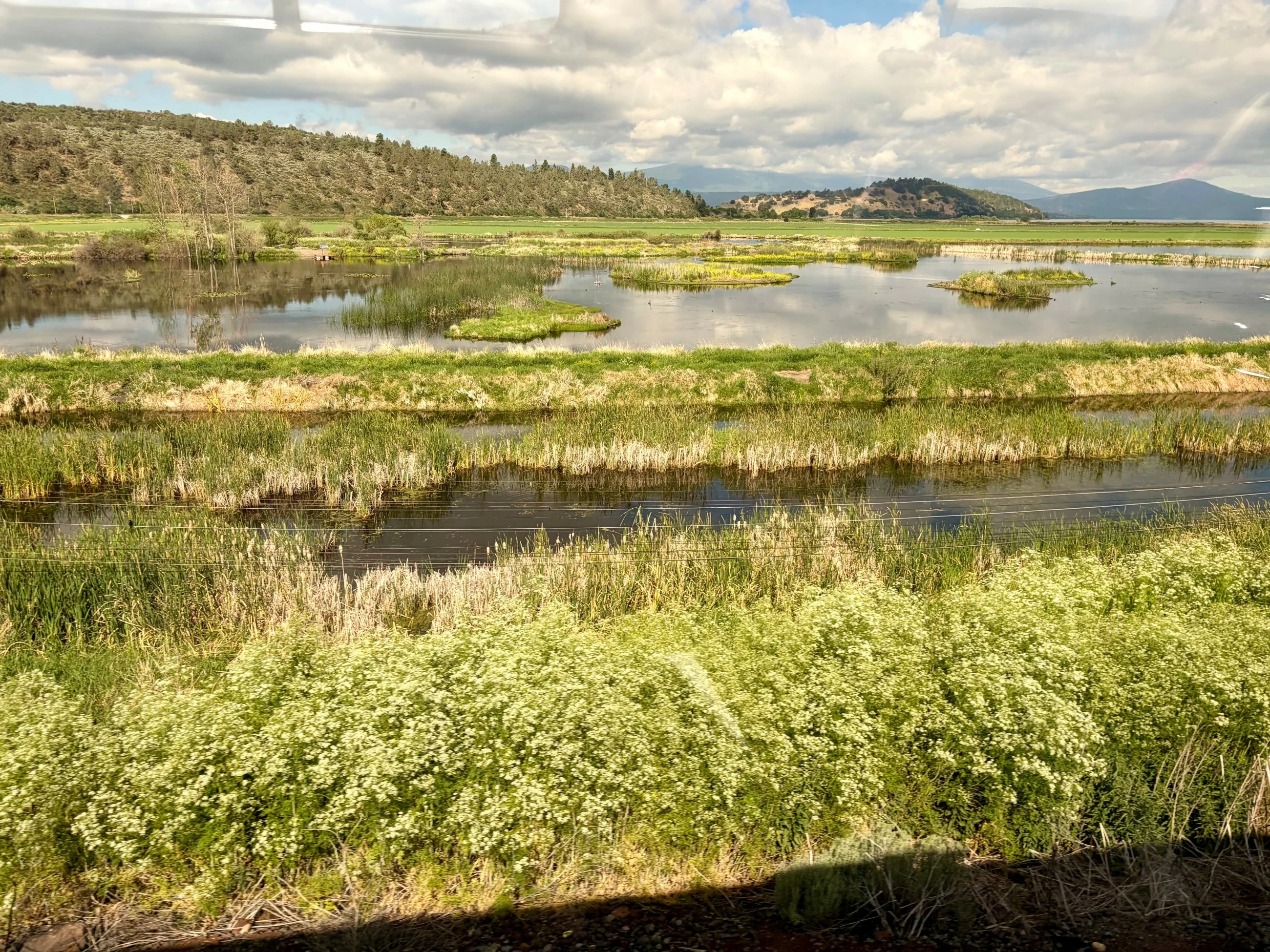
A wetland restoration project on the east shore of Upper Klamath Lake is seen along the Coast Starlight route north of Klamath Falls.
Traveling at 35 mph, he can identify sandhill cranes as the train passes marshes. He likes to talk about the timber trees seen from train windows: Western juniper, ponderosa pine, lodgepole pine, mixed conifer and Douglas fir. And he is serious when he tells passengers there will be a quiz. His commentary ranges from the recent removal of four of six dams on the Klamath River to historic facts. He notes that the 1954 Lookout Point Dam on the middle fork of the Willamette River caused the original highway and railroad tracks to rest on the bottom of the reservoir.
A one-way ticket between Klamath Falls and Eugene typically starts around $49 for basic coach. The modest fare buys more than transportation — it’s an educational journey through history and a front-row seat to the engineering feat that connected a once-forgotten town.
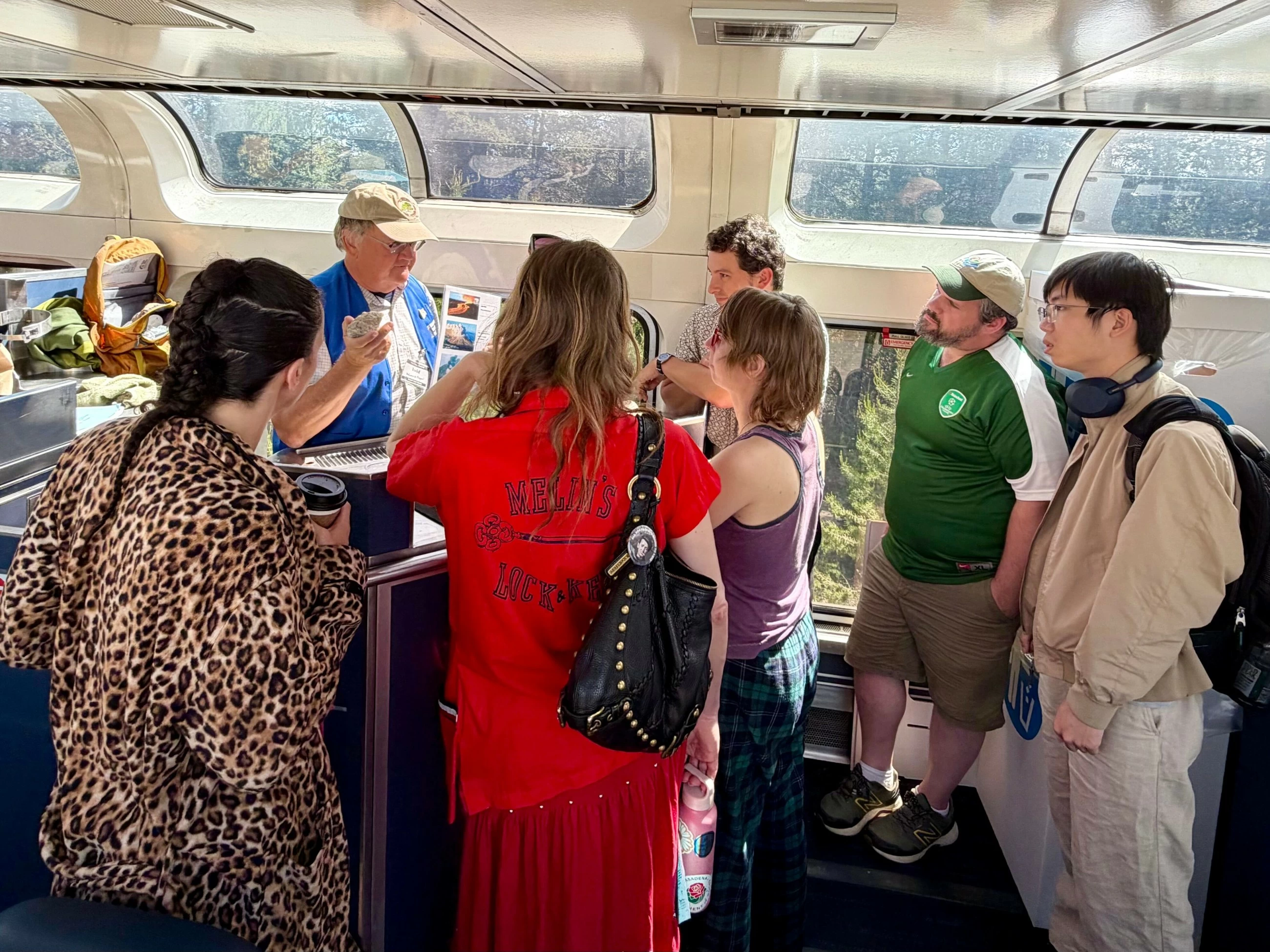
Todd Kepple conducting a geology class on the Amtrak train from Klamath Falls to Eugene.
A slower pace: People who arrive by train to Klamath Falls, the southernmost station in Oregon, may be riding the daily Coast Starlight from Los Angeles on the way north to Seattle 1,377 miles away, or they may have made connections from points back east. Some passengers boarding at Klamath Falls plan to catch evening flights out of Portland International Airport. Some choose the train over flying, while others prefer a slower-paced, nostalgic ride while on vacation or visiting family. The Coast Starlight is cherished for its sleeper cars.
Docents like Kepple and his wife, Jean Turgesen, are part of an interpretive program launched 29 years ago by the Klamath County Museum. It’s similar to the Trails and Rails programs operated by the National Park Service across the country. Volunteers explain regional historic, cultural and natural resources related to the journey to promote the need to preserve and protect these resources, according to Amtrak. Kepple and Turgesen tell passengers that the route traces the eastern shoreline of the Upper Klamath Lake, the largest freshwater lake in Oregon and one of the largest in the Western United States.
The first Amtrak stop north of Klamath Falls is Chemult, an unincorporated community that was an important stopping point for train crews in the days of steam locomotives. The tiny town had restaurants at both the north and south ends to cater to train crews working on opposite ends of long trains. Today Chemult primarily serves motorists coming through on the Willamette Pass (Highway 58) and US Route 97. Amtrak passengers can disembark at Chemult and transfer to an Amtrak Thruway connecting bus northward to Bend.
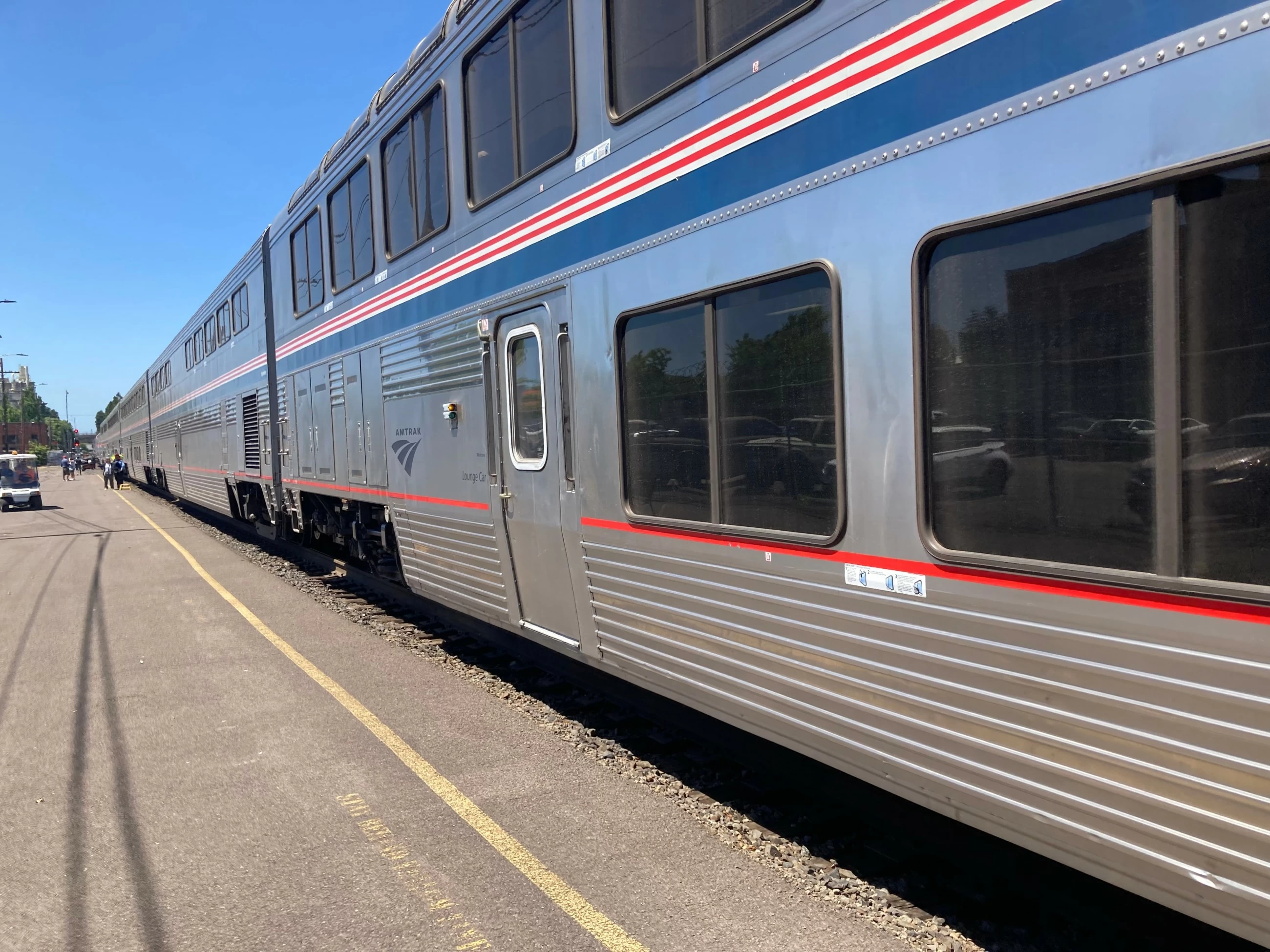
Amtrak’s Eugene Depot is in the heart of historic downtown Eugene surrounded by hotels, fine dining, shopping and performing arts. Photos: Tribune News Service
Three miles north of Chemult, the train leaves the Fremont-Winema National Forest, the ancestral land of the Klamath Tribes. The forest encompasses more than 2 million acres of woodlands. During the logging era, trains on rail lines moved logs to the mill sites. The Coast Starlight train then enters the Deschutes National Forest, with volcanic peaks, lakes, rivers and dense conifer forests. Kepple lets people in the sightseer car know that it will take 90 minutes and hairpin turns to cover the next 43 miles while descending more than 3,600 feet in elevation into the Willamette Valley. The relatively slow speed allows passengers to enjoy the scenery.
The Klamath Falls depot at 1600 Oak Ave. was built in 1909 for the Southern Pacific Railroad. The single-story building is composed of dark gray ashlar walls with staggered light-stone trim highlighting the windows and doors. On June 20, Kepple and Turgesen watched the northbound Coast Starlight No. 14 train pull into the station at 7:33 a.m. They hopped on before the train departed at 7:43 a.m. They then entertained and informed passengers for much of the almost 5-hour trip to the Eugene station.
Kepple prepared passengers before the train entered one of the 21 tunnels on the route. He counted down when they should try to spot the snowy peak of Diamond Peak and obsolete water towers used for steam engines through gaps in the trees, and a boxcar that fell from a bridge into a deep ravine in 1964.
Tribune News Service