admin
admin 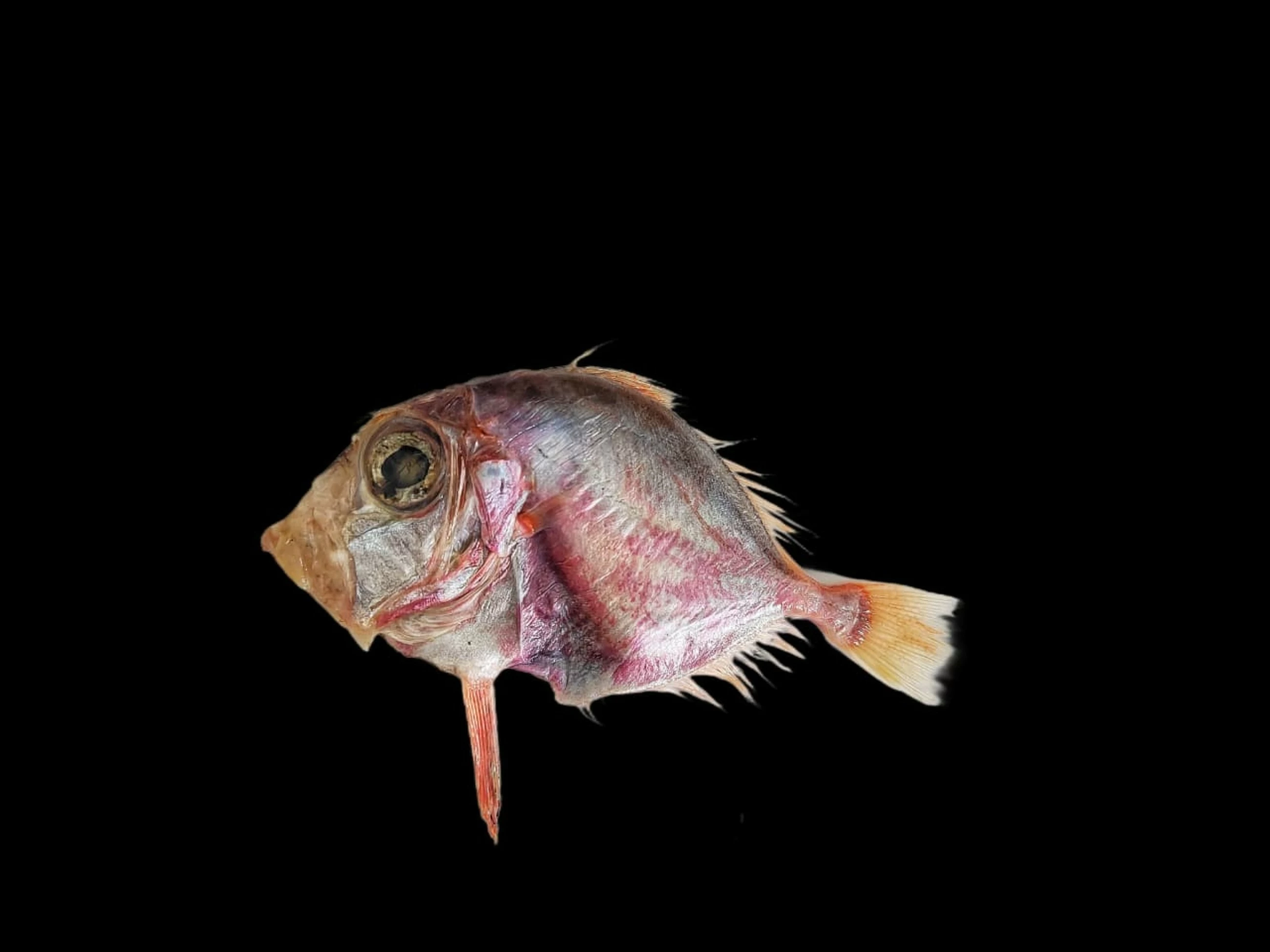
In a breakthrough that highlights the vast and largely unexplored biodiversity of India’s deep seas, scientists at the ICAR Central Marine Fisheries Research Institute (CMFRI) identified a new species of deep-sea fish from the Arabian Sea off the Kerala coast.
This newly recognised species has been named Cyttopsis indica, commonly referred to as the Indian dory.
It was found at impressive depths of 350-500 metres along the continental slope of the eastern Lakshadweep Sea, an area known for its rich marine biodiversity.
The discovery stems from an intensive study that involved collecting six specimens from deep-sea trawl landings at the Sakthikulangara fishing harbour in Kollam.
The research team, led by CMFRI scientist Dr Ratheesh Kumar, used traditional taxonomic analyses and advanced molecular techniques to confirm this species’ uniqueness.
The institute stated that the fish previously observed in the Indian Ocean were thought to belong to the species Cyttopsis rosea.
However, this new research has shown that the presence of Cyttopsis rosea should now be restricted to the Atlantic Ocean, thanks to the identification of Cyttopsis indica.
It said this revelation fixes a long-standing oversight in taxonomic classification, as DNA analysis showed significant genetic differences from all known species in the genus Cyttopsis.
The findings of this research have been published in the latest issue of the Indian Journal of Fisheries.
The article emphasises the importance of this newly discovered species and showcases the rich yet largely unexplored marine biodiversity found in the deep waters along India’s southwestern coast.
As scientists continue to explore these depths, it is evident that many more discoveries await, further enriching our understanding of marine life in this region.
Monsoon-driven upwelling in the Arabian Sea sustains one of the planet’s most biologically productive large marine ecosystems.
The Arabian Sea is known for being one of the world’s most productive marine ecosystems, largely due to monsoon-driven upwelling that brings nutrients to the surface.
Last year, a deep-sea fishing expedition by the Fishery Survey of India (FSI) uncovered several productive and potentially untouched fishing grounds in the region.
India’s leading fishery research organisation conducted the survey on a deep-sea trawler at depths of 300 to 540 meters, covering the area from Kollam, Kerala, to Goa.
New fishing grounds have been found 100 to 120 nautical miles off India’s western coast, with an average catch per unit effort (CPUE) of 150 to 300 kg/hr.
The survey revealed no significant differences in catches or species diversity between day and night fishing.
The area is rich in commercially valuable crustaceans, including humpback nylon shrimp, Arabian red shrimp, deep-sea mud shrimp, spiny lobster, and squat lobster. It also has abundant cephalopods like Opisthoteuthis sp. and Octopoteuthis sicula.
The new grounds support a diverse fish population, including species like the froghead eel, rosy cod, snake mackerel, and splendid alfonsino.
Notable elasmobranchs present include the sicklefin chimaera, pygmy ribbontail catshark, and bramble shark, among others.
The research aimed to improve understanding of how to sustain marine ecosystems and boost India’s fishing industry to double its income.
India’s coastal fishery resources face growing pressure from overfishing, habitat degradation, and climate change.
In this context, deep-sea resources emerge as a critical alternative for sustaining fisheries and ensuring food security in the nation.