admin
admin A small skiff moves through a stinking carpet of sargassum, dragging what looks like a threshing machine through the brown, floating seaweed choking the normally clear waters of the Mexican Caribbean.
A round-the-clock defense is underway against the invasion in Mexico’s international tourism hub, including boats, barriers and manual beach cleaning teams, though officials are still downplaying the impact.
An AFP team traveled through the Riviera Maya and Tulum aboard one of the 27 specialized ships the Mexican Navy has used since 2019 to contain the proliferation of sargassum — a type of algae with tiny berry-like sacs allowing it to float — that started arriving in 2011.
The boat moves as if through a video game, searching for concentrations of the weeds to suck up. A ramp built into the prow uses a mechanical belt to scoop the sargassum off the surface of the water, bringing it into a chute inside the boat.
‘Intense season’
Efforts to scoop up sargassum are carried out on the high seas with a ship that can carry 300 tons of the seaweed, as well as smaller boats and amphibious vehicles. The final tactic entails gathering the brown algae by hand.
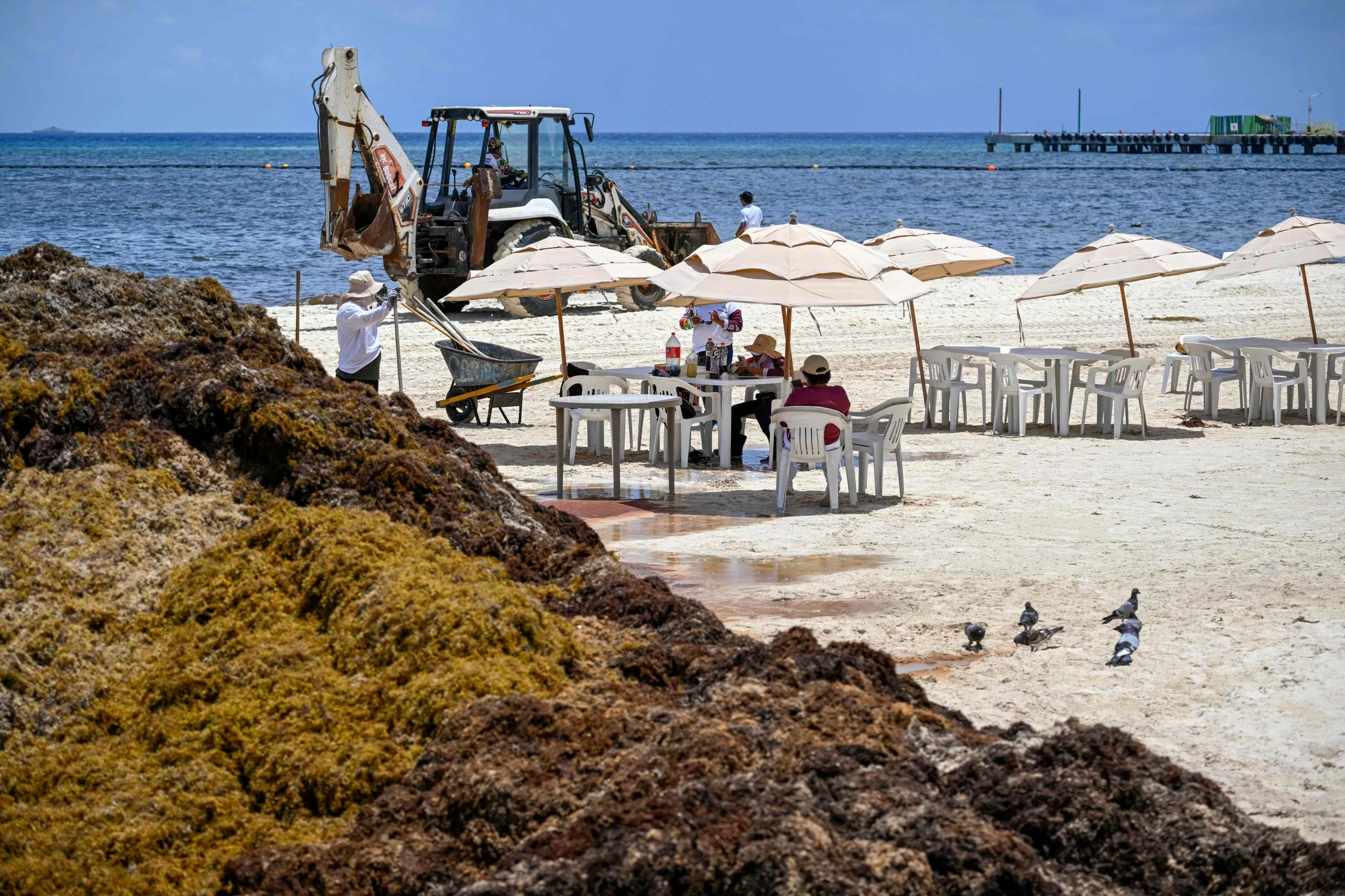
Municipal workers clean accumulated sargassum seaweed from a beach in Playa del Carmen, Quintana Roo State, Mexico.
“It’s been an intense season that really demanded greater effort,” said Rear Admiral Topiltzin Flores, the leader of the operation, who explained their goal is to concentrate efforts on the open ocean and prevent sargassum from reaching the coasts.
Personnel from the Marines and local government gathered over 100,000 tons of sargassum in the first half the year, already surpassing the 92,782 tons gathered in all of last year.
But the seaweed has still reached many beaches of the Mexican Caribbean, where few tourists want to sunbathe or swim while enveloped in the stench of rotting eggs.
Businesses have reduced their staff to adjust to the drop in tourism.
Azul Lucero, a 26-year-old Argentine waitress who works in Playa del Carmen, where she makes the majority of her income off tips, said her restaurant “doesn’t have over 50” customers a day.
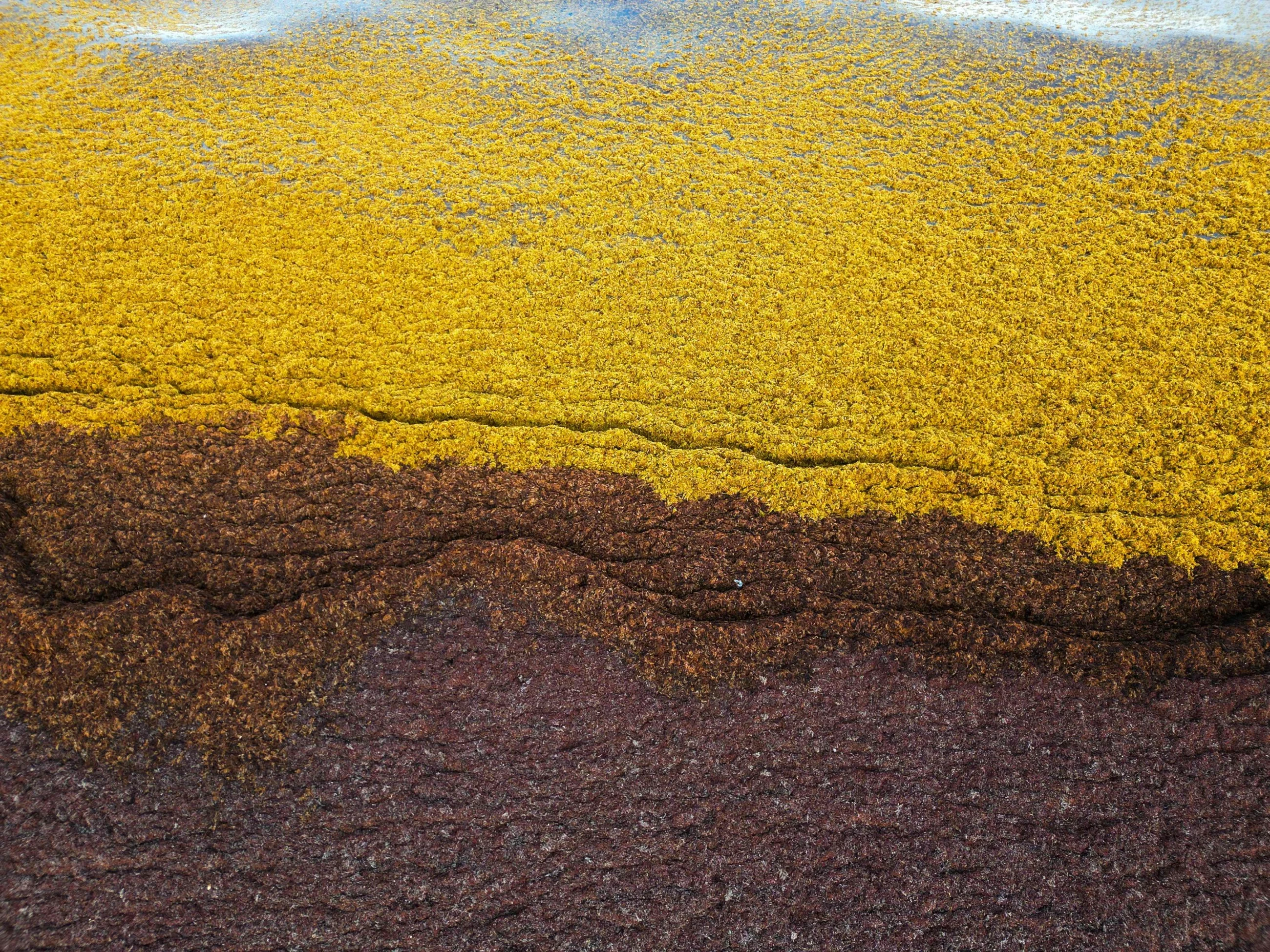
This aerial view shows sargassum seaweed floating in the Caribbean Sea off the coast of Tulum, Quintana Roo State, Mexico.
Normally, that number is closer to 400 when the ocean is clean and clear.
‘Unbearable stench’
The government insists that foreign tourists are arriving in record numbers, although President Claudia Sheinbaum acknowledged a slight drop when she unveiled an ambitious joint strategy between the government and hotel industry to fight the weedy invasion.
“There haven’t been major losses,” she added, attributing the shift to the price of plane fuel.
Hotel occupancy this summer has floated between 55 percent and 70 percent depending on the destination, whereas the high-season average reached up to 90 percent 15 years ago, according to industry statistics.
Near one mountain of sargassum is the Playa del Carmen hotel where Tere May, 47, works as a chef, but she complained that the “unbearable stench” was keeping all 24 rooms empty.
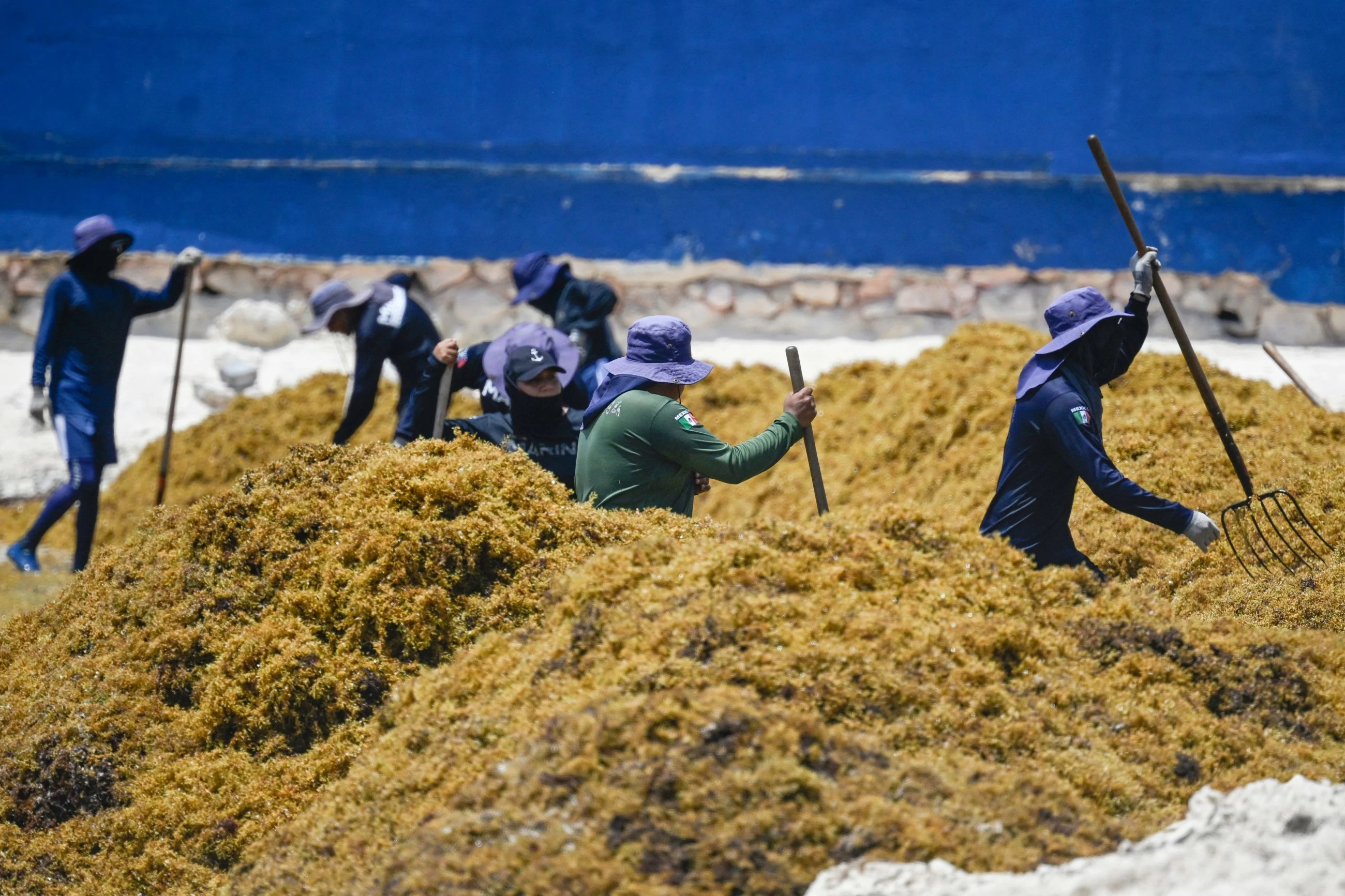
Members of the Mexican Navy remove accumulated sargassum seaweed from a beach in Playa del Carmen, Quintana Roo State, Mexico. Photos: AFP
“There is nothing right now,” she said. The sargassum “has affected everything.”
Bianca Ibanez, 33, had come to spend a few days of vacation with her family but was surprised by the sheer quantity of seaweed on the beach.
“You can’t really enjoy things,” she said.
Agence France-Presse