1. Home
  2. World

Category: World

World
Iran says ready for anything after Trump warning

Iran says ready for anything after Trump warning

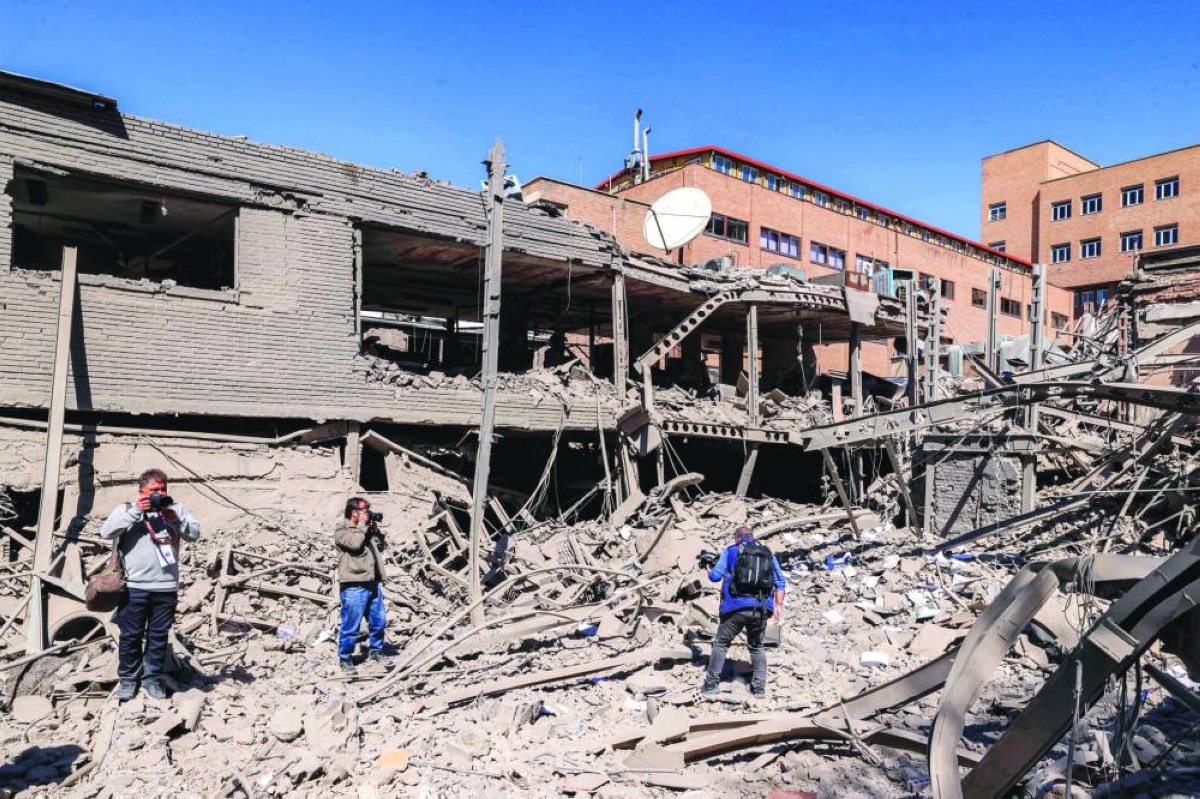
Journalists film at a damaged area following strikes on Sharif University of Technology in Tehran, Tuesday. (AFP) Iran said Tuesday it was prepared for any eventuality, after US President Donald Trump warned "a whole civilisation will die" if the Islamic republic did not heed a looming deadline to open the Strait of Hormuz.Speaking in Budapest, Vice President JD Vance said the United States had tools "that we so far haven't decided to use" against Iran, without explaining further. An Iranian resident looks out the window of his damaged home after Israeli-American strikes destroyed residential buildings

World
China’s foreign minister to visit North Korea to bolster loosened ties

China’s foreign minister to visit North Korea to bolster loosened ties

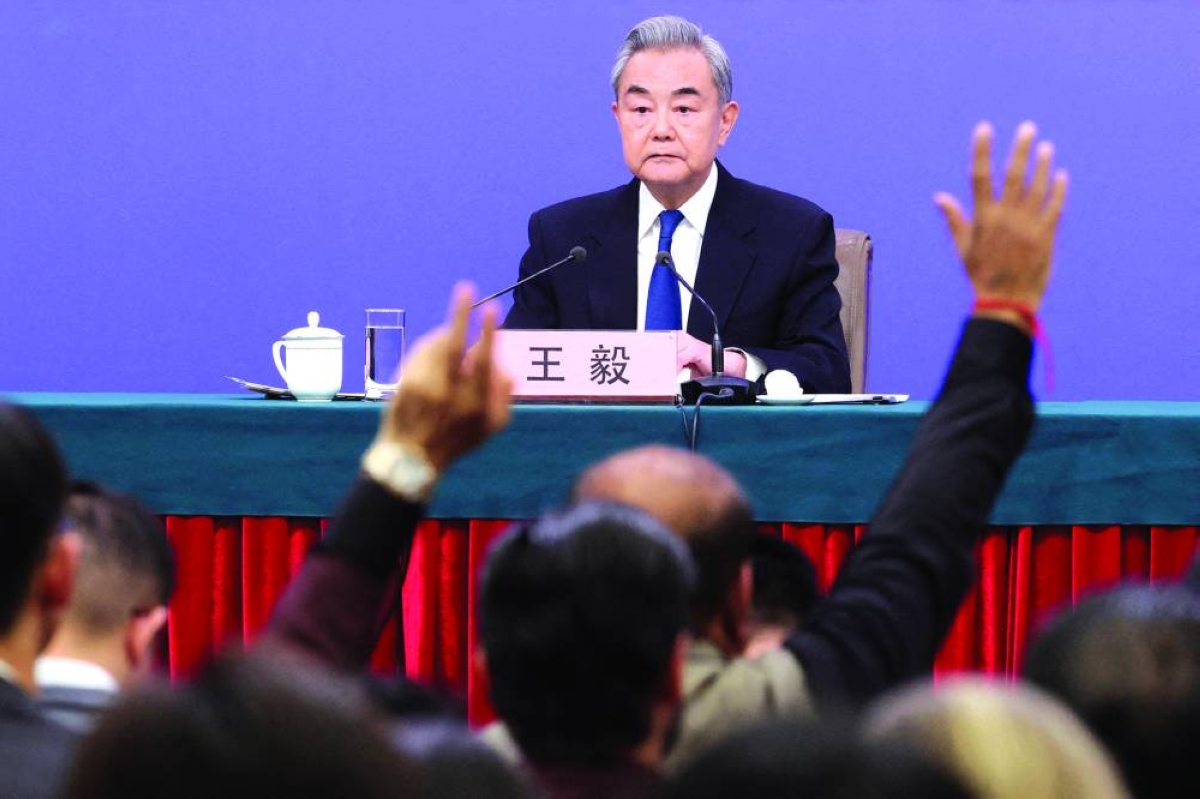
Chinese Foreign Minister Wang Yi attends a press conference on the sidelines of the National People's Congress, in Beijing. (Reuters/File Photo) China's Foreign Minister Wang ‌Yi will visit North Korea this week, his ministry ​said Wednesday, signalling efforts by ‌the East Asian neighbours to revitalise ties that chilled after ‌the Covid-19 pandemic ⁠and the Russian invasion ‌of Ukraine.Wang's last publicly known ‌visit to North Korea as China's foreign minister was in late 2019, following reciprocal ⁠visits by the two countries' top leaders earlier that year."China is willing to strengthen strategic communication with North Korea and enhance exchanges and cooperation," a Chinese ministry spokesperson, Mao Ning, said during a regular press conference.She called Wang's upcoming visit-scheduled over April 9 to 10-"an important move to advance bilateral ties".Beijing has worked to draw Pyongyang back into its orbit, after the ​Covid-19 pandemic froze exchanges and as North Korean leader Kim Jong-un shored up relations with Moscow, sending troops and weapons in support of Russia's war efforts in Ukraine.Passenger train ‌service between Beijing and Pyongyang resumed ⁠in March after ​being suspended for six years since the onset of the pandemic ​in 2020.China's flag carrier Air China has also restarted flights between the two capitals. However, the reopened links have not benefited Chinese tourists so far, with bookings available only for some business travellers and exchange students.North Korean leader Kim Jong-un travelled to Beijing in September on board an armoured train to join Russian President Vladimir Putin and other leaders for a massive military parade in the Chinese capital, where Kim met with Chinese President Xi Jinping.That meeting was followed by a visit to Pyongyang ‌in October by China's No 2 official, ‌Premier Li Qiang."Preserving, consolidating, and ⁠developing China-DPRK relations has always been an unwavering strategic policy of the party and ⁠government of China," Mao ⁠said Wednesday.Wang's Pyongyang visit also comes ahead of an expected summit between Chinese President Xi Jinping and US President Donald Trump next month. Co-ordination between North Korea and China could take place before the China-US summit, South Korea's Yonhap news agency said Wednesday.Trump has repeatedly expressed interest in resuming direct talks with ​the North Korean leader in his second term, but no meeting has materialised.North Korea analysts have been watching the possibility of a fourth meeting between Trump and Kim after they met three times during Trump's first term, most recently in 2019.In February, Kim said there is "no reason" North Korea and the US cannot "get along well" if Washington recognises North Korea as a nuclear-armed state and abandons its "hostile" policy against Pyongyang.Subsequent state media messages have refrained from ‌overtly criticising Trump.  Related Story

World
Frustration fuels Peru’s ultra-crowded presidential vote

Frustration fuels Peru’s ultra-crowded presidential vote

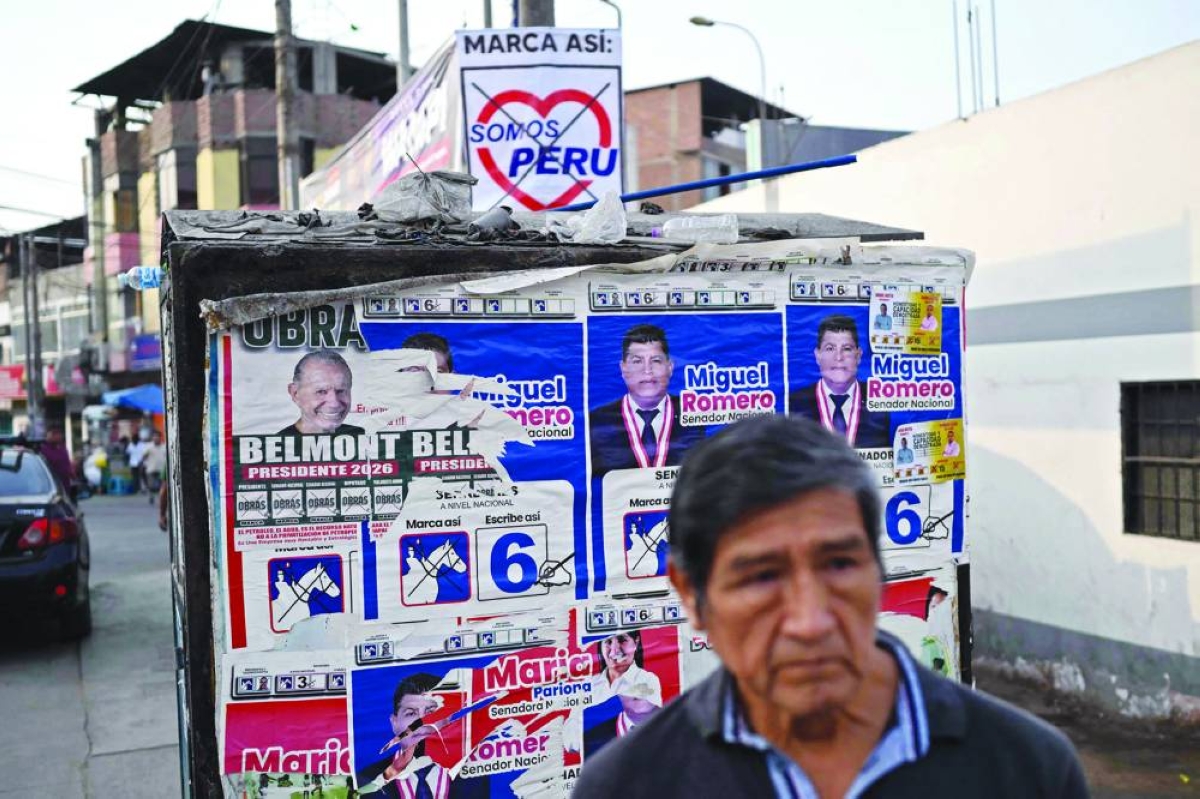
A man waits for a bus next to political propaganda in the Villa Maria del Triunfo neighborhood in Lima, Wednesday. (AFP) Peruvians will choose from a bewildering array of 35 presidential candidates this Sunday, electing the next leader of an Andean nation beset by crime and a string of short-lived, scandal? tainted presidencies."Now any old person runs for office," said 51-year-old schoolteacher Jane Layza, pondering the plethora of presidential hopefuls, and how she will cast her ballot.A few in the field are well known — a popular male comic, the daughter of a brutal autocrat, and a former Lima mayor.But no candidate is polling above the teens, and it is unlikely any will break the 50% threshold needed to avoid a runoff. That is frustrating news for fed-up Peruvians.Pocked with stifling jungles, brilliant snowcapped peaks, and bone-dry deserts, this crucible of the Inca Empire has in recent years struggled with chronic political instability and a surge in organised crime.The country has had eight presidents in the last decade. So many have been removed from office and jailed that they have a specialised prison of their own.Latinobarometro pollsters found more than 90% of Peruvians have "little" or "no confidence" in their government and parliament, the highest figures in Latin America."I'm not going to vote for anyone who is in government today, that much is very clear," said 56-year-old shopkeeper Nancy Chuqui.In the last decade, the homicide rate has more than doubled.Peruvian police once received 3,200 reports of extortion a year. Now they get at least 26,500 — and that is unlikely to be the full total.It is not just that criminality has increased in volume, according to sociologist Patricia Zarate. "What has changed is the harshness, the intensity of crime: extortion, attacks, murders," she said.A kaleidoscope of foreign criminal gangs from Venezuela, Colombia, Ecuador, and Mexico compete with homegrown rivals for control of lucrative trafficking routes and other illicit business.According to Zarate, voters "believe that politics is not only associated with corruption, but also with organised crime," and they expect "more of the same" from any new leader.Paradoxically, the Peruvian economy remains one of the most stable in the region, with the lowest inflation in Latin America and growing mining exports.Polls suggest that Peruvians, like many in Latin America, are looking to right-wing candidates for answers. But experts say the election could throw up a surprise.In 2021, leftist Pedro Castillo polled in seventh place a week before the first round, but eventually won.This time around, candidates have tried to break through to voters with last-minute, headline-grabbing promises on crime.Former Lima mayor Rafael Lopez Aliaga, vowed to send criminals to Amazon jails ringed with deadly snakes.Frontrunner Keiko Fujimori, in her fourth attempt to win the presidency, has promised to copy her late father's widely denounced use of anonymous judges.She leads with 15% in an Ipsos poll published last Sunday, the last one authorised before the election.Voting is compulsory for about 27mn Peruvians, out of a total population of 34mn.Incumbent Jose Maria Balcazar, interim president for less than two months, is barred from running.According to Ipsos, a third of voters remain undecided, or plan to cast a blank or spoiled ballot.Political scientist Eduardo Dargent said many Peruvians will vote with little or no information.There are so many candidates that there's no way to get to know them all, he said.  Related Story

World
Taiwan opposition leader says China visit to sow ‘seeds of peace’

Taiwan opposition leader says China visit to sow ‘seeds of peace’

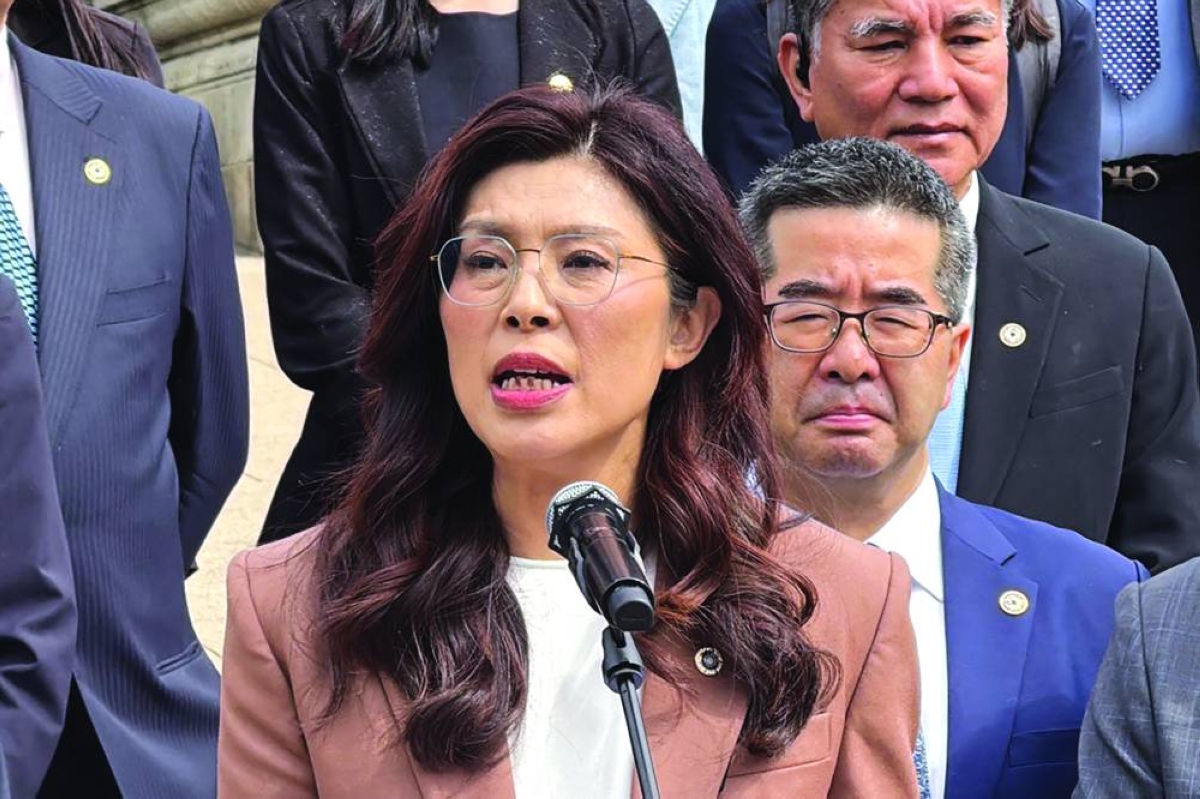
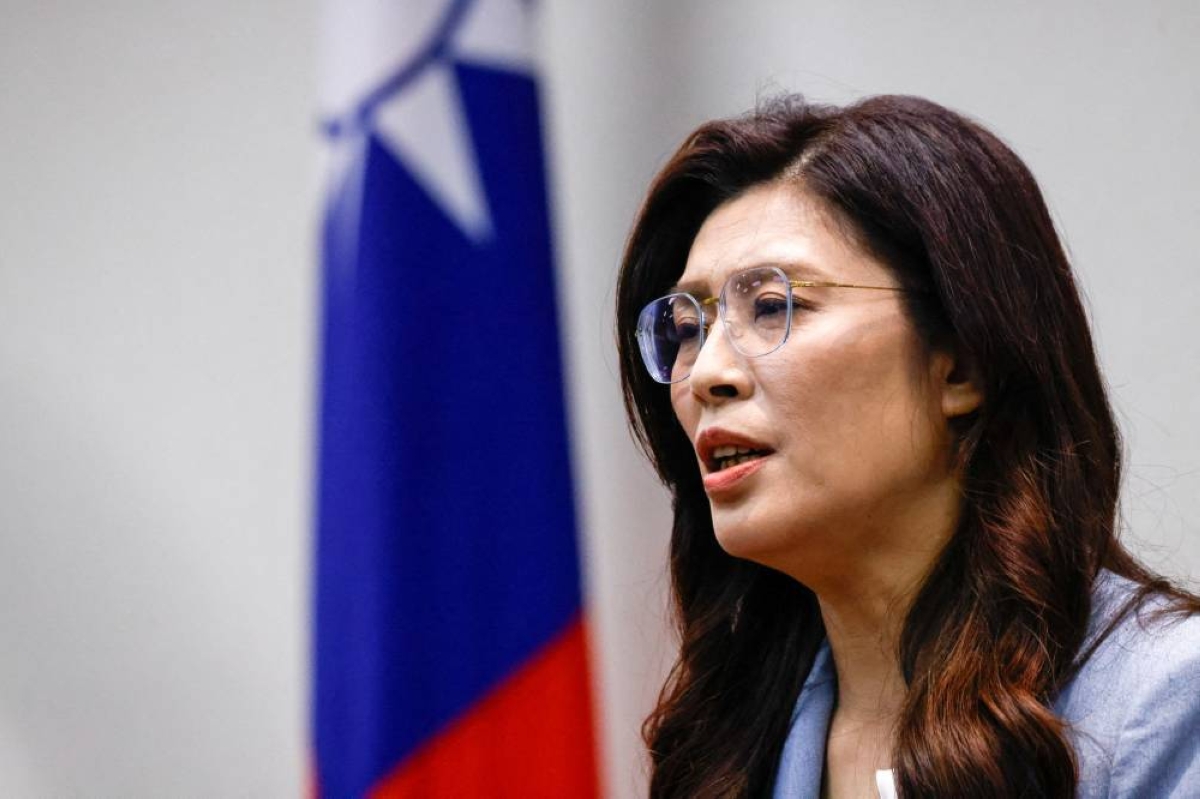
Kuomintang Chairperson Cheng Li-wen speaking to the press after a visit at the Sun Yat-Sen Mausoleum in Nanjing, in China's eastern Jiangsu province, Wednesday. (AFP) Taiwan's opposition leader, a proponent of closer ties with Beijing, said Wednesday she hoped to sow the "seeds of peace" during a rare visit to China.Kuomintang (KMT) chairwoman Cheng Li-wun is the party's first leader to visit China in a decade but her trip — during which she hopes to meet Chinese leader Xi Jinping — has sparked debate in Taiwan.Critics, including those within her own party which traditionally supports relations with China, have accused her of being too pro-Beijing.China claims self-ruled Taiwan is part of its territory and has threatened to use force to seize it."I hope that today we plant the seeds of peace not only for Chinese people on both sides of the Strait, but for all humankind," Cheng said on Wednesday, in comments broadcast by Taiwanese media.She spoke during a symbolic visit to the eastern city of Nanjing, where she visited the mausoleum of revolutionary leader Sun Yat-sen, one of the few Chinese historical figures revered in both Beijing and Taipei.Beefed-up security at the mausoleum prevented foreigners from entering, AFP journalists saw.China severed high-level contact with Taiwan in 2016 after Tsai Ing-wen of the Democratic Progressive Party won the presidency and rejected Beijing's claims to the island.Cross-strait relations have worsened since then, with China ramping up military pressure with near daily deployments of fighter jets and warships near Taiwan and regular large-scale military drills.However, Cheng said in a speech after her arrival on Tuesday evening that "the two sides of the Taiwan Strait are not doomed to war, as the international community has feared"."Taiwan should not be reduced to a geopolitical pawn," she said in a Facebook post, in an apparent reference to tensions between China and the US, Taiwan's main arms supplier.Her visit, she added, would mark a "historic journey of peace".In a park surrounding the mausoleum, 74-year-old Nanjing resident surnamed Fen told AFP on Wednesday that he had come to the area after hearing of Cheng's visit."I hope she will contribute to the reunification of the motherland," he said.  Related Story

World
Vietnam’s top leader To Lam to visit China next week

Vietnam’s top leader To Lam to visit China next week

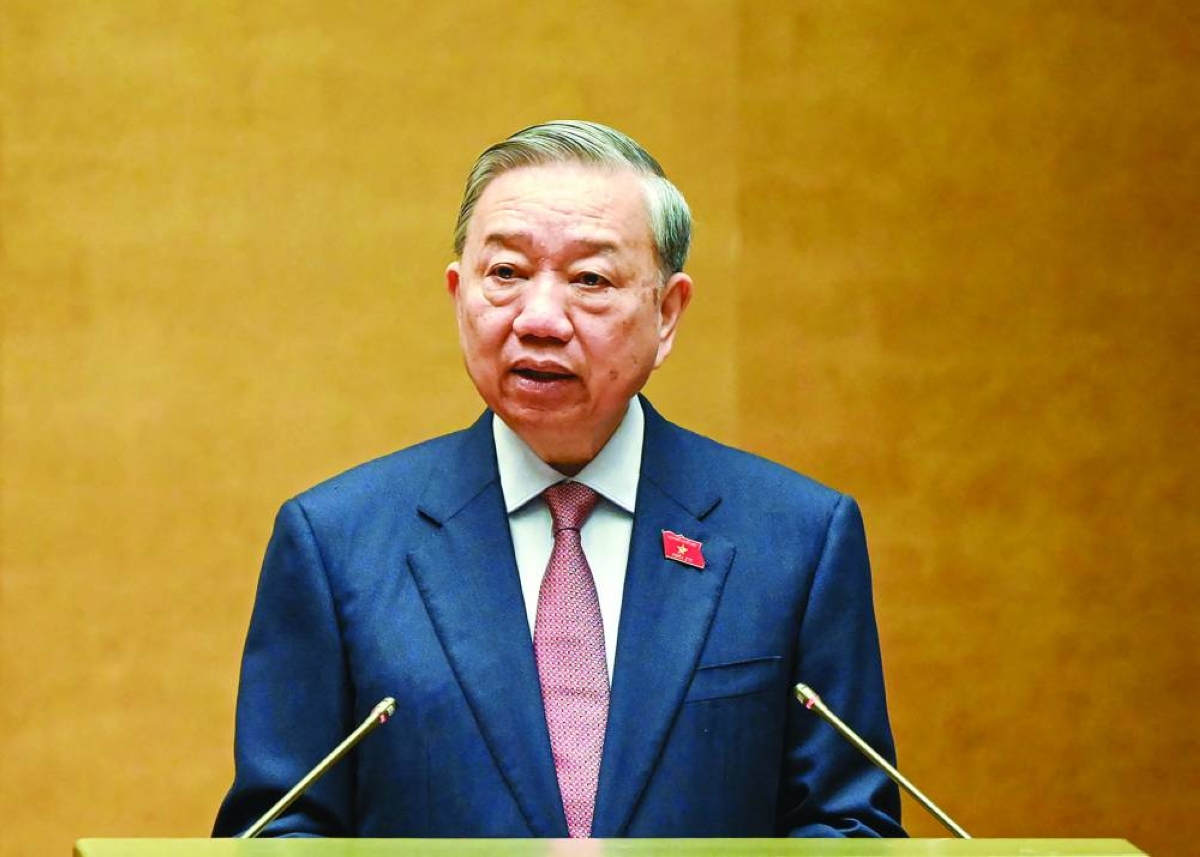
Vietnam's top leader To Lam plans to visit China next week to meet with counterpart Xi Jinping, an official briefed on his travel plans told AFP Wednesday, his first foreign trip since becoming president as well as Communist Party chief.Lam was elected president — the number two position in Vietnamese politics — by the National Assembly on Tuesday, unifying leadership of the party and state as Xi did in China."Vietnam's General Secretary and President To Lam would visit China between April 15-17," the official told AFP, adding he will meet with Xi.Other media reports have said the trip will begin on April 14.Despite rival territorial claims in the South China Sea, the two socialist states have sought to deepen already close economic ties to guard against global trade upheaval instigated by US President Donald Trump's tariffs.Both Vietnam and China get much of their oil imports via the Strait of Hormuz, where shipping has largely been halted due to the US-Israeli war with Iran.Xi on Tuesday congratulated the Vietnamese leader on becoming president and expressed his willingness "to work with To Lam... to continuously strengthen our respective socialist causes", Chinese state media reported.  Related Story

World
Veteran Hong Kong activist Koo Sze-yiu dies at 80

Veteran Hong Kong activist Koo Sze-yiu dies at 80

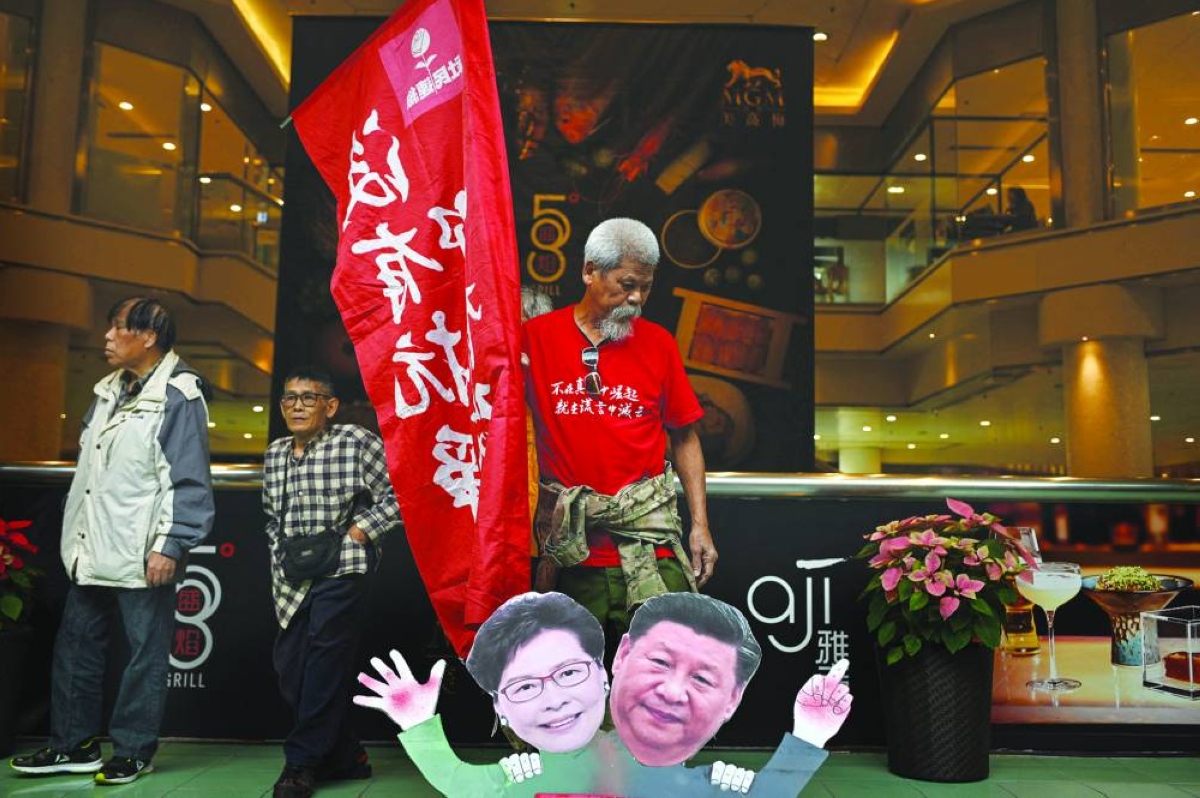
Koo Sze Yiu stands behind placards of Chinese President Xi Jinping and Hong Kong Chief Executive Carrie Lam during a protest before trying to board a ferry to Macau, in Hong Kong. (AFP/File photo) Hong Kong activist Koo Sze-yiu, who is known for decades-long pro-democracy advocacy and street protests, died of cancer on Wednesday aged 80, a local advocacy group said.A lifelong activist, Koo was among the handful of outspoken government critics remaining in the Chinese city after Beijing crushed Hong Kong's huge and sometimes violent democracy protests in 2019.He was also involved in decades of protests over disputed islets in the East China Sea known as the Senkaku islands in Japan and the Diaoyu islands in China, and campaigned for Japan to apologise for its invasion of China during World War II.Hong Kong-based group Action Committee for Defending the Diaoyu Islands said in a statement that Koo passed away in hospital, accompanied by his son.Fellow pro-democracy activist Figo Chan said in a social media post that Koo was "a fighter who defends the Diaoyu Islands, cares about human rights activists in mainland China, and has repeatedly been jailed for the people, a fighter who truly loved his country."Born in the Chinese city of Zhongshan in 1946, Koo spent most of his life in activism, from opposing the Portuguese colonial government in Macau to fiercely criticising Beijing's crackdown in Hong Kong.He was diagnosed with terminal rectal cancer in 2020, but continued to actively participate in street campaigns even as Hong Kong's civil society has shrunk in recent years.Koo was jailed at least 12 times since 2000, including a 2024 sentence for "attempted sedition" over plans to protest China's political clampdown with a prop coffin.In 2022, he was jailed for the same offence over a planned protest against Beijing's Winter Olympics."I don't mind being a warrior for the democracy movement, and I don't mind being a martyr for democracy and human rights," he told a Hong Kong court at the time. 

World
Protests over high fuel costs clog Dublin, other Irish cities for second day

Protests over high fuel costs clog Dublin, other Irish cities for second day

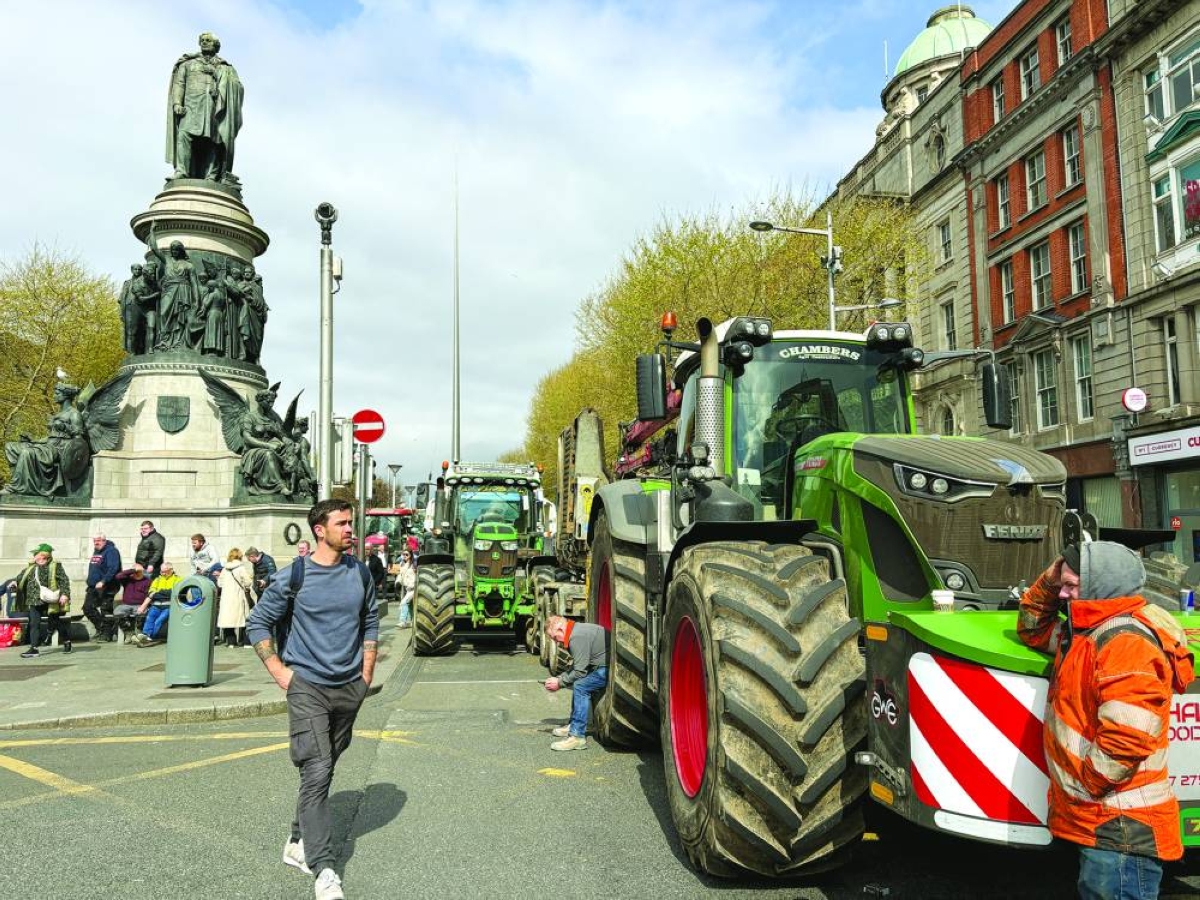
Tractors block Dublin's O'Connell Street, as part of a protest over the high cost of fuel that clogged up busy thoroughfares and motorways across Ireland for a second successive day, in Dublin, Wednesday. (Reuters) Protesters calling for further government help to lower ​the cost of fuel ‌clogged up busy thoroughfares and motorways with parked lorries ‌and tractors across ⁠Ireland Wednesday, disrupting commuters and public transport ‌for a second successive day.Convoys of vehicles began converging on ⁠Dublin's city centre and other towns and cities on Tuesday, with protesters, including hauliers and farmers, complaining that a 250mn euro package to temporarily cut taxes on petrol and diesel did not go far enough to cushion the knock-on cost of the Middle East conflict."With the price we're paying for fuel, I'm ​probably two months away from my business folding," said Christopher Duffy, 46, an agricultural contractor who was part of a group blocking Dublin's main thoroughfare ‌of O'Connell Street that ⁠is calling for the ​price of diesel to be capped at a ​lower rate."It's not a lot to ask for really... We're just backed into a corner."Ministers said they would not agree to the protesters' demands to meet with them as they did not belong to representative groups with whom the government has been engaging on supports. Organisers pledged a third day of disruption today."We respect people's right to protest but what is not acceptable is people declaring that we will ‌turn O'Connell Street into a ‌car park," Prime Minister Micheal ⁠Martin told a news conference.The lining of tractors and trucks down ⁠O'Connell Street led to ⁠severe delays to bus services and the part suspension of one of the two tram lines that cross the city. Significant traffic delays were also reported at motorways leading into other major cities.Protests at two fuel depots blocking deliveries into the cities of Galway and ​Limerick had led to at least one forecourt running out of fuel, the head of the representative body for forecourt operators told national broadcaster RTE.Ireland's government welcomed a two-week ceasefire in the Iran conflict and expected it to lead to a fall in fuel prices soon."If they give us that phone call or that meeting, the streets of Dublin will be cleared. If they don't, ‌we'll stay as long ​as it'll take," said 61-year-old farmer and agricultural contractor John Dallon. 

World
Venezuela interim leader Rodriguez vows to 'monitor' amnesty law

Venezuela interim leader Rodriguez vows to 'monitor' amnesty law

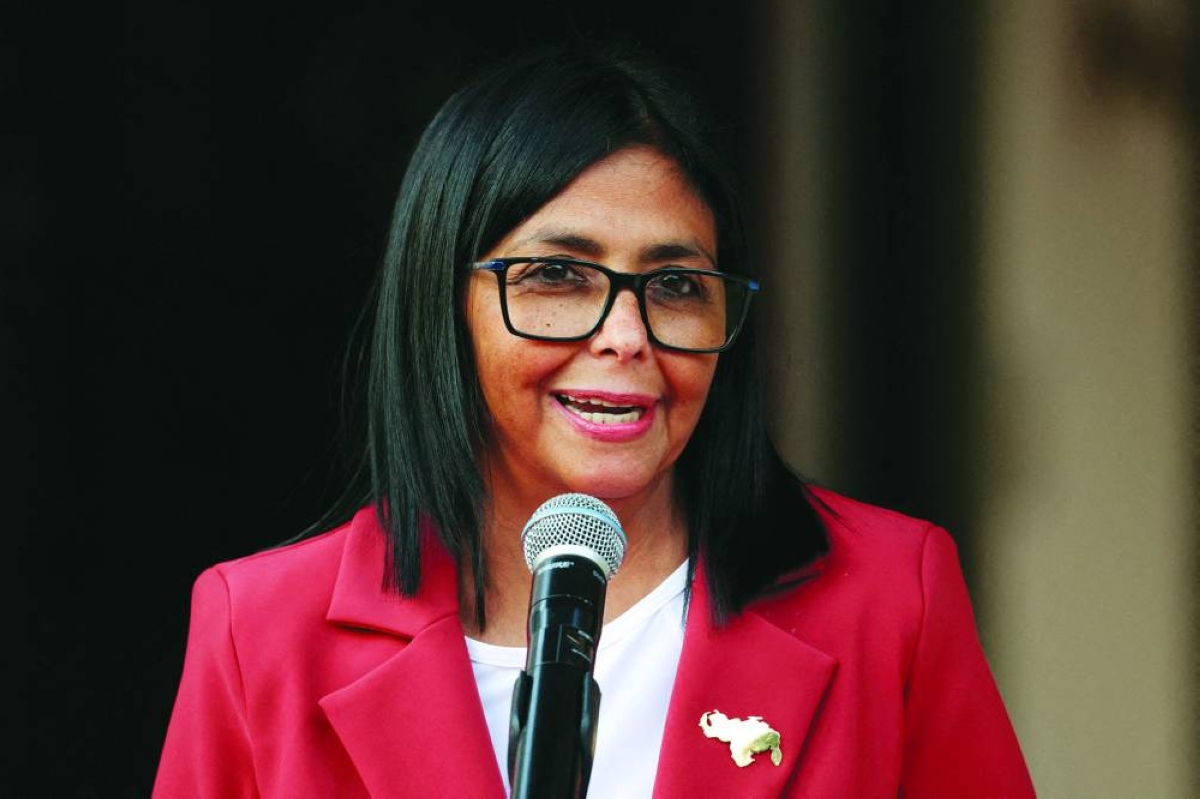
Venezuela's interim president Delcy Rodriguez vowed on Tuesday to 'monitor' the application of an amnesty law aimed at freeing political prisoners jailed under former leader Nicolas Maduro.The interim leader said she would keep an eye on the amnesty law in order to address the opposition's 'extremism,' which she said was inciting 'conflict' in the country.The law was passed in February by Rodriguez under pressure from Washington, after US forces captured Maduro and took him to New York to face drug trafficking charges that he denies.One of the most significant reforms championed by Rodriguez, it aims to turn the page on nearly three decades of state repression, but has been criticised by human rights organisations as being selectively applied.'More than 8,000 people have benefited' from amnesty, Rodriguez said in a televised speech.'Don't think that we don't know' that 'people who have benefited and continue to benefit from this amnesty law... are currently fomenting conflict,' Rodriguez said in her address at the Miraflores presidential palace in Caracas.'It is therefore important that we monitor the implementation of the amnesty law.''I'm not excluding anyone. I am simply saying that we need to monitor the situation to ensure that the opportunity we're providing to address extremism and radicalism can truly, truly help resolve these issues and secure the future,' she added.Around 700 political prisoners have been freed under the law, but between 500 and 700 remain behind bars, according to humans right organisations. Some groups say the law is being unfairly applied by judges accused of supporting the government.The law excludes those accused of involvement in alleged coups and assassination attempts.Opposition figures such as activist Javier Tarazona, one of the country's most prominent dissidents, and Perkins Rocha, legal advisor to Nobel Peace Prize laureate and longtime opposition figure Maria Corina Machado, have been excluded from its scope. 

World
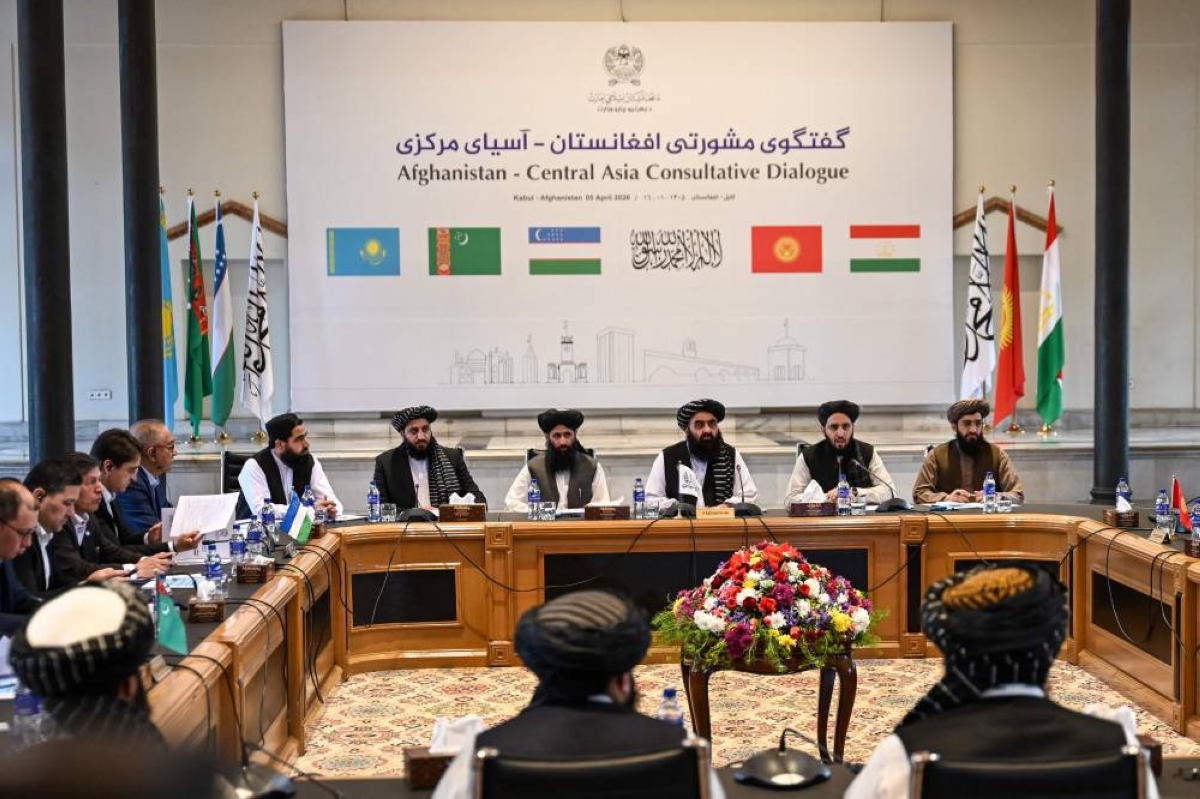
Afghanistan seeks to boost trade with Central Asia

Afghanistan seeks to boost trade with Central Asia

Afghanistan’s Foreign Minister Amir Khan Muttaqi (centre, back), along with representatives from Central Asian states, takes part in the Afghanistan-Central Asia Consultative Dialogue at the Foreign Affairs Ministry in Kabul on Sunday. (AFP)  Afghanistan aims to increase trade with Central Asian countries to $10bn within the next three or four years, Foreign Minister Amir Khan Muttaqi said on Sunday. Trade with Central Asian countries to Afghanistan’s north came to about $2.7bn in 2025, itself a significant increase over previous years, Muttaqi said. He stated Afghanistan’s new trade goal with its neighbours at a “constructive dialogue” meeting in Kabul with representatives from Tajikistan, Turkmenistan, Kyrgyzstan, Uzbekistan and Kazakhstan. The meeting focused on political, economic and security issues, regional cooperation, trade and the expansion of transit routes. Muttaqi said Afghanistan is seeking to use “its geoeconomic position” to link Central Asia with South and West Asia. Among the main projects is the TAPI (Turkmenistan-Afghanistan-Pakistan-India) gas pipeline, a major project between Herat in Afghanistan’s west and Turkmenistan, of which about 25 kilometres (15 miles) have been completed so far on the Afghan side. The Taliban government is trying to trade with the world, despite international sanctions on its banking sector that make investors wary. Russia remains the only state to have officially recognised the Taliban authorities, who returned to power in 2021, although countries including Turkiye, China, India and the United Arab Emirates have embassies in Afghanistan. Landlocked Central Asia is trying to regain its historic role as an important trading route. Access to the sea, heading south through Afghanistan, is vital because the route north through Russia is hampered by sanctions. Afghanistan has been in conflict with its eastern neighbour Pakistan for months, and faces a severe humanitarian crisis, but is seeking alternative partnerships. It shares a 2,329km border with Turkmenistan, Uzbekistan and Tajikistan. Dushanbe has been critical of the Taliban government in the past because of sometimes deadly cross-border incidents. Muttaqi acknowledged that “certain issues such as the threat posed by the Islamic State group, drug trafficking, and illegal migration are among our shared concerns” but said “there are no longer any security problems along our common borders”. 

World
Taiwan opposition leader to visit China

Taiwan opposition leader to visit China

Kuomintang (KMT) Chairperson Cheng Li-wun speaks to the media ahead of her trip to China, in Taipei, Taiwan. (Reuters/File Photo)  Taiwan opposition leader Cheng Li-wun leaves today for China and a potential ‌meeting with President Xi Jinping on what she says is a peace mission ​as Beijing makes a renewed push ‌to convince Taiwanese to support “reunification”. Cheng, chairwoman of the Kuomintang (KMT), Taiwan’s largest opposition party, ‌is travelling at a time of increased ‌Chinese military pressure on Taiwan, which Beijing ‌views as its own territory, and as the opposition-dominated parliament stalls a government plan for $40 bn in extra defence spending. The KMT and the ruling Democratic Progressive Party (DPP) have released duelling social media messages ahead of the trip, using the imagery of war and peace. “Peace is the only foundation for prosperity, and the hope for Taiwan’s future,” the KMT said on Sunday, putting out a video featuring young people relaxing on the ground, in a pool and smiling while looking up at the stars. The DPP shot back in a Facebook post that ​the KMT was trying to “co-operate with the Chinese communists’ scheme to weaken Taiwan’s defence capabilities”, pointing to the delay in passing defence spending, plans the US government has backed. Cheng told foreign reporters last month ‌that “peace cannot possibly be achieved through defence capabilities alone” and political ​efforts were equally indispensable. She is going to China a month before US ​President Donald Trump’s summit with Xi in Beijing. While the two sides could strike goodwill agreements in Beijing on trade in agriculture and aircraft parts, they are also expected to discuss areas of deep tension such as Taiwan, where little progress is expected. In a February call, Xi told Trump that the US “must carefully handle arms sales to Taiwan”. This is the first trip by a KMT leader to China in a decade, though China has yet to confirm whether Xi will definitely meet Cheng, who will be in Beijing from Thursday. Last week, Taiwan’s China-policy-making Mainland Affairs Council said Cheng should tell Beijing to stop its ‌military threats and respect the Taiwanese people’s ‌right to choose their own future. China refuses to speak to Taiwan President Lai Ching-te, saying he is a “separatist”. China has never renounced the use of force to bring Taiwan under its control, but says its preferred option is “peaceful reunification”. It has stepped up efforts in recent weeks to try and persuade Taiwanese of the benefits, including energy security, which Taiwanese officials have rejected. On Friday, the Eastern Theatre Command, which would lead any attack on Taiwan, published a cartoon picture of what “Taiwan province” would look like during the traditional Tomb Sweeping Festival, marked on Sunday, if it ​were united with China. People lay flowers at a “Monument for the complete reunification of the motherland”, in front of another sign showing the location — Taipei’s Machangding Memorial Park, where accused communist spy Wu Shi was executed by the KMT government in 1950. KMT forces fled to Taiwan in 1949 after losing a civil war with Mao Zedong’s communists. Opinion polls in Taiwan have repeatedly shown minimal support for accepting Beijing’s sovereignty under its “one country, two systems” model.Asked at the news conference with foreign reporters about her views on “reunification”, Cheng said the time was still far from ripe for such ‌a discussion. “What we need ​to deal with now is how to create peaceful and stable cross-strait relations,” she said.