1. Home
  2. Opinion

Category: Opinion

Opinion
Prince Harry and Meghan’s next power move decoded

Prince Harry and Meghan’s next power move decoded

Meghan Markle and Prince Harry looked visibly distressed as they stood at the bedside of Maria, a 14-year-old burns victim, at the Speciality Hospital in Amman this week. The Sussexes — on a 48-hour non-royal

Opinion
The danger of being inured to the status quo

The danger of being inured to the status quo

We have all had the experience of staying a few days in a hotel — say on holiday — which becomes home. Quickly, it becomes familiar. Individuals adjust to change. People who come into money

Opinion
Few dots needed

Few dots needed

What was needed in the latest Trump 'State of the Union' speech was less words and more dot points.Surely the purpose is to document how the country is going and what the plans are for

Opinion
Long journey

Long journey

Long journey

Opinion
Rebalancing act: Key outcomes of German leader’s China sojourn

Rebalancing act: Key outcomes of German leader’s China sojourn

German Chancellor Friedrich Merz urged Beijing to press Russia for an end to the Ukraine war and raised the issue of Europe’s yawning trade gap with China as he followed a string of Western leaders to court President Xi Jinping. Here are key outcomes of the German leader’s inaugural trip to China earlier this week: Travelling with dozens of business leaders, Merz told reporters that economic competition “played an important role” in conversations during his visit. European businesses complain that China, with its low domestic demand, is flooding Europe with cheap goods. Germany’s trade deficit with China hit a record €89bn ($105bn) last year. “This dynamic is not healthy,” Merz admitted after talks on Wednesday. “We want to reduce these imbalances, which have arisen primarily from overcapacity in China,” he said, vowing that more German officials would visit the country this year. While Merz stressed the need to reduce dependence and trade imbalances, China raised concerns about what it calls Berlin’s “over-securities” of trade and high-tech exports. Merz’s visit was a “success for both sides”, said Wang Dong, a professor at Peking University’s School of International Studies. “Germany secured strong economic and business deals, while China deepened strategic communication with Europe’s key power.” Companies from both sides reached more than 10 agreements this week across industries including autos, energy and finance, according to the Chinese commerce ministry. But the visit “did not exceed expectations,” said Philippe Le Corre, a China-Europe relations expert at the Asia Society Policy Institute’s Center for China Analysis. “Bilateral trade is unbalanced and increasingly so,” he said. “I don’t expect Chinese investments to come soon and help rebalance that deficit.” Merz said China had agreed to purchase up to 120 additional Airbus aircraft, adding that it “demonstrates how worthwhile such trips can be”. He did not specify when those purchases would take place. Airbus is Europe’s largest aerospace company, and China is a key export market. The new Airbus deal would follow a raft of orders announced by Chinese firms at the end of last year. Air China, Shanghai-based Juneyao Airlines and Spring Airlines, as well as Hong Kong-listed China Aircraft Leasing Group Holdings (CALC) announced purchases totalling around 150 jets. Airbus has yet to publicly comment on the deal announced by Merz. It did not respond to an AFP request. Merz told reporters following talks with Chinese leaders on Wednesday that he urged Beijing to exert influence on its ally Russia to end the war in Ukraine. “Signals from China are taken very seriously in Moscow,” Merz said. “China’s voice is heard in the world.” Xi said that diplomacy was “key to the issue” and that it was necessary to address the “legitimate concerns” of all sides, according to Chinese state news agency Xinhua. Merz added that Germany wanted China to avoid supplying Russia with dual-use goods its military could use against Ukraine. “I hope that in my talks I was able to foster a little understanding for the fact that the leadership of this country should also contribute to ending the war in Ukraine,” Merz told reporters before he left China on Thursday. Merz said he had also touched on the sensitive topic of Taiwan, the self-ruled island China claims as its territory and which it has not ruled out using force to annex. Any “reunification” must be done peacefully, the German leader said. Merz is the latest in a string of Western leaders to visit China since December. “China has risen to the ranks of the great powers,” Merz said. “That is also changing our relationship with China.” Britain’s Keir Starmer, France’s Emmanuel Macron and Canada’s Mark Carney also visited Beijing, as they recoil from a mercurial United States. “European countries now see China as a stable, indispensable partner — not just an economic player, but a critical factor in their foreign policy calculus,” said Peking University’s Wang. Merz said Germany’s trade policy was “not in isolation” from Europe. But visits by individual European leaders are not as strong as a coordinated push, Asia Society’s Le Corre warned.”Beijing has been trying to ignore EU institutions for the past few years,” he said. “Beijing is always keen to ‘divide and rule’.”   

Opinion
Balancing spiritual values, economic responsibility, environmental awareness

Balancing spiritual values, economic responsibility, environmental awareness

The holy month of Ramadan represents an opportunity to promote values of moderation, balance, solidarity, and self-discipline. However, the month also witnesses a noticeable rise in consumption levels across several sectors, particularly food, energy, and water. Instead of being a month of moderation and restraint, Ramadan has become for some families a season of excessive spending. Excessive consumption during Ramadan contradicts the essence of fasting, which is intended to refine self-discipline and strengthen social solidarity. From an environmental perspective, over-consumption aggravates waste management challenges, increases pressure on natural resources, and contributes to a higher carbon footprint, negatively affecting both the environment and society. In this context, experts have warned of the adverse consequences of rising non-essential spending on household budgets during Ramadan, stressing the importance of adopting behaviours that reflect the true objectives of fasting. Experts interviewed by Qatar News Agency (QNA) stated that high consumption during Ramadan is no longer limited to food, but has become a comprehensive phenomenon affecting various aspects of daily life, from energy and water consumption to increased purchasing and unplanned spending, creating a striking contrast with the spiritual values that the holy month is meant to reinforce. In this regard, Chairman of Friends of Environment Center (FEC), Dr Saif bin Ali al-Hajari, said Ramadan has become for some segments of society a season of intensive consumption rather than a period of reflection and rational use of resources. He stressed that focusing solely on food waste, despite its importance, does not reflect the full scope of the problem. He noted that consumption in Ramadan doubles in several aspects, with food representing the most visible component of a broader pattern that also includes energy, water, goods and even time. Food waste remains the clearest indicator of escalating consumption during the holy month, with estimates suggesting that food waste ranges between 30 and 50 percent of total food prepared in homes, hotels and restaurants. Food wasteDr al-Hajari pointed out that the average per capita food waste in Qatar during Ramadan exceeds global averages, stressing that these figures reflect imbalances in consumption culture and food planning, particularly amid the expansion of Ramadan banquets, social gatherings and rising demand for takeaway meals. The chairman of FEC also highlighted that energy and water consumption during Ramadan are no less significant than food waste. Homes typically experience higher electricity usage due to increased cooking activities and prolonged operation of household appliances, in addition to rising water consumption associated with food preparation and cleaning. He explained that this increase often occurs without real awareness of its environmental impact, despite its direct pressure on natural resources and contribution to a higher ecological footprint, stressing that rationalizing energy and water use is as important ethically and religiously as reducing food waste. Dr al-Hajari added that consumption during Ramadan also extends to non-food goods, as shopping malls and markets witness growing consumer demand driven by promotional campaigns and seasonal purchasing associated with the holy month. This spending pattern reflects a seasonal consumer culture based not on actual need but on social and psychological motivations, warning of its economic impact on families, especially amid rising financial obligations during and after Ramadan. In a less discussed dimension, Dr al-Hajari pointed out that wasting time is another form of irrational consumption during Ramadan, where excessive focus on preparation and consumption activities may overshadow the spiritual essence of the month, which is based on worship, reflection and social solidarity. Regarding the root causes of rising consumption patterns, he attributed them to the persistence of social customs linking abundance with social status, weak planning at the household level, commercial advertising influences during Ramadan, and limited awareness of long-term environmental and economic impacts. Dr Saif bin Ali al-Hajari affirmed that Qatar is making continuous efforts to promote responsible consumption through the National Food Security Strategy, waste reduction programs, and environmental and community initiatives aimed at strengthening sustainability concepts. He noted that charitable initiatives, smart applications and partnerships with the private sector provide practical models for managing consumption surplus, though their success ultimately depends on changing individual behaviour. He called for redefining the relationship with consumption during Ramadan, stressing that moderation does not mean limiting generosity but directing it in the right way. He emphasized that Ramadan is an opportunity to practice awareness rather than multiply consumption, and every resource we preserve today is a right for future generations. He also stated that building a sustainable society begins with simple daily decisions related to what we buy, consume and waste, stressing that the true spirit of Ramadan lies in balance rather than excess. For his part, Professor of Finance at the School of Business at Al al-Bayt University in Jordan, Omar Khalif Gharaibeh, pointed out in remarks to QNA that Ramadan has become a unique seasonal consumption phenomenon in Muslim societies, with effects extending to essential resources such as water and energy, as well as consumer behaviour regarding goods and services. Field estimates indicate that demand for food products may increase by 50 to 100 percent in some markets during Ramadan, accompanied by a noticeable rise in food waste. He also cited estimates by the Food and Agriculture Organization stating that about 1.3bn tonnes of food are wasted annually, adding that Ramadan represents a seasonal example of the global challenge of food loss. He noted the transformation of the holy month in some cases into a consumption-driven season influenced by social customs, advertising, and marketing campaigns. Excessive consumptionShopping has become an end, with spending increasing before iftar due to hunger and psychological stimulation. This psychological and social shift reflects a fundamental paradox: fasting is meant to regulate desires, yet in practice it is often accompanied by excessive consumption and waste, placing pressure on household and economic resources. Excessive consumption is not only linked to economic aspects but also to environmental challenges, including water and energy depletion, increased organic waste, and higher carbon emissions. Health experts also warn that overindulgence in sweets and fatty foods and poor sleep regulation can harm individual health, reflecting how resource mismanagement extends from society to the human body itself. Gharaibeh highlighted that Ramadan should be a comprehensive test of self-management and resource governance at both individual and societal levels, linking spiritual values with practical responsibility. He stressed that Ramadan should not become a season of luxury food or social competition but rather an opportunity to promote moderation and discipline in personal and public resources. He called for community-wide engagement in sustainable behaviour to reduce waste and support food security, noting that solutions should not be limited to individuals but should also involve public policies that encourage rational consumption, reuse practices and food donation. Addressing excessive consumption during Ramadan requires dual awareness, religious awareness that restores the true meaning of fasting based on moderation, and economic and environmental awareness that recognizes the impact of individual behavior on resource sustainability. Balancing the spiritual dimension with environmental responsibility is the pathway to making Ramadan a month of true worship and sustainable development at the same time.   

Opinion
Israel’s looming ban on 37 global NGOs a test case

Israel’s looming ban on 37 global NGOs a test case

In the hierarchy of threats to humanitarian relief, administrative fiat rarely ranks first. War, blockade, and bombardment do the obvious damage. Yet bureaucracy, when turned into an instrument of policy, can be dangerously efficient. That is the danger unfolding in the occupied Palestinian territory, where Israeli authorities have set a deadline at the end of February or 1 March 2026 for 37 international nongovernmental organisations to cease operations unless they submit to onerous new registration rules. The stated aim, protecting national security, masks a choice with perverse consequences: to curtail independent relief at a moment when it is most needed. The legal vehicle for this policy, Government Resolution No. 2542, is sweeping. Adopted in December 2024, it compels all foreign groups providing aid to “Palestinian residents” to register with the Ministry of Diaspora Affairs and Combating Antisemitism by the end of 2025 or forfeit their licences. The law vests the state with broad discretion to deny or revoke registration on vaguely defined “public safety or state security” grounds. It conspicuously exempts organisations serving Israeli citizens, including residents of East Jerusalem. The result is a rule that is at once selective and instrumental: humanitarian work that benefits Palestinians is singled out for conditionality; humanitarian work that benefits Israelis is left untouched. Destructive by designFrom the humanitarian perspective, the new demands are destructive by design. At the heart of the dispute is a requirement that many organisations refuse to meet: the transfer of personal datalists of staff, including local employees and their biodata — to an authority that is a party to the conflict. For organisations that insist on neutrality and the protection of their teams, this is not a bureaucratic hurdle but an ethical and security red line. The disclosure of names, addresses and other personal details risks exposing staff to harassment, arrest or worse. For European NGOs it also raises legal alarms under EU data-protection regimes. In short, compliance would endanger people and expose organisations to legal liability; non compliance invites deregistration and closure. Many of the 37 organisations have proposed reasonable alternatives: independent sanctions screening, donor audited vetting and third party compliance mechanisms that filter potential security risks without handing over raw personal data to authorities. According to the petitioners, these offers have been largely ignored. Instead, Israel has proceeded with enforcement measures that have real-world consequences—denial of visas for foreign staff, stockpiling of essential goods at crossings and warehouses, and, for the minority that have complied, a process that appears selective rather than universal. Those consequences are not theoretical. International and Palestinian actors together deliver a very large share of vital services in Gaza and the West Bank. United Nations and aid agency data show that international NGOs run or support roughly 60% of Gaza’s field hospitals, operate all stabilisation centres for children with severe acute malnutrition, and deliver substantial shares of water, sanitation, and hygiene services. OCHA warns that the closure of these 37 groups could shutter one in three health facilities in Gaza immediately, cut off monthly specialised care for roughly 20,000 patients and leave severe gaps in malnutrition treatment and sanitation—outcomes that would translate quickly into excess mortality and morbidity. The ban is also the latest phase of a broader squeeze on the international presence in Palestinian areas. Restrictions on UNRWA, the suspension of aid consignments deemed “dual use”, and curbs on civil society actors point to a strategy that uses administrative levers to shrink independent relief and oversight. That is significant for two reasons. First, independent organisations do more than deliver goods; they monitor abuse, advocate for civilian protection and provide a protective visibility that deters some excesses of violence. Second, substituting state controlled or politically vetted aid for an independent humanitarian architecture risk politicising relief and eroding the impartiality that underpins international assistance. The government’s legal argument rests on domestic security prerogatives and a claim that it has authority to regulate foreign actors operating on territory under its control. The petitioners counter that Israeli bodies have exceeded their authority under arrangements deriving from the Oslo Accords,under which the Palestinian Authority retains competency over NGO registration in parts of the territory, and that, as an occupying power, Israel has positive obligations under international humanitarian law to facilitate relief for civilians. They also stress proportionality: the imposition of blanket data sharing requirements is, they argue, arbitrary and disproportionate to any legitimate security aim. Whatever the merits of the competing legal claims, the practical arithmetic is stark. Only 27 organisations have apparently satisfied the registration demands, leaving gaping holes in service provision. At the same time, aid consignments, food, medicines, shelter materials worth tens of millions of dollars, remain stockpiled at crossings and in warehouses. Humanitarian work in Gaza and the West Bank is already being performed under extreme strain: infrastructure damage is vast (the UN estimated that as of mid October 2025 some 81% of structures in Gaza had been damaged), health facilities and schools are largely destroyed or impaired, and food insecurity afflicts a large fraction of the population. Removing independent actors from that scene will not stop suffering; it will intensify it. Strategic ironyThere is also a strategic irony. If the declared aim of the policy is to safeguard Israeli security, the likely outcome is the opposite. A rapid withdrawal of international NGOs will create governance and service vacuums that aggravate instability, fuel grievances, and increase reliance on non-transparent networks for basic needs — conditions that tend not to make a conflict easier to manage. Moreover, the reputational and diplomatic costs are immediate. Donors, European governments, and the United Nations are being asked, in effect, to accept a diminished role for institutions they finance and in which they place considerable trust. Many of those governments will find that domestic pressure and legal obligations do not allow them to countenance acquiescence. What should be done? Short of a reversal of the policy, the immediate imperative is to prevent an abrupt collapse of services. Israel’s courts should consider, and could sensibly grant, an interim injunction to pause enforcement while the matter is examined. That is what the petitioners have asked for. Parallel diplomatic channels should press for practical compromises: credible, independent vetting mechanisms that address security concerns without wholesale transfer of personal data; guarantees that registration decisions will be transparent and subject to appeal; and, crucially, assurances that lifesaving supply chains will not be blocked. Beyond these crisis management steps, the episode raises a larger question about the role of humanitarian actors in contexts where state security narratives are mobilised to curtail independent action. Democracies have a legitimate interest in protecting themselves; they do not, however, win security by undermining institutions, domestic or international, that stabilise fragile environments. When politics, law and administration combine to shrink neutral humanitarian space, the people who suffer most are civilians who have no part in those machinations. The 37 organisations facing closure have framed their appeal in stark terms: allowing the closures to proceed will cause immediate and irreversible harm. That is at once a legal plea and a moral one. Judges, diplomats, and ministers should weigh that claim not only against abstract security rationales but against the practical consequences of a humanitarian squeeze in a territory already ravaged by conflict. Administrative power can be precise and bureaucratically clean; its effects on people are messy and lethal. This is not the occasion for neatness. It is a moment to choose relief over regulation. A prolific writer and senior TV producer, the British-Sudanese author has won several awards for his work.  

Opinion
Why Druzhba oil pipeline has held up EU sanctions on Russia?

Why Druzhba oil pipeline has held up EU sanctions on Russia?

The stoppage of the last Russian oil flows to Europe, via the Soviet-era Druzhba pipeline, has triggered a geopolitical clash that has blocked new EU sanctions on Russia and vital funding for Ukraine. Druzhba, which translates as “friendship” in English, is ‌a pipeline that carries crude oil from Russia to Eastern Europe, via Ukraine. The Soviet-era link was one of ​the most important Russian oil arteries, delivering ‌crude from West Siberia to the industrial heartland in Europe including Belarus, Germany, Hungary, Poland, Slovakia, the ‌Czech Republic and Ukraine. At its peak, Druzhba pumped over ‌1mn barrels per day, over 1% of global ‌oil supply, according to Russian oil pipeline monopoly Transneft. Most EU countries halted their Russian oil imports following Moscow’s full-scale invasion of Ukraine in 2022, and by the start of this year Druzhba was carrying around 200,000 bpd to Hungary and Slovakia, according to Reuters calculations based on official data from the two countries. The leaders of Hungary and Slovakia are outliers in the EU for maintaining close ties with Russia. They say buying oil elsewhere is more expensive and would endanger their energy security. On February 12, the government of Ukraine said flows have been suspended for over two weeks, since January 27. Oil flows via Druzhba have been disrupted in the past and were usually reported by the countries involved within hours. Ukraine ​has accused Russia of damaging the pipeline with drones. Russia, as well as Hungary and Slovakia, have accused Kyiv of stalling the repairs for political reasons. Ukraine has not publicly disclosed details of the damage, nor a date for when it ‌expects to resume deliveries via Druzhba. Kyiv says repairs are ongoing, but shelling ​by Russia poses security risks to these efforts. A note submitted by Ukraine to a technical meeting ​of EU governments on oil supplies on February 25, seen by Reuters, said Russian attacks on January 27 had damaged an oil pumping station near the city of Brody and “technological and auxiliary equipment” of the Druzhba pipeline. Reuters could not independently verify the extent of damage because it could not access the sites. Hungary retaliated against the stoppage of flows by vetoing new EU sanctions on Russia this week and blocked a new EU loan for Kyiv, straining Europe’s pro-Ukrainian consensus on the eve of the fourth anniversary of the Ukraine war. Hungarian Prime Minister Viktor Orban, whose party is trailing behind the opposition in polls ahead of an April 12 election, on Wednesday accused Ukraine of an “oil blockade”. Orban has cast the election as a choice between “war or peace”, saying his ‌opponents would drag Hungary into the Ukraine conflict. Slovakia has ‌stopped providing emergency electricity supplies to Ukraine in response to the Druzhba dispute. Kyiv relies on emergency electricity from EU countries because of extensive damage to its power infrastructure from Russian drone and missile attacks. The EU has not said how it plans to break the deadlock on its new Russia sanctions, after talks between ministers on Monday failed to do so. Croatia has offered to replace oil from Druzhba by supplies via its Adria pipeline with non-Russian supplies shipped in by tankers. Pipeline operator Janaf says Adria could deliver as much as 280,000 bpd of oil to Hungary and Slovakia, more than enough to replace the 200,000 bpd coming from Russia. Hungary’s MOL has previously said Adria cannot deliver those volumes and that maintaining supplies via ​Druzhba is crucial to its operations. MOL and Janaf said on Wednesday they would start tests to confirm Adria’s capacity, with international observers present. The halt of supplies via Druzhba has not triggered an immediate oil shortage in Hungary or Slovakia. Both countries have ordered an emergency release of stocks. The cut in Druzhba flows has added to Russian oil production and export problems, according to traders and analysts. Russian oil flows to India and Turkey are set to drop in March-April due to US sanctions, leaving China as the main buyer of crude. Ukrainian drone attacks have also damaged several refineries inside Russia, reducing its ability to process crude, which together with export problems may ultimately lead to production cuts, according to analysts. Market ‌jitters over supply disruptions from ​Russia alongside U.S.-Iran tensions have supported benchmark crude oil prices above $70 per barrel, well above analysts’ predictions of $60 per barrel this year.   

Opinion
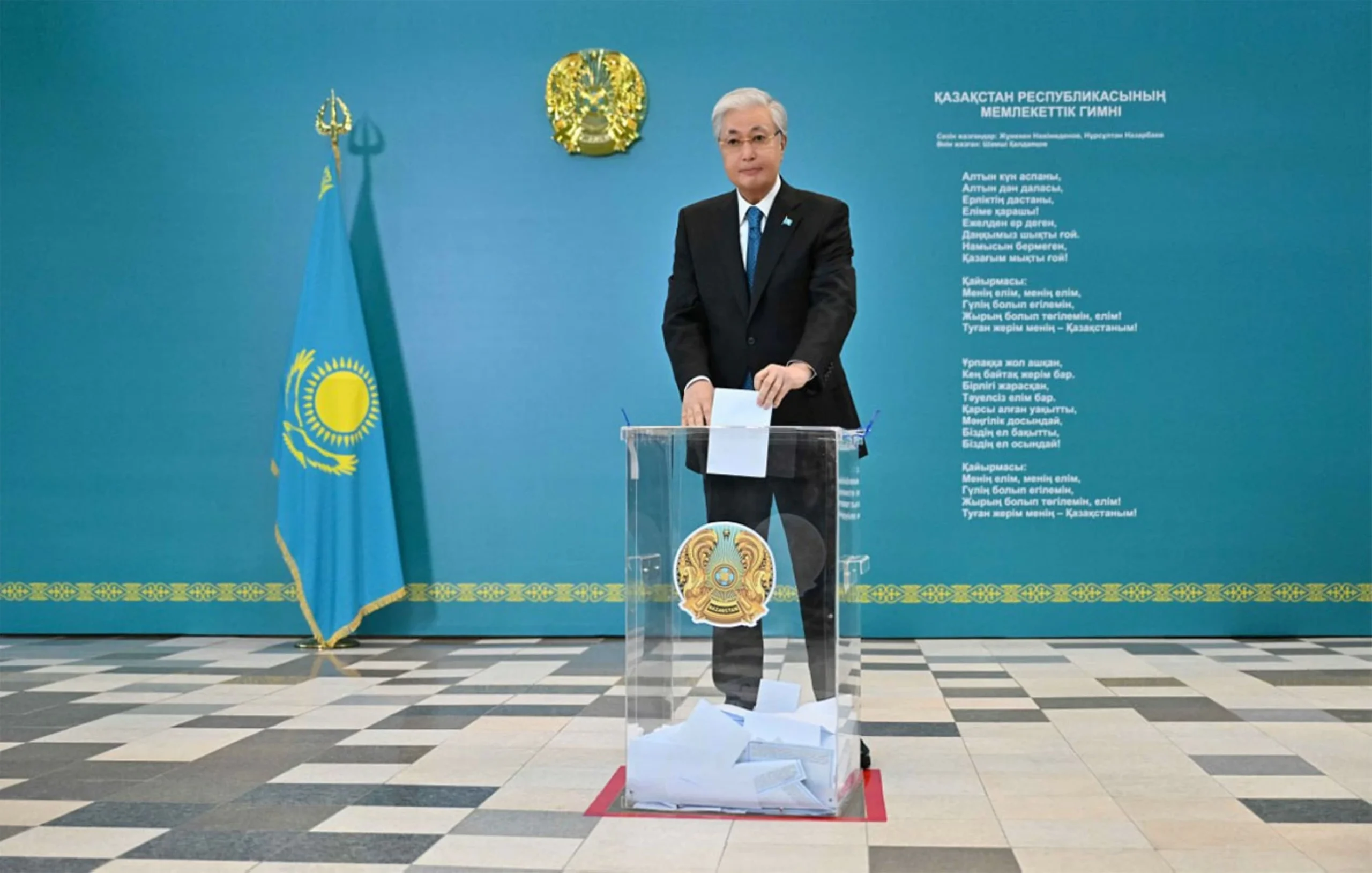
Trump’s aggressive State of the Union address

Trump’s aggressive State of the Union address

US President Donald Trump loves to be aggressive and say things that enrage his opponents, especially the Democrats. And this is what he did in his State of the Union address to the joint session

Opinion
A win for some offshore wind projects, roadblocks for others

A win for some offshore wind projects, roadblocks for others

Alex Brown, Tribune News ServiceThe five East Coast offshore wind projects that recently won court victories over the Trump administration have restarted construction, but they make up just a small fraction of Atlantic states’ ambitious