admin
admin 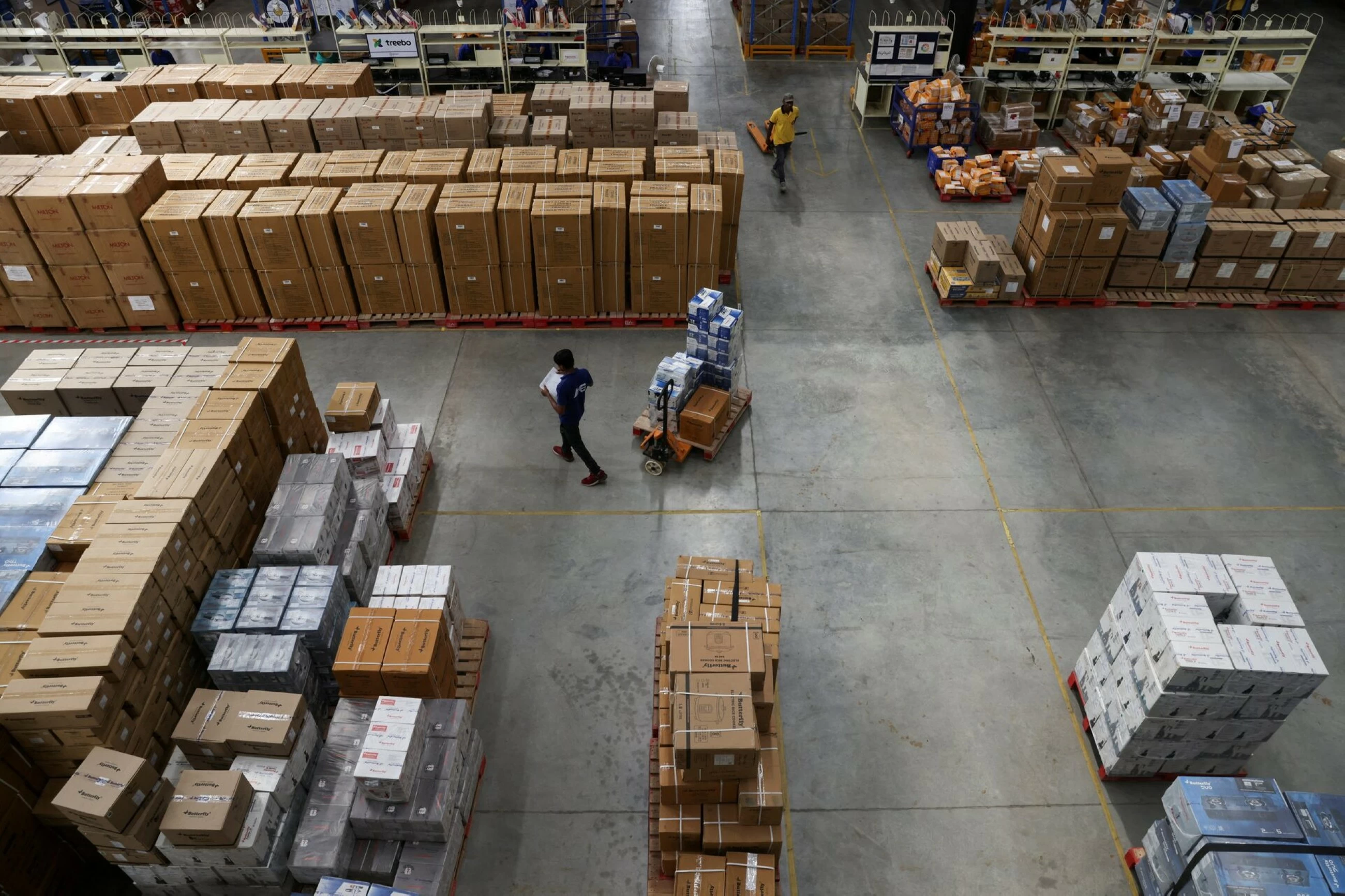
India’s Third-Party Logistics (3PL) sector has established itself as the warehousing market’s dominant occupier segment, recording cumulative gross absorption exceeding 110 million sq. ft between 2021 and H1 2026, according to JLL report titled ‘Beyond the Box: The Future of Real Estate of India’s Leading 3PL Players.’ The sector maintained consistent absorption shares ranging between 28% and 42% throughout this period, demonstrating sustained momentum despite broader economic fluctuations.
“India’s 3PL sector consistently captures the highest share of gross warehousing demand, thus establishing itself as one of the market’s most consistent growth engines. The 25% expansion in average deal sizes from 100,000 sq. ft in 2021 to 125,000 sq. ft in 2025 is not just about scale; it signals a long-term trajectory of growth and appetite for future-ready infrastructure.
This is about India’s manufacturing and logistics sector becoming globally competitive through strategic infrastructure investment that supports automation, sustainability, and technology integration,” said Yogesh Shevade, Managing Director, Industrial & Logistics, India, JLL.
There is a pronounced shift toward institutional-grade warehousing infrastructure that reflects the systematic prioritisation of operational efficiency and modern specifications supporting technology integration and automation readiness.
Presently, most customers tend to offer shorter contractual terms of engagement but expect heavy investments in technology and operations from 3PL players.
This doesn’t present an ideal scenario and likely stands in the way of higher technology penetration.
Average deal sizes across the 3PL sector grew 25% from 100,000 sq. ft in 2021 to 125,000 sq. ft in 2025. For Grade A facilities specifically, average transaction sizes reached 145,000 sq. ft in 2025.
This expansion in transaction scale indicates network consolidation strategies and longer-term commitments to quality infrastructure, with larger footprints enabling centralised operations and improved inventory management across expanded service territories.
The rental analysis reveals divergent growth patterns between facility grades. Overall 3PL facility rents increased at 3.9% compound annual growth Rate (CAGR) from 2021 to 2025, reaching INR 21 per sq. foot.
Grade A facilities demonstrated stronger appreciation at 4.9% CAGR, reaching INR 23 per square foot in 2025. There is a mismatch of market rentals vs occupier expectations on rentals for 3PLs. An equilibrium is much needed.
The rental premium for Grade A facilities accelerated notably in H1 2026, rising to INR 23.7 per square foot—a 7.7% year-on-year increase that outpaced overall market growth.
This widening differential underscores occupiers’ willingness to absorb higher costs in exchange for enhanced operational capabilities.
The 110 million sq. ft of cumulative absorption since 2021 positions 3PL operators as one of the warehousing sector’s largest occupier categories throughout this measurement period.
The sector’s consistent 28-42% absorption share across five annual cycles demonstrates structural demand resilience rather than cyclical volatility.
E-commerce/quick commerce and manufacturing businesses tend to outsource logistics to 3PL players, but the biggest challenge still remains, attracting and retaining trained talent. Ideally, developer, occupier, and 3PL convergence from the planning phase through construction to operations can bring much-needed synergy to the process.
Can NRIs buy agricultural land in India? Mathew Varghese, Sharjah.
Under FEMA, 2000, regulations, NRIs cannot directly purchase agricultural land in India. However, it may be acquired through inheritance from a resident Indian relative, gift from a resident Indian relative and with special approval from the RBI, which is granted only in limited cases after scrutiny of FEMA compliance and state land laws.
For NRIs, is a single Will sufficient or separate Will needed for Indian assets? Please clarify. Roy Amita, Dubai.
It is better to have different Wills for Indian and overseas assets.
This is because different countries have their own probate procedures, and using a single will across borders can slow down the process involving considerable time and efforts.
Which is one reason, separate Will is needed, one for Indian assets and another for global assets.