admin
admin 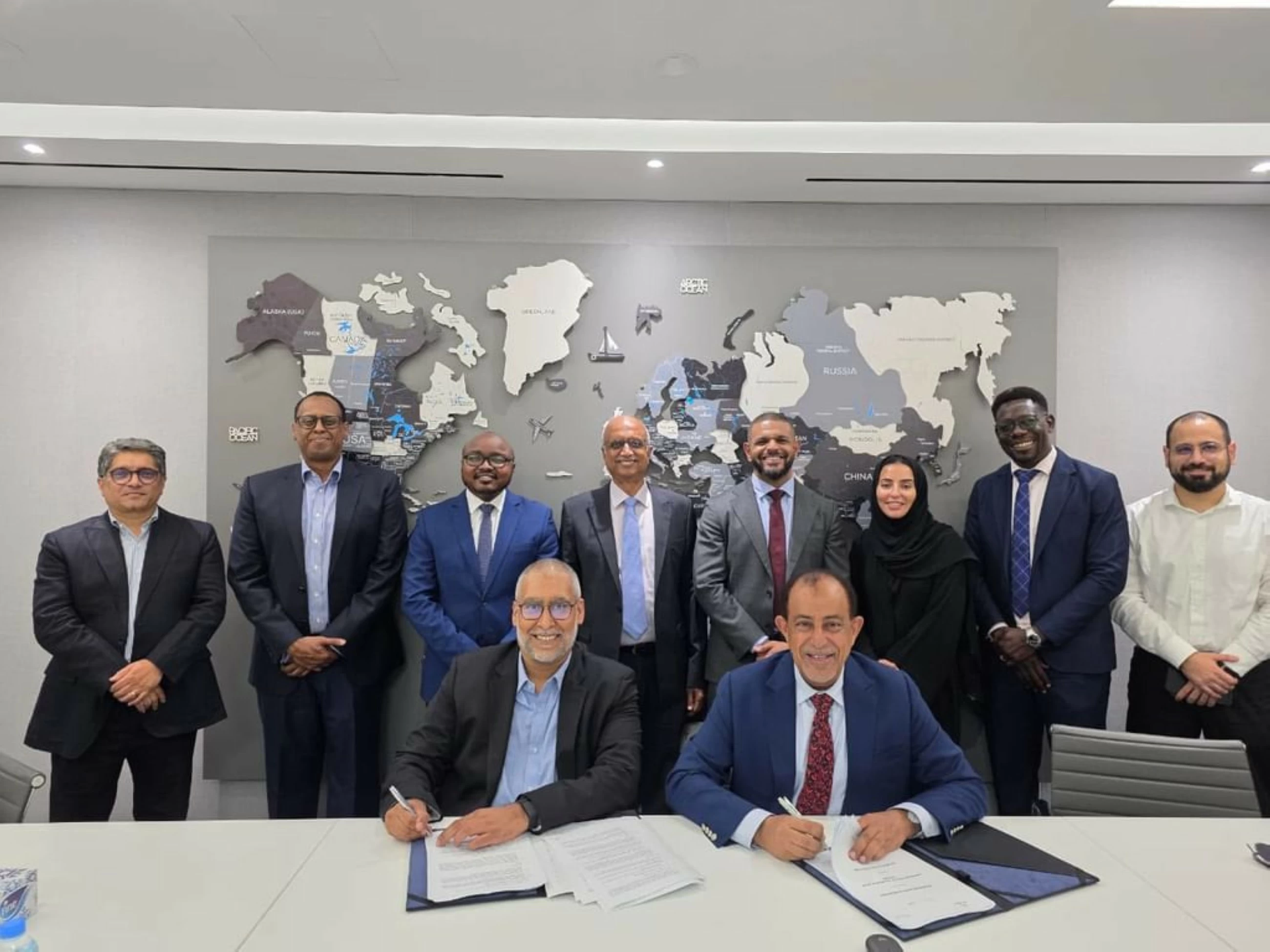
DP World is expanding its investment in Kenya through the development of the Mombasa Industrial Park, a Special Economic Zone (SEZ) that will strengthen the country’s position as a regional trade and logistics gateway and address the growing demand for modern industrial and logistics infrastructure in East Africa.
DP World signed an agreement with GulfCap Africa, a Kenya-based investment and development Group founded by Suleiman Shahbal, to develop the project.
To be developed over phases, the 222 hectares industrial park will be strategically located less than 20 kilometres from the Port of Mombasa, providing businesses with efficient access to regional and international markets. The first phase of the industrial park will span 40 hectares.
Yuvraj Narayan, Group CEO of DP World, said, “Kenya is an important market for DP World and a key gateway for trade across East Africa. The development of Mombasa Industrial Park reflects our commitment to investing in integrated trade infrastructure that connects ports, logistics and industrial ecosystems.
“By creating an environment where businesses can manufacture, distribute and access global markets more efficiently, we are helping unlock new opportunities for trade, investment and sustainable economic growth.”
Mohammed Akoojee, CEO and Managing Director for Africa at DP World, said that this project will not only strengthen regional trade and supply chain connectivity but also create thousands of employment opportunities, attract new investment and contribute meaningfully to Kenya’s socio-economic development.
Meanwhile DP World has attracted Dhs854 million in investments across Jebel Ali Free Zone (Jafza) in the first four months of 2026, underlining continued investor demand for Dubai’s trade and industrial hub.
The investments reflect commitments made by Jafza tenants to develop and expand facilities across manufacturing, logistics, food production, healthcare, vehicle handling and heavy equipment.
Momentum continued through March and April, with more than 43 per cent of the total commitments by value signed during these months.
The new investments reflect a broad mix of trade and industrial activity, including: Manufacturers of steel, food products and furniture strengthening production; Healthcare-related businesses investing in long-term operations in Dubai; Third-party logistics providers strengthening warehousing operations; Finished vehicle logistics operators investing in spaces for vehicle handling; Heavy equipment traders serving construction and industrial customers.
Jafza, home to 12,000 businesses, continues to play a central role in supporting Dubai’s trade and industrial growth. With its proximity to Jebel Ali Port and access to integrated sea, air and land connectivity, the free zone provides an efficient multimodal base for companies serving markets across the Middle East, Africa, South Asia and beyond.
Abdulla Al Hashmi, Global Chief Operating Officer, Parks and Economic Zones, DP World, said, “The scale of these commitments, particularly in essential sectors like food and healthcare, highlights how businesses are prioritising resilience alongside growth. We are seeing a clear shift towards long-term investment, with many large tenants choosing to anchor their regional and global operations in Dubai for the coming decades.
“This momentum reflects the strength of our integrated ecosystem as well as the reliability of our business continuity programmes, which have helped keep cargo flowing despite the recent disruption. It also reinforces Dubai’s position as a leading hub for trade, logistics and industrial activity.
“As demand continues to grow, we remain focused on enhancing our infrastructure and capabilities to support our customers and deliver sustainable, long-term value.”
DP World announced record financial results for 2025, with revenue up 22 per cent to $24.4 billion, and adjusted EBITDA up 18 per cent to $6.4 billion (margin 26.3 per cent), driven by strong performance across Ports & Terminals and Logistics.
Total Group gross throughput increased 5.8 per cent to 93.4 million twenty-foot equivalent units (TEU).
Profits for the year increased 32.2 per cent to $1.96 billion, reflecting operating leverage and disciplined cost management. Operating cash flow rose 14 per cent to $6.3 billion.
“In an environment defined by heightened uncertainty and changing trade dynamics, our diversified portfolio, disciplined capital allocation, and focus on high-yield cargo enabled us to deliver resilient earnings and strong cash flow,” said Essa Kazim, Chairman of the Board of Directors of DP World. “These results reflect the strength of our integrated platform and our ability to adapt as supply chains reconfigure.”
Yuvraj Narayan, Group CEO of DP World, stated, “Ports & Terminals performed strongly, supported by healthy volumes, improved yield and disciplined cost management, with like-for-like revenue per TEU increasing by 8.5 per cent. In 2025, we unified our Marine Services business under a single DP World brand, strengthening our position as a fully integrated global logistics provider.
“Across Logistics and our broader trade platform, we continued to scale capabilities and deepen collaboration through our ‘One DP World’ operating model. We remain focused on disciplined capital allocation, operational excellence and customer-centric execution—supporting customers through near-term uncertainty while investing selectively to deliver sustainable long-term growth.”
Return on Capital Employed (ROCE) increased from 8.9 per cent in 2024 to 9.9 per cent, reflecting stronger earnings despite continued geopolitical and trade uncertainty.
DP World invested $3.1 billion in capital expenditure in 2025 (up from $2.2 billion in 2024) to support capacity expansion and productivity enhancements globally. Port capacity increased to 109 million TEU.
For 2026, the Group’s 2026 capex budget is approximately $3 billion, focused on priority projects including Jebel Ali, Drydocks World, Tuna Tekra (India), London Gateway (UK), Ndayane (Senegal) and Jeddah (Saudi Arabia).
DP World reduced Scope 1 and 2 emissions by 14 per cent against a 2022 baseline, while approximately 67 per cent of global electricity is now sourced from renewables.
WAM