admin
admin 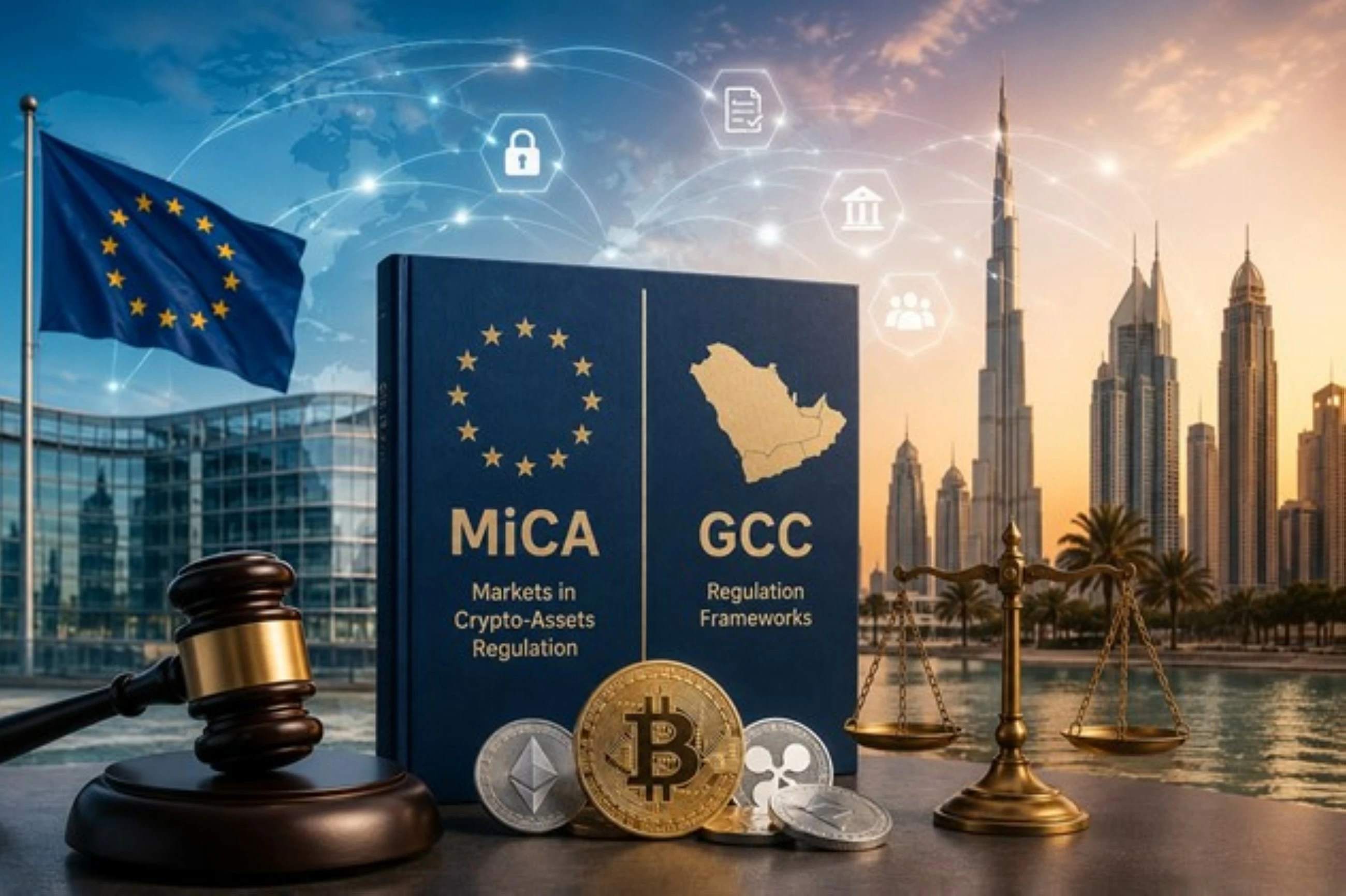
Recent years have seen a surge in the crypto market, with Dubai becoming a major crypto hub. As interest in crypto trading and investment rises, the need for regulation has grown significantly. Adequate regulatory frameworks across different regions ensures a more convergent global crypto market.
EU’s MiCA
In 2023, the European Union (EU) introduced the markets in crypto-assets (MiCA), governing crypto-assets not already covered by other EU legislation (e.g., MiFID II). GCC based Crypto-asset service providers (CASPs) offering crypto-assets to the public in the EU or seeking admission to trading must comply with MiCA.
General obligations such as safekeeping clients’ crypto-assets and funds, complaints-handling mechanisms, conflict of interest procedures, prudential requirements and governance arrangements are imposed on CASPs. Depending on the services provided, CASPs must also comply with requirements relating to client due diligence, transparency and prevention of market abuse.
Are you a CASP in the GCC wishing to provide crypto-asset services in the EU? Ensuring multi-jurisdictional legal compliance is key. The first step is to obtain authorisation from the relevant EU authority as a CASP. This is particularly important as MiCA provides for substantial penalties for infringements (e.g., up to €5 million for individuals and up to €15 million for companies). In addition to these fines, authorities may impose administrative measures, including temporary bans or suspension of authorisation. CASPs should therefore remain aware of applicable local laws.
Crypto-Assets in the GCC
Several GCC countries have introduced crypto-assets regulations, although their approaches differ. Similar to the EU’s approach with MiCA, GCC countries recognise the need to regulate crypto-assets to protect investors and ensure market integrity. However, unlike the EU’s unified legal framework, regulation in the GCC varies by jurisdiction.
In the United Arab Emirates, crypto-asset are regulated under both federal and free zone frameworks. Cabinet Decision No. 111 of 2022 established a framework for virtual assets and virtual asset service providers. Dubai Law No. 4 of 2022 created the Virtual Assets Regulatory Authority (VARA), while the Abu Dhabi Global Market (ADGM) and the Dubai International Financial Centre (DIFC) regulate crypto-assets through the Financial Services Regulatory Authority (FSRA) and the Dubai Financial Services Authority (DFSA) respectively.
Bahrain introduced the Crypto-Asset Module, establishing licensing and anti-money laundering requirements for crypto-asset service providers.
Saudi Arabia has no comprehensive framework for crypto trading, while Qatar permits certain digital asset activities within the Qatar Financial Centre but not traditional cryptocurrencies such as Bitcoin. Kuwait prohibits crypto-related activities, while Oman is developing a regulatory framework focusing on licensing and investor protection.
As crypto markets grow, both the EU and GCC continue to encourage innovation through regulation. While the EU has adopted a unified framework under MiCA, GCC countries continue to follow different approaches.
For companies operating across these regions, understanding both EU and GCC rules is essential for compliance. As regulations continue to develop, closer alignment between these regions could create smoother pathways for cross-border crypto business, opening new opportunities for growth and innovation.
Joint Article By
Mr. Hassan Amine El Sayed & Ms . Fatimah Diouani
PhD researchers at Vrije Universiteit Brussel (VUB)