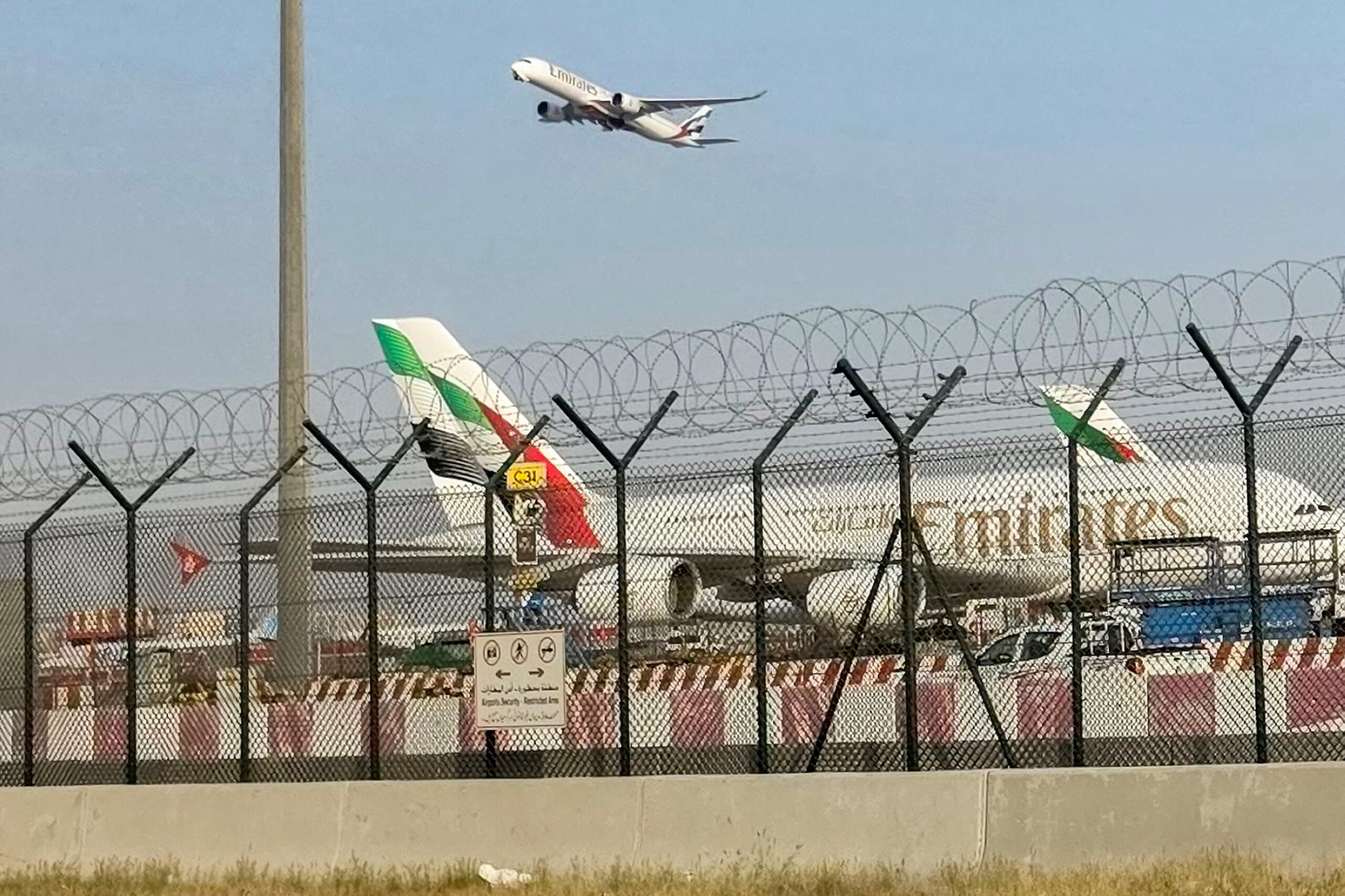
In moments of escalating regional tension, a central question inevitably arises: what might compel the Gulf states to move from deterrence to direct retaliation against Iran — and what would mark the decisive turning point? The answer begins with a crucial clarification: the confrontation unfolding today is fundamentally an Iranian–American–Israeli conflict, not a Gulf war. Yet the Gulf finds itself precariously caught between both sides. Israeli escalation risks widening the conflict, while Iran’s retaliations often unfold unpredictably. The region thus remains exposed to the fallout of a crisis not of its own making. For years, the Gulf — and particularly His Highness the Amir Sheikh Tamim bin Hamad al-Thani — has championed dialogue as the essential path to stability. From UN speeches to international forums, Qatar’s leadership has repeatedly urged diplomatic engagement on Iran. Even in the tense weeks preceding this war, Qatar pursued direct talks with all stakeholders, including Tehran, in a bid to de-escalate.A critical question now looms: can the world sustain wars of this nature? Modern conflicts reverberate far beyond the battlefield, disrupting global markets, transport, and energy flows. The evidence is already stark. Aviation analytics firm Cirium reports over 23,000 flight cancellations since February 28 — more than half of the 36,000 scheduled Middle East flights — cutting some 4.4 million passenger seats. All GCC states experienced temporary airspace closures, dealing a severe blow to regional tourism during Ramadan and causing projected losses of $40 billion. Hamad International Airport in Doha logged over 2,000 cancellations, Dubai International endured an evacuation after being hit, and Abu Dhabi’s Zayed International scrapped more than 1,000 flights since the war began. Even perceived threats to maritime corridors have triggered market shocks far beyond regional shores. The energy shock has been no less dramatic. Oil prices surged about 50% following the initial strikes on Iran, with Brent crude briefly topping $119 a barrel — the first time since Russia’s 2022 invasion of Ukraine that prices crossed the $100 mark. Qatar’s Energy Minister HE Saad bin Sherida al-Kaabi warned that Gulf producers could be forced to halt output if tankers cannot transit the Strait of Hormuz, a scenario that could push prices toward $150 a barrel and “bring down the economies of the world.” Rystad Energy analysts predict that unless the war eases, Brent could average $135 within four months. Amid this volatility, a strategic question arises: are US–Israeli objectives in this conflict aligned with those of the Gulf? The Gulf’s enduring priorities are clear — regional stability, secure energy flows, and economic continuity. Diplomacy, led by states such as Oman, once brought Iranian engagement to an advanced stage. But the current escalation risks unravelling that delicate progress. Nonetheless, the Gulf has shown professionalism and preparedness in managing security risks. Defence co-ordination across the region — from co-ordinated air operations to joint intelligence — reflects growing institutional maturity. As of March 10, 2026, Qatar’s Ministry of Defence reports that national defence systems intercepted approximately 138 ballistic missiles, seven cruise missiles, and 53 drones since the onset of Iranian attacks. Yet an irony remains: Qatar — a state that has consistently played mediator, including during Gaza ceasefire efforts — has sometimes faced criticism or even threat despite its diplomatic overtures. Such contradictions underscore the volatility and polarisation of the present moment. Across the Arab world, recent days have revealed divided reactions. Social media commentary in the Gulf has shown frustration toward some Arab states perceived as unresponsive or muted in the face of crisis. Whether justified or not, this sentiment highlights a deeper truth: Gulf states represent one of the few remaining zones of Arab political and economic success. Their stability rests on decades of governance reform, diversification, and institutional consolidation. But success brings responsibility. The Gulf must now move beyond economic integration toward strategic co-ordination. A unified foreign policy posture — even if imperfect — would amplify collective influence and reduce vulnerability in future crises. Divergent diplomatic messaging risks weakening Gulf voices at precisely the moment when unity matters most. The region’s potential is extraordinary: young populations, deep financial reserves, and globally pivotal geography. With critical infrastructure bridging the Red Sea, Arabian Gulf, and Indian Ocean routes, the Gulf is indispensable to global logistics. Middle East airports handle 14% of all international transit, so disruptions here ripple through global connectivity networks within hours. Security architecture is equally vital. International bases across the Gulf have long provided deterrence, but recent events are a reminder that lasting stability depends on regional unity first. A shared missile defence grid, tighter joint drills, and institutionalised crisis-response mechanisms would strengthen collective resilience and reduce reliance on external actors. The Gulf’s influence, however, extends far beyond defence. Its energy exports power entire continents — from LNG shipments in Qatar lighting Japanese cities, to Saudi and Kuwaiti oil sustaining economies in China and India. The Strait of Hormuz alone handles about 20% of global oil and LNG flows, and roughly 16% of the world’s fertilisers. Even brief disruptions there can send commodity shocks from Tokyo to Frankfurt. Hence, Gulf stability is not simply a regional imperative — it is a global necessity. Iran has often spoken of “strategic patience” as its guiding principle. But today, it is the Gulf’s patience that is most tested. The war has already disrupted 20% of global oil supply — more than double the losses seen during the Suez Crisis of 1956-57 — and the clock is still ticking. Despite provocations, Gulf diplomacy continues to stress restraint. The realities of war are unforgiving: ruined economies, displaced populations, and shattered infrastructure. Oxford Economics estimates international arrivals across the region could drop 11–27% in 2026, meaning a loss of 23–38 million visitors and $34–56 billion in tourism revenue. The longer-term reputational damage to the Gulf’s hard-won image as a safe, global hub could be even costlier. History repeatedly shows that conflicts launched with limited aims often spiral into crises far beyond their original scope.This is why the Gulf must remain cautious and avoid being drawn into a conflict fundamentally not its own. Maintaining open lines with Tehran remains indispensable. However tense the moment, diplomacy is always preferable to irreversible escalation. The Gulf states have the wisdom and institutional experience to navigate these challenges. Their leaderships have steered the region through regional wars, energy shocks, and global recessions — always with stability and development as guiding ideals. That continuity has preserved their credibility and strategic weight.Today’s moment demands renewed adherence to those same guiding principles: unity at home, restraint abroad, and an unwavering belief in dialogue. For in the end, the Gulf’s greatest strength lies not in war, but in stability, co-operation, and the pursuit of peace.

admin