1. Home
  2. Author Blogs

Author: admin

admin

Opinion
What is the hantavirus that killed three cruise ship passengers?

What is the hantavirus that killed three cruise ship passengers?

Three people have died in an outbreak of hantavirus aboard a luxury cruise ship, with another five confirmed or suspected cases reported, but the World Health Organisation (WHO) has said the wider threat to public health remains low. There have been eight known and suspected hantavirus cases linked to the cruise ship, the MV ​Hondius, the WHO said yesterday, including ‌the three deaths. Three people were evacuated from the ship on Wednesday, two of them seriously ill, ‌said the vessel’s operator Oceanwide Expeditions. Another patient remains in ‌intensive care in South Africa, and a man who returned ‌to Switzerland after being a passenger on the ship is being treated in Zurich. There are nearly 150 people still on board the ship, which has been marooned off Cape Verde since Sunday and was expected to set off for Spain’s Canary Islands. Passengers who are not showing symptoms — currently all of those still on the ship — will be allowed to disembark when they reach the Canary Islands. Spain said the 14 Spanish passengers would be quarantined in a military hospital, while all other passengers will be repatriated and quarantined in line with their own countries’ guidance. Hantaviruses are rodent-borne viruses that can infect people and cause illness. The WHO estimates there are 10,000 to 100,000 human cases ​globally each year, with severity varying by strain. The strain identified on the ship is the Andes hantavirus, which typically circulates in Argentina and Chile. The Hondius set off from Argentina on April 1. Hantavirus spreads primarily through rodents, infecting people via contact ‌with rats or mice, or their urine, droppings, or saliva — often when the ​virus becomes airborne during cleaning of infested areas. Less commonly, it spreads through contaminated surfaces. The Andes virus ​is the only known hantavirus that can spread through close, prolonged human-to-human contact. The WHO said on Wednesday it had not been informed of any changes in the virus that could have made it more transmissible in this way, but it believes there has been some human-to-human spread on board the Hondius. Studies have shown that the virus tends to transmit in the early stages of a patient’s sickness, when they have symptoms. Maria Van Kerkhove, WHO Director of Epidemic and Pandemic Management, told Reuters in an interview that close contact meant something like sharing a cabin or bunk room on board the ship. She said experts were working to establish which passengers were high-risk or low-risk, based on their contacts with passengers who were unwell. Hantaviruses common in different parts of the ‌world cause different symptoms or diseases - and some cause ‌none at all. Symptoms typically begin one to eight weeks after exposure and may include fever, muscle aches and gastrointestinal issues, according to the WHO, although a typical incubation period would be closer to around two to three weeks, said Andrew Pollard, a professor at Oxford University’s Pandemic Sciences Institute. The Andes hantavirus and other hantaviruses in the Americas can cause hantavirus cardiopulmonary syndrome, which progresses quickly and leads to fluid buildup in the lungs along with heart complications. Fatality rates from hantavirus cardiopulmonary syndrome are up to 50%, the WHO says, compared to 1-15% from the infections common in Asia and Europe. There is no specific treatment for infection from hantavirus, so current therapy focuses on supportive care, including rest and fluids. Patients ​may need breathing support such as a ventilator. Prevention focuses on limiting contact with rodents through measures like keeping areas and surfaces clean. During outbreaks, contact tracing can give others potentially exposed to the virus earlier access to hospital care, improving outcomes and preventing further spread. The cruise ship outbreak is unusual, although disease outbreaks of illnesses such as influenza are more common on ships due to proximity of people on board, experts said. The current outbreak is being investigated by experts from the WHO and various countries but the risk to the public remains low, the UN health agency says.   

Opinion
Understanding Qatar’s resilience beyond the IMF assessment

Understanding Qatar’s resilience beyond the IMF assessment

The International Monetary Fund’s (IMF) recent description of Qatar as a “model of resilience” reflects something that is increasingly visible on the ground, but not always fully understood. The label itself is not new. What is changing is what sits behind it. The resilience Qatar is demonstrating today is fundamentally different from what defined it ten or even five years ago. For a long time, resilience here was essentially shorthand for hydrocarbon strength. Liquefied natural gas (LNG) insulated the economy, underpinned fiscal stability, and provided a reliable buffer against external shocks. That remains true. But it is no longer the full story, and it is certainly not the defining one. What is emerging now is a different kind of resilience, built less on resources and more on structure. Spend time with businesses operating in Qatar and a clear pattern emerges. The conversation is no longer about entering the market, but about how deeply companies are embedded within it. That is borne out in day-to-day conversations with business owners, leaders and investors, where the focus has shifted towards licence stability, compliance frameworks, workforce continuity, and internal governance. At Sovereign PPG, roughly a third of all our corporate activity now sits in these operational and regulatory areas rather than expansion. That tells you something important. That companies are not testing the market, they are committed to building around it. And in a more uncertain global environment, that behaviour says more about economic durability than headline growth ever will. This is where the IMF’s assessment starts to carry real weight. It reflects an economy that is being shaped from within, not just measured from above. That shift is often described as diversification, but the term is used too loosely. The focus tends to be on sectors such as finance, tourism, and logistics – and yes, those are expanding. The Qatar Financial Centre (QFC) is playing a growing role in attracting international firms. Tourism has moved beyond the one-off surge of the World Cup into something more sustained. And logistics infrastructure – from Hamad Port to Hamad International Airport – is steadily reinforcing Qatar’s position as a regional connector. But diversification is not really about what grows. It is about how it is built. This is where Qatar is beginning to stand out. In a Gulf context often associated with speed – rapid scaling, fast capital, quick wins – it is taking a different path, prioritising structure over speed. That may sound less exciting, but it is far more durable. And increasingly, it is becoming a key competitive advantage. The regulatory environment is central to that. Clearer licensing pathways, foreign ownership frameworks, and internationally aligned platforms like the QFC have reduced the friction that typically comes with entering emerging markets. More importantly, they make companies easier for global investors to understand and trust. That reduces many of the structural concerns that tend to shape “emerging market” perceptions in the first place. For investors, predictability matters as much as opportunity – and Qatar is offering both. The result is a business environment that is easier to assess, easier to understand, and ultimately easier to invest in. Companies are structured to be globally legible from the outset, rather than treated as exceptions. This has practical consequences. Capital moves with greater confidence, due diligence becomes more straightforward, and businesses can scale without repeatedly reworking their foundations. Over time, that shifts the balance of the economy towards a more capable and confident private sector that plays a greater role in driving growth. This is where infrastructure comes back into the picture, though not in the way it is often discussed. Much of Qatar’s pre-World Cup investment cycle was once criticised as excessive or overly ambitious. But that framing misses what is becoming clear on the ground – that they legacy is not sitting idle, it is actively shaping how the economy functions. Take the Doha Metro. It is not just a visible marker of development, it is changing day-to-day business conditions in ways that are easy to overlook but hard to ignore once you are in the market. Commutes are shorter, cross-city access is easier, and the day-to-day challenges of doing business across the city has been reduced. For companies operating here, those are not abstract efficiencies. They show up in staffing decisions, logistics planning, and how quickly teams can scale across locations. And over time, they compound. That is why Qatar’s resilience looks different today. It is no longer simply about absorbing shocks. It is about whether the underlying system allows businesses to keep operating smoothly when conditions shift. Seen from that perspective, the shift is less about protection and more about preparedness. None of this diminishes the role of hydrocarbons. LNG will remain central to Qatar’s economy for years to come. But its role is changing. It is no longer the only pillar holding the system up, it is one of several. As the private sector deepens and the economy becomes more structurally mature, dependence on hydrocarbons becomes less defining of the whole system. There are still gaps to close. Diversification needs greater scale. Regional competition is intensifying. And building the human capital required for a more complex economy will take time. But Qatar’s trajectory is deliberate, and more coherent than it is often given credit for. The IMF has recognised Qatar’s resilience. But the more useful lens is not the label itself, but what sits behind it. This is no longer an economy defined primarily by what it produces, but by how it is organised. And what is increasingly evident on the ground is that Qatar is not redefining its foundations. It is reinforcing the structure built around them. Neil Wilson is the MD of Sovereign PPG Qatar, part of the Sovereign Group, a leading corporate service provider across the GCC. 

Sports
Sadd cruise past Duhail to set up final against Gharafa

Sadd cruise past Duhail to set up final against Gharafa

Al Sadd and Al Duhail players battle for the ball. Al Sadd stormed into the Amir Cup final with an emphatic 4-1 victory over Al Duhail in a high-intensity semi-final clash at Ahmed Bin Ali Stadium last night. Goals from Akram Afif and Rafa Mujica handed Al Sadd a comfortable two-goal lead at the break, putting the Qatar Stars League champions firmly in control of proceedings. Al Duhail responded early in the second half through Boubakary Soumare to cut the deficit, briefly raising hopes of a comeback. However, Al Sadd quickly reasserted their dominance. Captain Hassan al-Haydos, introduced from the bench, delivered a decisive blow with the third goal to kill off the contest, before Afif added his second and Al Sadd’s fourth deep into stoppage time. Al Sadd produced a commanding attacking display throughout, controlling the tempo in what was the seventh Amir Cup semi-final meeting between the two fierce rivals. Al Gharafa’s goalkeeper Khalifa Abubakar (centre), who was named man of the match, celebrates with his team-mates after the penalty shootout win over Al

Entertainment
Celebrity Underboobs Guess Who!

Celebrity Underboobs Guess Who!

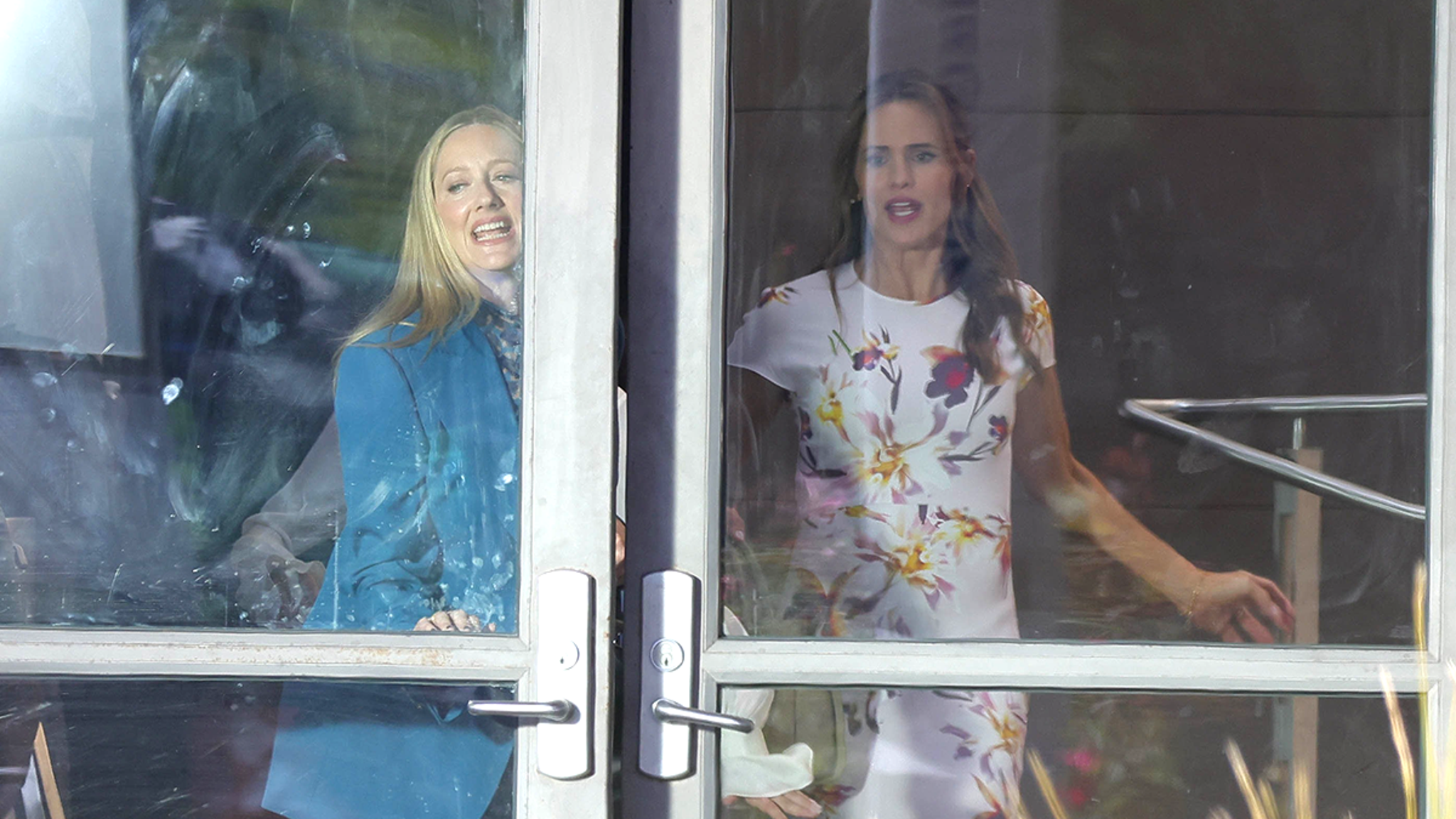
Can you guess which Hollywood hottie put her underboobage on full display in this eye-popping shot?! She's a YouTuber -- once part of David Dobrik's "Vlog Squad." Now you can catch her makin' her own

Sports
Sheikh Joaan attends final day of Schools Olympic Programme

Sheikh Joaan attends final day of Schools Olympic Programme

HE Sheikh Joaan bin Hamad al-Thani, President of the Qatar Olympic Committee (QOC), attended the final day of the boys’ competitions at the 19th edition of the Schools Olympic Programme, held at Aspire Dome. The final day was also attended by Sheikh Suhail bin Butti al-Maktoum, President of the UAE School and University Sports Federation; Sheikh Dr. Saqer bin Salman al-Khalifa, President of the Bahrain School and Collegiate Athletic Association; Hamad Abdullah al-Hamad, President of the Kuwait School Sports & Higher Education Federation; and Hasnae El Ayoubi, Executive Director of the International School Sport Federation. From the Qatari side, the event was attended by Dr. Thani bin Abdulrahman al-Kuwari, Second Vice President of the QOC; Jassim bin Rashid Al Buenain, Secretary General of the QOC; Dr. Ahmad Abdulla al-Buenain, Chief Executive Officer of the Doha 2030 Asian Games Organising Committee and the Director General of the Organising Committee of the FIBA Basketball World Cup Qatar 2027; Abdulla al-Nuaimi, Acting Chief Executive Officer of Aspire Zone Foundation and Abdulrahman al-Muftah, Executive Director of the School Olympic Program, along with a number of presidents of national sports federations. This year’s edition witnessed wide participation, with approximately 25,000 students from public and private schools competing across 21 sports, including football, basketball, volleyball, gymnastics, swimming, padel, fencing, table tennis, athletics, wrestling, taekwondo, shooting, karate, judo, boccia, chess, cricket, weightlifting, esports, rowing and the Mini Basketball World Cup.. The Schools Olympic Programme was established in response to an initiative by His Highness Amir Sheikh Tamim bin Hamad al-Thani, with the Qatar Olympic Committee organising the programme in cooperation with the Ministry of Education and Higher Education, the Qatar School Sport Federation, and the Qatar Paralympic Committee. The Schools Olympic Programme was first launched in the 2007–2008 season as a national initiative under the slogan “Sport and Health,” forming part of the legacy of the Doha 2006 Asian Games. The program aims to promote sports culture in schools, identify and develop young talent, and encourage healthy lifestyles among students.  Related Story

News
Musk wanted $80 billion to colonize Mars, OpenAI presiden…

Musk wanted $80 billion to colonize Mars, OpenAI presiden…

OpenAI's president testified on Tuesday that Elon Musk supported transforming the artificial intelligence startup ‌into a for-profit company, but wanted full control in part to help him raise $80 billion to colonize Mars.The testimony by

Entertainment
Texas Man Allegedly Kills Wife, Their 2 Kids, Himself in Triple Murder-Suicide

Texas Man Allegedly Kills Wife, Their 2 Kids, Himself in Triple Murder-Suicide

Houston Restaurant Owner Kills Kids, Wife, Himself ... In Triple Murder-Suicide, Police Say Published May 5, 2026 1:17 PM PDT A terrible tragedy rocked Texas when a Houston man allegedly murdered his wife and their

Entertainment
David Letterman Torches CBS Owners as ‘Lying Weasels’ Over ‘Late Show’ Axe

David Letterman Torches CBS Owners as ‘Lying Weasels’ Over ‘Late Show’ Axe

David Letterman CBS Bosses are Lying Weasels🤬... Colbert Axe Was Never About $$$!!! Published May 5, 2026 12:21 PM PDT David Letterman is unloading in a new print interview -- torching his former CBS bosses

News
WHO tracing over 80 people on flight taken by hantavirus victim

WHO tracing over 80 people on flight taken by hantavirus victim

The World Health Organization said Tuesday it was tracing people on a flight between the island of Saint Helena and Johannesburg, taken by a cruise ship passenger who died of hantavirus.A total of 82 passengers

Entertainment
Former Disney CEO Bob Chapek Sells L.A. Estate for $13M

Former Disney CEO Bob Chapek Sells L.A. Estate for $13M

Former Disney CEO Bob Chapek I Sold My Mouse House Published May 5, 2026 11:04 AM PDT Bob Chapek dreamed it, and then he did it ... the former Disney CEO just unloaded his Los