1. Home
  2. Author Blogs

Author: admin

admin

World
Trump readies first flight on Qatar-gifted jet this week

Trump readies first flight on Qatar-gifted jet this week

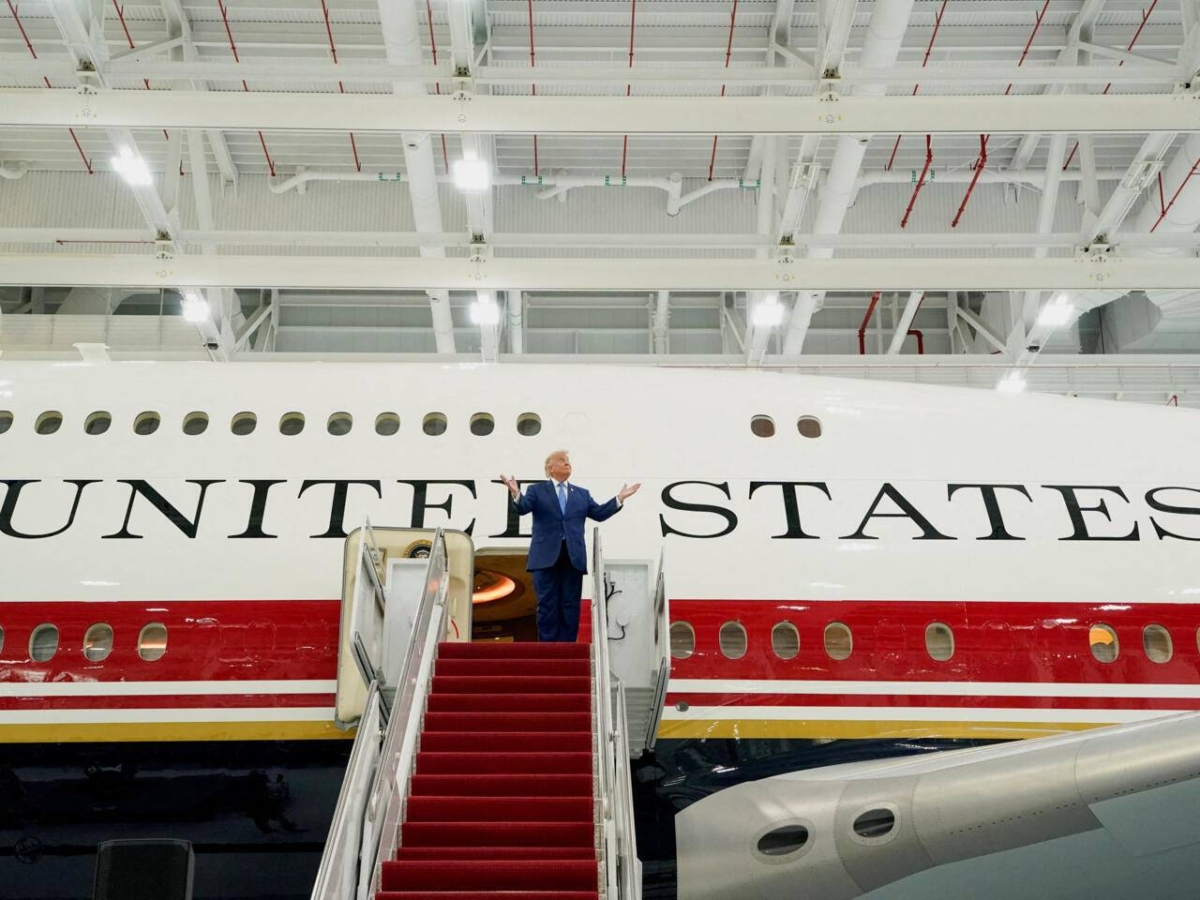
US President Donald Trump will make his first flight on a new Air Force One plane gifted by Qatar later this week, the White House said Monday.Trump will take the jet Wednesday to North Dakota for an event marking the 250th anniversary of US independence, a White House official told AFP.As he unveiled the plane earlier this month, Trump praised Qatar for being "so nice and providing" the modified Boeing 747, which previously served Qatari leadership.Billionaire Trump has been keen since his first term to replace the aging jets that serve as Air Force One, and he hand-picked the new plane's red, white and blue livery.Trump's administration has said the plane is a direct gift to the US Department of Defense and said the plane would eventually be donated to Trump's presidential library.The Qatari-gifted plane is meant to be a stopgap until US planemaker Boeing delivers two new 747-8 aircraft to serve as the presidential jet in a program plagued by delays and cost overruns.  Related Story

Opinion
Qatar makes the case for holiday that is closer to home

Qatar makes the case for holiday that is closer to home

There is a quiet confidence in the numbers, and it is worth pausing over. Qatar welcomed 1.13mn visitors in the first quarter of 2026 — and as the summer holidays settle in, the country is bracing not for a lull but for a fresh wave. After a spring shadowed by regional tension and stubbornly high airfares, that is no small thing. It is the sound of a sector finding its feet again. The headwinds have been real. International arrivals dipped sharply in March, a reminder that tourism remains tethered to the mood of the wider region. But Qatar has been here before, and recovered before — rebuilding momentum after the pandemic, then turning a World Cup into a lasting calling card. The instinct now is not to wait anxiously for confidence to return, but to manufacture reasons for people to come, and to stay. Hence the season’s quiet pivot inward. Where once the summer meant airports and departure boards, more families this year are discovering that the holiday can begin at home. The maths is persuasive — a domestic break can cost more than 50% less than one abroad — but the appeal runs deeper than the wallet. With more than 10 beaches, from open natural stretches to fully integrated beachfront resorts, alongside nature reserves, historic forts, parks and the new draw of attractions such as Meryal Waterpark, the country has quietly assembled a holiday it no longer needs to import. Visit Qatar’s “Hello Summer” campaign, running from May to the end of September, is the engine of this push: the Qatar Toy Festival, concerts, mall activations, theme parks and water attractions, much of it pitched squarely at families with children. The aim, refreshingly, is to break the tired assumption that a Gulf summer is something merely to be endured. It is being reimagined as a season to be enjoyed. The foundations are sturdier than a single quarter suggests. Qatar drew 5.1mn international visitors across 2025, up 3.7% on the year, with hotel room nights surpassing 10.8mn and occupancy climbing to 71%. Hotel capacity has more than doubled since 2015, and the country now counts over 40,000 keys. The Q1 spread tells its own reassuring story: Gulf visitors led with 36% of arrivals, Europeans followed at nearly 27%, and travellers from Asia and Oceania made up another 21% — proof that the appeal is broad, not narrow, and that no single market carries the weight alone. What the experts call the “tourism square” — anchored by Hamad International Airport, linking Doha to more than 190 destinations across 35-plus airlines, and Qatar Airways with its 160-plus destinations and 140-plus daily flights — keeps the doors open to the world even when the world hesitates to travel. Crowned GCC Tourism Capital for 2026, Doha has earned its standing the unglamorous way: through clean arrivals, easy movement around a compact city, and the patient work of making visitors feel at home. Gulf families, who make up the largest share of arrivals, sense that hospitality instinctively. Europeans, the second-largest group, are increasingly drawn by the same. Ambition has not dimmed either. The QR20bn Simaisma coastal destination and the National Tourism Strategy 2030 point to a country building for the long horizon, not merely the next quarter. For now, the message is gentler and closer to hand. The world will return — it always does. And while it makes up its mind, Qatar is offering its own people a summer worth staying for.

Sports
Haaland fires Norway past Ivory Coast, into last 16 clash against Brazil

Haaland fires Norway past Ivory Coast, into last 16 clash against Brazil

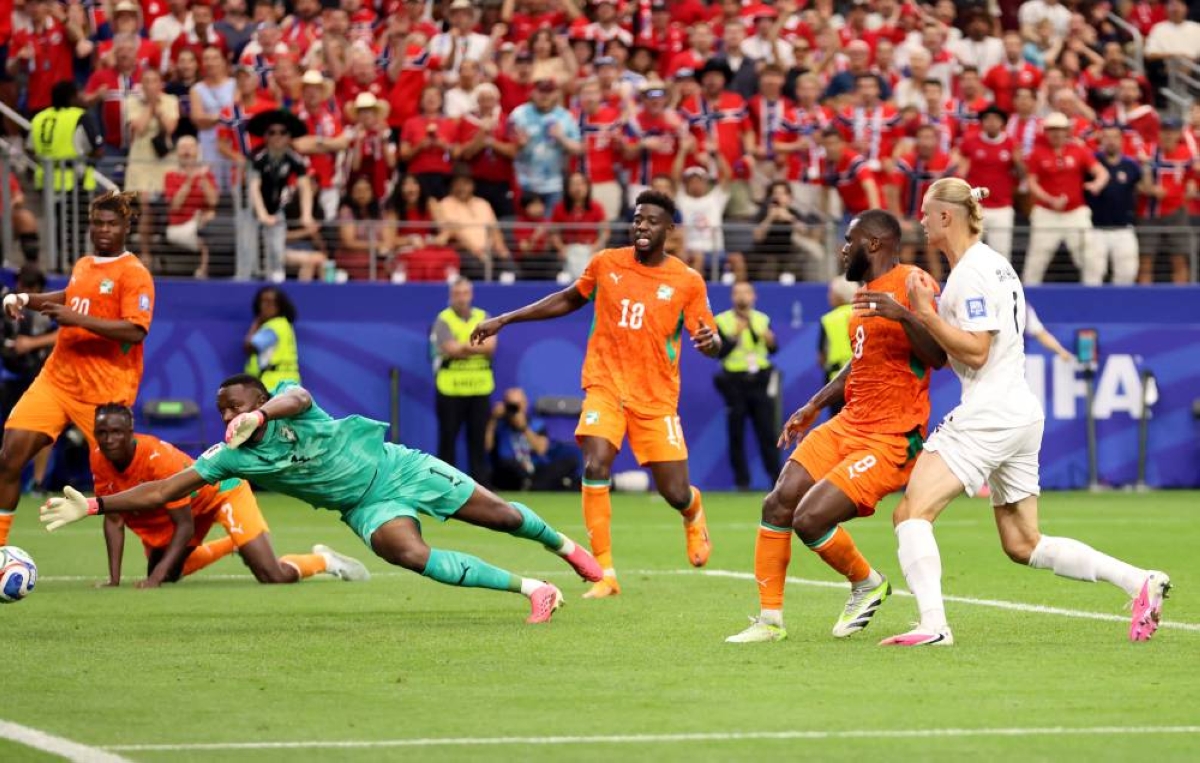
Erling Haaland (right) scores past Ivory Coast’s goalkeeper Yahia Fofana in the 86th minute during the FIFA World Cup last 36 match in Arlington, Texas. (Reuters) Erling Haaland scored a late winner as Norway set up a last-16 showdown with Brazil at the World Cup after taming the Ivory Coast 2-1 in Texas on Tuesday. The Manchester City striker prodded in from close range, the ball dribbling in on 86 minutes for his fifth goal of the tournament. It was the first time that Norway had won a knockout game in the history of the competition. After an even first half that was slow to get going, Antonio Nusa fired Norway into the lead six minutes before the break with one of the goals of the tournament. Manchester United's Amad Diallo was sent on for the Ivory Coast after an hour and was immediately in the thick of it, stopping a certain second Norway goal and then grabbing a terrific equaliser on 74 minutes. With extra time looming, predator supreme Haaland got on the end of a cross by Patrick Berg to make some Norwegian history. They face five-time champions Brazil on Sunday in New Jersey with the quarter-finals at stake.  Norway's captain Martin Odegaard plays the drum as

World
‘Where is she?’ The desperate search for Venezuela’s missing

‘Where is she?’ The desperate search for Venezuela’s missing

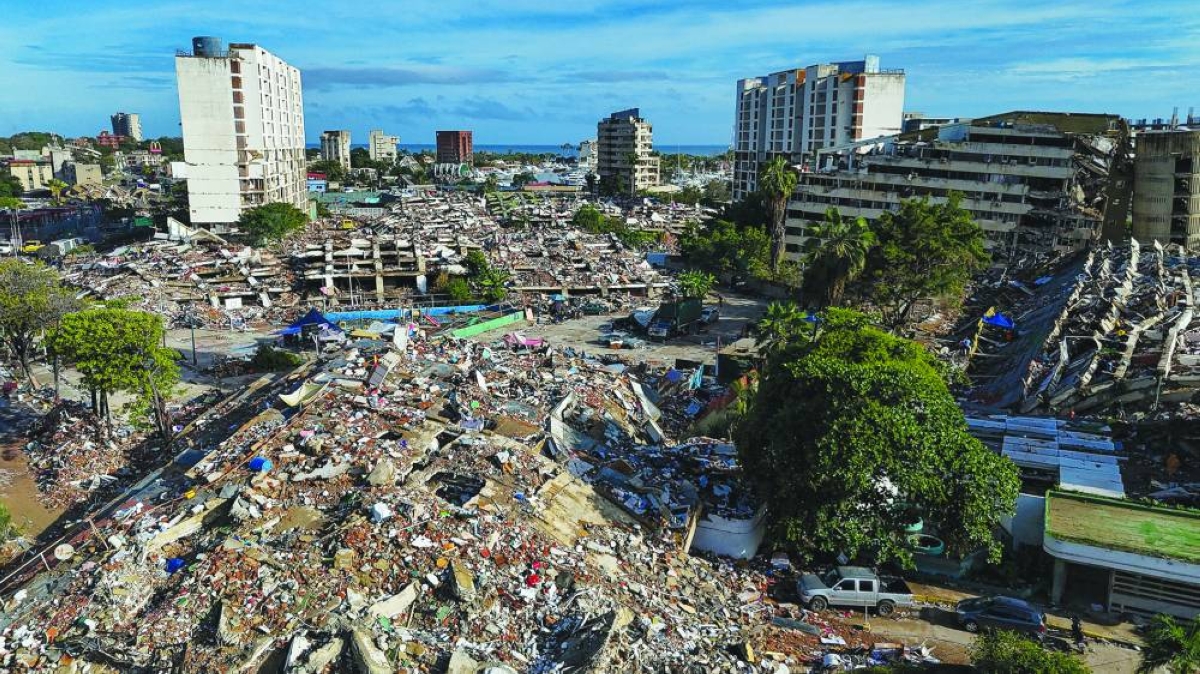
Soraida Torrealba's family has spent days desperately searching for her among the rubble of their building.Other relatives scour hospitals and morgues after the two earthquakes that struck Venezuela on June 24 left more than 1,700 dead and tens of thousands more still missing.Soraida's 44-year-old sister, Rosanna Luna, says not knowing what happened her sister is excruciating."I feel like my hands are tied because I can't find her," she laments.Like Luna, thousands of people are searching for one or more family members with growing desperation six days after the disaster.Social media is flooded with photos of children, the elderly, and couples, along with their names and descriptions, as well as a contact number for their families.The initiative "venezuelatebusca.com," a database launched to help find friends and relatives lost since the earthquakes, reports more than 46,000 missing. The name means "Venezuela is looking for you."The UN estimates that the number could be as high as 50,000 but Venezuela's government has avoided putting a number on how many people are still unaccounted for.On Sunday, Luna thought she recognized her sister among the photos of the dead at the main Caracas morgue.One of the faces looked very similar, but when she looked more closely, the toenail polish didn't match.The next day, she returned and found another face that resembled Soraida's in a new batch of photographs.But the person's features were so swollen that she couldn't be sure it was her.Other relatives have been searching for her among the ruins of the apartment where Soraida lived with her dog Princesa in La Guaira, on Venezuela's Caribbean coast, the region worst hit by the earthquakes.But on Monday, as they were returning to the site, a strong aftershock forced them to abandon their search."It's harder not knowing, because you ask yourself, 'What do I do? Where do I look for her?" Luna cried."I look for her here and she's not there, I went to the hospital and she's not there. Where is she?'"Her anguish is shared outside morgues as well as in hospitals, where photos of missing persons are plastered on walls and utility poles, written on handwritten pieces of paper.Robert Campos, who lost contact with several family members, says that information gathered from websites isn't always accurate.His nephew was marked "deceased" on one site on Friday, but when he arrived at the hospital to which the page directed him, there was no record of his relative.He continues to tour hospitals and morgues, following possible leads sent to him from other family members, who continue to dig through rubble.Nearly a week after the earthquake, the 54-year-old just wants closure."If they are alive, all the better, but what I want is to find them," he said.The pungent smell of death emanates from the Caracas morgue, an odour that thousands of liters of donated chlorine cannot mask.An employee who asked to remain anonymous said that the institution has received "a great many" bodies since the day of the two earthquakes, magnitudes 7.2 and 7.5, and is overwhelmed.Many have not been identified, partly due to the advanced state of decomposition of the bodies."Not knowing anything," says Campos, is the hard part."Being told that the person died gives you the peace of mind that you don't have to keep searching. You can help others, but you've already overcome that barrier that has been holding you back," he said.Rosanna Luna, who is looking for her sister, is still hoping for a miracle."I've asked God that she turns up safe and sound," she said. "But if that's not the case, at least let us find her."  Related Story

Opinion
Why Doha? Because the venue is its own verdict!

Why Doha? Because the venue is its own verdict!

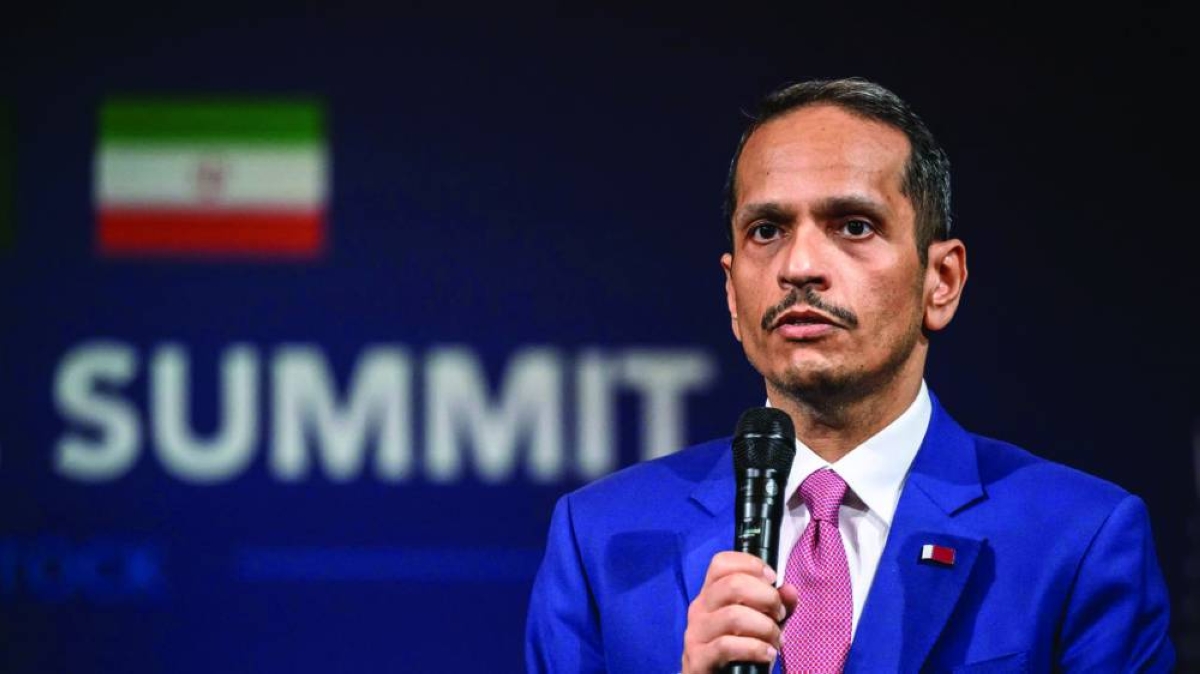
There is a particular reflex that separates the diplomat from the dealmaker, and Qatar’s prime minister displayed it twice in the same week, last week. The dealmaker announces a triumph and goes home. The top diplomat, a natural foreign minister if there is one, having signed the paper, looks up and says the labour is only now beginning. “Now the real work is actually starting,” Sheikh Mohammed bin Abdulrahman bin Jassim al-Thani told the Financial Times of the US–Iran understanding reached in Switzerland — a sentence delivered not as anti-climax but as a statement of method. It is the same instinct that ran through his earlier conversation with Al Jazeera, where he described the memorandum between Washington and Tehran less as a destination than as a “clear institutional framework,” scaffolding raised so that the talks can survive their own bad days. Read side by side, the two interviews are a small masterclass in how Doha understands the business of peace — and why, in a region that has spent the better part of two years learning the cost of escalation, that understanding has become indispensable. Begin with the texture of the thing. Most mediation is narrated to the public in the grand abstractions of “tracks” and “frameworks.” What is striking about the FT exchange is how quickly the prime minister descends from the cathedral of strategy into the plumbing. The crisis in the Strait of Hormuz, he explains, is not only a matter of mines and tankers but of mischief — of bad actors exploiting open shipping channels to impersonate authority. A vessel inching through the cleared lane might suddenly hear, over the radio, a voice claiming menace: “’Go back, we are going to fire, we are the IRGC’,” he recounts. “That’s what we are getting sometimes.” The remedy he describes is almost unglamorous in its practicality — a hotline whose entire purpose, in his words, is “to make sure that any ship that gets any type of threat is to be verified by Iran . . . and to let the ship pass safely.” This is diplomacy as defragmentation: the patient removal of the static and “disinformation” that allows a single rogue transmission to unravel a hard-won understanding. Few foreign ministers would bother to explain the wiring. That he does is a sign of a mediator who knows that wars resume not in summit halls but in the gaps between them. That same realism shapes his reading of the human factor. Asked about the risk of spoilers inside Iran, he does not pretend the danger away, nor does he weaponise it. “You will always have people who don’t like the deal, and you will have people who will try to sabotage,” he told the FT. “It happens in any kind of conflict with any party.” It is a remarkably even-handed sentence — the observation of a man who has sat across enough tables to know that every delegation contains its own internal opposition, and that the mediator’s job is to build a structure sturdy enough to absorb the inevitable attempts to break it. The Al Jazeera interview makes the design intent explicit: mechanisms, he says, have been put in place precisely so that the flare-ups over Lebanon and Hormuz that nearly derailed the opening round cannot do so again. Qatar’s “core message,” as he frames it, is that it has “strived to establish a framework that protects this negotiation process.” The verb matters. Not win. Protect. It would be easy, given the stakes, to forget that Qatar is also a casualty here — and the dignity with which Sheikh Mohammed carries that fact is its own quiet argument. The country’s Ras Laffan complex, the beating heart of the world’s second-largest LNG export machine, was struck twice; repairs to the worst-hit facility, he acknowledges, could run to five years, and the long-planned expansion of the North Field has slipped. A lesser interlocutor might have let grievance colour the diplomacy. Instead, he keeps the ledger sober and forward-looking. Production will return “within a few weeks, except the damaged facility,” he tells the FT; the tankers are already being readied; QatarEnergy will lift force majeure only “once the company sees they have addressed all the issues, and it’s safe to operate.” There is no triumphalism and no self-pity — only the unhurried confidence of a state that intends to be supplying the world long after the current crisis is a footnote. And it is the world, not merely Qatar, that he keeps in frame. One of the most useful passages in either interview is his warning that the war’s economic aftershocks have not yet fully arrived. “We stopped the damage from escalating and expanding,” he told the FT, “but the impact of that damage will also take some time to appear. We will see the consequences coming in September, October.” From the country that supplies the planet with the largest share of its helium — the gas without which MRI scanners fall silent — and a commanding share of its urea, this is not parochial accounting. It is a reminder that a strait closed in the Gulf is felt in a hospital in Lyon and a wheat field in the Punjab, and that Qatar’s interest in reopening it is continuous with everyone else’s. On the questions where moral clarity is required, he does not flinch, and he is careful to keep that clarity from curdling into belligerence. He calls Israel’s conduct in Lebanon “disproportionate” and accuses its government, in the FT’s telling, of “escalating the conflicts instead of de-escalating.” To Al Jazeera he is sharper still, pointing to the hundred dead in three days while a ceasefire was nominally in force, and insisting on an end to the occupation of Lebanese territory and respect for Lebanese sovereignty. Yet even here the destination is not denunciation but de-escalation: a dedicated working group for Lebanon, a verification mechanism stitched together from the Lebanese government, US Central Command, Iran and the mediators. The criticism is in service of the architecture, not a substitute for it. What elevates the whole performance from crisis management to statecraft is the horizon behind it. In both interviews the prime minister insists that the nuclear file is only one room in a much larger house — that the real prize is “this regional security framework between us and Iran,” as he put it to the FT, one that might in time carry “economic co-operation in the future between all of us — to bring the region back to stability.” He situates the entire effort within the priority set by His Highness the Amir Sheikh Tamim bin Hamad al-Thani and his fellow leaders: to extinguish the flames and reach calm. And he refuses to let the moment pass without naming the wound beneath all the others, telling Al Jazeera that complete stability is unattainable without “a just and comprehensive solution to the Palestinian issue” — a Palestinian state standing sovereign beside a region in which, as he envisions it, Israel too has a settled place. This is the connoisseur’s pleasure of these two interviews: they reveal a foreign policy that is patient where others are theatrical, granular where others are grandiose, and generous where it could so easily be aggrieved. Doha has spent a decade making itself the room where adversaries who cannot stand to share a building will nonetheless agree to share a city. The Hormuz hotline, the Lebanon working group, the Pakistani co-mediation, the careful sequencing of nuclear talks and regional security — all of it bears the same workmanlike signature. And as if to underline the point, the proof is arriving on schedule. The technical talks between the United States and Iran, once slated for Switzerland, are now reported by Axios to be convening in Doha. The venue is its own verdict. When the negotiators want somewhere the work will actually get done, they keep choosing the same address. The writer is Deputy Managing Editor, Gulf Times Related Story

World
Korea, Ukraine hold ‘constructive’ talks about North Korean POWs

Korea, Ukraine hold ‘constructive’ talks about North Korean POWs

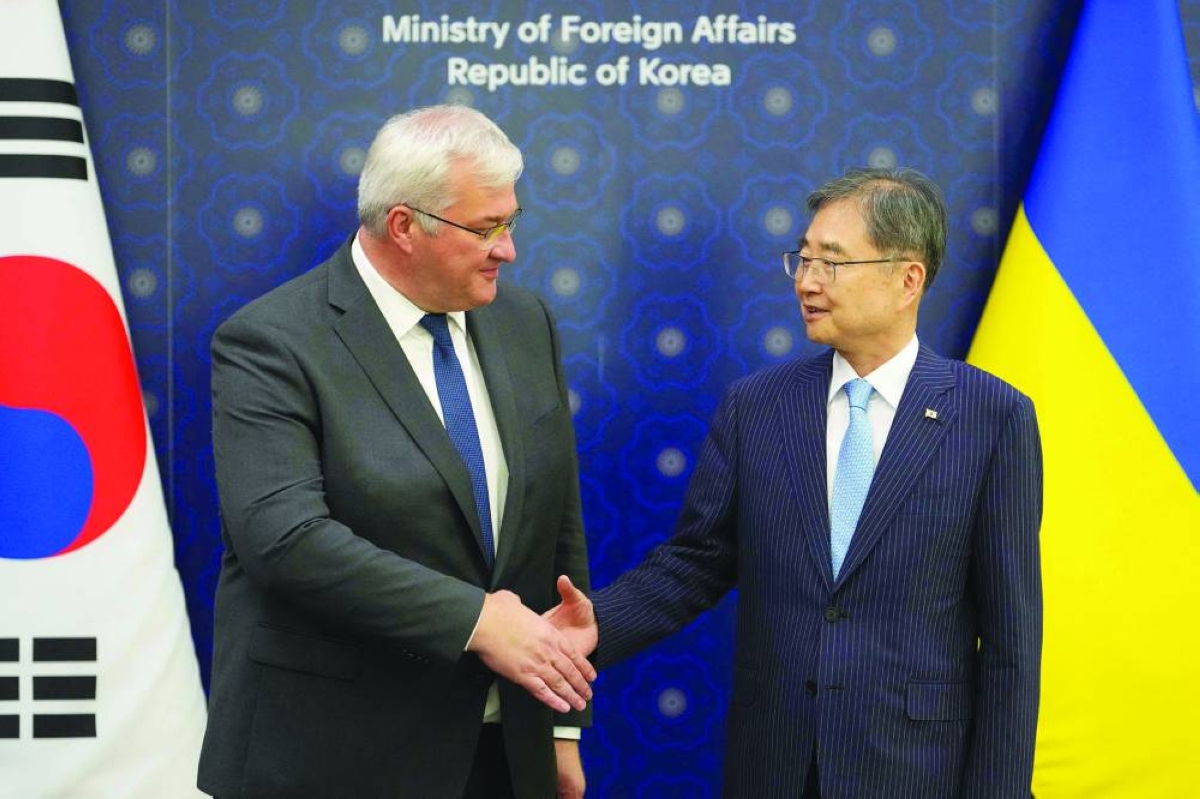
Ukrainian Foreign Minister Andrii Sybiha (left) shakes hands with Korean Foreign Minister Cho Hyun before their meeting at the Foreign Ministry in Seoul Tuesday. (AFP) Republic of Korea and Ukraine held "constructive" talks on Tuesday about the fate of two North Korean soldiers captured while fighting in Russia, Seoul said Tuesday.Korean Foreign Minister Cho Hyun and Ukrainian counterpart Andriy Sybiga discussed the matter during talks in Seoul.The soldiers were captured by Ukrainian forces in January last year while fighting for Russia in the Kursk region.North Korea and Russia have demanded the repatriation of the pair, but rights groups and experts have warned they could face severe punishment if returned to Pyongyang.The soldiers have asked to be sent to Korea, which would in effect amount to defection.Seoul is seeking their transfer on the grounds that they are citizens of a single Republic of Korea envisaged in its constitution.North Korea and Republic of Korea remain technically at war after their 1950-53 conflict ended in an armistice, not a peace treaty.The nations are separated by a demilitarised zone, but Seoul considers the entire Korean peninsula as one country.The ministers "engaged in constructive discussions" on the soldiers' future yesterday, a Korean foreign ministry spokesman told reporters.They agreed to be guided by "international law and humanitarian principles"."The government will continue to make diplomatic efforts to advance and resolve the issue of the North Korean prisoners of war," the spokesman said.Writing on X, Sybiga said he and Cho discussed the matter "in detail".It has been reported that North Korean authorities instructed troops to commit suicide rather than allow themselves to be captured while fighting for Russia.One of the two held by Ukraine told Korean broadcaster MBC earlier this year: "If I am not brought to Korea, I will end up dying."North Korean leader Kim Jong-un praised North Korean troops killed in Ukraine in April for taking part in "death-defying hand-to-hand fights and heroic suicidal explosions... without hesitation", according to the Korean Central News Agency.Kyiv had assured Seoul the two soldiers would not be repatriated to North Korea against their will, Cho said in March.Analysts say North Korea has received financial assistance, military technology, food and energy from Russia in exchange for missiles, munitions and thousands of troops for Moscow's war in Ukraine.The two countries had signed a mutual defence treaty in 2024, obliging each to provide military assistance "without delay" if either comes under attack.More than 7,000 North Korean troops were killed or wounded while fighting alongside Russian forces in the Kursk region during the 2024-2025 campaign, the Kyiv Independent quoted Ukraine's military intelligence agency as saying this week.Sybiga said he and Cho also discussed "shared challenges stemming from the deepening cooperation between Moscow and Pyongyang".  Related Story

World
Cuba FM says ‘no progress’ in negotiations with US

Cuba FM says ‘no progress’ in negotiations with US

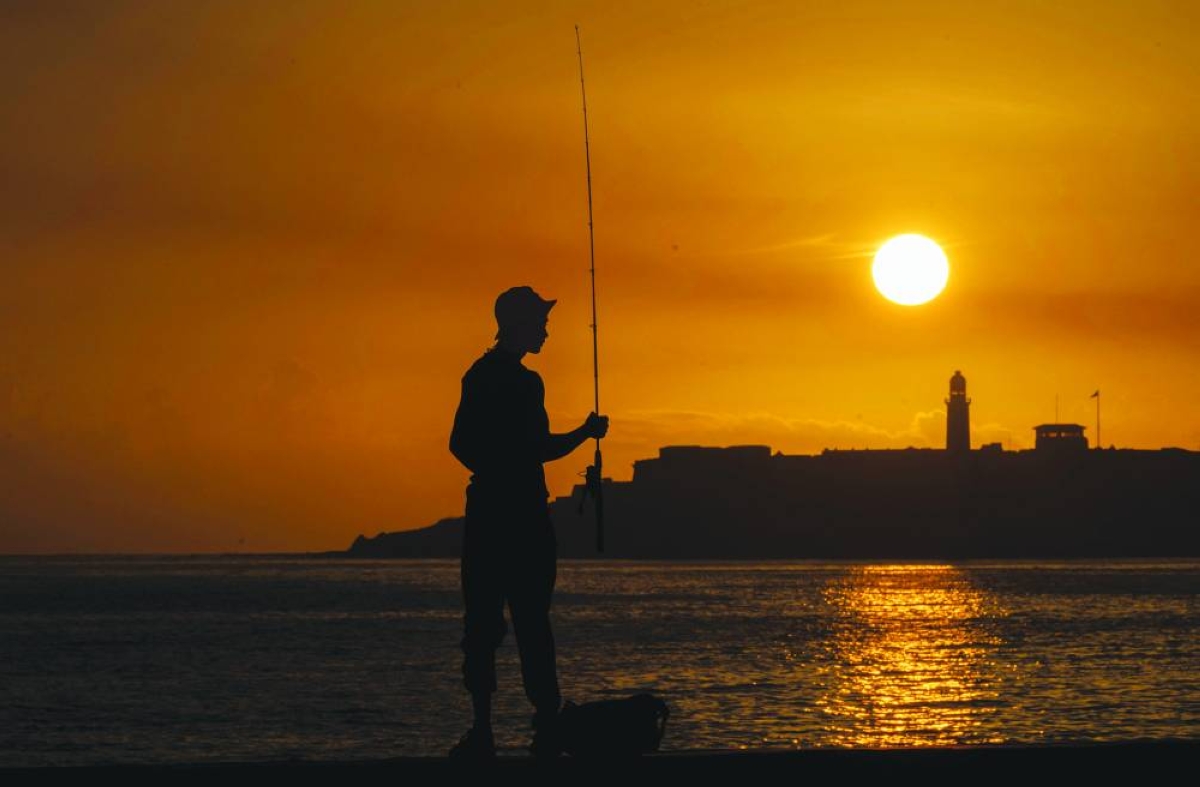
The silhouette of a fisherman is seen with the Morro lighthouse in the background during a power outage at dawn in Havana on June 29, 2026. (AFP) Cuba's government said Tuesday that months of negotiations with the US, which is applying maximum pressure to the island to try to bring about a change in governance, had shown "no progress.""The discussions between the Cuban and US governments are showing no progress," Foreign Minister Bruno Rodriguez told a press conference, adding that "despite all that" Havana "will remain open to dialogue."Washington has cranked up pressure on the communist island in recent months, imposing an energy blockade and several rounds of sanctions that have deepened an already dire economic crisis.President Donald Trump has made clear he would like to see a change of leadership, pointing to Washington's overthrow of Venezuela's socialist president Nicolas Maduro and installation of a Washington-friendly successor as a possible blueprint for what he would like to achieve in Cuba.Cuba's government earlier this month pushed through a batch of major free-market reforms but has repeatedly said its political model is not up for discussion and vowed to resist any invasion militarily.Rodriguez said he had "no illusions" about Washington's aims and had requested a UN General Assembly debate on July 7 to discuss Washington's sanctions."It's urgent because the multi-faceted aggression of the US government against Cuba is already ongoing and intensifying," he warned.As part of its pressure tactics, the US recently indicted former president Raul Castro, brother of revolutionary leader Fidel Castro, over the downing of two civilian planes three decades ago.But the standoff is hurting ordinary Cubans most, with the fuel shortages exacerbating recurring power cuts of up to 40 hours at a stretch and bringing transport across the island to a near standstill.Food, drinking water and medicine are also in short supply.  Related Story

News
Israeli forces kill 15-year-old Palestinian in West Bank

Israeli forces kill 15-year-old Palestinian in West Bank

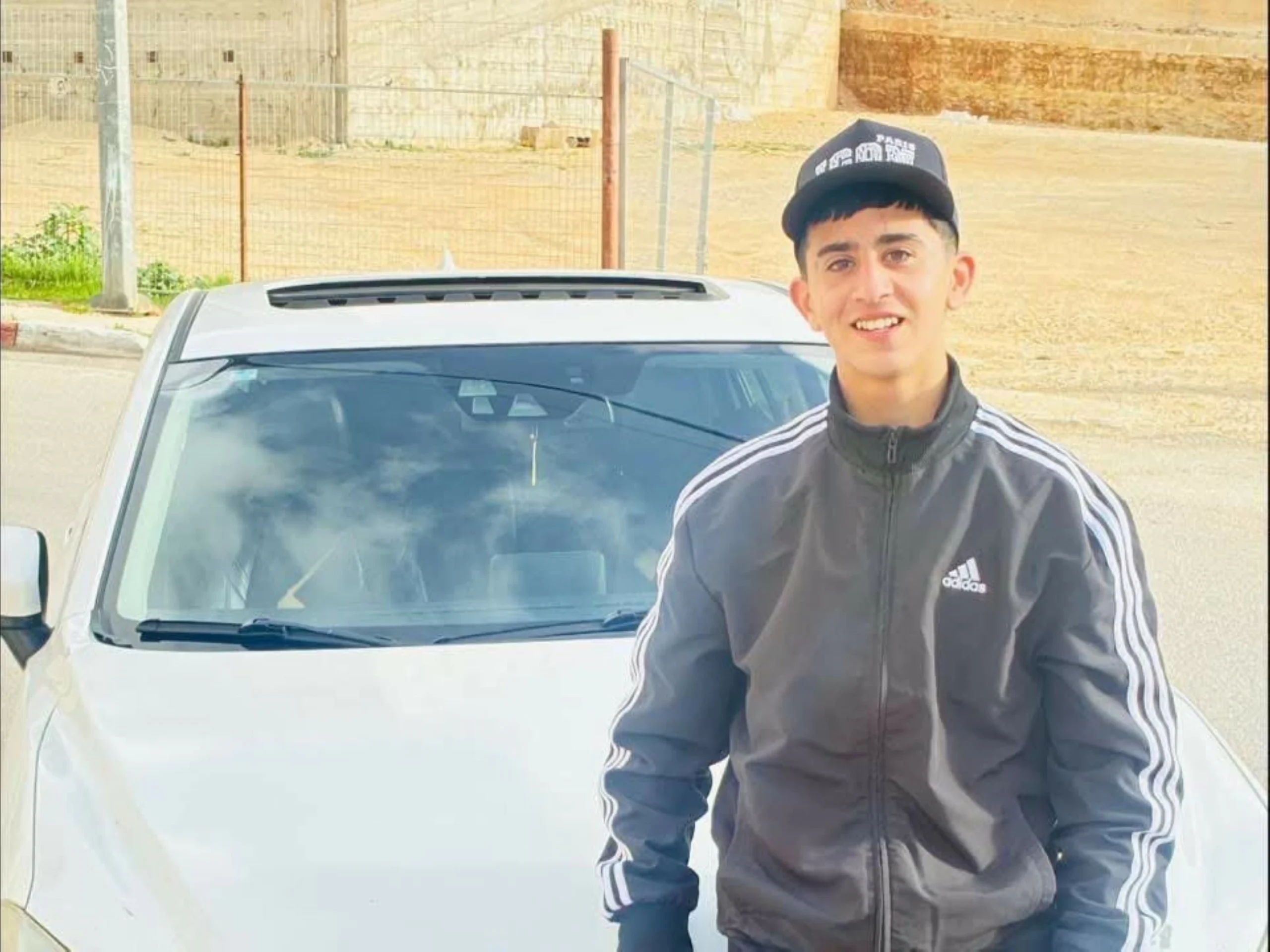
Israeli forces fatally shot a 15-year-old Palestinian teenager during a raid in the occupied West Bank on Monday, the Palestinian health ministry said, as violence surges in the Israeli-occupied territory."The child Amir Ahmad Jawad Jaber,

Sports
Martinelli scores in 95th minute to send Brazil into World Cup last 16

Martinelli scores in 95th minute to send Brazil into World Cup last 16

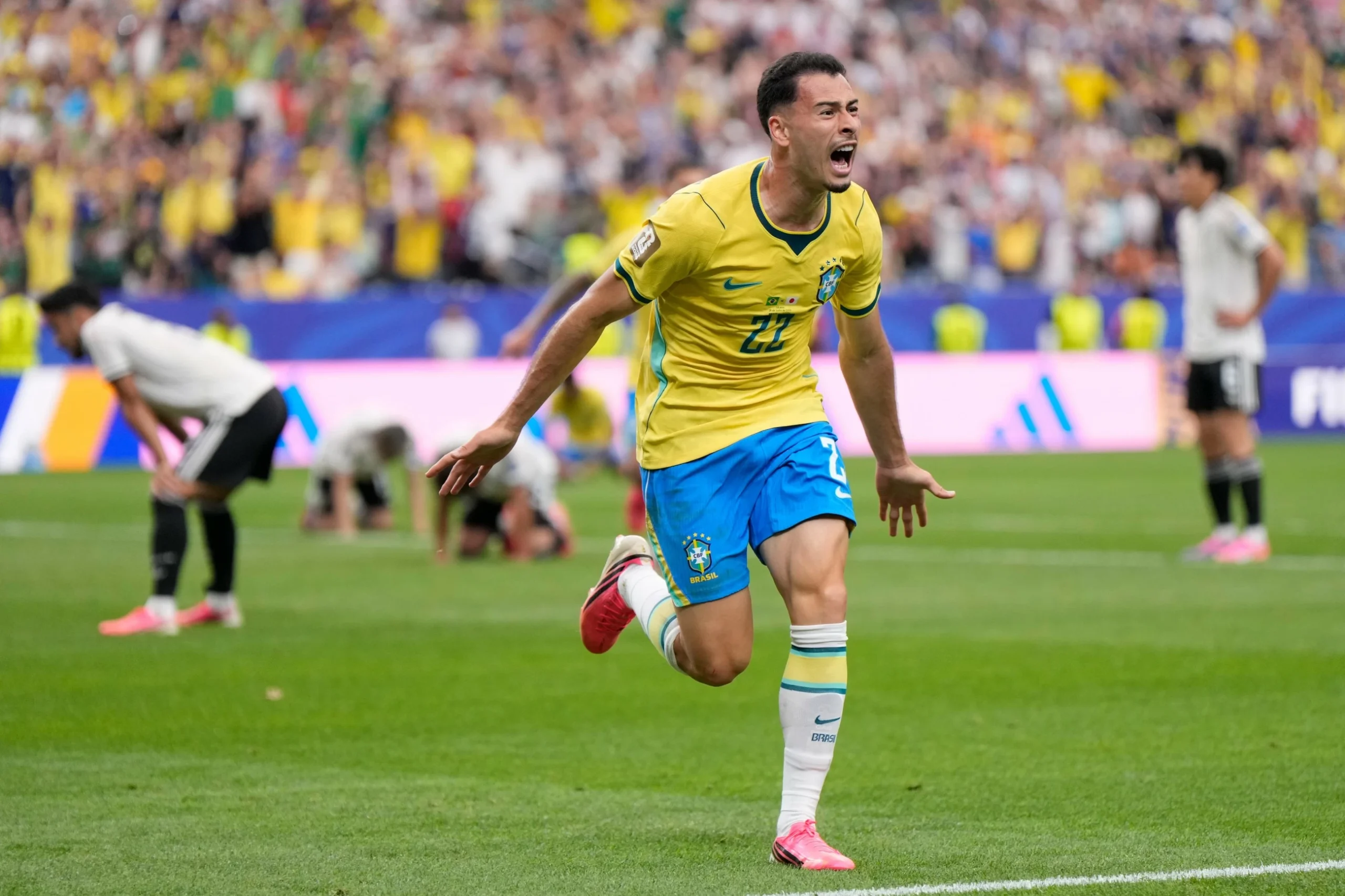
Substitute Gabriel Martinelli scored deep in injury time as Brazil beat a stubborn Japan 2-1 on Monday to roll into the World Cup last 16.Arsenal winger Martinelli struck in the 95th minute in Houston to

News
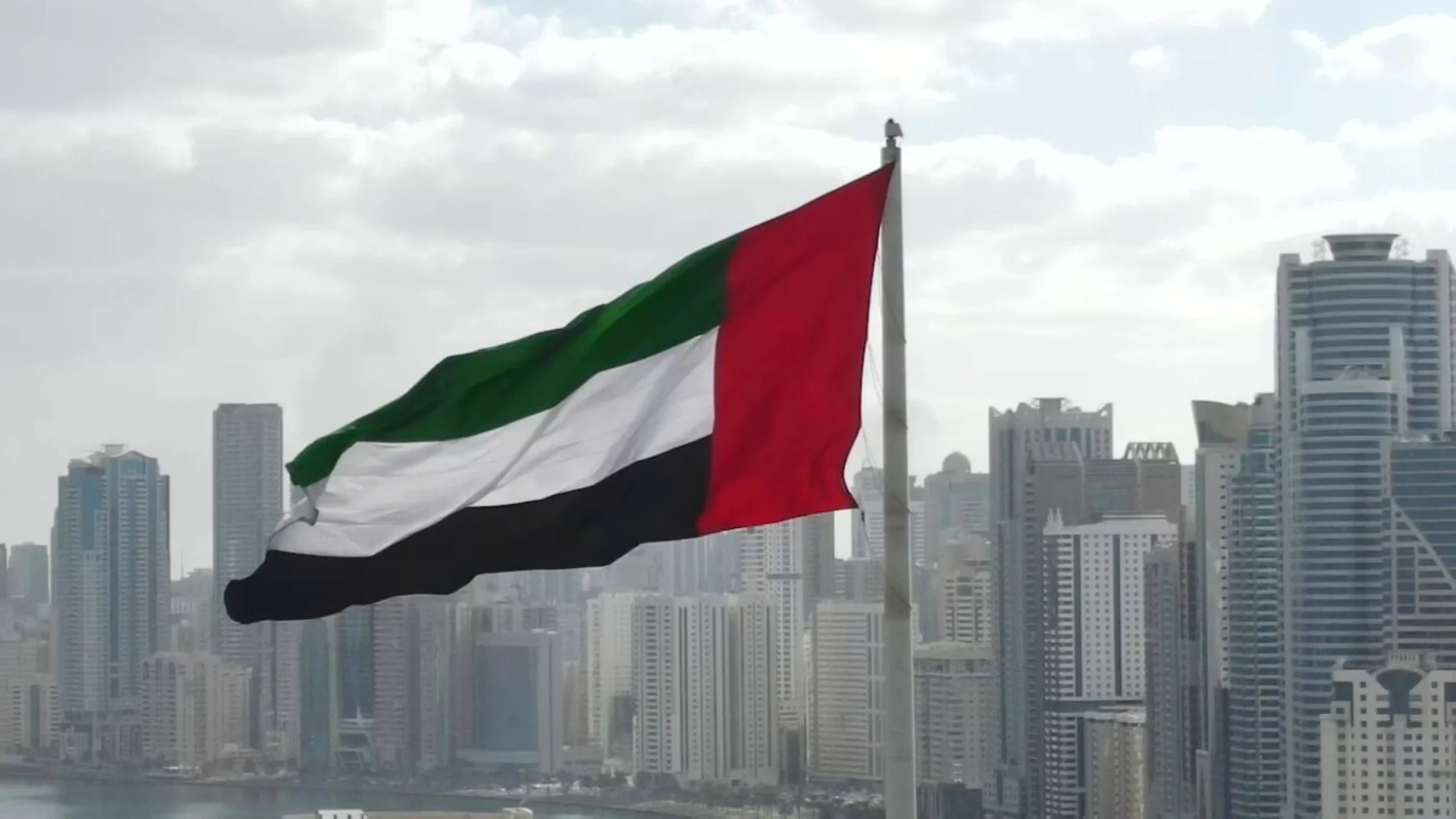
UAE allows its citizens to visit Lebanon with Twajudi service

UAE allows its citizens to visit Lebanon with Twajudi service

The UAE has said its nationals can travel to Lebanon, effective on Monday, lifting a weeks-long ban in place because of the Middle East war and concerns about Iran's influence.The Ministry of Foreign Affairs (MoFA)