1. Home
  2. Author Blogs

Author: admin

admin

Opinion
Global Alliance for Human Rights: Notable shift in advancing rights

Global Alliance for Human Rights: Notable shift in advancing rights

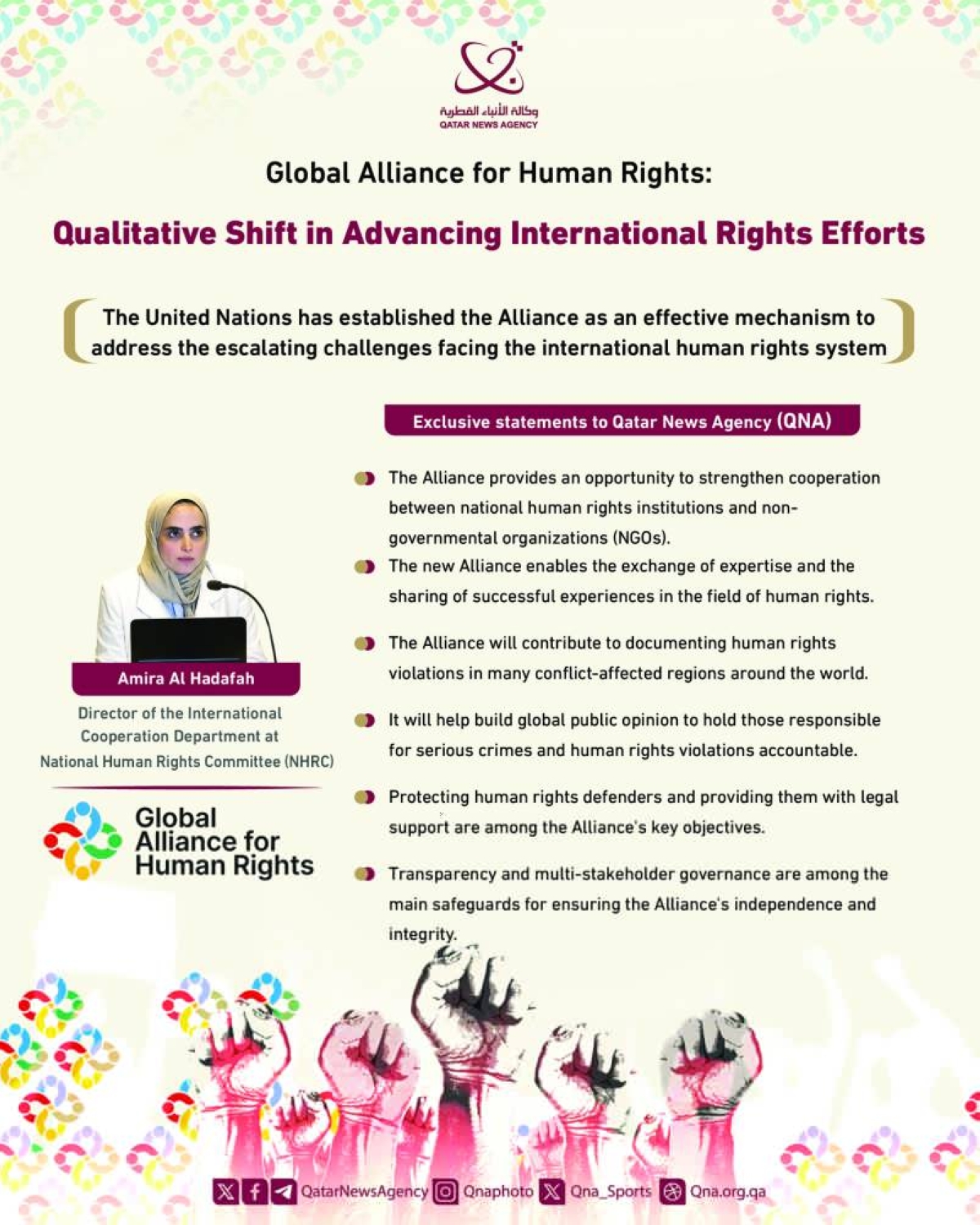
The recent launch of the UN Global Alliance for Human Rights marks a significant step in strengthening international efforts to protect human rights by bringing together stakeholders across regions and sectors to address growing global challenges. The new alliance aims to bring tangible change in human rights through four strategic tracks: promoting human rights at home and at work; cultivating a human rights culture; advancing human rights through innovation and technology; and engaging young people in addressing global challenges. In remarks to Qatar News Agency (QNA), Director of the International Cooperation Department at the National Human Rights Committee (NHRC), Amira al-Hadafah, described the Global Alliance for Human Rights as a significant addition and an important strategic step toward strengthening and protecting human rights internationally. She said the NHRC views the alliance as a unique opportunity to enhance cooperation and coordination among national human rights institutions, non-governmental organizations, experts and other stakeholders through a shared vision aimed at bridging gaps between international human rights standards and policies and their implementation in practice, while reinforcing human dignity and promoting justice and equality worldwide. Al-Hadafah said the alliance offers a platform for sharing expertise, best practices, and successful experiences in the field of human rights, while coordinating efforts to address global challenges that hinder the effective realisation of human rights. Regarding the alliance’s potential contribution at a time of widespread human rights violations in conflict zones and areas affected by crises, she said it could make a meaningful difference by documenting violations, facilitating rapid humanitarian responses, and providing victims and their families with a platform to make their voices heard. Such efforts would help transform human rights solidarity from rhetoric into evidence-based institutional action, while drawing greater international attention to serious and widespread violations committed during conflicts, particularly those targeting women and children, she highlighted. Regarding the alliance’s implementation mechanisms and operational tools for translating its principles into tangible results, particularly amid persistent impunity for perpetrators of atrocities and human rights violations, al-Hadafah said impunity remains one of the greatest challenges facing the international human rights system because it contributes to the recurrence of grave violations, especially in armed conflicts, while denying victims, their families and communities effective remedies. She expressed confidence that the alliance could contribute to strengthening accountability and combating impunity through systematic monitoring and documentation, sustained engagement with victims and affected communities, and providing them with a platform to present their experiences and demands for justice before the international community. She added that these efforts could help build global public support for holding perpetrators of serious crimes accountable, establish international advocacy networks, and strengthen cooperation with international mechanisms and courts by providing evidence related to such crimes. Al-Hadafah stressed that the alliance has the potential to generate wide international support for activating international jurisdiction to address the gravest crimes and human rights violations, stemming from the cost of double standards and continued impunity on international peace and security. On the challenges faced by human rights defenders, including harassment and intimidation, she said protecting human rights defenders is among the alliance’s core priorities. She noted that creating a safe and enabling environment for human rights defenders is essential to upholding the rule of law and strengthening respect for human rights within societies. She emphasised that this alliance will strengthen safeguards for human rights defenders through monitoring, establishing an early warning system, providing legal support and protection, and maintaining ongoing coordination with the UN Special Rapporteur on Human Rights Defenders, treaty bodies, and other relevant human rights mechanisms. It will also work to mobilise international support for the effective implementation of the UN Declaration on Human Rights Defenders, with the aim of creating a safe environment for human rights defenders worldwide. Addressing the alliance’s ability to maintain independence from political pressures and secure sustainable funding, Al-Hadafah said, in her concluding remarks, that transparent, multi-stakeholder governance would be a key safeguard for its independence and integrity. She said such governance would enable the alliance to pursue its vision of building a world in which the rights enshrined in the Universal Declaration of Human Rights and related international instruments are respected, protected and fulfilled, while fostering a strong global civil society capable of monitoring compliance with international human rights obligations and contributing to the advancement of justice. In this context, she added that the alliance is expected to develop a comprehensive strategic plan outlining priorities, strategic partnerships and funding sources, expressing confidence that it is committed to preserving its independence, credibility and freedom from any influence that could compromise its vision, objectives or human rights values.
Opinion
The limits of regional power: what the GCC can and cannot do

The limits of regional power: what the GCC can and cannot do

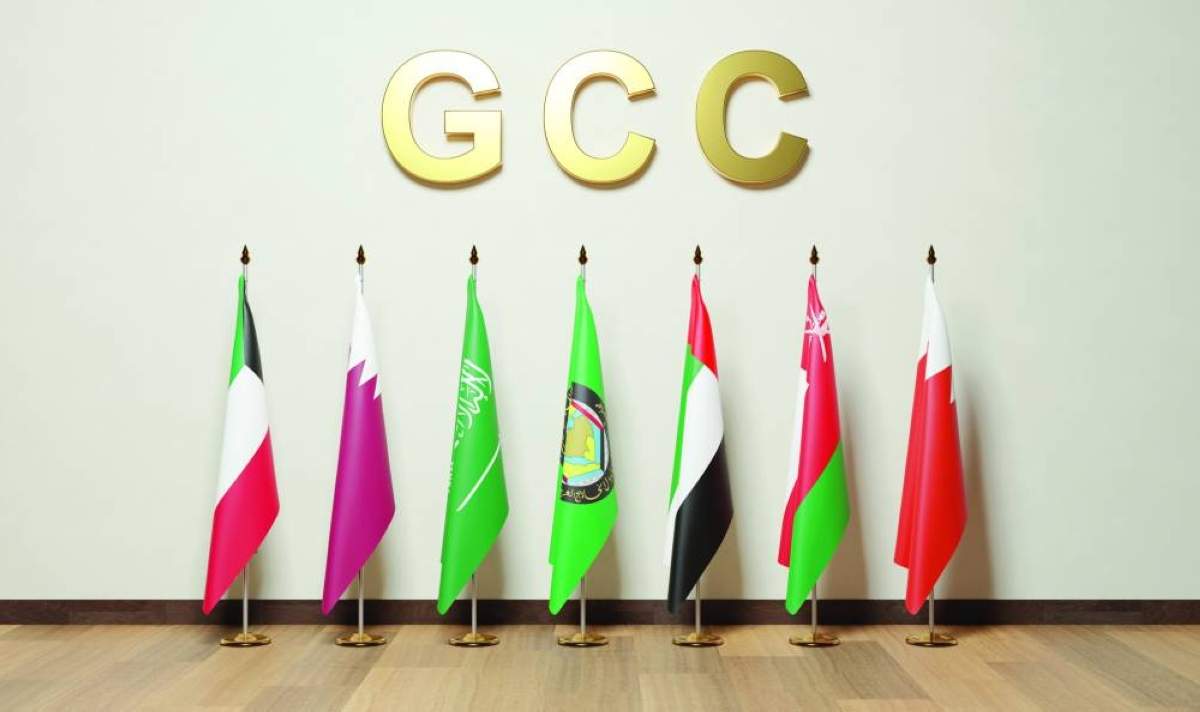
The Cooperation Council for the Arab States of the Gulf. Speaking after a US-GCC ministerial meeting last week, GCC Secretary-General Jassim Mohammed al-Budaiwi was clear that any future regional security arrangements must take into account the interests and security needs of GCC member states. Statements like this by senior officials inevitably raise the question of the future role of the six-member GCC in the post-war regional order. Specifically, it raises the question of the whether the GCC, which celebrated its 45th anniversary last month, can or should transform into a security and defence alliance or rebrand as a conflict mediation framework that can resolve, if not prevent, regional crises as they happen. In theory at least, regional organisations like the GCC do provide members with opportunities to work together to address shared challenges. But there are limits to what regional organisations — whether in the Gulf, Europe, Asia, or anywhere else — can achieve as frameworks primarily focused on providing security or delivering peace. The 55-member African Union has regularly deployed military, as well as civilian, resources across its home continent to manage crises. The EU has done the same on the Union’s borders and, at times, further afield in parts of Africa and Asia. These are the exceptions not the norm. Of the estimated 300 regional organisations active today, very few have the legal authority, political will or institutional and operational capabilities to enforce existing peace agreements. Even fewer use force to restore peace, never mind undertake more pro-active security operations intended to defend or achieve the organisation’s core interests. In the first place, regional organisations are “meeting places” for member states not independent entities free to act as they choose on matters of security and peace. In the EU, for example, ultimate decision-making on these issues requires the unanimous agreement of member states through the EU Council. What complicates matters further is that members usually have different, and often competing, values and beliefs. They also tend to prioritise different interests, and disagree with each other over what threats deserve the most attention. It is only on those rare occasions when the security interests of members converge that regional organisations can mobilise to undertake security operations. But even this requires members to share a vision of the benefits of acting together, as occcured with the GCC in Bahrain in 2011 during the Arab Spring. Once the specific threat subsides, members again opt for sovereigty over security cooperation inside the regional organisation. The doctrine of non-intervention in domestic affairs is intended to protect the sovereignty of member states. It makes it especially challenging for regional organisations to act in peace and security. It is the foundational principle of ASEAN, which includes Singapore, Indonesia and Malaysia among its members. It is also a core value of most other regional organisations, including the 81-year old Arab League, one of the world’s oldest. Non-intervention is not cost-free. It can impact on the credibility and legitimacy of regional organisations, especially when they refuse to respond to regional conflicts that result in humanitarian crises or atrocities. But the doctrine of non-intervention also plays an important role in building trust and sustaining regional organisations during challenging times. It reduces the likelihood that disagreements spill over and undermine cooperation between members on issues where interests overlap. For example, following Iraq’s invasion of Kuwait in 1990, the Arab Cooperation Council (ACC) collapsed because members – Egypt, Iraq, Jordan, and North Yemen – aligned on opposite sides of the crisis. The non-intervention doctrine also demands shared, or at least consensus-based, decision-making. This makes it harder for bigger members, with larger economies and armies, to impose their preferences on smaller partners. It also allows smaller actors to gain disproportionate influence relative to their size. For example, an April survey of ASEAN opinion leaders ranked Singapore as the most influential and effective member ahead of Indonesia — home to the bloc’s biggest population, economy, and army. Smaller members can use their available resources and expertise to promote their policy preferences to shape, and even set, the regional agenda. They can also lobby other members to back their the policy preferences or convince them to join with them in collective action to fight for common peace and security goals. This “multiplier effect” is a very important instrument of power for smaller actors inside regional organisations. This is how Sweden, despite the opposition of larger members, won its fight for the inclusion of a civilian crisis management mechanism — the EU Programme for the Prevention of Violent Conflict — in the European Security and Defence Policy (ESDP). It is also how Ireland convinced the EU to fully back its two national priorities during the EU-UK Brexit negotations: blocking a hard border between the north and south of the country, and protecting the 1998 Good Friday peace agreement. Smaller member states also use the “multiplier effect” within the regional organisation to play an oversized role in external mediation and multiparty negotiations. Some examples include Ghana, Gambia and Togo in West Africa’s ECOWAS; Guyana and Suriname in CARICOM in the Caribbean; and Uruguay within Mercorsur, the Brazil-dominated South American common market. Disillusioned states all over the world are currently searching for new peace and security mechanisms to counter rising uncertainty, instability, and disorder. Regional organisations, including the GCC, are unlikely to meet those needs. But that does not reduce their value. They provide a safe space for building trust and nurturing collective problem solving among neighbours. They can empower smaller members to play a role in regional affairs and they can add legitimacy and credibility to the values and interests of those inside the organisation. In today’s evolving geopolitical environment, these all help to reduce regional conflict and increase opportunities for peacemaking.The writer is Professor of International Politics and Director of the Small States and Energy Studies Programmes at Georgetown Univeristy in Qatar@RoryDavidMiller 

Sports
Ronaldo and Modric struggle to defy Father Time at World Cup

Ronaldo and Modric struggle to defy Father Time at World Cup

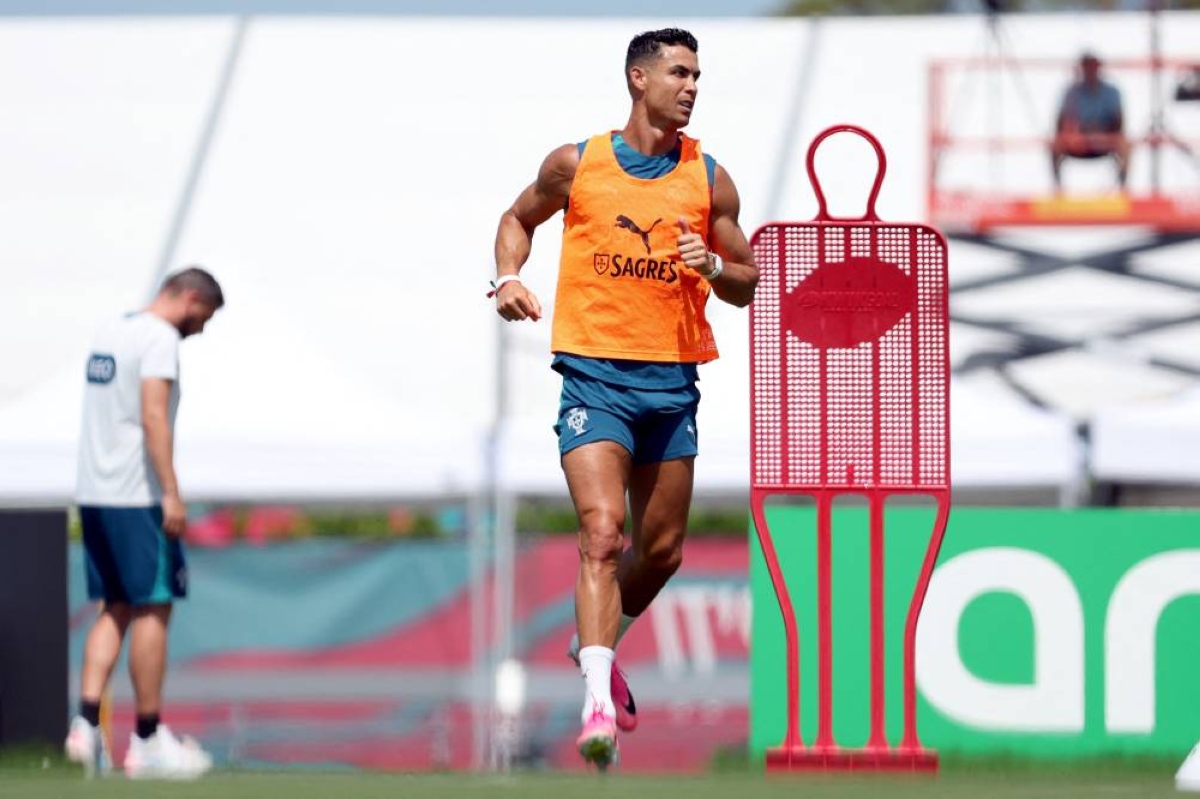
Cristiano Ronaldo and Luka Modric will make history when two outfield players aged over 40 face off for the first time in a World Cup as Portugal take on Croatia in Friday's last-32 clash.But both men are facing questions over whether their status as national heroes is now more of a burden than a boost to their countries' hopes of progressing far in the competition.Prior to this tournament, only Cameroon's Roger Milla had played in a World Cup as an outfield player after turning 40.Ronaldo and Modric, who won four Champions Leagues in six seasons together at Real Madrid, have long defied Father Time but have shown their age in what will almost certainly be their final flourish on the global stage.At 41, Ronaldo defiantly screamed "I'm back" after netting twice against Uzbekistan as he became the first player to ever score at six World Cups.Yet either side of a 5-0 romp over a team ranked 60th in the world, Portugal failed to beat the Democratic Republic of Congo and Colombia and fell into a tougher section of the draw as a result."It's already 23 years I've been a professional and whenever things don't go well it's 'Cristiano, he's finished, he's old'," Ronaldo said earlier in the tournament.The forward played every minute of the group stages and outgoing Portugal boss Roberto Martinez shows no sign of taking the bold call to sit the five-time Ballon d'Or winner on the bench."There is not an issue physically or mentally for Cristiano in today's game to play the 90 minutes," Martinez said after Ronaldo managed just two touches in the Colombia box. Protecting Ronaldo's ego After a slow start to the World Cup four years ago, Ronaldo was eventually dropped by Fernando Santos in favour of Goncalo Ramos.The AC Milan striker immediately scored a hat-trick in a 6-1 demolition of Switzerland, but a 1-0 defeat to Morocco in the quarter-finals meant Ronaldo's time out of the side was short-lived and Santos was removed as coach.The impression that Martinez is wasting a richly talented generation just to protect Ronaldo's ego grows with every pedestrian performance.Portugal's depth of midfield talent meant Paris Saint-Germain's Joao Neves and Bernardo Silva, now of Real Madrid, started on the bench against Colombia.Yet even with one of the World Cup's strongest midfields behind him, Ronaldo's strikes against Uzbekistan are his only non-penalty goals in his past 14 games at major tournaments.Modric, 40, similarly showed his age in Croatia's tournament opener, which ended in a 4-2 defeat to England in Dallas.Caught on his heels, Modric conceded a penalty when chopping down Noni Madueke for England's opening goal and was sacrificed by Zlatko Dalic before the hour mark.Croatia bounced back to celebrate Modric's 200th cap, edging past Panama 1-0.In doing so, Modric became the fourth man to reach a double century of international appearances, joining Ronaldo.The AC Milan midfielder then provided the assist for Nikola Vlasic's winner as Croatia beat Ghana 2-1.Finalists in 2018, Croatia also reached the semi-finals four years ago.Modric was the driving force behind those incredible runs for a country of less than four million people.A likely last-16 meeting with Spain and one final shot at glory awaits the winners in Toronto.But for one of football's all-time greats, the World Cup curtain will come down in Canada.  Related Story

Opinion
Trump tariffs aren’t saving jobs at Whirlpool’s Iowa refrigerator plant

Trump tariffs aren’t saving jobs at Whirlpool’s Iowa refrigerator plant

If any company stood to gain from President Donald Trump’s trade war, it was Whirlpool and the workers assembling its iconic appliances in Iowa. But at its “Big Blue” refrigerator plant, so named because of its robin’s-egg-coloured siding, the company has cut more than half its nearly 2,000-strong workforce in the last year, despite tariffs championed by Trump to support US manufacturing. “Jobs and factories will come roaring back into our country,” ‌he said in April 2025 while announcing the tariffs on his self-proclaimed “Liberation Day.” Whirlpool was among those expected to benefit from the tariffs, which have since been reshaped by legal challenges. The company ​makes about 80% of what it sells in the US from its ‌10 — soon to be 11 — domestic factories, leaving it less exposed to import duties than rivals and in theory better positioned to gain as foreign-made appliances grow more expensive. Yet only ‌one assembly line now runs at the plant, down from five that once turned out nearly a million ‌units a year. Another 288 workers are set to lose their jobs in July. CEO Marc Bitzer last year praised Trump’s trade actions, saying in an investor call that the Michigan-based company was a “net winner” from the policy. But tariffs have not halted the job losses in Iowa or the decline in Whirlpool’s stock, now at its lowest since the 2007-2009 financial crisis. Tariffs have raised Whirlpool’s costs for steel and imported components while demand tied to a weak housing market has softened. Meanwhile, Whirlpool has said tariffs have supported investment in other parts of its US operations. The company has increased sourcing from plants in Mexico and China and moved some speciality models to an updated plant in Ohio. The changes underscore the still-evolving effects of Trump’s tariffs. While some companies say the measures support investment at home, others face higher input costs and shifting supply chains, with uneven consequences for jobs. The layoffs also carry political implications for the Republican Trump administration and may weigh on voters in a close congressional race in the Iowa district where the plant sits in November’s midterm elections. The battle in Iowa’s 1st US. Congressional District is one of only 18 races across the country deemed a “toss-up” by the Cook Political Report. The Republican incumbent, Mariannette Miller-Meeks, defeated Democrat Christina Bohannan by fewer than 1,000 votes in the last elections in 2024. Manufacturing has emerged as a ​hot-button issue as several large producers, not just Whirlpool, have cut jobs and in some cases shifted work abroad. Tractor maker CNH in May closed its factory in Burlington, Iowa, while John Deere has reduced its workforce at several of its factories across the state. Miller-Meeks and fellow Iowa Republican, US. Representative Ashley Hinson, sent Bitzer a letter after a layoff announcement in March. “These layoffs would hollow out a community and undermine the very domestic manufacturing base that American workers have spent decades building,” they wrote. Bohannan also ‌dispatched a letter to Bitzer. The two candidates clash over who’s tougher on Whirlpool. “She didn’t say anything about it until after ​I put out my statement,” Bohannan told Reuters. Bohannan said many supported Trump in 2024 because he talked about bringing back jobs. “But reckless, chaotic tariffs are not the way to do ​it.” Miller-Meeks issued a statement saying, “I remain deeply disappointed by Whirlpool’s decision. From the moment we learned of the layoffs, I engaged directly with Whirlpool leadership and followed immediately with a formal letter.” The Trump administration has said tariffs will revive domestic production by making imports more expensive. “The Trump administration is implementing a nimble and multi-faceted strategy for America’s long-term reindustrialisation,” said White House spokesman Kush Desai, adding that industry leaders, including Whirlpool, have committed to “investing trillions into American manufacturing.” Whirlpool is expanding its US. operations, just not in Iowa so far. In October it said it would spend $300mn on its Marion and Clyde, Ohio, plants, which churn out washers and dryers. And in April, it said it would spend another $60mn on a new Ohio factory to produce plastic parts for its laundry business. Whirlpool says the Iowa factory overhaul reflects its long-term commitment to making refrigerators domestically. “We are one of the last who think we can be competitive making refrigerators in the US,” said Jason Ebert, the company’s vice president of North American manufacturing. He said the company had to cut jobs and assembly lines to make way for the new technology and assembly layouts needed to update the Amana operation. Those new lines are now being designed, he said. The company is also looking to bring more component manufacturing into the factory, a move it is undertaking as it updates other domestic plants. Luke Harms, Whirlpool’s director of government relations, said trade policies have helped narrow the cost advantage as it competes with mostly ‌low-cost importers, including Chinese manufacturers. For instance, the administration extended steel tariffs to derivative products, ‌including appliances, and applied tariffs to the product’s full value. “That’s made us more confident in our modernization plan,” he said. At the same time, tariffs on steel and imported components have driven up costs for Whirlpool. Many of the remaining Whirlpool workers in Amana are despondent. The plant a few years ago churned out more than 900,000 refrigerators a year, according to the International Association of Machinists and Aerospace Workers, the union which represents workers. It now makes fewer than 250,000. Kerry Waddell, who worked at the plant for 36 years and now serves as business agent for the union, said he has watched the plant steadily dwindle as Whirlpool invested heavily in its Mexico refrigeration operations. Reflecting that dour mood, only a handful showed up for the last monthly union meeting held at a local community centre where the layoffs were discussed. Another topic on the agenda: clearing furniture from their old union hall, which the diminished workforce can no longer support. One attendee, Greg Cousins, said, “It’s all going to Mexico. I’ve thought that for the last three years.” Cousins, a 63-year-old forklift driver, said he plans to retire next year and will be glad to be out of the plant. Asked about Whirlpool’s plan to modernise, he said he doesn’t see any evidence of that. “Just stuff going out.” Others are more outspoken. Aaron Southard said he is a Republican and voted for Trump in the ​last election. But he said he is looking to support Democrats in the midterms. “We thought we’d be getting our jobs back,” said the 44-year-old auto press operator. “I feel betrayed - they’re out there stomping and saying Make America Great and bring jobs back.” Many workers, including Southard, have started looking for other jobs, though he said he wanted to stay and fight. One place attracting workers from Whirlpool is Sub-Zero — the super high-end refrigerator maker, which is building a new plant in nearby Cedar Rapids that will be non-union. Building refrigerators in the US is a challenge for any manufacturer. Refrigerators are labour-intensive, many with hundreds of parts and features like through-door ice and water dispensers and multiple doors. By contrast, washing machines or stoves can be built relatively quickly on an automated line. Sweden-based Electrolux announced in April it would stop producing refrigerators at its 1,255-employee plant in South Carolina as it shifts the work to Ciudad Juárez, Mexico. The company, in a statement, said it would retool the US plant to make laundry equipment. The US appliance industry remains under pressure. Trump’s tariff war sparked a flood of imports by appliance makers trying to beat the onset of the taxes, which killed pricing power for everyone amid an already-weak housing market critical to their fortunes. Meanwhile, investors are almost as unhappy as the workers in Amana: The company’s shares have fallen about 70% since Trump returned to the White ‌House 17 months ago and issued a rapid series of tariff ​orders. The company just suspended its dividend, breaking a seven-decade streak of consecutive payouts. Southard, the auto press operator, is peeved about that last move. He has worked at the plant for a decade and accumulated Whirlpool stock as part of his savings. “I used to make $600 a year from it,” he said, referring to the dividends. “Now, that’s gone.” — Reuters     

Sports
Mbappe fires France into World Cup last 16

Mbappe fires France into World Cup last 16

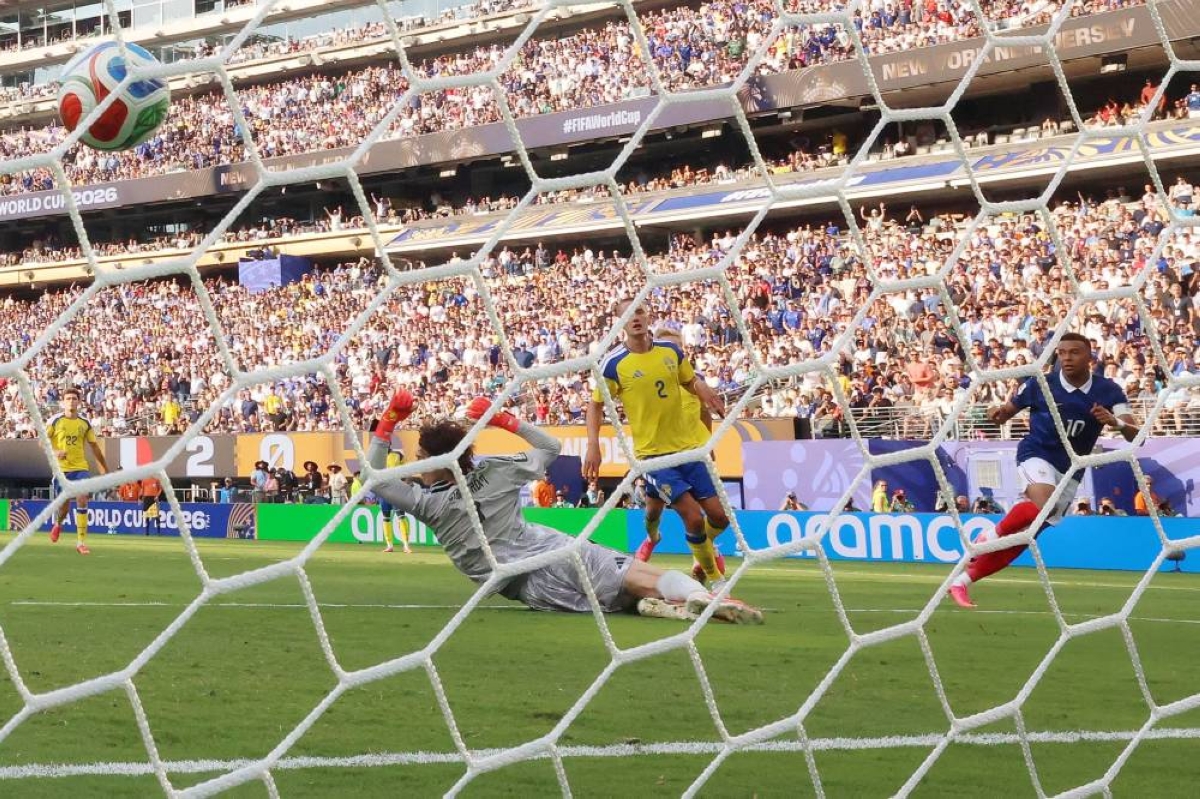
France’s forward Kylian Mbappe scores his team’s third goal during the 2026 World Cup round of 32 match against Sweden at the New York/New Jersey Stadium in East Rutherford on June 30, 2026. (AFP) Kylian Mbappe extended his red-hot scoring streak to fire France past Sweden and into the last 16 of the World Cup on Tuesday. France's flamboyant attack might have ‌reached double figures were ⁠it not for the ‌woodwork and a series of near-misses measured ‌in millimetres.Paraguay lie in wait, and the exhilarating football France produced here will do little to help ⁠the South Americans sleep before their last-16 meeting.At the heart of it all was French captain and talisman Kylian Mbappe. From the start it had been clear he was a man on a mission.Mbappe's two goals lifted his World Cup finals tally to 18, one behind Lionel Messi on the all-time list. Remarkably, those goals have come in just 18 matches, with his double here taking him to six for the tournament.By the final whistle Sweden looked less like ​beaten men, more like beaten-up men, after 90 minutes hauling themselves round the New York-New Jersey pitch trying to keep up with the precise French passing.The temperature on the pitch felt even hotter than the 32 degrees ‌Celsius (90 degrees Fahrenheit) officially recorded in ⁠East Rutherford, but for ​Sweden it might as well have been the surface of the sun as ​they visibly wilted under a relentless French onslaught.Mbappe was at the centre of everything. He had a long range shot saved in the 16th minute and had the ball in the net four minutes later. The effort was ruled out for offside, but Sweden had been warned. HYDRATION BREAK BOOSThe match was scoreless by the time the packed stadium roundly booed the hydration break, as has become customary among soccer fans angered by the effective introduction of four quarters to a game traditionally separated by two halves. For once, though, nobody could doubt the justification as the haggard Swedes looked out on their feet.The jeering fans were swiftly distracted by ‌a deafening rendition of Jon Bon Jovi's "Livin' ‌on a Prayer" before the match ⁠resumed but there was to be no divine intervention for the Scandinavians.Mbappe rattled the post just after ⁠the half-hour as he inched ever closer ⁠and finally broke the deadlock on 45 minutes when, from a pass by Ousmane Dembele, he jinked and skipped and slammed a right-foot shot past Jacob Widell Zetterstrom.The pair have now combined for six goals at World Cup finals, more than any duo in tournament history, moving clear of Germany's Michael Ballack and Miroslav Klose, and Poland's Grzegorz Lato and Andrzej Szarmach.The French among the more than 86,000 ​in the stadium erupted and Mbappe, followed by the entire French team, ran to Didier Deschamps on the touchline to embrace the coach just back in the U.S. after attending his mother's funeral.France came out for the second half in the same fashion. Sharp, precise and dangerous.After squandering a handful of gilt-edged chances by the finest of margins France finally recalibrated their slide-rule precision in the 53rd minute, when Bradley Barcola lofted the ball past the Swedish goalkeeper to double their lead.Twenty minutes later Mbappe had his second, clipping the ball past the keeper from a deft through-ball from Michael ‌Olise.In the 84th minute, ​Deschamps brought Mbappe off and the captain left to rousing cheers from the crowd after a masterclass that hammered out France's intentions. 

Sports
Messi returns ‘home’ to lead Argentina World Cup charge in Miami

Messi returns ‘home’ to lead Argentina World Cup charge in Miami

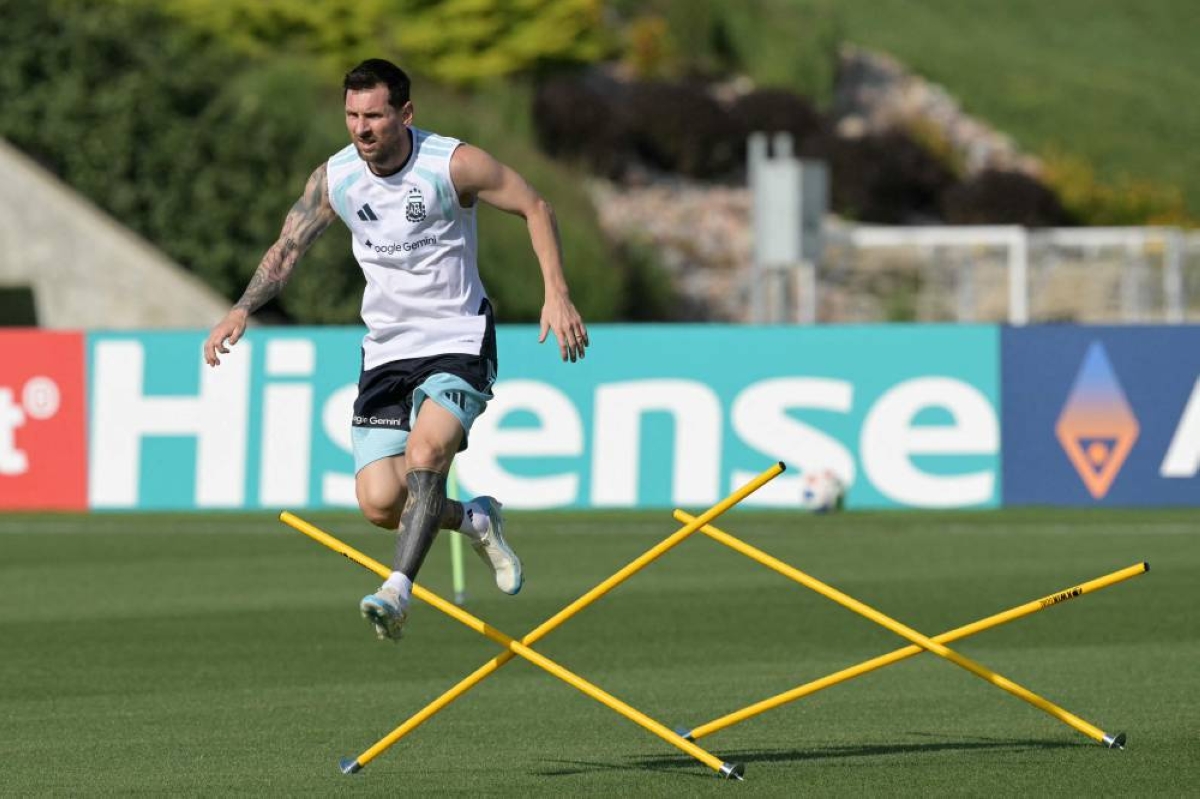
Argentina’s forward Lionel Messi takes part in a training session ahead of their World Cup round of 32 match against Cape Verde at Sporting KC Training Centre in Kansas City. (AFP) Few imagined that three years after making the move to Miami, Lionel Messi would be leading Argentina's charge to defend the title and smashing records at his sixth World Cup. The 39-year-old returns to the Florida city he now calls home for a last 32 clash against the surprise package of the tournament Cape Verde on Friday after scoring six times in the group stages. In doing so Messi became the all-time top scorer in World Cup history with 19 and is on a record seven-game scoring streak in the competition. Many believed the eight-time Ballon d'Or winner was headed for semi-retirement when he swapped top level European football for Major League Soccer after ending his long to wait to win the World Cup in Qatar. But Messi has defied expectations, both with his impact on soccer Stateside and his ability to continue deciding games at international level. Inter Miami, co-owned by David Beckham and only formed in 2018, had never won a trophy prior to his arrival. Messi's arrival instantly made one of MLS's newest franchises a go-to destination for European stars. Aided by his former Barcelona teammates Sergio Busquets and Jordi Alba, Messi led Inter to victory in the Leagues Cup, a knockout competition between clubs in the MLS, Mexican and Canadian leagues, in his first season. Last year Messi and Miami went one better in securing the club's first MLS title.The Messi efect The influence of a player widely considered the greatest of all time extends far beyond the pitch. "Messi marked a before and after for what soccer means here. From 2023 onwards, everyone became an Inter fan," explains Juan Pugin, a coach at the Revo Soccer academy in Doral, near Miami. "We've really noticed it at the academy too. Many more kids have signed up to play the sport." That passion brings a smile to the face of Lily Diaz, a 69-year-old native of Buenos Aires, who was out for a walk in Miami wearing a national team cap. She said these days she feels closer to the country she left four decades ago to settle in Florida. "It's a huge thrill to have Messi come play for Argentina. It's a source of pride; he's a role model as both an athlete and a human being," said Diaz, who has already seen the star play four times with Inter. Nearby, Johnny Fortes, 62, has traveled from Buenos Aires to follow Argentina throughout their World Cup journey all the way to a potential final. "I work an office job, but for a year-and-a-half, I drove a car at night so I could afford to come to the United States," he said. "I made sacrifices, but it was worth it." At Buenos Aires Bakery, a popular Argentine restaurant, a mix of national team fervor and business savvy has led to an entry fee of $15 and a $20 minimum spend for those wanting to watch the world champions' matches in the packed venue. Inside, Julian Franco is enjoying the Argentine food he can't find in the US city of Buffalo where he settled three months ago after moving from the Argentine province of Catamarca. Like thousands set to descend on Miami, he doesn't have a ticket for Friday's match, but wanted to soak up the atmosphere in south Florida. "You feel so excited watching Messi play," he says. "Especially knowing that he has faced failures too. "It gives you hope that not everything is lost - that you always have to give a little bit more to achieve what you want."  Related Story

Opinion
Sovereignty on paper – Gulf Times

Sovereignty on paper – Gulf Times

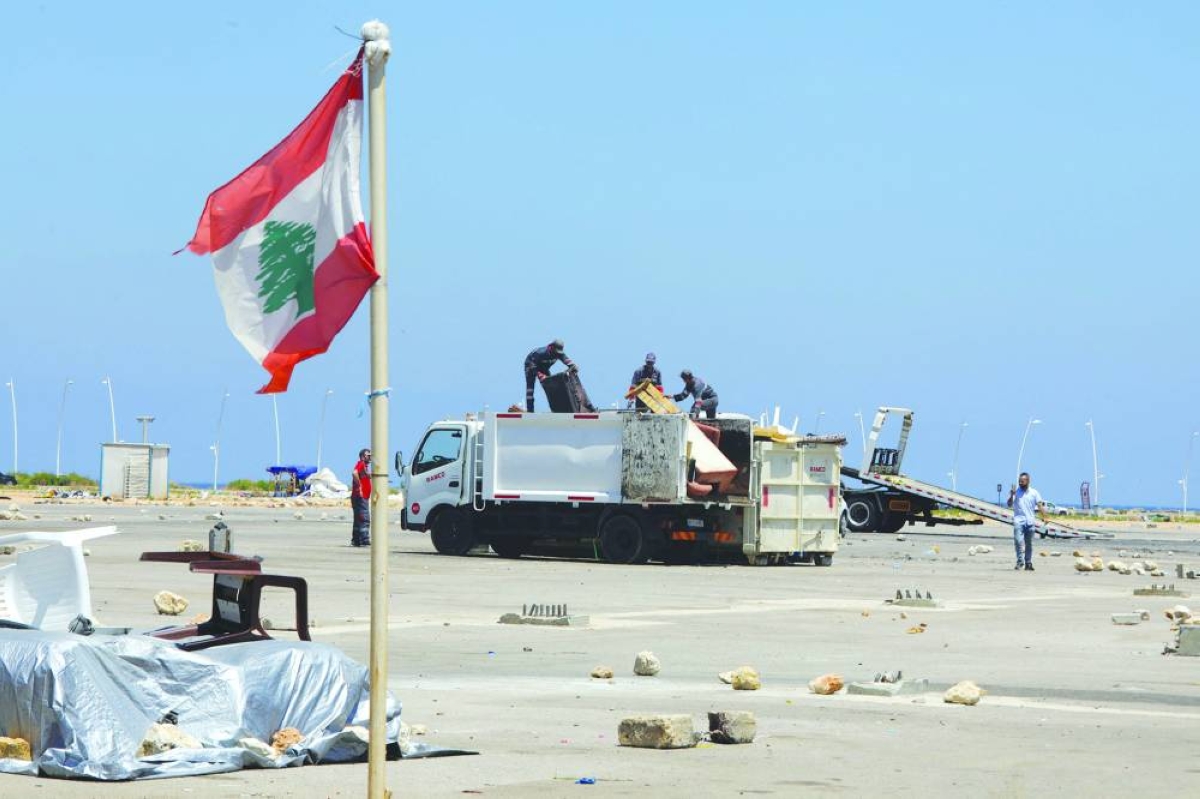
Workers load the dismantled tents onto a truck at the dispaced families’ camp along the waterfront area in Beirut on Wednesday. (AFP)  When Joseph Aoun, Lebanon’s president, appeared on television in the spring and asked why his country could not negotiate “to save the homes that have not yet been destroyed,” it was not the voice of a leader bargaining from strength. It was a plea. By then Israel’s renewed war on Hizbullah, which began on March 2nd, had driven some 1.2m people from their homes — more than a fifth of Lebanon’s population — and killed more than 4,000. Israeli bulldozers were erasing border villages one by one, in what many Lebanese saw as the Gaza plan moved north: more than 40,000 homes in the south destroyed, whole towns wiped from the map. Beirut’s call for talks went unanswered for weeks. That it was answered at all owed less to Beirut than to Washington. Donald Trump’s inner circle on the Middle East is unusually Lebanese. His envoy to Turkey, Tom Barrack, descends from emigrants from Zahle; his ambassador to Lebanon, Michel Issa, is Lebanese-American; and his in-law and adviser Massad Boulos, whose son married Trump’s daughter Tiffany, was born in Lebanon. The couple’s first child — Trump’s grandson, with a Lebanese-American father — arrived in 2025. Sentiment aside, Trump had a colder reason to act. Israel’s bombing of Beirut threatened to wreck a larger prize: his deal to end the war with Iran. He leaned on Binyamin Netanyahu to stop. The strategy was to deny Iran its Lebanese arm. Rather than let Tehran fold Lebanon into the terms of its own ceasefire, Trump chose to back the government in Beirut, which insisted that it alone had the right to speak for the country. The trouble was that the government had little to speak with. The Aoun-Salam administration, in office only since early 2025, had spent its entire mandate managing a war it did not start and could not stop. It had never been free to govern. Weak hands rarely win at the table, and Lebanon’s were very weak. The United States set the talks in motion and hosted them in Washington, where Secretary of State Marco Rubio steered five rounds of negotiation. By the time they began, Israel occupied roughly a fifth of Lebanese territory and more than a million Lebanese were displaced. Worse for Beirut, it played its hand alone. The 2026 war with Iran had swallowed the Gulf. Iran’s closure of the Strait of Hormuz pushed Brent crude above $120 a barrel at its peak; the International Energy Agency called it the largest supply disruption in the history of the oil market. Gulf states faced shortages of food and even water. The Gulf Co-operation Council, normally Lebanon’s deepest pocket and loudest patron, was fighting for its own economic life. Lebanon’s gamble was a solitary one. The result, signed on June 26th, reads like a text written in Israel and pressed on Lebanon by Rubio. The Lebanese delegation balked at the conditions and, by several accounts, almost walked out. It signed anyway. On paper the agreement is historic: not since 1983 have the two states formally recognised each other’s sovereignty. That should reassure no-one. The agreement of May 1983 was also signed while Israeli troops occupied Lebanon; it was never ratified, and Beirut tore it up within a year. This one, too, is signed under occupation — which is the heart of the problem. In practice it gives Lebanon almost nothing it can hold. Israel agrees to leave only two small “pilot zones.” It keeps the fifth of Lebanon it occupies until Hizbullah is verifiably disarmed — and there is the trap. The agreement is built on a condition that cannot be met. Hizbullah will not be disarmed by force, which has been tried, nor by politics, which has failed for two decades. Neither the Lebanese army nor the Israeli one can deliver it. If the deal cannot be implemented, who benefits from signing it? The answer is Netanyahu. He called the framework “a major achievement for Israel” and a blow to Iran, and lost no time selling it. Israel faces an election by October 27th. His Likud party leads the polls but his coalition is short of a majority, and he had just been embarrassed when Washington and Tehran ended their war without him. The framework lets him claim a victory in the north and a “security zone” defended on his terms, with no obligation to leave. For a prime minister whose fortunes have sagged since the failures of October 7th, it is a timely gift. In Lebanon the agreement was dead on arrival. Naim Qassem, Hezbollah’s leader, pronounced it “null and void.” Hezbollah and its ally Amal, led by the speaker, Nabih Berri, treated it as though it did not exist. Supporters burned tyres and blocked the road to Beirut’s airport. That leaves Aoun and his prime minister, Nawaf Salam, in a strange limbo: holders of a paper that registers Lebanon as a sovereign state, independent of Iran’s bargaining, but commanders of no force that can make the paper real. One actor showed unexpected restraint. After weeks of attacking the Lebanese initiative, Iran did not push its allies into the street battles that many feared. It allowed the anger to simmer rather than boil. Tehran has no interest in a Lebanon that collapses into its own blood while Iran is still recovering from war. The calm is tactical, not friendly. What the agreement really marks is the opening of a new phase in the long quarrel over Hozbollah’s weapons—and over the very sovereignty that Aoun and Salam have staked their futures, and their country’s, upon. The bill for that quarrel is staggering, and it is the part no signing ceremony can wish away. More than a million Lebanese remain displaced. Towns destroyed in vengeance have left families with no homes, no schools, no hospitals to return to. The treasury is empty and the economy is sinking deeper into a crisis that began in 2019, the worst financial collapse in the country’s history, which has wiped out almost all of the lira’s value and pushed more than a third of Lebanese into poverty. The finance minister, Yassine Jaber, puts fresh war damage at no less than $3bn-4bn, on top of some $7bn from the fighting of 2023-24. The World Bank’s reconstruction estimate of $11bn is already out of date and climbing; some officials speak of $20bn-30bn. For a bankrupt state, the figure might as well be written on the moon. For now the war is paused rather than ended, halted by Trump and held in place by his interest, not by any guarantee on the page. Hezbollah follows Tehran’s agenda as stubbornly as ever. Only one man can change the arithmetic: the president who stopped the bombing can also force a real Israeli withdrawal, and turn a hollow document into something Lebanon can use. Until he does, Aoun and Salam are left holding a certificate of sovereignty in a country where sovereignty stops at the edge of the occupied fifth. The Lebanese writer is former editor of Al-Hayat in London and The Daily Star in Beirut.  

News
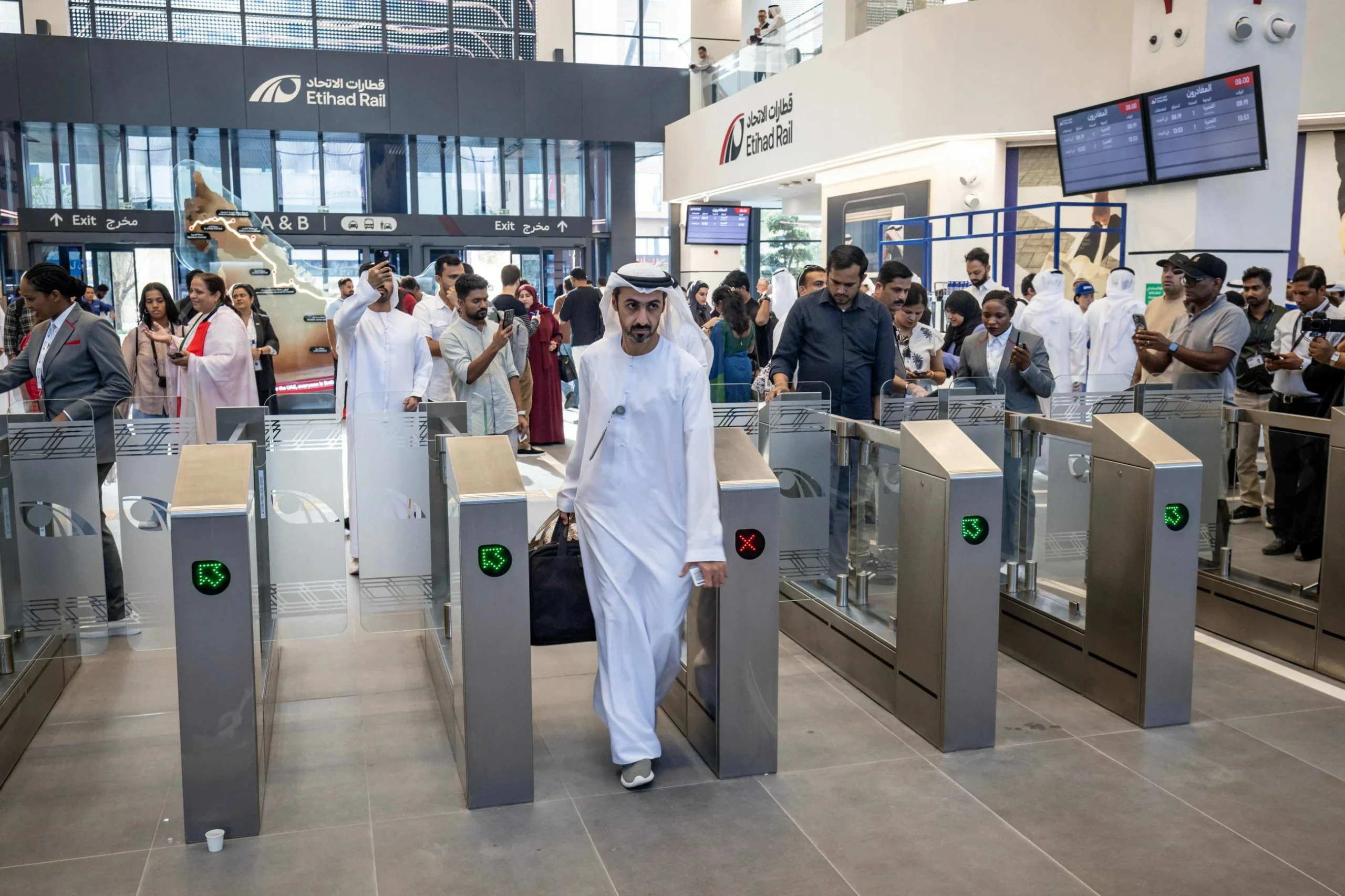
‘We got to see incredible landscapes:’ First Etihad Rail …

‘We got to see incredible landscapes:’ First Etihad Rail …

 It's 7.13 am on a sultry June morning and a passenger train pulls into the station in Abu Dhabi, capital of the United Arab Emirates. An unremarkable scene in many cities but here, the first

Entertainment
Tom Hardy Returns To ‘MobLand’ After Alleged Production Clashes

Tom Hardy Returns To ‘MobLand’ After Alleged Production Clashes

Tom Hardy I Won't Leave The Mob Life!!! Published June 30, 2026 1:14 PM PDT Looks like Tom Hardy cut a deal with "MobLand" producers ... TMZ confirmed he's returning to the show for its

Entertainment
Spencer Pratt Says Daveigh Chase Should’ve Been Forced Into Rehab

Spencer Pratt Says Daveigh Chase Should’ve Been Forced Into Rehab

Spencer Pratt on Daveigh Chase Someone Should've Dragged Her to Rehab!!! Published June 30, 2026 12:22 PM PDT Spencer Pratt says Daveigh Chase is dead because "nobody was willing to drag her to rehab against