1. Home
  2. Author Blogs

Author: admin

admin

Opinion
Net-zero champion Europe snared by climate change on its doorstep

Net-zero champion Europe snared by climate change on its doorstep

The June heatwave that broke a series of temperature records in Europe has focused minds on the urgency of adapting to global warming in a continent once complacent about its relatively gentle climate and its ambitious goals on reducing emissions. The European Union has sought to be a leader in addressing climate change, and was one of the first major economies to set a legally binding target to reach net-zero emissions by 2050. However, a June heatwave that peaked at above 40° Celsius (104° Fahrenheit) in parts of Europe has revealed how its businesses, amenities and critical infrastructure are not prepared for the consequences of climate change in the here and now. “We’ve not been good enough on adaptation,” Poland’s Deputy Climate Minister Krzysztof Bolesta told Reuters after some power supplies across the region were disrupted, outdoor work was banned in places, trains cancelled in Germany and in Sweden a cargo train derailed as extreme temperatures buckled metal rails. Among the countries worst affected, Spain reported 1,000 excess deaths that it linked to the record heat. Adapting buildings and public spaces to cope with extreme heat is typically the responsibility of national or regional authorities, rather than the EU, which says individual countries are best placed to understand their particular needs. “There’s no point in trying to say from Brussels how the Greeks or the Spaniards need to battle wildfires,” EU Climate Commissioner Wopke Hoekstra, who later this year will set out an EU-wide “climate resilience plan”, told journalists. “They know that much better than we do as the Dutch know much better how to build dikes,” he said, adding the EU plan would focus on common scenarios and best practice. Still, the EU’s own spending on adapting remains small, even as global warming is heating Europe at a faster rate than any other continent. Between 2021 and 2025, 72% of the climate-related spending from the EU’s joint budget went to mitigation, or limiting the greenhouse gases that cause warming, while just 18% went to adaptation, and 9% touched both issues, official figures show. The EU and its member governments have a suite of financial incentives in place to reduce emissions, including subsidies to build renewable energy, and the EU’s Emissions Trading System, which caps the emissions companies produce and lets greener firms trade at a profit their spare permits to pollute. Poland’s Bolesta said that for businesses there was no equivalent encouragement to invest in adaptation measures. “It’s easier to see the business case for mitigation, because you have the cap-and-trade system, you have carbon credits, you have renewables companies,” he said. “Adaptation, it’s mostly regarded as a cost with very long-term benefits, so delayed gratification, but also sometimes just an insurance policy – it might or it might not kick in.” Climate change-fuelled extremes like heatwaves, drought and floods cost the near-stagnant European economy 0.3% points in output last year, Dutch bank ING said in a note this week. “The uncomfortable truth is that heatwaves have quietly graduated from ‘weather event’ to ‘macro variable’,” ING said. “The thermometer, it turns out, has become a leading indicator.” The cost to economies ranges from threats to tourism or farming revenues in southern countries, to the difficulty of working in offices that are not adapted to hot weather. Despite an official estimate that one day of heat above 30C (86F) costs the German economy €430mn ($465mn) due to productivity losses, only half of German offices are air-conditioned, according to the Federal Environment Agency versus 90-95% in southern Europe. “For decades, we (Germany) built against cold and not against heat and that’s an adaptation gap,” said Geraldine Dany-Knedlik from the German Institute for Economic Research DIW. Irene Seemann, who heads efforts to help businesses with climate adaptation in the large German state of North Rhine-Westphalia, said there were signs of mindset change. “To use a football analogy, Germany has been one-nil down because heat has not been much of an issue,” Seemann said. “Now companies see that it has a direct impact on their operations.” Some adaptation fixes are simple and relatively cheap. Forbidden by heritage laws from structurally altering its historic, glass-domed  headquarters in Cologne, German flooring firm Project Floors applied reflective film to its  windows and managed to lower indoor temperatures by 10C. “It was simple, effective, and required no power,” said Project Floors managing director Bernd Greve. Others require more fundamental changes to workplaces and labour organisation, for example by rearranging work shifts to cooler times of the day, right through to reinventing public transport networks and urban spaces.There has been progress compared with a deadly heatwave in 2003, when peer-reviewed studies have found around 70,000 excess deaths occurred over the summer in Europe. The World Health Organisation (WHO) released a statement this week estimating that heat-related deaths in Europe, more than two decades later, would havebeen around 80% higher without the adaptation measures now in place. They include heat-health action plans, early warnings, cooling spaces and outreach to vulnerable people. “They are saving lives right now,” said the WHO’s regional director for Europe, Hans Henri P Kluge. “We need more of them, across all of the European region.”

Opinion
Merz’s reforms have potential – eventually – to boost German growth

Merz’s reforms have potential – eventually – to boost German growth

A late-night deal ‌agreed by Chancellor Friedrich Merz’s ruling coalition on a long-awaited package of reforms has the ​potential to give Germany’s anaemic economy a ‌shot in the arm if implemented fully and quickly, economists and business leaders said. The ‌measures to cut red tape, offer tax relief ‌to working families, allow more flexible job contracts ‌and boost investment in housing come on top of last week’s proposals to add a capital element to the state pension and gradually push back the retirement age. The latest moves come 15 months after a landmark agreement on a €500bn special fund for infrastructure and plans to largely remove defence investment from borrowing caps, paving the way for a spending surge that has nonetheless taken longer to materialise than many had expected. “If implemented, Germany can become a better place to invest and create jobs again,” said Holger Schmieding, chief economist at Berenberg of the new package combining both left-leaning and pro-business elements. He estimated the reforms ​could almost double Germany’s trend growth rate from a dismal 0.4% to 0.7% per year, offering a much needed boost to an economy that has struggled to gain momentum. Deutsche Bank’s CEO Christian Sewing called the package “a very successful opening move”, ‌adding: “This is exactly the momentum we need to make Germany fit ​for the future.” The individual measures agreed in the package are expected to be passed ​by parliament by the end of the year. “Admittedly... it is not a package that will morph a stagnating economy into a booming economy overnight,” said Carsten Brzeski, global head of macro at ING. Failure to deliver on economic pledges could deepen public frustration and feed perceptions of government ineffectiveness, creating fertile ground for the far-right AfD party, which tops national polls. “The reform package shows that both coalition partners were willing to compromise,” said Marion Muehlberger from Deutsche Bank Research. “The German government agreed on one of its biggest reform packages in decades.” Once the engine of European growth, the continent’s largest economy has stalled as competition from China and higher energy prices have challenged its export-driven foundations ‌and the reform package aims at boosting competitiveness, ‌economists said. The package includes €10 billion ($11 billion) in annual tax relief for lower-income earners, more flexible labour laws, changes to the pension system and cutting red tape. Merz said an average family will get tax relief of €600. That will be funded mainly by raising the top tax rate to 47% from 45% for the highest earners, defined as those with annual income of €280,000 or more. The package includes cuts to red tape, including faster approval procedures for infrastructure projects and the abolition of some reporting and documentation requirements. “The planned measures to reduce bureaucracy, in particular, show great promise because they could give German businesses more leeway,” said Commerzbank’s senior economist Ralph ​Solveen, who like others added the caveat that it all depended on effective implementation. The long list of measures also includes an action plan against benefit fraud, a target to cut staffing in federal ministries by 8% through digitisation and an end to workers’ ability to obtain permission for sick leave by phone. The proposals were criticised by the services union Verdi, which said they exemplified a “culture of mistrust” against workers. Germany’s Association of General Practitioners also said the requirement for workers to obtain written confirmation of illness would be “absolutely disastrous” for already overburdened medical practices.   

Sports
Mexico chase another slice of history as England return to Azteca

Mexico chase another slice of history as England return to Azteca

Mexico’s Gilberto Mora and Brian Gutierrez take part in a training session at the Centro de Alto Rendimiento in Mexico City on July 4, 2026, on the eve of the World Cup round of 16

World
‘Super typhoon’ Bavi heads for US Pacific islands

‘Super typhoon’ Bavi heads for US Pacific islands

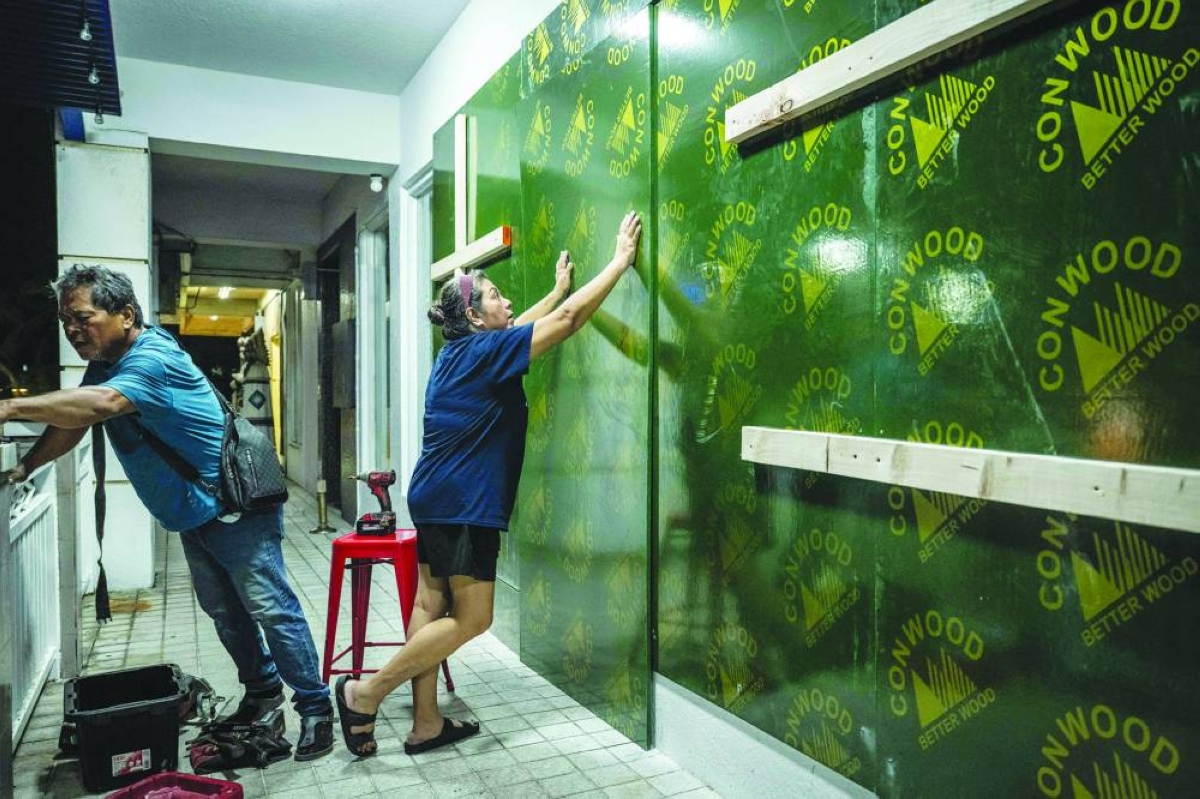
People in Guam and the Northern Marianas readied themselves Saturday as the second "super typhoon" since April drew closer to the US territories, bringing the equivalent of category-5 hurricane winds.Bavi was moving westward with sustained winds of 269 kilometres per hour (167 miles per hour) and gusts of 324kph (201mph), the Joint Typhoon Warning Center (JTWC) said in an update at 7:00pm local time (0900 GMT).The eye of the storm was expected to pass Monday very close to the small island of Rota between Guam and Saipan, the main island of the Northern Marianas, with winds set to strengthen to 278kph, the JTWC forecast."My girls were saying to me it's scary. But it will be okay. My house is concrete so the worst that can happen is a window could blow in," local Arabella Paulino, 48, told AFP on a Guam beach as the sky darkened and rain fell intermittently."Typhoon Sinkalu in April wasn't as bad as Mawar in 2023. That brought my whole house down," said her friend Derma Soaladaob, 51. "I stay up north, but I'm going to a hotel. I have a concrete house but with the noise and the wind, it's scary."Guam was set to go into "Condition of Readiness 2" — meaning a typhoon was expected in 24 hours — from 10:00pm, with emergency shelters due to open Sunday from 7:00am, the governor's office said.Residents were told to bring to the shelters "enough food and water to last seven days for each family member" as well as medicines, bedding and personal hygiene products. Pets were not allowed.Any plans for celebrating the United States's 250th anniversary on Saturday — also Liberation Day for Saipan — have been quickly overtaken by storm preparations, with both Guam and the Northern Marianas declaring a state of emergency.Many of the islands' roughly 200,000 inhabitants have queued at petrol stations in recent days and thronged hardware stores to buy plywood to board up their windows while also stocking up on food, water and other essentials.Jeff Garcia, 48, who lives in Kagman Village in the Northern Marianas, told AFP that safety was the top priority, adding that they had "weathered super typhoons before.""We bought basic needs like water, candles, batteries, and canned goods... As a community, our greatest defence is our unity, our preparation and our discipline," he said.Still recoveringThe Northern Marianas archipelago is home to around 40,000 people, and nearby Guam — a separate US territory — around 170,000. Major battles were fought in the area in World War II.Super Typhoon Sinlaku, which hit in mid-April, knocked out power for tens of thousands of people, uprooted trees, overturned cars and ripped metal roofs off buildings.A cargo ship, the MV Mariana, suffered engine failure and overturned in the storm. The body of one crew member was recovered and five others were missing, presumed dead.The American Red Cross warned that some locals were still in temporary shelters or under makeshift roofs, even as it deployed disaster teams and supplies ahead of Bavi's arrival.Em Marilla, 42, who lives in As Lito village on Saipan, told AFP the thought of "going through it all again without electricity and water is really sad.""Furthermore, the application process for assistance takes far too long, and having to keep spending out of pocket for our daily needs is truly draining," she said.Lherie Galvan, 50, an accountant in San Antonio village, said: "I'm tired of preparing, planning and fixing our roof.""It's another anxiety to recover from. We need more psychiatrists on the island and financial assistance."Children already have trauma but at a young age they know how to prepare — pack their things for emergencies."Warming oceans The world's oceans experienced their hottest June on record and could set fresh highs in the months ahead, the European Union's Copernicus Marine Service said on Wednesday.Warmer oceans help tropical storms to intensify and add more moisture, which can fall as heavy rain.The World Meteorological Organisation warned on Friday that El Nino, which typically occurs every two to seven years and lasts nine to 12 months, has already begun in the tropical Pacific and is likely to be strong.The natural climate phenomenon warms surface temperatures in the central and eastern equatorial Pacific Ocean, bringing worldwide changes in winds, pressure and rainfall patterns.  Related Story

World
How drug gangs use social media to recruit Thai air crew as couriers

How drug gangs use social media to recruit Thai air crew as couriers

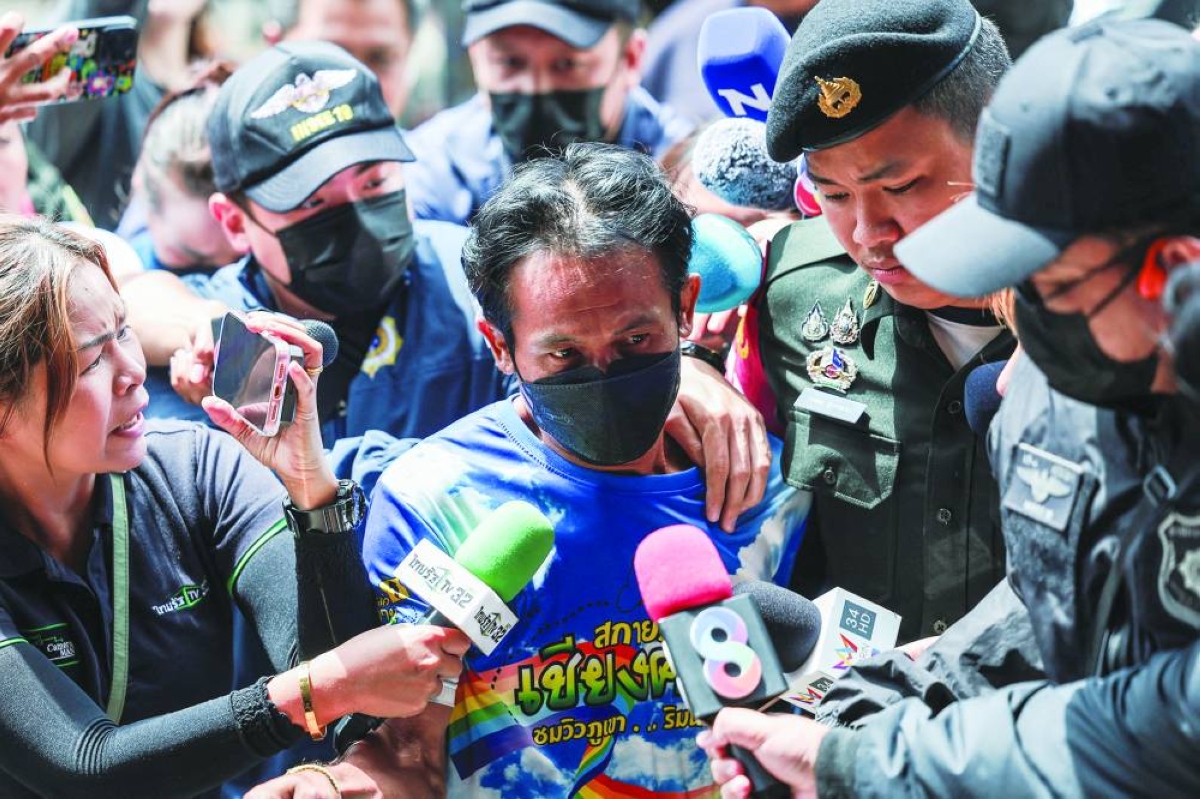
Early in the morning on June ​18, a message from an unknown account ‌slipped into the TikTok inbox of a flight attendant in Bangkok with a series of questions: 'Are ‌you flying to Australia? ⁠Do you do carry-for-hire? ‌What is your rate?'The 30-year-old, who flies for a ‌regional budget carrier, ignored the message and forgot about it — until Tuesday, when a Thai Airways flight attendant was charged ⁠with importing more than one kilogram (2.2 pounds) of heroin into Australia hidden in several tote bags.The rare detention of a national airline cabin staff has triggered alarm in Thailand, raising questions about security measures at airports and concern that international trafficking networks are targeting air crew in their attempts to get illicit drugs to lucrative markets beyond the Southeast Asian nation.'According to reports, in the first half of this year, there have already been at least six cases of people travelling from Thailand who were charged with commercial drug trafficking,' Thai Prime Minister Anutin Charnvirakul said ​at a meeting on Friday of the top national anti-drug committee.'This is considered a high number... and it damages the country's image,' he said.Thailand's main airport operator will improve baggage screening and inspections, including those of crew members, and airlines will take serious disciplinary ‌actions against staff carrying or accepting items ⁠on behalf of others, a ​government spokesperson said.'I don't reply to strangers like this,' the Bangkok flight attendant told Reuters, referring ​to the account that messaged her. She asked not to be named due to the sensitivity of the issue. 'We've been constantly warned about this, no carry-for-hire. It's a well-known rule.'The unknown account — named 'Powder is Powder' in Thai — was linked to drug trafficking networks that create fake social media accounts to find people to move illicit substances across borders, said Areepak Ngernbamroong, a spokesperson for Thailand's Office of the Narcotics Control Board.'The account has now been shut down,' Areepak said. 'The ONCB is investigating, and preliminary findings indicate that the account used many different names.'In a statement following the detention, Thai Airways said it had strict rules governing the conduct of all employees and would cooperate with the relevant authorities.CROSS-BORDER MOVEMENTAfter procuring drugs from neighbouring countries with large production facilities, trafficking networks move the ‌substances through Thailand concealed in items such as ‌clothing, coffee packets, and vases, according to Thai ⁠authorities. The cultivation of opium poppies for the production of heroin in neighbouring Myanmar surged to its highest level in ⁠a decade in 2025, the UN Office on Drugs ⁠and Crime (UNODC) reported in December.War-torn Myanmar is the world's main known source of illicit opium, amid declining production in Afghanistan, as conflict and economic hardship push more farmers into the illicit trade.In Thailand, trafficking networks target specific groups of travellers, including flight attendants, to help transport the drugs overseas, said Police Major Suriya Singhakamol, Secretary-General of the ONCB.In the case of the Thai Airways flight attendant arrested in Australia, she had initially posted in a social media group where people offer to carry ​items overseas for a fee, he said.The flight attendant then began communicating with a Facebook user named 'Rose Rose', according to Suriya.'They later agreed on a fee of 8,800 baht ($265.46),' he told reporters.The heroin concealed within the lining of the bags carried by the attendant had an estimated street value of A$500,000 ($347,150), according to the Australian Federal Police.Using similar methods, drug smuggling networks had prepared to send five more packages from the Thai capital Bangkok to Australia and Taiwan between June 30 and July 1, said Suriya.'But authorities seized 24.38 kilograms of heroin, concealed in traditional goods, silk clothing, coffee sachets, and winter jackets,' he said, adding that Thai agencies were coordinating with Australian and Taiwanese authorities.So far, ‌Thai authorities have taken into ​custody two people, a Thai man and his Laotian wife, suspected of sending drug parcels from a border province to Bangkok. 

World
US envoy says Cook Islands minerals are a top priority

US envoy says Cook Islands minerals are a top priority

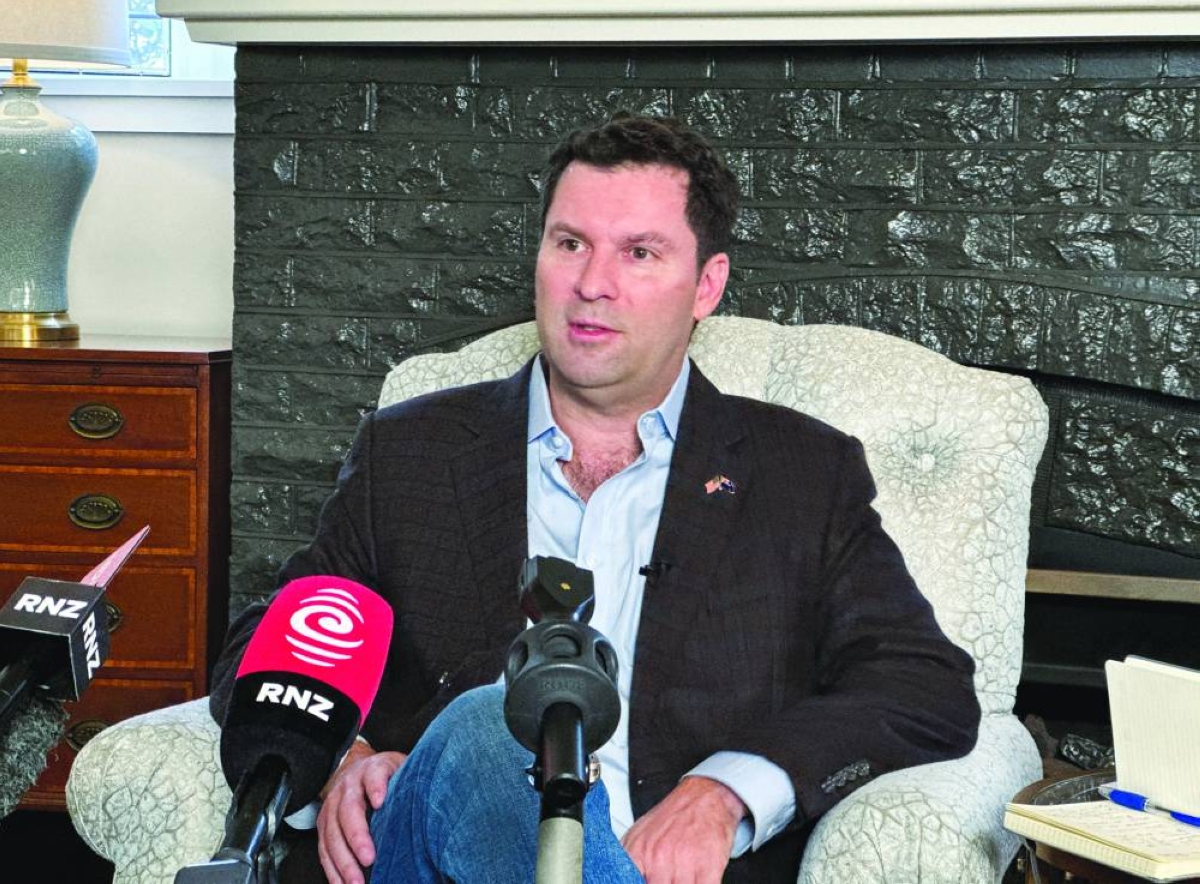
The new US ambassador to New Zealand ‌and several Pacific island nations said on Friday that securing Cook Islands seabed minerals ​was a top priority, and that ‌China's push for influence in the Pacific carried risks for small island states.Jared Novelly, ‌US ambassador to ⁠New Zealand, the Cook Islands, ‌Niue and Samoa, said in a press ‌conference that critical minerals had moved rapidly up his agenda over the last year.'When I was getting briefings ⁠in October, November last year, the critical minerals thing was kind of a lesser item,' Novelly said. 'Fast forward to February, March of this year, critical minerals, and particularly in the Cooks, is either 1A or 1B of my priorities.' Washington has made securing critical minerals a strategic priority as it seeks to reduce its reliance on China-dominated supply chains and support defence and clean-energy industries. The Cook Islands' waters contain deposits of polymetallic nodules, sought for batteries and other technologies, and the government has allowed exploration, ​but not commercial extraction. In February, the Cook Islands and the US signed a non-binding framework on critical minerals research and supply-chain security, including deep-sea minerals in Cook Islands waters. It has also signed an exploration and research agreement with ‌China.Novelly, a Missouri businessman and sports ⁠team owner who ​is the inaugural US ambassador to the Cook Islands, said he planned to spend time ​in the country and would look to introduce US companies that could help with the minerals' extraction. The Cook Islands government did not immediately respond to a request for comment.He said he also believed he needed to warn Pacific countries to be cautious in dealings with Beijing.'China has made no bones about they want a base in the Pacific, they want an expanded presence there,' he said, adding that island nations needed to understand 'what a debt trap is' and that 'there can be strings attached'. China in recent years has become a major player in the region, in development finance, ports, airports and telecommunications, and has sought a greater role in the military, policing, digital connectivity ‌and media. Beijing says its relationships ‌in the region are based on mutual respect ⁠and delivering benefits to the Pacific people.Novelly said he was also exploring ways to support Pacific economies ⁠beyond aid, including by reducing the cost ⁠of remittances.US FACES MORE SCEPTICAL KIWISNovelly arrived in New Zealand earlier this week and presented his credentials to the governor general on Wednesday before hosting the embassy's annual July 4 party.Novelly said Washington respected New Zealand's role in the South Pacific, including defence cooperation, but said partners needed to spend more on security. 'It's important that you care as much about your defence as we care about your defence,' he said, echoing ​US policy towards partners and allies around the globe. Novelly arrives as New Zealanders' views of the US have fallen. A June survey by the Asia New Zealand Foundation found that, for the first time in a decade, they viewed Washington as more of a threat than China.But Novelly said it was not something he had experienced on his visits to the country and 'there seems to be a very friendly camaraderie that occurs between folks from the US and Kiwis.'On New Zealand's nuclear-free policy, which restricts visits by nuclear-powered or nuclear-armed vessels, Novelly said any change was a decision for Wellington but that ‌he would like to see a ​US aircraft carrier visit in Auckland harbour.'I would really like the opportunity to work with New Zealand on that,' he said. 

Entertainment
Egypt Make World Cup History, Beat Australia on Penalties to Reach Last 16

Egypt Make World Cup History, Beat Australia on Penalties to Reach Last 16

Egypt reached the Round of 16 at the 2026 FIFA World Cup for the first time in their history after beating Australia 4-2 on penalties following a dramatic 1-1 draw after extra time at Dallas

Entertainment
Houston Man Arrested For Allegedly Filming Water Gun Attacks on Homeless People

Houston Man Arrested For Allegedly Filming Water Gun Attacks on Homeless People

Houston Man Arrested After Filming Water Gun Attacks on Homeless People Published July 3, 2026 1:32 PM PDT A Houston man allegedly thought soaking strangers would make good content ... now cops say it's evidence.

Sports
Gauff tames plucky Liu in third round to match best Wimbledon run

Gauff tames plucky Liu in third round to match best Wimbledon run

Coco Gauff of the U.S. shakes hands with Claire Liu of the U.S. after winning her third-round match at Wimbledon on Friday. (Reuters) * American overcomes compatriot Liu in decider* Gauff returns to the fourth round of Wimbledon* She faces Swiss Bencic for place in quarters  Seventh seed ‌Coco Gauff reached the fourth round and matched ​her best Wimbledon display ‌with a 6-3 6-7(5) 6-2 victory over fellow American ‌Claire Liu ⁠on Thursday ‌to keep her bid for a ‌third Grand Slam title alive.The 22-year-old former U.S. Open and ⁠French Open champion, who crashed in her opener at the All England Club 12 months ago, arrived under pressure to improve her modest grasscourt record and appeared to be in cruise control early on against Liu.She eased through the opening set with minimum fuss and was on course for a ​routine victory when world number 146 Liu sprang to life and saved three match points in the second set, before forcing a tiebreak as ‌the evening shadows engulfed ⁠Court One."I think ​I'm not playing my best tennis," Gauff admitted in ​her on-court interview, though she said there were positives."I think today I served well as I did in my last match, I held when I needed to. I definitely feel more confident."Gauff's passive approach in the tiebreak allowed qualifier Liu to take control and level the contest at one set apiece, but she quickly regained her rhythm in the decider and broke in the opening game by forcing ‌an error with a deep ‌backhand.GAUFF GLAD MISSED CHANCES ⁠DID NOT DERAIL HER"Yeah, I'm just happy to get through," Gauff ⁠added."I had some opportunities ⁠to close it out in the second set, but I'm glad I didn't let that derail me and was able to come out with a win today."I felt better today. I think Claire stepped up her level and I definitely had my opportunities ​with some of those match points, but it's only experiences that you can learn from."The double major champion's serve came under pressure from Liu in the games that followed, but there was no looking back when she built a 5-2 lead, as she earned a fourth-round clash with Swiss 11th seed Belinda Bencic."The opponents I've played have been high level players and good grasscourt ‌players. Belinda will ​be the same," she said."It'll be a tough one."  Related Story

Sports
French officials told they can cancel Tour de France stages in extreme heat

French officials told they can cancel Tour de France stages in extreme heat

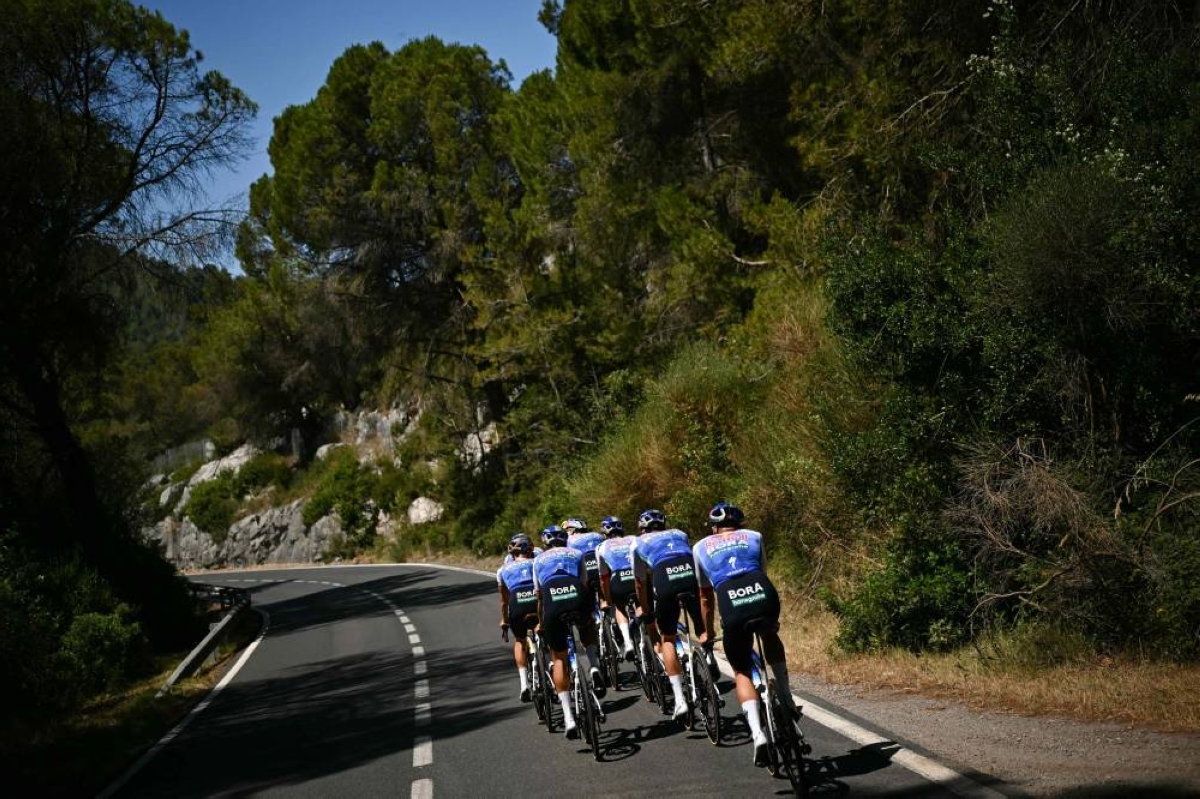
Red Bull - BORA - hansgrohe team's riders cycle during a training session on the eve of the start of the 113th edition of the Tour de France cycling race, in Barcelona in northeastern Spain,