1. Home
  2. Author Blogs

Author: admin

admin

Opinion
Trump’s feuds, tensions with allies likely to outlast Iran war

Trump’s feuds, tensions with allies likely to outlast Iran war

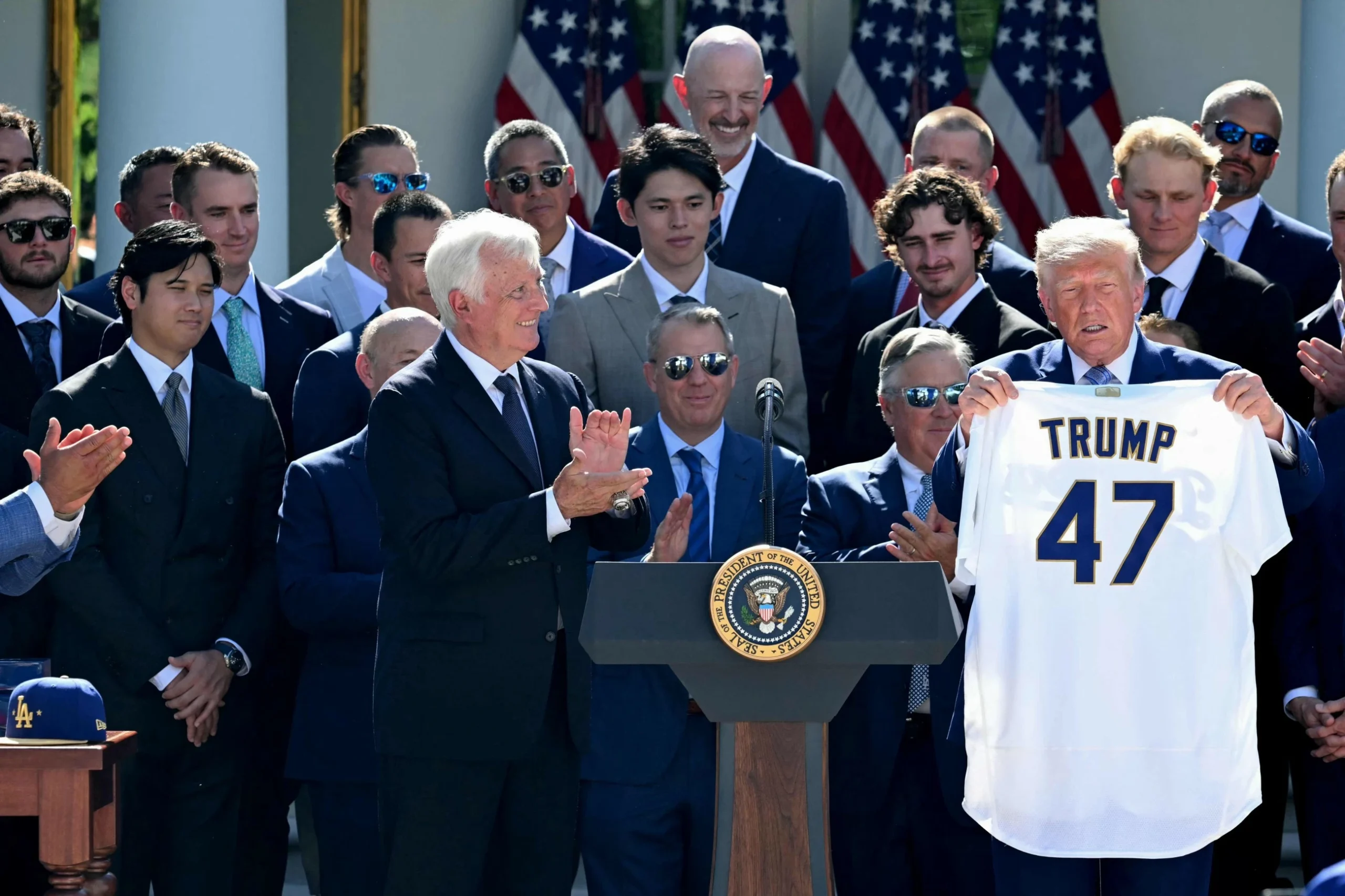
With his decision to pull some US troops from Germany, his threats to draw down forces elsewhere in Europe and his downplaying of Iran’s recent attacks on an important Gulf partner, President Donald Trump’s latest moves foreshadow what could be the war’s enduring legacy: the fraying of ties with key allies. Even as the US and Iran inch toward a potential off-ramp from their 10-week war, Trump’s words and deeds have revived fears among Washington’s long-standing friends - from Europe to the Middle East to the Indo-Pacific - that the United States might be unreliable in a future crisis. In response, some traditional US partners ‌are starting to hedge their bets in ways that may bring long-lasting changes in relations with Washington, while adversaries such as China and Russia are looking to exploit strategic openings. It is not yet clear ​whether Trump’s war with Iran will mark a permanent turning point in US ‌relations with the world. But most analysts believe his erratic conduct since returning to office, essentially upending the rules-based global order, will further erode US alliances, especially with Nato continuing to feel his ‌ire for largely resisting his wartime demands. “Trump’s recklessness with respect to Iran is resulting in some dramatic shifts,” said Brett ‌Bruen, a former adviser in the Obama administration who now heads the Situation Room strategic consultancy. “US credibility ‌is at stake.” Tensions are especially high between Trump and the Europeans since he joined Israel in striking Iran on February 28, claiming without evidence that Tehran was close to developing a nuclear weapon. Iran’s retaliatory closure of the Strait of Hormuz unleashed an unprecedented global energy shock that has made European countries some of the biggest economic losers from a war they never asked for. Even before that, Trump had rattled allies by imposing sweeping tariffs, pushing to take over Greenland from Denmark and cutting military aid to Ukraine. The rift widened when Trump announced this week he was withdrawing 5,000 of the 36,400 troops the US has stationed in Germany after Chancellor Friedrich Merz angered him by saying publicly that the Iranians were humiliating the US. The Pentagon then scrapped a planned deployment of Tomahawk cruise missiles to Germany. Trump -- who has long questioned whether the US should remain in the Nato alliance it helped create after World War II -- said he was also considering reducing US forces in Italy and Spain, whose leaders have been at odds with him over the war. FEUDING WITH ALLIESThe move followed Trump’s accusations that allies have not been doing enough to back the US in the war and his suggestions that this meant Washington might no longer need to honor the alliance’s Article 5 mutual defense clause. “President Trump has made his disappointment with Nato and other allies clear,” White ​House spokeswoman Anna Kelly said, noting that some requests to use military bases in Europe for the Iran war had been denied by host governments. While insisting that Trump had “restored America’s standing on the world stage and strengthened relationships abroad,” she said he “will never allow the United States to be treated unfairly and taken advantage of by so-called ‘allies.’” Trump had earlier taken aim at British Prime Minister Keir Starmer, deriding him in March as “not Winston Churchill” and threatening to impose a “big tariff” on imports from the UK. And Trump’s Pentagon has floated ‌the prospect of punishing Nato allies it believes have failed to support US operations against Iran, including suspending Spain as a member ​and reviewing US recognition of Britain’s claim to the Falkland Islands. European governments have responded by stepping up efforts to increase co-operation among themselves, shoulder more of their own defence burden and jointly develop ​weapons systems to reduce reliance on the US, while trying to convince Trump of the value of maintaining transatlantic allies. One European diplomat called Trump’s threats a clear signal for Europe to invest more in its own security but said leaders were resigned to having to roll with the punches for now. As “middle powers,” the Europeans have limited options, especially given their dependence on their superpower ally for strategic deterrence against any possible attack from Russia, and analysts say the transition to greater self-reliance will take years. In their efforts to mollify Trump, meanwhile, European officials have quietly stressed that many of their countries are allowing US forces to use bases on their soil and their airspace during the Iran campaign. But European leaders, some of whom had used flattery with Trump to defuse earlier crises, are also becoming wise to his negotiating tactics and more emboldened in standing up to him, analysts say. Jeff Rathke, president of the American-German Institute at Johns Hopkins University, said that while Merz had seemed to charm Trump during earlier meetings, now he “is not trying to hide the critical assessment of what the United States has gotten itself into.” But the Europeans are also mindful that Trump, barred by law from running again, could feel unrestrained “to do whatever he thinks” on the world stage before he leaves office in January 2029, the European diplomat said. NATO’S FUTUREAs some European leaders sound the alarm about Nato’s future, Polish Foreign Minister Radoslaw Sikorski told a conference in Warsaw there is no need to panic so long as Europe delivers on promised higher military spending, which Trump has long demanded. Even so, the strains on US alliances extend ‌well beyond Europe. When Iran this week launched missile and drone attacks against the United Arab ‌Emirates, a close US ally, Trump and his aides seemed to turn a blind eye, causing further unease among Gulf Arab states already hard hit by the war. Trump was quick to dismiss a strike on Monday as minor, though it set fire to the important Fujairah oil port and prompted the government to close schools, and even after further attacks later in the week he insisted that a month-old ceasefire was still holding. Trump went to war against the advice of some Gulf partners, some now worry he could strike a deal that leaves them facing a still-dangerous neighbour. The war has also stirred anxiety among Asian partners, many heavily dependent on oil that flowed freely through the strait before the conflict. Countries like Japan and South Korea have already been unsettled by Trump’s high tariffs and disparagement of traditional alliances. Some may now wonder whether the vulnerability he has shown to economic pressure at home, including high gasoline prices, could mean Trump might hesitate when asked to help in a conflict with China, such as an invasion of Taiwan. “What worries us most is that trust in, respect for, and expectations toward the United States - the core partner in the alliance Japan values most -- have been shrinking,” Takeshi Iwaya, who served as Japan’s foreign minister at the start of Trump’s second term, told Reuters. “It could cast a long shadow over the entire region.” Since the start of the war, Russia and China, long-time allies of Iran, have mostly steered clear, but analysts say they are watching closely. 

World
Indonesia detains over 300 foreigners in gambling crackdown

Indonesia detains over 300 foreigners in gambling crackdown

Indonesian authorities have detained more than 300 foreign nationals this week for allegedly running an online gambling ring in the capital Jakarta, police said Saturday.Gambling is illegal in the archipelago, with punishments extended to bookmakers, punters and those who promote gambling content online.Police raided a building in Jakarta on Thursday, where they found and detained 321 foreigners and seized phones, passports, laptops and computers.The majority of those detained, 228 people, were Vietnamese nationals. The group also included 57 from China, 11 from Laos, five from Thailand and three each from Cambodia and Malaysia, police official Wira Satya Triputra told a news conference.Some 275 people face charges of gambling and money laundering, Wira said, adding that authorities were still investigating the rest."We caught the perpetrators red-handed, meaning they were conducting an online gambling operation," he said.Preliminary investigations suggested that the ring, which started operations about two months ago, targeted victims outside Indonesia, Wira said, without specifying where.Police have previously said that many scammers had moved operations to Indonesia and other Southeast Asian countries following a crackdown in China.Elsewhere in Indonesia this week, immigration authorities raided an apartment building in Batam, in Riau Islands province, arresting 210 foreigners suspected of running an investment scam.In February, Police raided two villas on the resort island of Bali and arrested 39 Indian nationals for allegedly running an illegal gambling operation.Turnover linked to online gambling reached more than 280tn rupiah (about $16bn) last year, official data showed, with more than 12mn Indonesians estimated to be engaged in the illicit activity.  Related Story

Sports
QFA President congratulates Al Gharafa on winning the Amir Cup

QFA President congratulates Al Gharafa on winning the Amir Cup

Following Al Gharafa’s victory in the 54th Amir Cup final, Jassim bin Rashid al-Buainain, President of the Qatar Football Association (QFA), Saturday congratulated the club for their impressive performance. “I congratulate Al Gharafa on winning the Amir Cup,” said al-Buainain. The final, played under the gracious patronage of His Highness the Amir Sheikh Tamim bin Hamad al-Thani, saw Al Gharafa defeat Al Sadd at Khalifa International Stadium." Beyond the result, the QFA President was keen to highlight the collective effort behind the event. “I truly appreciate the work of all our partners in making this final, our most precious trophy, a success,” he stated. “It caps off a successful and truly special season for Qatari football.” The QFA President also praised the technical and organizational standards on display, noting that the final coincided with a landmark anniversary. “This was a fitting celebration as Khalifa International Stadium marks 50 years since its opening, I extend my appreciation to every government, sports, security, and media entity that collaborated with the QFA to deliver a memorable experience for the fans in attendance.” Al-Buainain went on to acknowledge the tournament’s sponsors as essential partners. “We value the vital role played by the Amir Cup sponsors. They are fundamental to the competition’s continued success through their unwavering support. We wish them continued progress and prosperity.” Taking a broader view of the season, the President added: “I also congratulate every club that has won silverware during the 2025–2026 season. We’ve seen outstanding performances from clubs throughout the year. By any measure, it has been a successful season, and we wish them all the best in their future competitions, both domestically and internationally.” Finally he offered a special word of thanks to the local media. “I am pleased to express my gratitude and appreciation to Qatar’s media outlets. Your role as a core partner in supporting Qatari football, and in covering every event and competition throughout the season, is invaluable," he added.  Related Story

Sports
Im leads Fleetwood by one at Quail Hollow

Im leads Fleetwood by one at Quail Hollow

South Korea's Im Sung-jae fired a two-under par 69 to seize a one-stroke lead over England's Tommy Fleetwood after Friday's second round of the PGA Truist Championship.Im birdied the par-five 10th and 15th holes and answered a bogey at the 12th hole with a birdie at 14 to stand on nine-under 133 after 36 holes at Quail Hollow in Charlotte, North Carolina."I'm very happy I'm leading," Im said. "I didn't putt very well, but I'm happy with where I'm at."I'm driving the ball very well. I'm keeping it in the fairways, so it makes it easier for me to hit my second shots on the green. I know this course very well, so I'm taking advantage of that."Fleetwood fired a 67 to finish one adrift with England's Alex Fitzpatrick and American Justin Thomas sharing third on 135 after each fired 68.Rory McIlroy, coming off a triumph in last month's Masters, shot 67 despite a bogey at 18 to join a pack in eighth on 137 that included Americans Rickie Fowler, who fired a 63, and Matt McCarty, the first-round leader."Would have been nice not to make that bogey at the last," McIlroy said. "But overall it was a good day's work and puts me right into the thick of things going into the weekend."Im, a 2020 Masters runner-up, seeks his third PGA Tour title after the 2000 Honda Classic and 2021 Shriners Children's Open.The 28-year-old Asian star had struggled with a wrist injury but said he was "100%" this week.Fleetwood sank a 13-foot birdie putt at 14 and made a five-footer for birdie at the par-three 17th to grab second."Definitely didn't have my rhythm, got ahead of a few shots, but I didn't hit it in any terrible spots and I scored very well," Fleetwood said."I've definitely hit enough good shots. Today I didn't quite have it, but still managed to get a good score out of it. I holed out well and did a lot of other things well."McCarty, who fired a 63 on Thursday, shot 74 with three bogeys and a double bogey.World number two McIlroy, who had played only the Masters over a seven-week span, found his form as he charged into the hunt for his fifth victory at Quail Hollow.The Northern Ireland star sank a 17-foot birdie putt at par-five 11th, made an 13-foot birdie putt at 11 and dropped his approach inside three feet then tapped in for birdie at the par-three 13th.McIlroy reached the green in two and tapped in for birdie at the par-five 15th then made an 11-foot birdie putt at 16 to pull within three of the lead before finding fairway and greenside bunkers at 18 to set up a bogey.A day earlier he sank a 15-foot birdie putt at 18 after 17 pars."I still feel like I left a couple out there," McIlroy said. "It was an improvement and if I can keep seeing improvements as the week goes on, that's a good thing."There's maybe a little rust, but it's more like getting a (scorecard) in your hand and getting comfortable hitting certain shots. Definitely felt a little more comfortable today, drove it in the fairway a little bit more and was able to take advantage of that and make some more birdies."American Chandler Blanchet aced the 188-yard, par-three 17th hole. 

World
Indonesia rescuers retrieve hiker’s body after volcanic eruption

Indonesia rescuers retrieve hiker’s body after volcanic eruption

Indonesian rescuers retrieved Saturday the body of one of three hikers killed in a volcanic eruption in a seismically active no-go zone, a rescue official said.Mount Dukono on Halmahera island erupted on Friday, sending an ash cloud 10km (6 miles) into the sky, with no towns or villages near enough to face any immediate threat.The eruption killed two hikers from Singapore and one from Indonesia, local police chief Erlichson Pasaribu said on Friday.Seventeen other climbers, including seven Singaporeans, had been brought down safely.Rescuers combing the area around the edge of the volcano's crater found a woman's body, local search and rescue agency head Iwan Ramdani said, without specifying her nationality."The joint search and rescue team... found the dead victim at 2:30pm (0530 GMT) along with her backpack," Iwan said in a statement.The body was transported to a local hospital for identification, he added.Images shared by the rescue agency showed a team carrying a black body bag on a makeshift stretcher down the mountain.The search for the remaining victims has been suspended due to rains and volcanic ash and will resume on Sunday, Iwan said.The volcano erupted again several times Saturday, once spewing an ash column about three kilometres (1.8 miles) high, according to the national Centre for Volcanology and Geological Hazard Mitigation.Preliminary information suggested the two Singaporeans' bodies were about 20-30m (65-100 feet) from the rim of the crater, national disaster mitigation agency spokesman Abdul Muhari said in a statement.Singaporean media quoted the foreign ministry saying it was working with the embassy in Jakarta to provide assistance to affected citizens and families.Dukono, one of Indonesia's most active volcanoes, has been on level two of the country's four-tiered alert system since 2008.Authorities have imposed a 4km (2.5-mile) exclusion zone around the crater since December 2024, according Lana Saria, the head of the government's Geology Agency.The police's Erlichson said on Friday that the hikers had ignored social media appeals and warning signs put up at the entrance of the trail to stay away.Indonesia, a vast archipelago nation, experiences frequent seismic and volcanic activity due to its position on the Pacific "Ring of Fire" where tectonic plates collide.The Southeast Asian country has nearly 130 active volcanoes.  Related Story

Sports
Cricket-Australia’s Starc eyes 2027 World Cup

Cricket-Australia’s Starc eyes 2027 World Cup

Australia fast bowler Mitchell Starc remains driven by the competitive nature of cricket and hopes to extend his ‌16-year international career for a few more ​years, he said ‌on Saturday, keeping the door open for ‌a potential ⁠appearance at ‌the 2027 World Cup.The ‌36-year-old left-armer, Australia's third-highest wicket-taker with 759 across formats - ⁠behind only Shane Warne and Glenn McGrath - retired from Twenty20 internationals in September to prolong his career in tests and 50-over cricket.The next ODI World Cup is scheduled to be held in South Africa, Zimbabwe and Namibia in October-November 2027."I'm pretty competitive, ​so I just enjoy that aspect of cricket," Starc told reporters. "For Australia, I get to play with some of ‌my best mates. I ⁠enjoy the ​hard work, but I also enjoy competing, and ​it's still fun."Starc, who has been managing elbow and shoulder niggles, said his body was holding up well despite the demands of international cricket."There's always something going on. I've had a bit of a niggle with my elbow and shoulder, which is still being managed, but there's probably a little less impact in T20 cricket," he ‌said."I'm still going okay ‌after 16 years ⁠and hopefully there are a couple more left."Starc, who ⁠made his Australia ⁠debut in 2010, is currently playing for Delhi Capitals in the Indian Premier League, in which they sit eighth in the 10-team table.He was named player of the series in Australia's recent 4-1 Ashes victory over ​England."It's (2027 World Cup) a long way down the road, but I'll hopefully be there. The World Cup is always a goal for every cricketer," he added."I've stepped away from T20 internationals, but I'm still enjoying my cricket. I don't set timelines - I just see where the body is and where the cricket is."  Related Story

Sports
Abbas takes five wickets to put Pakistan ahead in Bangladesh Test

Abbas takes five wickets to put Pakistan ahead in Bangladesh Test

Mohammad Abbas claimed five wickets to restrict Bangladesh to 413 before two debutant batsmen combined to put Pakistan in a strong position in the first Test Saturday.Opener Azan Awais hit an unbeaten 85 and Abdullah Fazal, also playing in his first Test, was 37 not out as Pakistan reached 179-1 at stumps on the second day in Dhaka.The visitors trail Bangladesh by 234 runs but veteran Pakistan seamer Abbas was the standout performer, claiming three wickets in the morning session after the home side resumed at 301-4.Abbas took two more wickets after lunch and finished with figures of 5-92 from 34 overs, the sixth five-wicket haul of his career.Bangladesh captain Najmul Hossain Shanto laid a strong platform on the first day with 101. Mushfiqur Rahim, who was 48 not out overnight, then went on to make a gritty 71 off 179 balls,Mushfiqur celebrated his 39th birthday by equalling Tamim Iqbal's record of 42 innings of 50 or more for Bangladesh in Test cricket.Bangladesh began day two well before 36-year-old Abbas dismantled their innings with disciplined bowling.Litton Das fell for 33 while attempting a pull shot, and Mehidy Hasan Miraz was out for 10 one ball after hitting a six.Taijul Islam edged a bouncer from Abbas for 17 before Shaheen Shah Afridi bowled Mushfiqur in the first over after lunch.Taskin Ahmed made a late cameo of 28 before falling to Afridi, who finished with 3-113.Senior assistant coach Mohammad Salahuddin lamented that Bangladesh was unable to post a bigger score and pinpointed slips catching as an area of concern after two chances were dropped."I think if we could have scored another 50-60 runs it would have been much better for us," he said."Our slip catching needs a lot of improvement. It is a specialised area and we will talk about how to improve further."Pakistan began their innings strongly, with Imam-ul-Haq and Azan adding 106 for the opening wicket before Mehidy trapped Imam lbw for 45.Imam praised Abbas and the two new batsmen."Abbas bowled very well, everybody knows how good he is," Imam said."The way Azan batted, taking and absorbing all the pressure, the kid really held his composure. I am very happy to see both of them playing so well," he said.BRIEF SCORES: Pakistan 179 for 1 (Awais 85*, Imam 45, Mehidy 1-37) trail Bangladesh 413 (Shanto 101, Mominul 91, Mushfiqur 71, Abbas 5-92) by 234 runs.  Related Story

Sports
Martin surges to MotoGP sprint win as Marquez breaks foot at Le Mans

Martin surges to MotoGP sprint win as Marquez breaks foot at Le Mans

Jorge Martin surged to victory in the MotoGP sprint race at the French Grand Prix at Le Mans Saturday as Marc Marquez broke a foot in a spectacular crash.Martin started eighth on the grid but raced through the pack heading into the first corner and then pulled away to win."I love this track," said Martin, who won both the sprint and the main race at Le Mans on his way to the 2024 world title.Behind him, reigning world champion Marquez endured a nightmare day that ended in a violent crash on his factory Ducati. It left him with a broken right foot that will require surgery.Marquez started on the front row but had slipped to seventh before losing control with less than two laps of the 13-lap race to go.He put his left foot on the ground to try to regain his balance but was flipped over the handlebars in the opposite direction, sliding along the ground as his disintegrating Ducati cartwheeled just past him.Ducati issued a statement after the race saying that an X-ray showed "a fracture of the fifth metatarsal in his right foot" and that Marquez, who is a distant fifth in the standings, would miss Sunday's main race and at least one more."He will fly to Madrid this evening to undergo surgery in the coming days. He will not participate in the Catalan Grand Prix next week," said the Ducati statement.Martin started from eighth on the grid but jumped to first early on his Aprilia."I struggled a bit in qualifying but I knew my potential," he said."I put all my determination into the start. I found myself ahead at the second corner and I pushed like I'm used to alone, and boom! boom! boom!" he added, punching the air three times.In balmy, sunny conditions, Martin finished a comfortable 1.107 seconds ahead of Francesco Bagnaia on the second factory Ducati."I'm happy," said the Italian. "We are stilling missing something compared to Aprilia. I hope tomorrow we will have good weather because we can make a good result."The other Aprilia, ridden by Marco Bezzecchi, was third 2.786sec back.The Italian remained at the top of the riders' standings, with his lead cut to six points over team-mate Martin.Pedro Acosta, on a KTM, is third, 36 points off the pace."I'm very happy," said Bezzecchi. "I wasn't feeling very good. Happy to get this result. Always fighting."Spaniard Acosta was fourth with Frenchman Fabio Quartararo fifth for Yamaha.The weekend's racing continues with Sunday's main race when rain is forecast.  Related Story

Opinion
Surge of pro-independence parties in Britain marks the death knell of the old union

Surge of pro-independence parties in Britain marks the death knell of the old union

Three of the United Kingdom’s four nations are set for the first time to be governed by pro-independence parties after elections on Friday which nationalists said marked the death knell of the centuries-old union. A breakup of England, Scotland, Wales and ‌Northern Ireland is by no means imminent, and polling showed voters were motivated by factors other than independence, but the outcome is likely ​to make Britain harder to govern. Michelle O’Neill, the ‌Northern Ireland First Minister from Sinn Féin, which wants to end British rule of the province and unite it with Ireland, ‌described the parliamentary votes in Scotland and Wales - held alongside English local elections - ‌as a “moment of seismic change”. “I don’t think there can be any ‌clearer sign that Westminster’s time is coming to an end for the people here and the people in Scotland and Wales,” she told Reuters. The United Kingdom’s four nations have proud separate identities and regularly fought wars before coming together as one political entity over the centuries, with ties often straining since then. In recent decades Irish nationalists and pro-British “loyalists” waged a 30-year war over Northern Ireland’s place in the union that ended in 1998. Parties representing both sides now govern together under a power-sharing peace deal, but Sinn Fein nationalists won the most seats in 2022 and chose the first minister for the first time in 2024. Pro-independence nationalists have run Scotland since 2007, although Scots voted to reject independence in a referendum in 2014. They managed to keep power in Friday’s election despite scandals that had weakened their leadership in recent years. And in Wales, nationalist ​party Plaid Cymru was on course to be the largest party in the Welsh Senedd assembly for the first time, with voters deserting Prime Minister Keir Starmer’s Labour Party and main opposition Conservatives who between them have governed the UK from London’s Westminster for a century. The populist Reform UK party of Brexit veteran campaigner Nigel Farage - who rose ‌to prominence on a platform of English nationalism - also performed strongly across England, Scotland and Wales, ​with voters attracted to its rejection of what it calls “establishment politics”. With the electorate angry over a stagnant economy, a prolonged cost-of-living ​crisis and a widespread perception that Britain’s best days are behind it, anti-status quo voices are cutting through. “There is a real risk that we end up sleepwalking into the end of the United Kingdom,” said George Foulkes, a former minister for Scotland under Labour’s former Prime Minister Tony Blair. “Once these things get momentum, they are hard to stop.” He said the Westminster government should offer a new constitutional settlement - with a new chamber of parliament made up of the four nations, or risk one leaving in the next decade. For now the nationalist parties lack a short-term roadmap to leaving. Scottish leader John Swinney was expected to fall short of winning a majority of the 65 seats in the Scottish parliament that, he said, would have provided a mandate for a second referendum. British prime ministers have refused requests from the Scottish government for a new independence referendum in recent years, insisting that the one in 2014 when voters rejected it by 55% to 45% stands for a generation. In Wales, where Labour ‌has been the biggest party for a century, Plaid was ‌expected to form a minority government in the 96-seat Senedd to take control for the first time since the parliament was set up in 1999 to give locals more say over their own affairs. Officials in the pro-independence party said they would not push for a referendum in the first term as it would distract from tackling the nation’s many problems. Delyth Jewell, deputy leader of Plaid, told Reuters that independence would be considered if the party won a second term. In Northern Ireland, the terms of the 1998 Good Friday peace agreement oblige the British government to call a referendum if it appears likely that a majority would back a united Ireland. But polls show any vote would currently be defeated. While polls show support for independence stands at about 50% in Scotland, about 40% in Northern Ireland, and about 25% in Wales, they also indicate voters were backing these left-wing parties partly ​for other reasons. Independence was only the sixth most important issue for Scots at these elections, according to a YouGov survey, behind the economy, health, immigration, education and housing. In Wales, independence was the 14th most important issue.     

Opinion
A decade on, healthcare remains under fire in conflict zones: report

A decade on, healthcare remains under fire in conflict zones: report

Ten years after the adoption of a landmark UN resolution aimed at protecting healthcare during armed conflicts, hospitals, medical workers, ambulances, and patients continue to face relentless attacks across global conflict zones. Senior international officials and major health organizations warned that commitments made under international law have yet to translate into meaningful protection on the ground, stressing that healthcare must never become a casualty of war. The warning comes amid continued assaults on medical infrastructure through bombardment, sieges, and deliberate destruction, leaving hospitals in many conflict areas unsafe and depriving civilians of critical medical care in what rights groups describe as grave violations of international humanitarian law. The World Health Organization (WHO), the International Committee of the Red Cross, and Medecins Sans Frontieres said attacks on healthcare facilities and personnel have intensified in recent years, raising serious questions about the effectiveness of international legal protections. UN Security Council Resolution 2286, adopted in May 2016, condemned attacks on medical facilities and personnel and called on warring parties to respect international humanitarian law, ensure safe access for medical teams, and investigate violations. Speaking to Qatar News Agency (QNA), Assistant Professor of International Affairs at Qatar University Dr Abdullah Bandar al-Otaibi said structural flaws have prevented the resolution from becoming an enforceable reality. International lawLegally, he said, the resolution lacks an independent enforcement mechanism and relies on states and conflict parties to ensure compliance without imposing automatic penalties on violators. Al-Otaibi added that political divisions within the UN Security Council, particularly the use of veto power, have further weakened accountability efforts, turning the protection of healthcare into a bargaining tool rather than an unconditional obligation. He stressed that the principle that healthcare is not a target remains fully binding under international law, citing the Fourth Geneva Convention and customary international law. What the world is witnessing in Gaza as well as in Ukraine, Syria, Yemen, and Sudan, he stressed, shows that the problem is not the law itself, but the absence of real consequences for violations. When hospitals are attacked without legal or political accountability, he continued, the principle risks being reduced from a deterrent into a moral slogan. On the effectiveness of international accountability mechanisms in deterring attacks on healthcare infrastructure and medical personnel, Assistant Professor of International Affairs at Qatar University Dr Abdullah Bandar al-Otaibi said existing international accountability mechanisms have largely failed to deter attacks on healthcare infrastructure and medical personnel in conflict zones. Speaking to QNA, al-Otaibi said institutions such as the International Criminal Court, UN investigative bodies, and targeted sanctions retain symbolic and legal importance, but remain hindered by limited jurisdiction, slow procedures, and political pressure from major powers. He added that current accountability mechanisms deliver delayed and partial deterrence rather than preventive deterrence, stressing that meaningful effectiveness requires independence from geopolitical calculations. Al-Otaibi described preventive diplomacy as the missing link between international legal texts and real-world enforcement, calling for explicit protections for healthcare facilities in all ceasefire agreements and peace negotiations. He also urged the activation of early-warning systems enabling the United Nations and the World Health Organization to monitor violations in real time and intervene before escalation. Generational scarsAccording to al-Otaibi, genuine political leadership requires states to move beyond rhetoric by linking military and economic assistance to respect for healthcare infrastructure and applying collective diplomatic pressure on violators regardless of alliances. He highlighted Qatar’s mediation role as a notable example of humanitarian diplomacy aimed at safeguarding medical neutrality during conflicts, suggesting that such efforts could form the basis of a broader coalition advocating for the protection of healthcare systems. On whether new legal instruments are needed, al-Otaibi said the core problem lies primarily in weak political will rather than a lack of legislation, noting that existing international laws already criminalise attacks on hospitals, medical staff, and patients. However, he said, updated legal frameworks could address emerging threats, including cyberattacks targeting hospital systems, the use of artificial intelligence and drones near medical facilities, and the misuse of dual-use claims to justify strikes on hospitals. Al-Otaibi warned that the continued absence of accountability carries profound legal and humanitarian consequences, eroding the principle of distinction between civilians and combatants, a cornerstone of international humanitarian law. When violations become normalised, he underlined, what was once considered a war crime risks being redefined as collateral damage, and eventually viewed as a legitimate tactic. He added that the collapse of healthcare systems leaves generational scars, reviving preventable diseases, depriving communities of medical care for decades, and deepening public distrust in international institutions and global justice systems. The real challenge facing the international community, he concluded, is not only saving hospitals in today’s wars, but preserving the very principle that war must have moral and legal limits. If healthcare loses its protected status, what remains untouchable after that?