1. Home
  2. Author Blogs

Author: admin

admin

Opinion
Quiet Pakistani diplomacy that turned a corner

Quiet Pakistani diplomacy that turned a corner

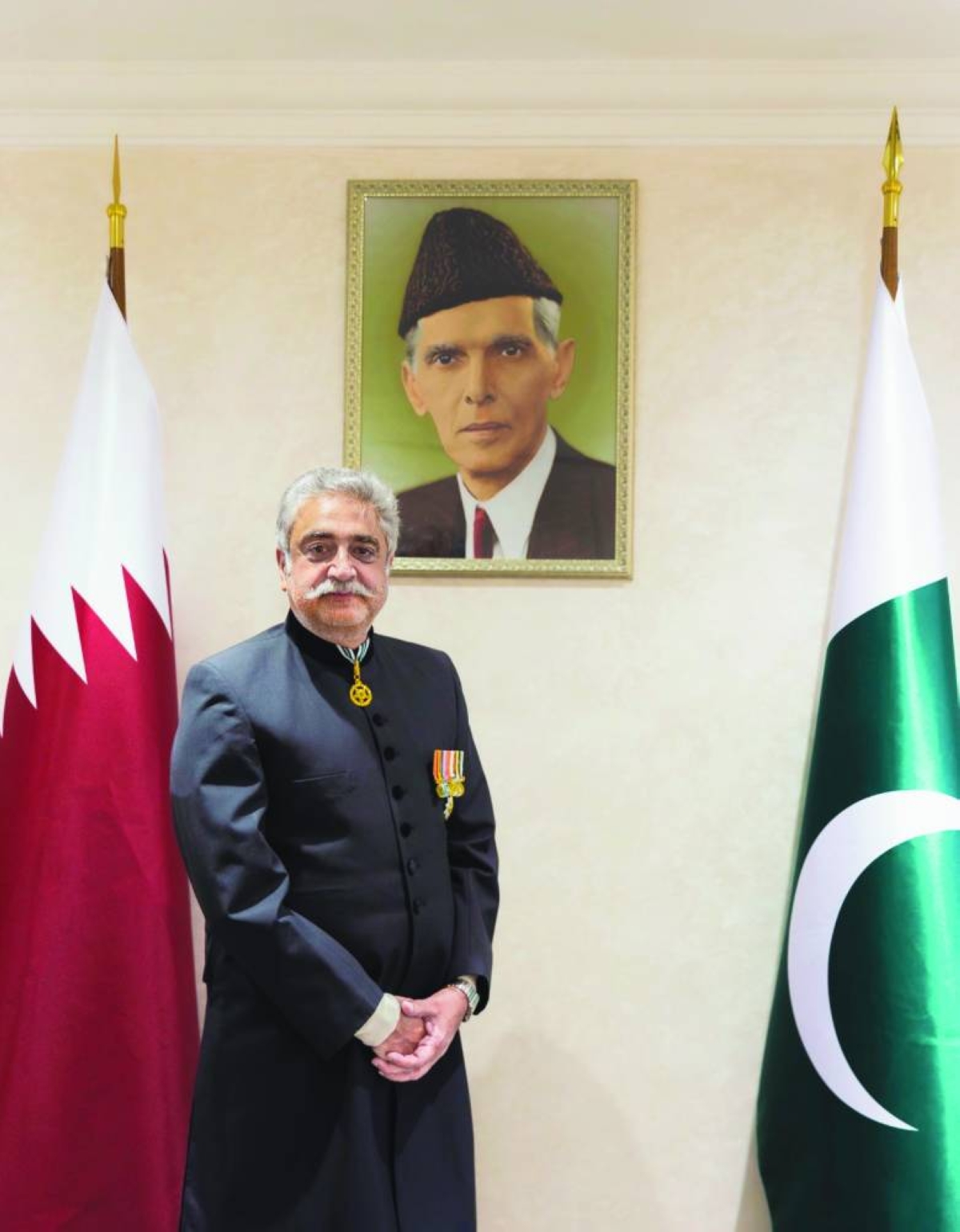
When the history of this year’s Gulf war is written, a podcast recorded in Doha may prove one of its more revealing primary sources. In a rare interview on the CIRS Long View, the podcast of Georgetown University in Qatar’s Center for International and Regional Studies, conducted by the university’s Maryam Daud recently, Pakistan’s ambassador to Qatar, Muhammad Aamer, offered the fullest account yet from a serving Pakistani diplomat of how Islamabad manoeuvred two implacable adversaries — the United States and Iran — into the same room for the first time since 1979. The conversation catches Pakistani diplomacy at the moment of its vindication, and the ambassador in a mood both expansive and studiedly prudent. The first puzzle put to him is the one that has exercised chancelleries everywhere: how did a country that exchanged missile strikes with Iran in 2024 become, two years later, the venue of which Tehran’s envoy could say, “We will negotiate nowhere else but Islamabad”? Ambassador Aamer’s answer was a deliberate widening of the lens. Pakistan’s position, he insisted, “is not a one-off thing which just propped up because of the circumstances”. He invoked geography, a 900-kilometre shared border, cultural affinity and — pointedly — “the power structure of Pakistan, being a nuclear state”. As for the 2024 turbulence: “We sat down, we ironed out the differences, and we moved forward from that. We came out of that difficult situation very amicably and with a lot of trust developed at the end.” The connoisseur will notice what is being done here. The 2024 clash is recast not as a liability but as a credential — proof that Pakistan and Iran possess a functioning machinery for de-escalation. In the grammar of mediation, having survived a crisis with one of the parties is worth more than never having quarrelled at all. Equally instructive was the ambassador’s treatment of the vacuum question. When pressed on whether Pakistan rose because the conventional mediators were caught in the crossfire or sidelined, he was gracious but unambiguous. Qatar, he said, is “a powerhouse of mediation and negotiations”, yet “the situation became such that Pakistan had to come in. Pakistan had to fill the vacuum.” Reading between the lines, the admission is significant: when Iranian strikes reached Gulf infrastructure, the region’s brokers became stakeholders in the war itself. Mediation migrated to the nearest credible actor standing just outside the blast radius — a nuclear-armed neighbour with equities on every side but wounds on none. The Pakistani envoy recalled the early 1970s, when “it was Pakistan which brought both the countries together” and an American president (Richard Nixon) “flew from Pakistan to China”. The analogy is not idle. Then as now, Pakistan’s utility lay precisely in the richness of its portfolio — a defence pact with Saudi Arabia, “people-to-people contact” and “cultural affinities” with Iran, security ties with Washington dating to the 1950s. “Diplomacy,” he observed, “is the game of maintaining balance and walking on the tightrope successfully.” On the mechanics of the talks themselves — three rounds, 21 hours, delegations facing each other across a table in April — the ambassador declined the invitation to storytell, and in declining delivered the interview’s most quotable arithmetic. “You mentioned about 21 hours, but you don’t know how many hours went in before that particular event,” he said, estimating “2,100 hours — maybe before that, and many more hours after that — which did not let the process die down.” What the visible hours produced, in his telling, was almost physical in its symbolism: the two sides “entered the same room, sat at the same table, looked eye to eye with each other, and even shook hands after decades.” His defence of the process against the charge of failure was equally deft. “I think negotiations never failed. I think the expectations of the people — and especially the detractors — they failed.” A conflict “rooted in history” and “layered” with technicalities was never going to be resolved “in one sitting... in a theoretical exercise, in a classroom”. Here he deployed Churchill: “Meeting jaw to jaw is better than war.” The line is doing real work. It reframes the metric of success from outcomes to contact — and by that metric, April 2026 was already historic before a word of the Accord was drafted. Perhaps, the most analytically interesting stretch concerned what one might call the political economy of the memorandum. A contrast was drawn with the JCPOA (Joint Comprehensive Plan of Action — the 2015 nuclear agreement between Iran and the US, UK, France, Russia, China, plus Germany, along with the EU) — a Western-led instrument backed by sanctions and the implicit threat of punishment. The Islamabad Memorandum, by comparison, is the product of a mediator with no coercive leverage whatsoever — and Ambassador Aamer embraced the distinction as a philosophy. “Why not mediate with sincerity? Why not mediate with frankness?... And why not mediate without getting any benefit out of this?” Diplomacy of equals, in other words, offered as a structural alternative to diplomacy of compulsion. Whether goodwill can substitute for enforcement over the long haul is the memorandum’s great untested proposition; but as an origin story, it is a genuine departure from the region’s recent treaty-making. The ambassador was careful, too, not to let the rise of the so-called Middle East Quadrilateral — Egypt, Pakistan, Saudi Arabia and Turkiye — whose foreign ministers have met in Riyadh, Islamabad and Antalya in a relatively short span of time — be read as an obituary for multilateralism. Regional powers stepped in, he argued, because “the regional stakes were important” and they acted “in proximity” and “indigenously”, but “it doesn’t mean that multilateralism has finished”. He reached for the famous consolation offered by Swedish diplomat and economist Dag Hammarskjöld, who served as the second Secretary-General of the world body: the United Nations “is not created to take mankind to heaven; it has been created to save us from hell”. It was a shrewd hedge — claiming the middle-power moment while keeping Pakistan’s UN credentials, including its own resolution on mediation, firmly in view. Nor did the ambassador flinch from the question of self-interest. With millions of Pakistanis in the Gulf and heavy energy dependence on the region, Pakistan’s stake in de-escalation is existential as much as ethical. He converted the point into a closing flourish: “If you say our skin is into it — well, not only our skin; our mind and heart are also into it. And that’s why we are successful.” His parting counsel to Washington and Tehran was that of a professional wearied by performative statecraft: open direct channels “rather than depending on somebody else, rather than using social media only for communication”, because diplomacy “needs a lot of thought before uttering even a single word”. The Islamabad Accord will be judged by whether it holds. But this interview already establishes something durable: a doctrine of mediation — patient, unglamorous, uncoerced — articulated from Doha by the ambassador of the country that made the handshake possible. Scan the QR code to watch/listen to the episode:https://youtu.be/4-zTjl9A7Hc?si=KoLH9DPhAgmP3OOL The writer is Deputy Managing Editor, Gulf Times 

World
On America’s big birthday, mixed emotions over legacy and future

On America’s big birthday, mixed emotions over legacy and future

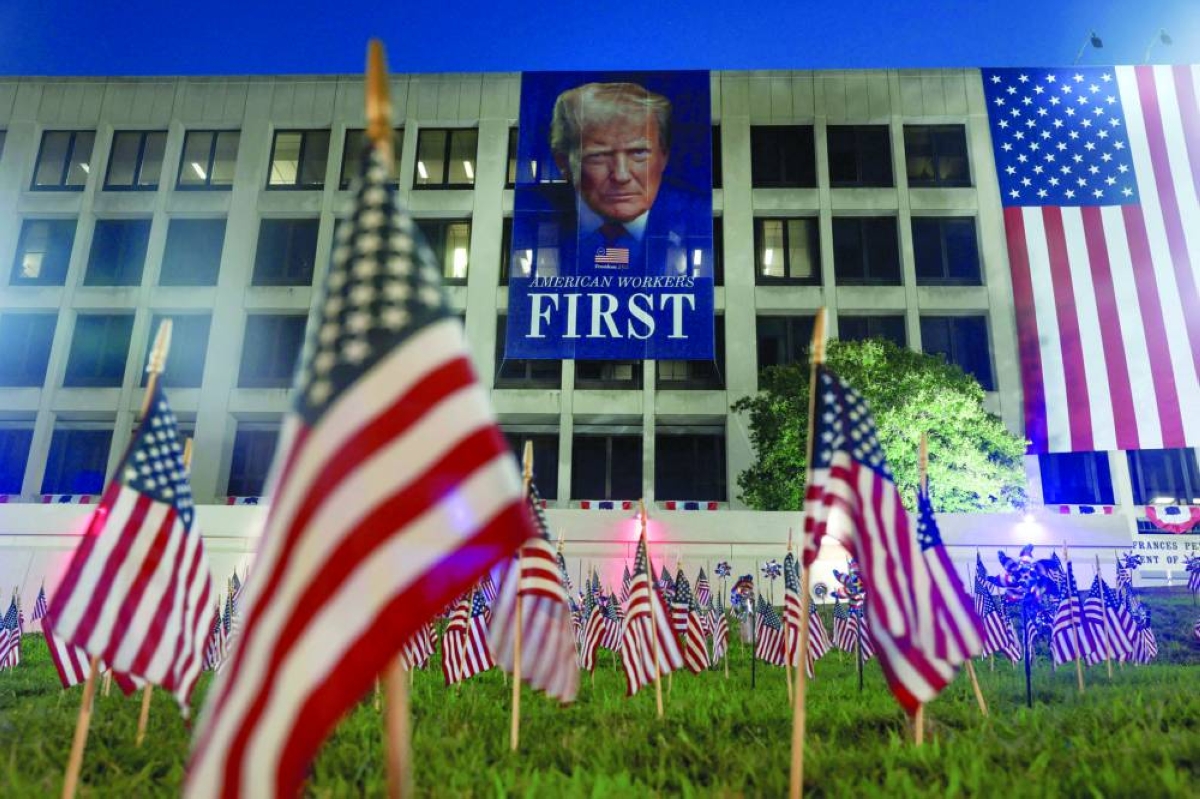
American flags are planted in the ground in front of a banner of President Donald Trump, hanging from the US Department of Labour building, ahead of July 4th festivities. (AFP) Americans celebrated 250 years of independence Saturday with conflicting emotions as pride, hope and patriotism battled with uncertainty and unease over the country’s direction. On Washington’s grassy National Mall, lined by monuments and museums, thousands sweltered in multiblock lines as temperatures neared 38C. With National Guard troops — controversially deployed across Washington by President Donald Trump — imposing crowd control, forklifts dropped pallets of bottled water which crowds clawed through in scenes evoking a disaster response. Still the mood was joyous, with chants of “USA! USA! USA!” breaking out in one set of lines near the National Gallery. Nearby, Iowa state congressman Eddie Andrews was hanging off the back of a farm tractor draped with stars-and-stripes livery, shouting “God bless America!” at the top of his lungs to crowds headed toward the Mall. “Really this day, 250 years ago, really marked the new modern day of freedom, and it’s why America leads the world in so many areas,” he told AFP, between laps through downtown DC.A few blocks away, Donna Dasher and her husband Albert were trying to get a photo of the White House. “I think it’s just the greatest event in our nation’s history,” Dasher said. “President Trump is trying to do everything he can to make it the greatest celebration, and some people say, ‘Oh, it’s about Trump.’ No, it’s not.” The Dashers traveled from Richmond Hill, Georgia to celebrate both America’s anniversary and their own, adding that they were holding military veterans — including some members of their family — in their thoughts during the festivities. As the afternoon sun continued to bake attendees, the National Guard rolled out more bottles of water. “Take two or three or as many as you guys want!” one soldier said. “You guys got any Stella?” one attendee joked. Inside the security perimeter more lines formed — specifically for the air conditioned pavilions of each state and the water stations dotting the vast lawn. The larger tents where companies like Micron and Mastercard have booths struggled to keep temperatures down. Underneath a large model of the proposed Trump Arch, dozens sheltered in the short midafternoon shadows as the roaring sound of military aircraft was heard overhead. While the crowd in the US capital may have represented America geographically, it did not appear to do so ideologically. Amid accusations that Trump co-opted the anniversary to celebrate his own achievements, his and his MAGA movement’s stamp was immediately clear on the clothing and accessories spotted around the Mall. In Atlanta, Georgia, music therapist Melissa Pate was far more somber about the holiday. “I guess in this current political climate, 250 years — it feels like we still have a long way to go,” she told AFP. “To think that we’re 250 years in and there are people in this country that are still not living in true freedom,” she added. “It’s kind of disappointing.” Yet she and her husband would still celebrate the holiday with a traditional barbecue — but later in the evening after the heat subsided. Pate said recent Democratic wins in regional and local elections had given her “hope that the little people — the working class — maybe are being heard.” William-Jose Velez Gonzalez, a Washington resident who is originally from Puerto Rico, had similar thoughts, saying that he felt a certain “sense of grief with the way that things are being handled, with the way that the country is being run.” He was planning a small gathering with friends to watch the fireworks.  Related Story

Opinion
Beneath the calm, a new diving frontier surfaces

Beneath the calm, a new diving frontier surfaces

Qatar has long been defined by what rises above the waterline — the towers of Doha, the sweep of the Corniche, the ambition written into stadiums, museums and a national carrier that carries the country’s name to every continent. Yet the discovery of a new dive site some three kilometres south of GMC Reef is a quiet reminder that this country’s most compelling story may lie not only in the heights it has built, but in the depths it has scarcely begun to explore. There is something fitting in that. A nation that has spent a generation projecting itself confidently onto the world stage now finds fresh promise by looking downward — into the calm waters of the Arabian Gulf, where shipwrecks, coral reefs and some of the sea’s most magnificent creatures have been waiting, largely unseen, all along. The case made by diving ambassador Khaled Zaki in our story published Sunday is persuasive precisely because it is unhurried. Diving, he reminds us, is far more than a recreational sport. It is an adventure, an education and a gateway to understanding the marine environment — and ourselves a little better. Qatar’s underwater portfolio is already richer than many residents realise: GMC Reef, the newly developed Club Reef, the Barj Wreck at some 20 metres, the Inland Sea site, the QAFCO Reef Balls. And then the great visitors — the seasonal aggregations of whale sharks, among the largest anywhere on earth, alongside dugongs, turtles and dolphins. These are living evidence of an ecological inheritance Qatar has every reason to cherish and every obligation to protect. There is a practical hurdle. Too few sites are reachable from the shore; most require a boat, and with that come cost and inconvenience that keep many would-be divers on dry land. Expanding shore-accessible sites would open the sport to schools, families and curious first-timers. The treasures beneath these waters, as Zaki puts it, are waiting to be explored. Qatar has the ingredients, the resolve and the responsibility to explore them well.

Opinion
Ronaldo: The star endures, but the scrutiny never lets up

Ronaldo: The star endures, but the scrutiny never lets up

There is a particular cruelty reserved for the very greatest. The higher a star climbs, the more relentlessly the world seems determined to watch it fall — and few have understood this arithmetic more intimately than Cristiano Ronaldo. On the eve of what will be his final World Cup last-16 tie, a 41-year-old at the twilight of an extraordinary career chose not to plead for kindness but to hold up a mirror to those who have spent a generation waiting for him to stumble. “You have been trying to kill me for the past 23 years,” he told reporters in Texas, “but you must have seen that is not worth it, it’s a waste of time, but you try and try and try and try and try.” It is a remarkable sentence, and not only for its defiance. It is an indictment of an age in which scrutiny has curdled into something closer to bloodsport, where the appetite for pulling down what was once lauded has become a spectacle in its own right. Ronaldo did not pretend to be what he no longer is. “I am not the player I used to be,” he conceded — an admission that costs a proud man a great deal, and one that many of his critics would never grant themselves. Yet honesty about decline is treated, in the modern coliseum, not as grace but as an opening. The wounded lion draws the crowd. That he could add, in the same breath, “I am not doing too bad” — three goals into the tournament — speaks to a resilience that the daily churn of judgement rarely pauses to acknowledge. What is striking is how early the hunt began. “It’s been like this since I was 18,” he observed, “it is not going to change.” Here is the quiet tragedy beneath the glamour: the celebrated are never permitted an ordinary reckoning with time. Every ageing athlete, every fading performer, must conduct their decline in public, narrated by voices that profit from the drama of the descent. The question of when he will stop — asked again and again — he answered with weary precision: “(I will stop) when I choose, not when you choose.” There is wisdom in his refusal to be diminished by any single result. “I am not going to be more Cristiano Ronaldo or less because I win the World Cup,” he said, and in that line lies a rebuke to a media culture that measures a life’s worth by its final headline. “Age gives you maturity and experience to see how relative things can be.” One suspects his younger self could not have said it. Most disarming of all was his gratitude. “I even say thanks for the attacks I feel after I turned 40,” he offered. “The criticism is how you grow, so thank you for doing this.” It would be easy to read this as sarcasm; it is more generous, and more damning, to take it at face value. He has metabolised a lifetime of hostility into fuel, and in doing so exposes the futility of the enterprise ranged against him. The lesson is not that scrutiny should cease — accountability is the price of the platform. It is that we might learn to distinguish scrutiny from cruelty, and to remember that behind the caricature stands a person. Whatever unfolds against Spain, Ronaldo said he will leave “with a clear conscience.” His pursuers should ask whether they can say the same.

Entertainment
Kanye West Poses with Shane Gillis Backstage at San Antonio Concert

Kanye West Poses with Shane Gillis Backstage at San Antonio Concert

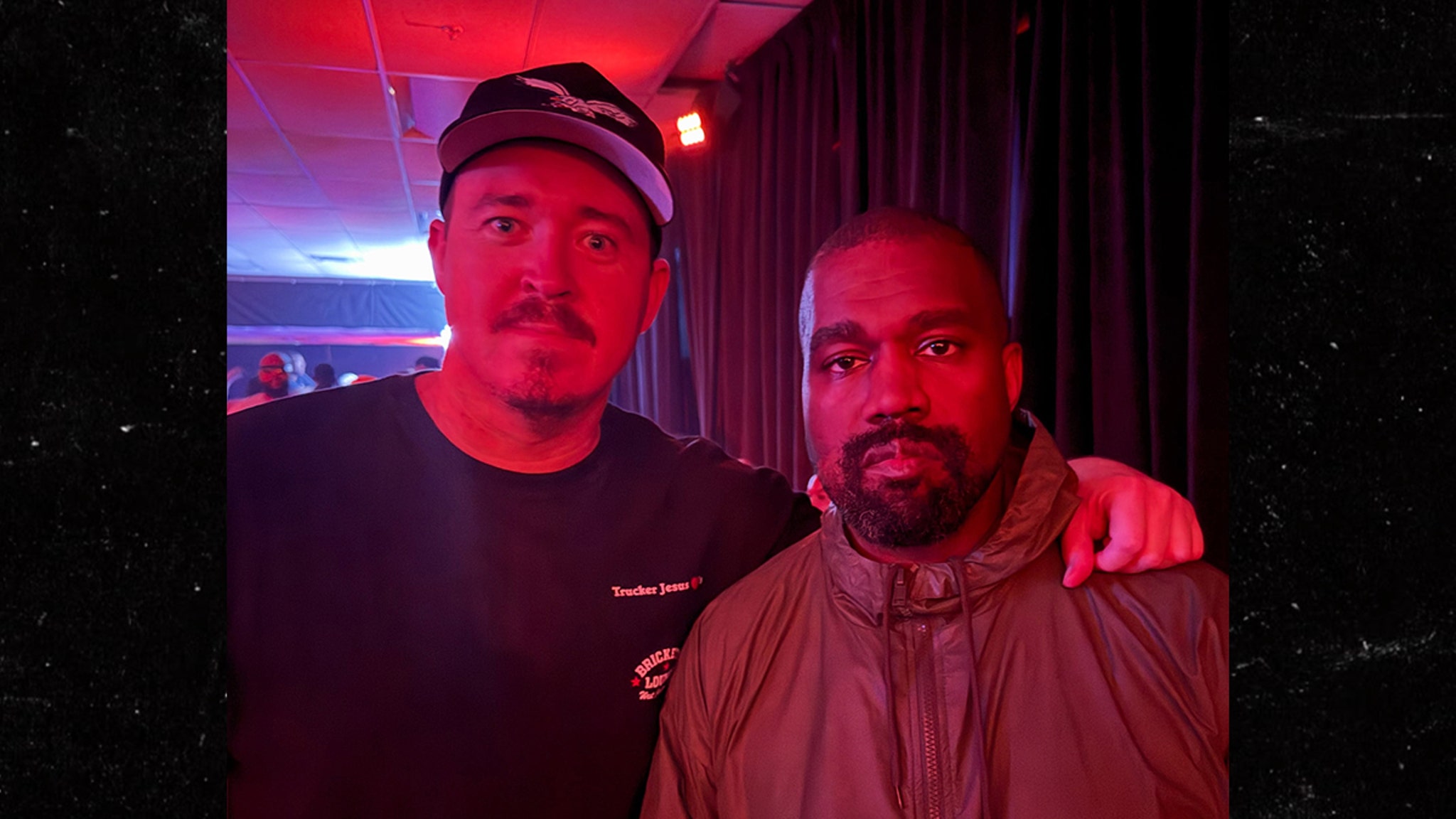
Here's a crossover you probably weren't expecting ... Kanye West and Shane Gillis hanging backstage after the rapper's Texas concert. The comedian gave fans a look behind the scenes by posting to Instagram a photo

Sports
Del Toro too tired to watch Mexico World Cup clash

Del Toro too tired to watch Mexico World Cup clash

UAE Team Emirates - XRG's Mexican rider Isaac Del Toro celebrates on the podium with the best sprinter's green jersey after the 2nd stage of the 113th edition of the Tour de France cycling race,

Sports
Del Toro wins Tour de France stage two as Pogacar closes in on Vingegaard

Del Toro wins Tour de France stage two as Pogacar closes in on Vingegaard

UAE Team Emirates XRG's Isaac Del Toro celebrates winning stage 2 alongside teammate Tadej Pogacar at the Tour de France in Barcelona, Spain, on Sunday. (Reuters) Isaac del Toro overcame a mechanical issue and a long wait to change his bike before launching a late attack to win the second ‌stage of the Tour de France on Sunday, becoming only the second ​Mexican to claim a stage at ‌the race after Raul Alcala more than three decades ago.Del Toro's ‌teammate and defending ⁠champion Tadej Pogacar finished ‌second, cutting Jonas Vingegaard's overall lead ‌to six seconds."It means really everything," said Del Toro after his second Grand Tour stage ⁠win. "As I said before, I'm very privileged. Plenty of confidence by the whole team. I cannot believe I just did it. It's just insane. You cannot believe how it feels now for me, especially for the country."We made a plan for Tadej, I did it but then the gap was bigger and I just went with the flow to the finish line."Slovenian Pogacar crossed the finish line with Del ​Toro and lifted the 22-year-old in the air as the UAE Team Emirates-XRG colleagues celebrated the victory.With about 60km left on the hilly ride from Tarragona to Barcelona, Del Toro suffered a mechanical ‌problem. A miscommunication with his ⁠team on the radio ​left him sitting by the road, waiting for a replacement bike.But Del ​Toro needed little more than 10km to make up for lost time when he got going again and played a central role in his team's strategy during the three laps up Cote de Chateau de Montjuic at the end of the stage.POGACAR AND TEAMMATES DOMINATE THE FINISHBrandon McNulty set the pace for Pogacar during the first climb as two-time winner Vingegaard remained behind his Visma-Lease a Bike teammate Victor Campenaerts.Pogacar and three teammates led the way during the second lap of the hill, but Vingegaard's teammate Matteo Jorgenson made a late push to become the ‌second rider to the top behind ‌McNulty.As the race entered the final ⁠10km, Vingegaard positioned himself behind Jorgenson, with four-time champion Pogacar following the Dane closely, ⁠along with others.When Jorgenson fell back ⁠during the final climb, Adam Yates led out Pogacar for the final attack, before Del Toro surprised his rivals with his launch for the finish line."It was not an easy day, I think this circuit is not my favourite terrain so I think I can be pretty happy with keeping the yellow jersey. They did a super job so they really ​deserved the victory today," Vingegaard said.Del Toro said he was happy to get the win for Mexico on the same day that the country's soccer team play in the World Cup round of 16."We have these 11 guys ripping it in the football, they're doing amazing and to be at the same level here in France at the hardest race is like a dream," he added.The French portion of Monday's stage three, a ride from Spain's Granollers to Les Angles in France, will be closed to fans ‌due to risks posed ​by a forest fire raging in the region, officials said on Sunday.  Related Story

News
Sharjah to launch 8th Ithmar media training programme on July 6

Sharjah to launch 8th Ithmar media training programme on July 6

The Sharjah Government Media Bureau (SGMB) will launch the eighth edition of its “Ithmar” media training programme on Monday (July 6). Organised by the Sharjah Press Club (SPC), the month-long programme will bring together students

Entertainment
Seaplane Carrying 8 People Crashes Into New York City’s East River

Seaplane Carrying 8 People Crashes Into New York City’s East River

NYC Seaplane Crash Plane Goes Down in East River Published July 5, 2026 12:34 PM PDT What started as a flight over New York City ended in the East River ... after a seaplane carrying

News
Emirati child dies after being hit by car on his way to grocery

Emirati child dies after being hit by car on his way to grocery

A 7-year-old Emirati child Jassim Mohammed Abdullah Ali Zaid Al Shehhi, died in a hit-and-run accident in Tunisia on Saturday afternoon while on summer vacation with his mother, tragically ending their trip and annual holiday.The