admin
admin 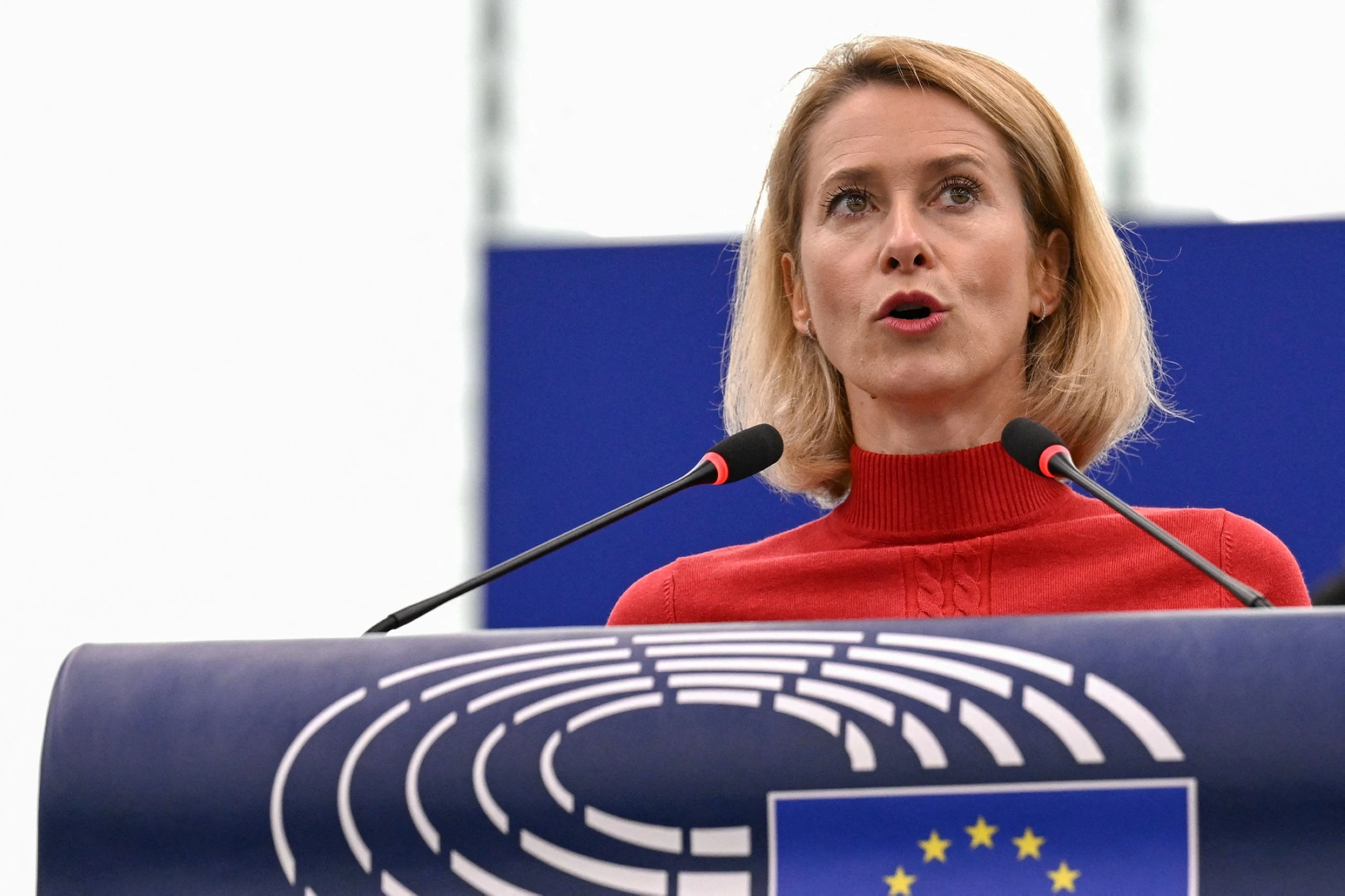
John T. Shaw, Tribune News Service
Russia’s bloody, brutal and seemingly endless war on Ukraine has confused the world with its baffling momentum swings and surprising surges and countersurges. This murky and dispiriting conflict has been made more complex by the Trump administration’s incoherent narrative about the war and its decision last year to show sympathy for the Russian aggressor. That led to a head-snapping moment in the United Nations when the United States opposed a European-sponsored resolution condemning Russia’s invasion and supporting Ukraine’s territorial integrity. In a shocking vote, America was joined by such dubious partners as Russia, North Korea, Belarus and Sudan.
Amid this ongoing confusion, Kaja Kallas, the European Union’s top diplomat, offers calm, steady and unflinching support of Ukraine. Kallas is formally known as the high representative for foreign affairs and security policy and vice president of the European Commission. She is determined and unshakeable, refusing to hedge, soften or obfuscate about the war.
“There is one aggressor and one victim,” she said, declaring that the conflict is about “freedom of the free world. It’s about the world where international law applies and the world where might does not make right.” Hers is the statesmanship of moral clarity, iron resolve and firm conviction. If some Europeans are focused on placating President Donald Trump’s administration, Kallas is more than willing to challenge it. She disputes those who say that we must accept a world in which great powers do what they want and the law of the jungle dominates. “Even in the jungle,” she said with a steely smile, “animals cooperate.”
Kallas is from the small nation of Estonia, which is lodged between Russia and the Baltic Sea. She comes from a family with vivid experience of a dangerous world. One of her grandfathers was sent to prison during the Soviet invasion of Estonia in World War II. Her mother, grandmother and other family members were banished to Siberia.
Her father became a prominent Estonian leader, heading the central bank, and later served as foreign minister, prime minister and Estonia’s first commissioner to the European Union. Kallas began her professional career as a private sector attorney specializing in competition law. She later entered politics, serving in Estonia’s Parliament, the European Parliament, and then as the leader of Estonia’s Reform Party. She was Estonia’s prime minister from 2021 to 2024. A few months into her tenure, Kallas challenged Germany’s powerful chancellor, Angela Merkel, during a meeting of European leaders. Merkel suggested inviting Russian President Vladimir Putin to a coming European summit. Kallas was incredulous and spoke up. ”A summit on what?” she asked. “What is it for?” Merkel backed down, and Kallas’ reputation for firmness grew. She has been described as Europe’s new “Iron Lady,” a comparison to Britain’s formidable Margaret Thatcher.
As Estonia’s leader, she dispatched military assistance to Ukraine on the eve of the Russian invasion in January 2022. Estonia continues to robustly support Ukraine. Kallas stepped down as prime minister to become the EU’s top diplomat. On Dec. 1, 2024, her first day on the job, she traveled to Ukraine with other senior EU officials and declared that Europe was not interested in becoming a neutral broker. “The European Union wants Ukraine to win this war. We will do whatever it takes for that,” she said. She has remained a forceful supporter of Ukraine. She has been unafraid to clash with the Trump administration. When Trump and senior officials ambushed Ukrainian President Volodymyr Zelenskyy at the infamous Oval Office meeting on Feb. 28, 2025, Kallas responded immediately: “Today it became clear that the free world needs a new leader. It’s up to us, Europeans, to take this challenge.”
At the Munich Security Conference earlier this year, Kallas dismissed, even derided, Secretary of State Marco Rubio’s grim warnings about European weakness. “Contrary to what some may say, woke, decadent Europe is not facing civilizational erasure,” she said. “In fact, people still want to join our club. And not just fellow Europeans. When I was in Canada last year, I was told that over 40% of Canadians have an interest in joining the EU. The waiting list is getting long.”
She describes Russia as a broken nation with a cratering economy and beleaguered citizens who are choosing to flee rather than fight. “In fact the greatest threat Russia presents right now is that it gains more at the negotiation table than it has achieved on the battlefield,” she said.
Kallas has implored the EU to go on the diplomatic offensive, assembling a tough package of demands that Russia — not Ukraine — should accept to end the war. She has called on Russia to end hostilities, halt cyberattacks, withdraw from Ukrainian territory, pay war damages and return abducted Ukrainian children. She knows this is unlikely to happen immediately but wants to put Russia on the diplomatic defensive. “For any peace plan to succeed, it has to be supported by Ukraine, and it has to be supported by Europe,” she said. “The pressure must be on the aggressor, not on the victim. Rewarding aggression will only invite more of it.”