admin
admin 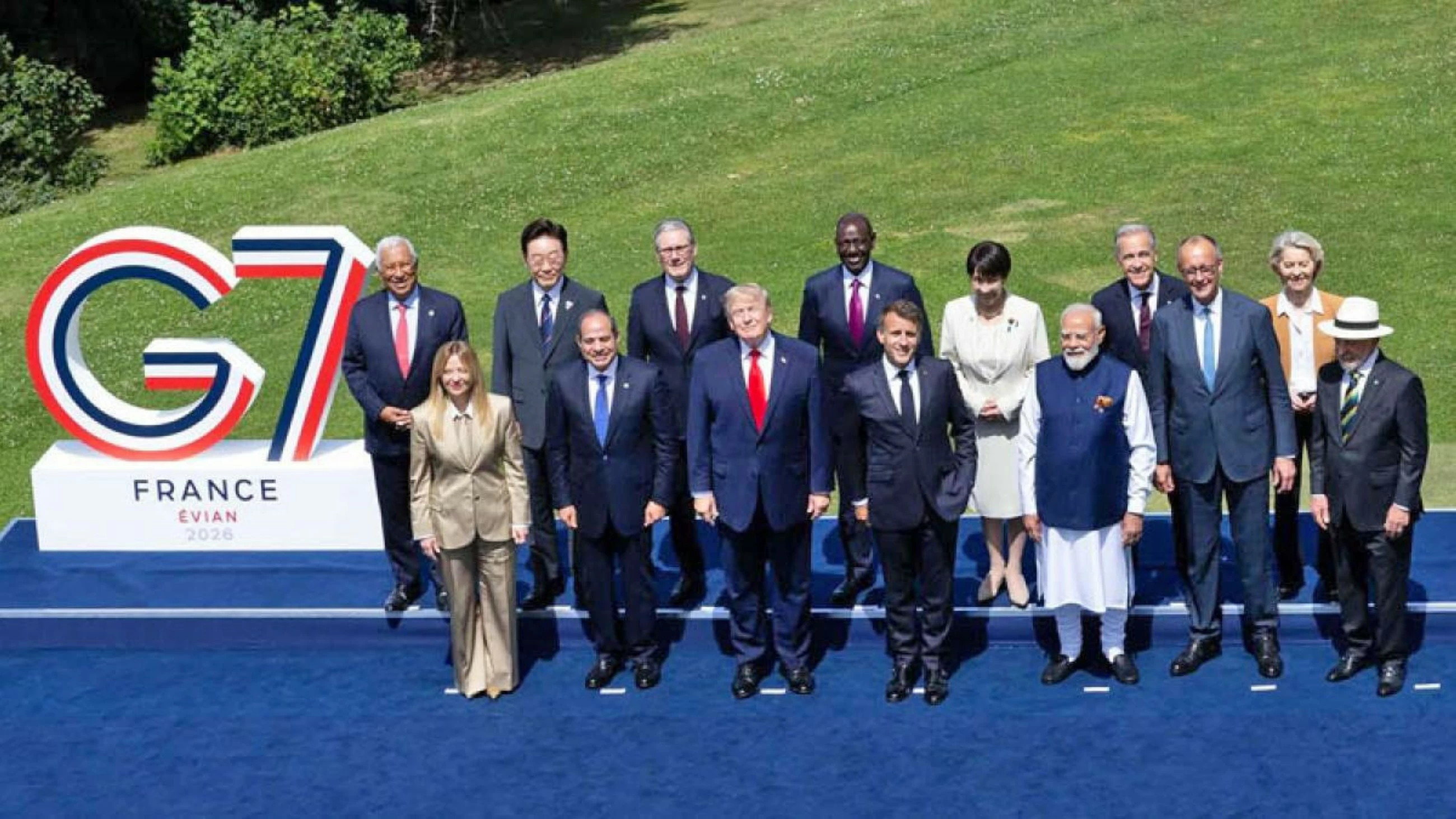
The rich industrialised group of advanced economies – G-7 – many of whom are in the euro zone, are faced with economic crunch of a rare kind. They find that the United States, the largest economy, is absorbing the savings of other countries as investment to continue on its spending spree and running current account deficit, while China is producing excessive goods and selling them at cheap princes because of its underpriced currency and also supported by government subsidies, while European economies are not investing enough to boost productivity, and they are lagging behind the US in consumption and China in production of goods. French President Emmanuel Macron, who is the current president G-7, is apprehensive that if this trend continues unchecked, then the world economy will run into a deep crisis. He wants a tough trade policy with regard to China’s exports, though he does not seem to have any ready solutions on how to revive European economy in terms of manufacturing and consumption. The US’s debt-supported consumption again goes unaddressed.
The G-7 is also worried about the monopoly of China over the rare and critical minerals, and the absolute dependence of Western economies on the key inputs of advanced technologies like the semiconductor industries and Artificial Intelligence (AI), which is what is driving the American economy at the moment. Last year China flexed its economic muscle when it imposed curbs on the export of rare earth minerals to the US, which was needed for producing the memory chips, and it drove the American production houses into a panic mode. Europe and the US would like to wriggle out of the apparent stranglehold that China has over the critical minerals.
One of the ways Europe wants to deal with the China challenge is to raise tariffs against Chinese products. China is opposed to the move, and it argues in its defence that its products are cheap based on competition and not due to any unfair subsidy backing. In the recent tariff hike implemented by US President Donald Trump, China seems to have had a better hand. Chinese exports to the US continued to rise despite increased tariffs. The world, and mainly the Western economies, are fully dependent on China-made products. For these countries to shake off dependence on Chinese exports, it will take time as well as the costs would be higher as well. It is a genuine dilemma. The Europeans and Americans would like to strike a hard bargain so that they get a fair deal in the transactions which are inevitable.
The world economy in the last two decades has been moving from one crisis to another, starting with the 2009 financial meltdown in the West to the Covid pandemic in 2020 to the Russian war in Ukraine in 2022 and the US-Israel attack on Iran in 2026. China has recovered from the Covid impact though the pandemic had its origins in the country, and it remained the largest supplier to Europe and North America. And it has remained relatively unaffected by the wars in Ukraine and Iran. As a matter of fact, it had derived economic advantages from the two wars while the other countries struggled with the supply chain disruptions. Ironically, it is the West that has helped in creating China’s manufacturing monopoly because of cheap labour and lost the edge in competitive costs. Many of the Western production houses set up shop in China to take advantage of cheap labour. There have been attempts since Covid to shift out of China and to places like Vietnam, the Philippines and India. But it has only been a marginal shift. The Western economies, especially G-7, are still in search of the answer to the China economic riddle.