Opinion
A Rubicon crossed: Trump, FIFA and the politics of red card

A Rubicon crossed: Trump, FIFA and the politics of red card

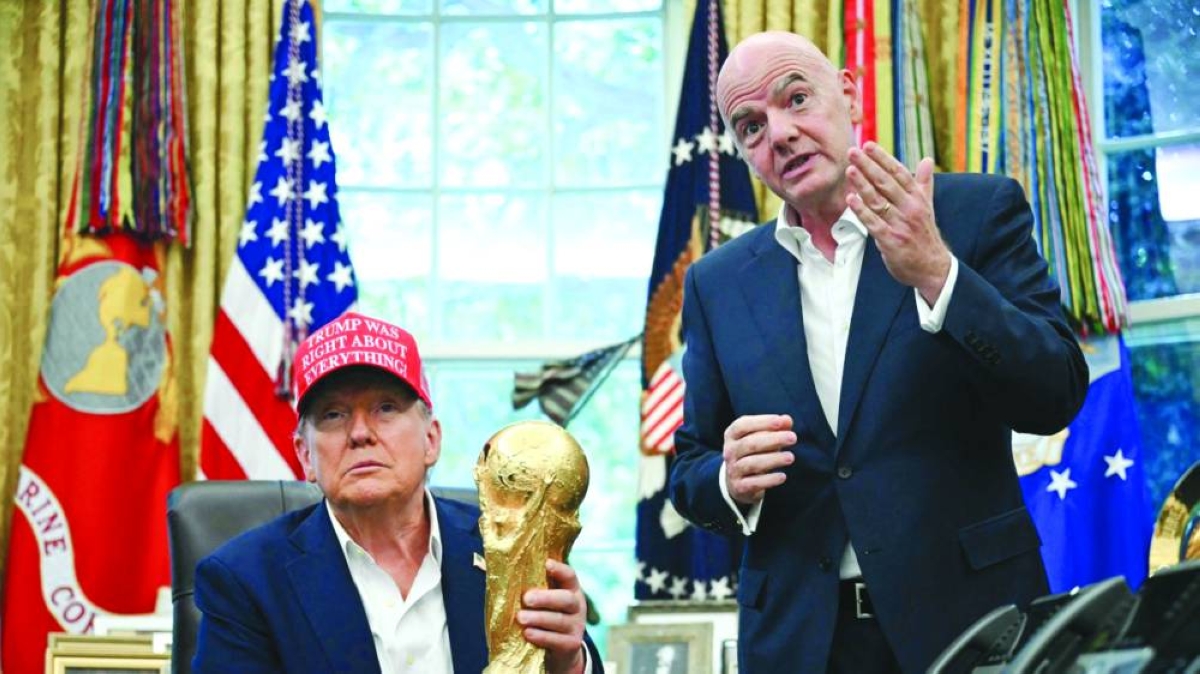
US President Donald Trump and FIFA president Gianni Infantino, at the Oval Office of the White House, Washington, on August 22, 2025. (AFP/File Photo) As the 2026 FIFA World Cup enters its final stages, the competition had been going well, both on and off the field. On the pitch, the performance of nations such as Cape Verde and the Democratic Republic of Congo captivated fans and justified the controversial expansion to 48 teams from the previous 32. Thrilling games proved the adage that in all World Cup the football does the talking once the matches begin. Off the pitch, the stadiums were largely full and worries that Immigration and Customs Enforcement might target vulnerable communities at games were unmet, despite a sharp rise in ICE arrests more generally. Above all, US President Donald Trump had refrained from commenting on the games even as the US team performed strongly and won the group to advance to a Round of 32 clash with Bosnia and Herzegovina. While the US cruised to a 2-0 win that marked their first victory in a knockout round since 2002, the game was marred by a red card for star US striker Folarin Balogun, who had scored the opening goal in the match. As anger mounted over the sending off, Trump suddenly took credit for a FIFA decision to suspend Balogun’s one-match ban that freed him to play in the Round of 16 against Belgium. In the furore that followed, a sharp divide opened up between American commentators, who praised FIFA for reversing a harsh decision, and international fans, mainly from Europe, who condemned FIFA president Gianni Infantino for bowing to political pressure. As with so much of the discourse around Trump, there was little in the way of middle ground, as further comments by Trump, calling into question the character of the Brazilian referee who had sent Balogun off, and by Senator Lindsay Graham thanking Trump for intervening, added further fuel to the flames. Belgium’s subsequent 4-1 win dampened the debate, but the events cast a shadow over the 2026 World Cup and Infantino’s leadership. Infantino spent much of the 18 months preceding the World Cup developing a personal relationship with Trump that he may have hoped would translate into political capital during the tournament were it to become necessary to seek Trump’s assistance. And yet, at several critical junctures, this approach appears to have failed, notably when Somali referee Omar Artan was denied entry to the US despite being on the FIFA list of approved referees for the World Cup and in possession of a valid visa. If there was ever an occasion for Infantino to use the relationship he had cultivated with Trump it was then, particularly as Infantino had given assurances in 2025 about access for all participants. The restrictions placed on Iran’s team also reflected poorly on Infantino’s seeming inability to pressure the White House on an issue as basic as ensuring fair treatment of all nations. FIFA will survive the controversies of 2026 although Infantino, who is seeking election for a third term as president, may emerge weakened if UEFA, the European governing body, and individual football federations, such as Norway or Germany, increase their scrutiny of him. The outcome of the vote, to take place at a FIFA Congress in Rabat in March 2027, is hardly in doubt as the expansion of the World Cup and the record levels of revenue expected to be distributed to the 211 member federations has won Infantino widespread support. However, the intensity of European backlash to Infantino may only deepen the splits within world football between ‘legacy’ and ‘frontier’ markets that became so evident and vocal during the 2022 World Cup in Qatar and may be so again ahead of Saudi Arabia in 2034. What is perhaps more unusual is that the brazen nature of Trump’s phone call and appeal to Infantino to reverse Balogun’s red card, while in character for the most transactional and unconventional president in modern times, should have happened at all. Few had Trump and the White House publicly boasting of their role in getting a refereeing decision overturned on their list of potential issues before the tournament began. While it is not the first time that a World Cup has been overshadowed by direct political intervention, the two most direct parallels were long in the past and believed to belong in the history books rather than have any contemporary relevance to the global game in the twenty first century. Thus, the second World Cup, which took place in fascist Italy in 1934, was marred by allegations that Benito Mussolini had intervened to secure favourable refereeing outcomes in Italy’s games in both the quarter-final and the semi-final, although match-fixing was never proven. Forty-four years later, another host nation, Argentina, went into their final game in the second-round group in 1978 needing to beat Peru by a minimum of four goals to advance to their first World Cup final at the expense of great rivals and three-time champions, Brazil. Peru duly lost 6-0 as it emerged that General Videla, the president of military-run Argentina, had visited the Peruvian changing room before the game, again sparking allegations, never fully dispelled, of political interference at the highest level. The lasting significance of Trump’s action, and the perception that it worked, given that the red card was rescinded, may be that it sets a precedent for other leaders who may be tempted to make a similar intervention in future competitions. Already this week, a Labour member of parliament wrote to Britain’s outgoing Prime Minister, Keir Starmer, to request that the government raise with Infantino the red card given to an English player during their Round of 16 game against Mexico. While that particular intervention was frivolous and more of a populist stunt than anything else, a Rubicon has been crossed for political leaders who may seek relief in high-stakes clashes in coming World Cups. It will certainly be harder for FIFA to push back against any such attempts, given the events of the past week, which only further reinforce how sport and politics remain so deeply intertwined. The writer is a leading scholar specialising in Gulf politics and international political economy, and a fellow at the Baker Institute and co-director of the Middle East Energy Roundtable.  
World
Growing list of countries move to ban social media for children

Growing list of countries move to ban social media for children

A blue verification badge and the logos of Facebook and Instagram are seen in this picture illustration taken January 19, 2023. REUTERS/File picture The European Union's plan to regulate children's access to social media follows the implementation or proposal of similar measures around the world.This list now stretches to more than 20 countries, including five where restrictions are already in force, according to an AFP tally.In most, the measures are very recent and target children under the ages of 15 or 16.An expert committee is due to submit its recommendations to the European Commission on Monday about a potential social media ban for children in the 27-nation EU.Social media has been banned for under-16s in Australia since December 2025, while Brazil introduced a law in March requiring platforms to link the accounts of users aged under-16 to those of their parents, while also requiring platforms to verify users' ages.In China, where the internet is tightly regulated by the state, minors' access to social media has been restricted progressively since 2019.Initial measures imposed time limits and curfews on online gaming, before similar restrictions were extended in 2023 to social media and streaming platforms.Indonesia has banned social media for under-16s since March and Malaysia has taken a similar approach, with legislation coming into force in June excluding under-16s from major platforms.Turkiye is set to join the list after passing legislation to bar under-15s from social media in April. The law is expected to take effect in late 2026.The United Arab Emirates announced a ban on social media for under-15s last month, with implementation set for around a year's time.Restrictions announcedWithin the EU, the Greek government announced in early April that it intends to ban social media access for under-15s from January 1, 2027.Austria and Slovenia are also preparing legislation to prohibit access for under-14s and under-15s respectively.In Germany, where Chancellor Friedrich Merz supports restricting or even banning social media for children, an expert commission has proposed two options: a ban graded by age or platform-specific restrictions.A similar debate is under way in Sweden, where a government commission has proposed banning social media for under-15s by early 2028.The Irish government has warned that it is considering legislating in the absence of an EU decision.In Denmark, the government announced in October 2025 that it would propose banning "several social media platforms" for under-15s.Outside the EU, the Norwegian government will present a bill by the end of the year to ban access for those under 16.The UK is looking to ban social media for under-16s by early 2027.Canada also wants to set the minimum age for social media use at 16.Several states in India are considering restrictions for children and the government said it is holding discussions with platforms over potential measures.A proposal to ban social media for children under 15 is currently wending its way through parliament in France.The National Assembly approved the bill at first reading in January but the Senate later amended it to target only the most harmful platforms, prompting concern in Brussels.A final version of the legislation is expected in the coming weeks, with the government hoping it can come into force in September.Portugal is considering a bill that would set the age for independent access to platforms, services, games and applications at 16.Spain has proposed raising the minimum age for registering on a social media platform from 14 to 16.In Italy, parliament is considering legislation that would ban social media use for children under the age of 15.  Related Story

Opinion
The umbrella that leaked: 10,000 troops and no cover

The umbrella that leaked: 10,000 troops and no cover

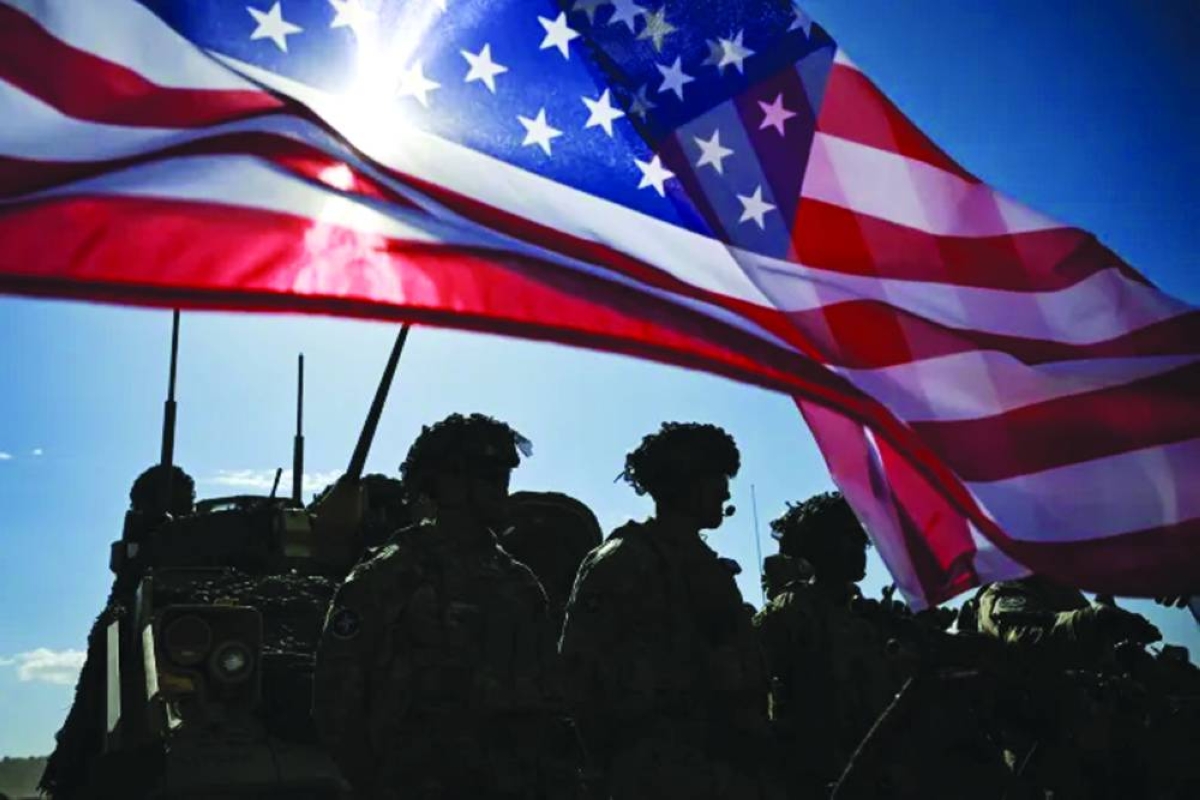
Representative photo of US soldiers. (AFP) On Valentine’s Day 1945, aboard the destroyer USS Quincy anchored in Egypt’s Great Bitter Lake, an ailing Franklin Roosevelt sat across from King Abdulaziz Ibn Saud and struck history’s most consequential handshake in the Gulf: American security guarantees in exchange for reliable oil. Roosevelt later told Congress he had learned more about the Middle East in five minutes with the king than in two or three dozen letters. Eighty-one years later, on 28 February 2026, that bargain was tested as never before, and by most honest accounts, found wanting. That morning, American and Israeli warplanes killed Iran’s Supreme Leader. They opened a war that, within 24 hours, saw Iranian missiles and drones strike all six GCC capitals, along with Amman, Jordan, the first time in history that every Gulf monarchy absorbed direct fire in a single day. The Pentagon’s own forward headquarters at Al Udeid, home to some 10,000 American troops, had already taken a direct hit the previous June, forcing a humiliating evacuation before the wider war even began. Kuwait, which hosts 13,500 US personnel, and Bahrain, home to the Fifth Fleet’s roughly 9,000 personnel, fared no better. The question Gulf capitals and Washington planners now ask, gently in public and bluntly in private, is whether the American security umbrella still covers anyone at all. “No-one in their right mind would ever put the CENTCOM forward headquarters 100 miles away from Iran, yet that’s where it is.” — General Frank McKenzie (ret.), former CENTCOM commander The interception numbers, when disclosed, tell their own story. The UAE says it shot down 165 ballistic missiles and 541 drones in the opening barrage alone, yet 35 drones still got through. Kuwait downed 97 missiles and 283 drones. Saudi Arabia, the region’s largest spender, has not released comparable figures at all. These are not the statistics of a defense architecture; they are the statistics of six countries each improvising on its own under fire. Retired General Frank McKenzie, who commanded CENTCOM until 2022, has answered with rare bluntness. Basing the region’s nerve center a hundred miles from Tehran, he said recently, is something no one in their right mind would do. McKenzie now argues for pulling the “necklace of bases” westward, into Israel, Jordan, and Egypt, putting distance between American forces and Iranian missiles that have only grown faster and more accurate. Michael Rubin of the American Enterprise Institute goes further, arguing that it is time to close US bases in the Middle East, since they have become more of a liability than an asset. Yet the numbers cut against complacency. The six GCC states together spend more than $130 n a year on defence, a sum exceeding the annual budgets of most mid-sized nations, and still could not produce a joint command, a shared radar picture, or common rules of engagement when the missiles came. Each fought its own war in its own airspace, phoning its own American liaison officer. Riyadh’s arsenal cannot speak to Abu Dhabi’s; Doha’s cannot speak to Kuwait’s. Money bought quantity. It did not buy unity. And unity, not hardware, is what small, wealthy, thinly populated states need most when facing a country of ninety million that has spent four decades mastering the art of imposing costs it need never fully absorb itself. Here, the strategist’s oldest warning applies: a vacuum left by a great power is rarely filled by nothing. Riyadh has already begun hedging, signing a mutual defence pact with nuclear-armed Pakistan last September, days after Israeli strikes on Doha rattled the entire peninsula. Muhanad Seloom of the Doha Institute for Graduate Studies captures the Gulf mood more precisely than most: the Gulf states, he writes, are not pivoting to China, nor are they asking the United States to leave; they are simply informing Washington that presence without protection is no longer an acceptable trade. The old bargain, in which hosting brought presence more reliably than protection, has been exposed by weeks of incoming fire. That is the paradox confronting American planners as they eye the Indo-Pacific and a rising China. Every dollar and destroyer redirected toward containing Beijing is a dollar and destroyer not defending Manama or Muscat. But an American withdrawal, however partial, does not return the Gulf to some neutral equilibrium. Though bloodied and besieged by months of conflict, Tehran remains unbowed. It now holds the exact prize eighty years of American bases were designed to deny: absolute proximity to the world’s vital oil chokepoint, resilient staying power, and neighbouring Gulf capitals left with nowhere else to look for leverage. Ibn Saud never asked Roosevelt for democracy or nation-building. He asked for a guarantee that his sovereignty and his oil fields would be protected, and got it, verbally, in the course of a single afternoon. Today’s Gulf rulers are asking a version of the same question with far more urgency, having watched Patriot batteries and THAAD radars strain against Iranian salvos in real time. Washington’s planners can withdraw from the region, redistribute forces westward, or double down, but what they cannot do, if the last war taught anything, is pretend that hosting American troops still automatically means those troops can protect the people hosting them. The Quincy bargain assumed American power was close to absolute. Eight decades and a dozen wars later, that assumption is the one now up for renegotiation. The writer is a prominent news anchor, programme presenter and media instructor. 

World
US senator and Trump ally Lindsey Graham dies aged 71

US senator and Trump ally Lindsey Graham dies aged 71

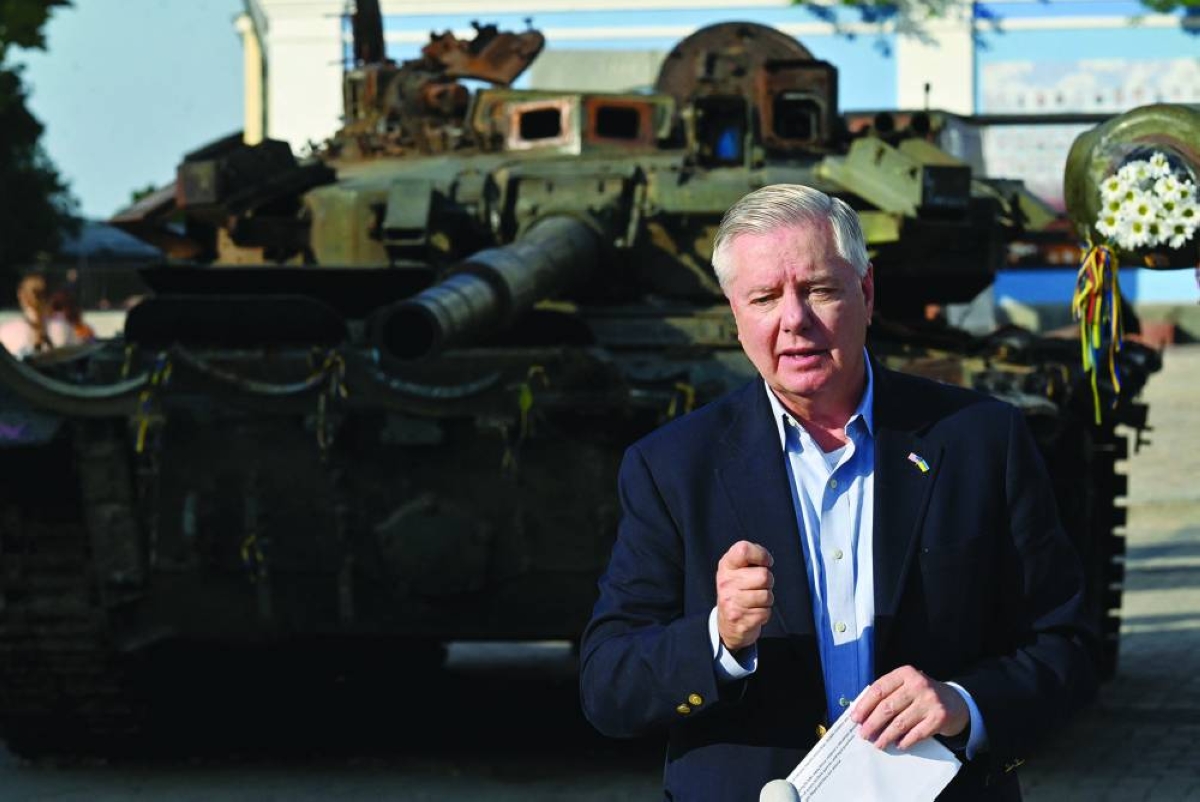
US Senator Lindsey Graham addresses media during the press-conference at open air exhibition of destroyed Russian equipment in Kyiv after his talks with a top Ukrainian officials on May 26, 2023. Senator Lindsey Graham, a

News
UAE strongly condemns hostile attack on border posts, off…

UAE strongly condemns hostile attack on border posts, off…

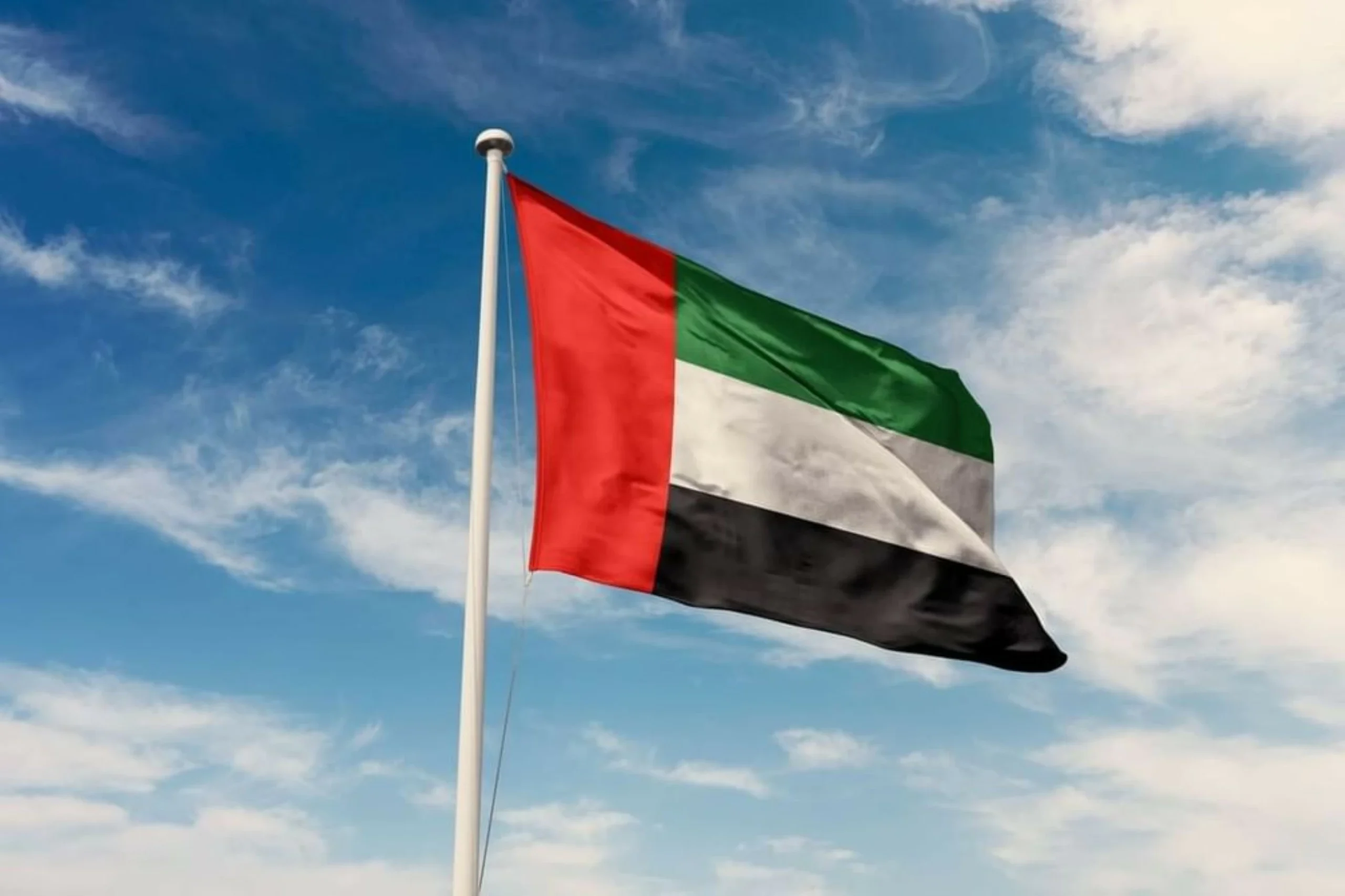
The United Arab Emirates has condemned in the strongest terms the hostile drone attack on the State of Kuwait, which targeted three border posts and an offshore drilling platform operated by Kuwait Oil Company, resulting

Sports
Bhatia first woman to score Lord’s Test century as India run riot

Bhatia first woman to score Lord’s Test century as India run riot

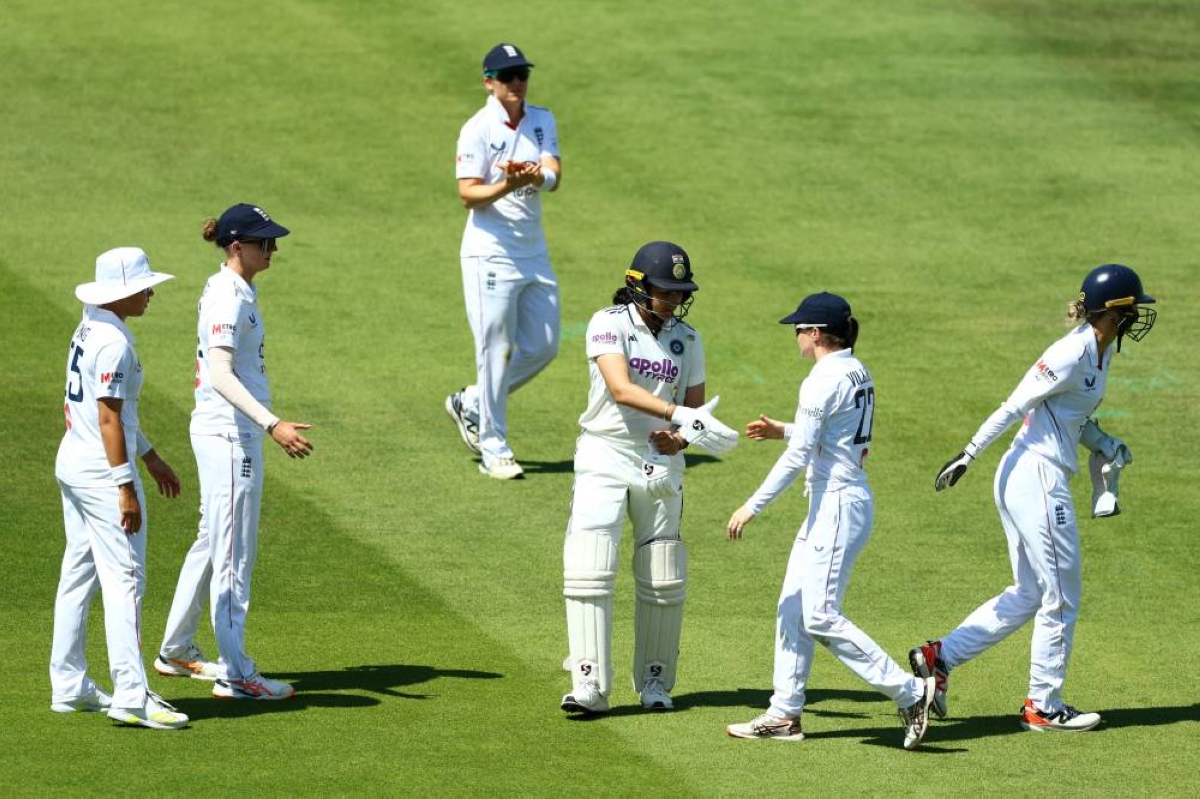
England players congratulate India's Yastika Bhatia as she walks after losing her wicket, dismissed by England's Mady Villiers off the bowling of Sophie Ecclestone during day three of the Women's Test at Lord's Cricket Ground,

Sports
Factbox on Wimbledon singles champion Jannik Sinner

Factbox on Wimbledon singles champion Jannik Sinner

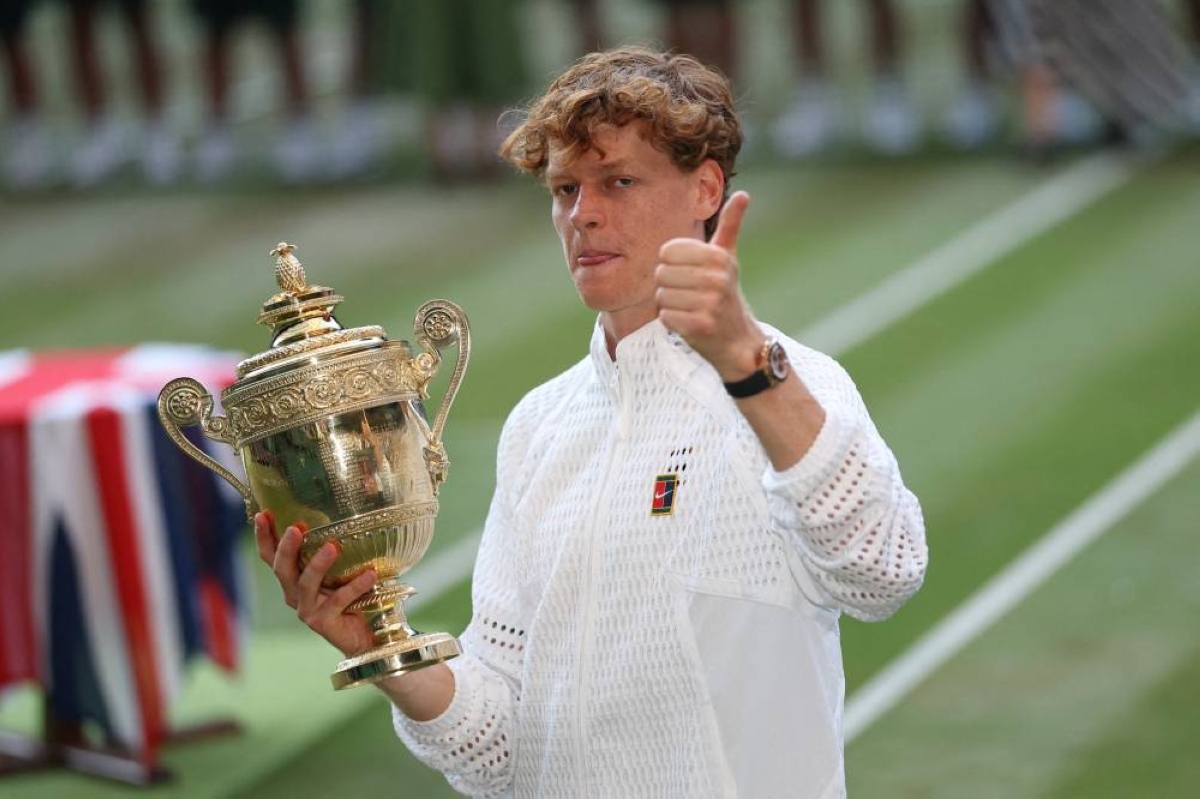
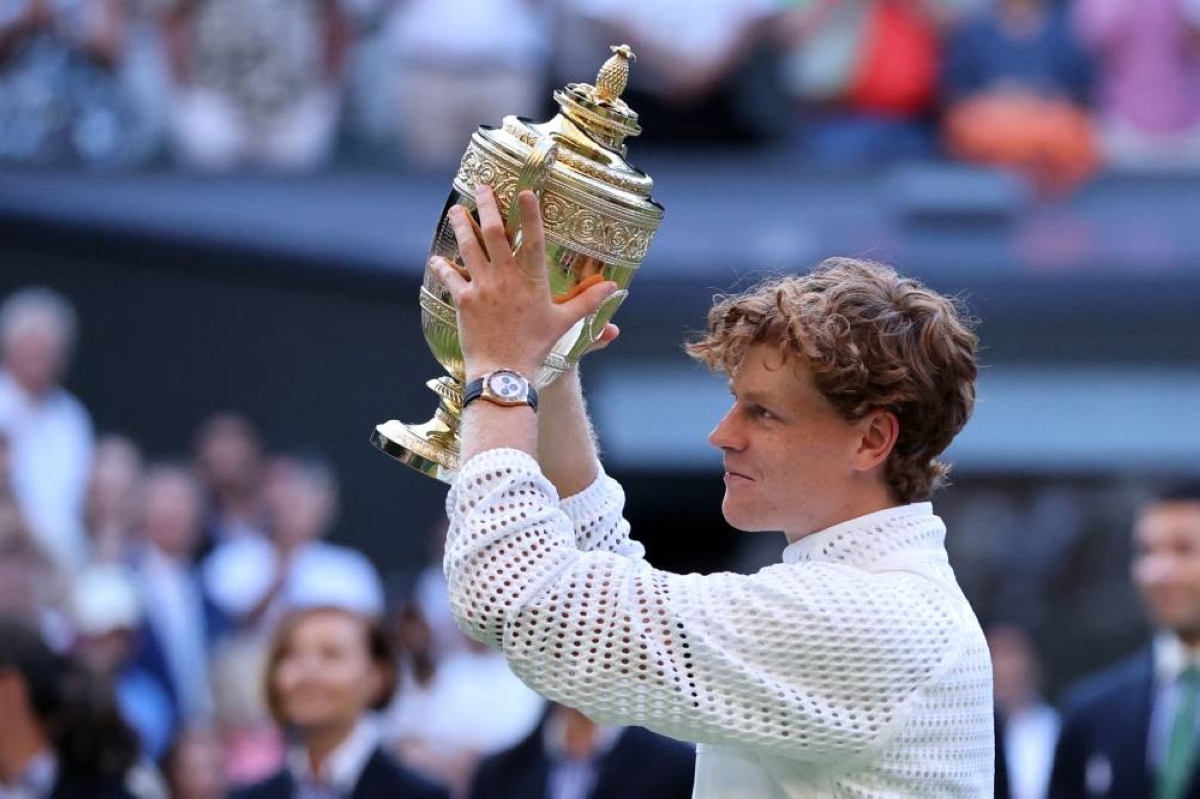
Italy's Jannik Sinner celebrates with the trophy after winning his final match against Germany's Alexander Zverev in London on Sunday. (Reuters) Here are some key facts about defending champion Jannik Sinner, who beat second seed and French Open champion Alexander Zverev 6-7(7) 7-6(2) 6-3 6-4 to claim his second Wimbledon title on Sunday. Age: 24  Nation: ‌Italy ATP Ranking: 1 Seeding: 1 Grand Slam titles: 5 (Australian Open 2024, 2025; U.S. ​Open 2024; Wimbledon 2025, 2026) ROAD ‌TO FINAL First round: beat Miomir Kecmanovic (Serbia) 4-6 6-3 6-7 6-2 6-3 Second ‌round: beat ⁠Nuno Borges (Portugal) 7-6 7-6 ‌6-4 Third round: beat Jenson Brooksby (USA) 6-4 ‌6-3 6-4 Fourth round: beat Shintaro Mochizuki (Japan) 6-3 7-6 6-3 Quarter-finals: beat Jan-Lennard Struff (Germany) 7-5 ⁠7-6 6-3 Semi-finals: beat Novak Djokovic (Serbia) 6-4 6-4 6-4 EARLY LIFE * Born in the small northern Italian town of Innichen, Sinner began playing tennis at age 7.* Initially he preferred skiing and soccer to tennis before fully committing to the sport at age 13. CAREER TO DATE * Began his professional career playing on the ITF Circuit in 2018. * Won the 2019 Next Gen ATP Finals by beating ​Alex de Minaur. Ended the year ranked 78th in the world, winning the ATP Newcomer of the Year award. * Won the 2020 Sofia Open, his first ATP title, and ‌became the youngest Italian to ⁠win a tour-level title ​in the Open Era. Ended the year ranked 37th in the ​world. * In 2021, he won the Great Ocean Road Open, Washington Open, Sofia Open and European Open. Ended the year ranked number 10. * Reached his first Grand Slam semi-final at Wimbledon 2023 and won his first Masters 1000 title at the Canadian Open. He also reached a career-high ranking of world number four, becoming just the second Italian to reach the top five. * Helped Italy to win the Davis Cup for the first time in 47 years in November 2023. * Beat Daniil Medvedev to win his first ‌Grand Slam title at the ‌2024 Australian Open. * Tested positive ⁠for the steroid clostebol in two samples taken in March 2024 but received no ⁠suspension after the International Tennis ⁠Integrity Agency found the positive tests were due to contamination from his physiotherapist. * Became the world's number one ranked player after reaching the French Open semi-finals in June 2024. * Beat Taylor Fritz to win his first U.S. Open title in 2024. * Won the Shanghai Masters and finished 2024 with his first ATP Finals crown. * Retained ​the Australian Open men's singles title in 2025. * In February 2025, Sinner accepted a three-month ban following a deal with the World Anti-Doping Agency, which had challenged a decision not to suspend him after the two positive tests in 2024. * Avenged his 2025 French Open final loss against Alcaraz by beating him at the 2025 Wimbledon final, securing his first title at the All England Club. * Became the first man to win five successive Masters 1000 titles after winning the ‌Madrid Open in May ​2026. * Won his second consecutive Wimbledon singles final in 2026 by beating Alexander Zverev. Related Story

Sports
Sinner passes stern Zverev test in final to stay on Wimbledon throne

Sinner passes stern Zverev test in final to stay on Wimbledon throne

Italy's Jannik Sinner poses with the Gentleman's Singles trophy after his victory against Germany's Alexander Zverev at the end of their s singles final on the last day of the 2026 Wimbledon Championships at The

Entertainment
Senator Lindsey Graham Led An Extremely Active Life Before Sudden Passing

Senator Lindsey Graham Led An Extremely Active Life Before Sudden Passing

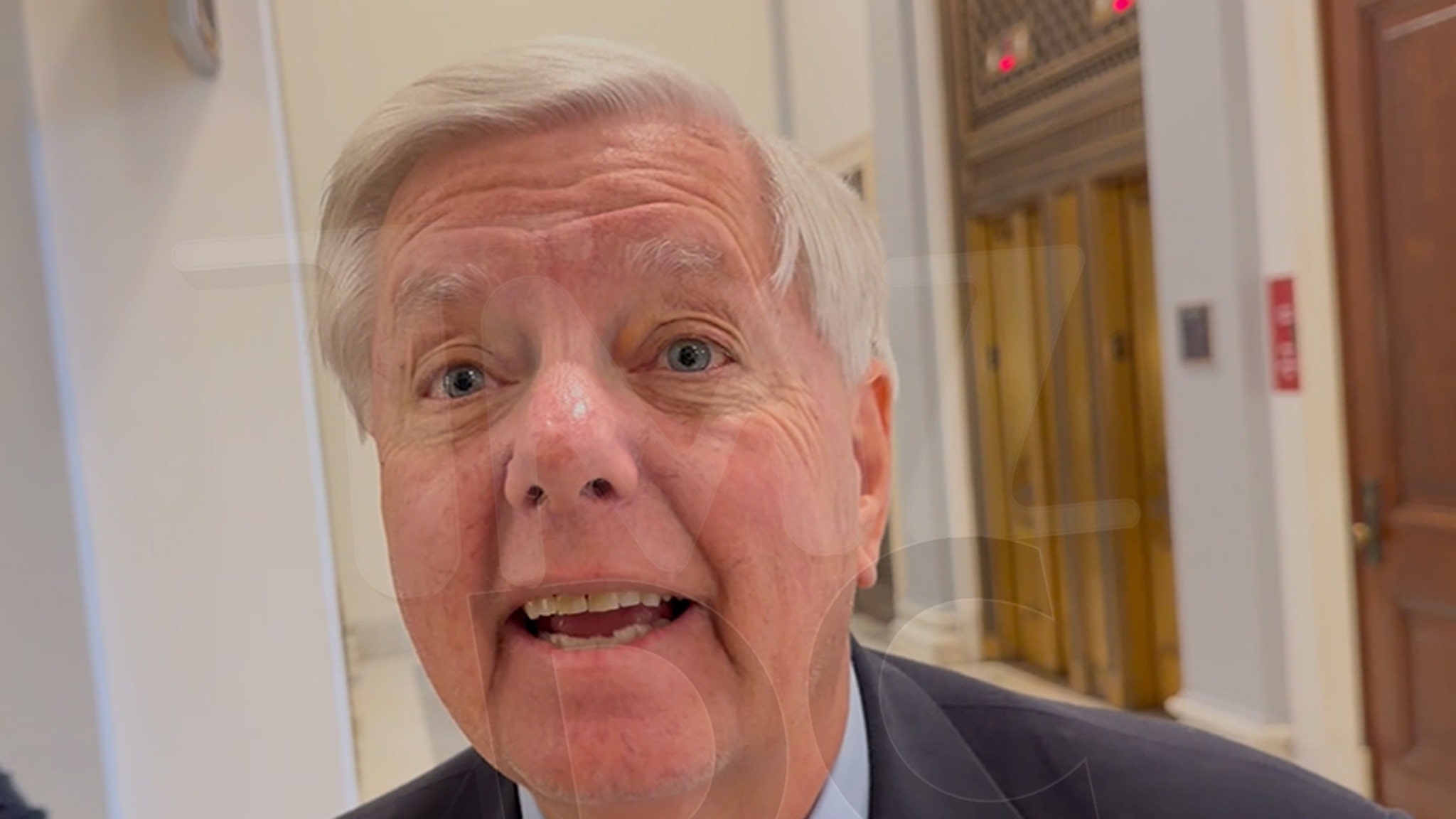
Senator Lindsey Graham One Of The Most Active Senators ... Before Sudden Death Published July 12, 2026 12:11 PM PDT Play video content Lindsey Graham's sudden death has shocked the political world ... not least

Entertainment
‘Daredevil’ Actress Wai Ching Ho Dead at 82

‘Daredevil’ Actress Wai Ching Ho Dead at 82

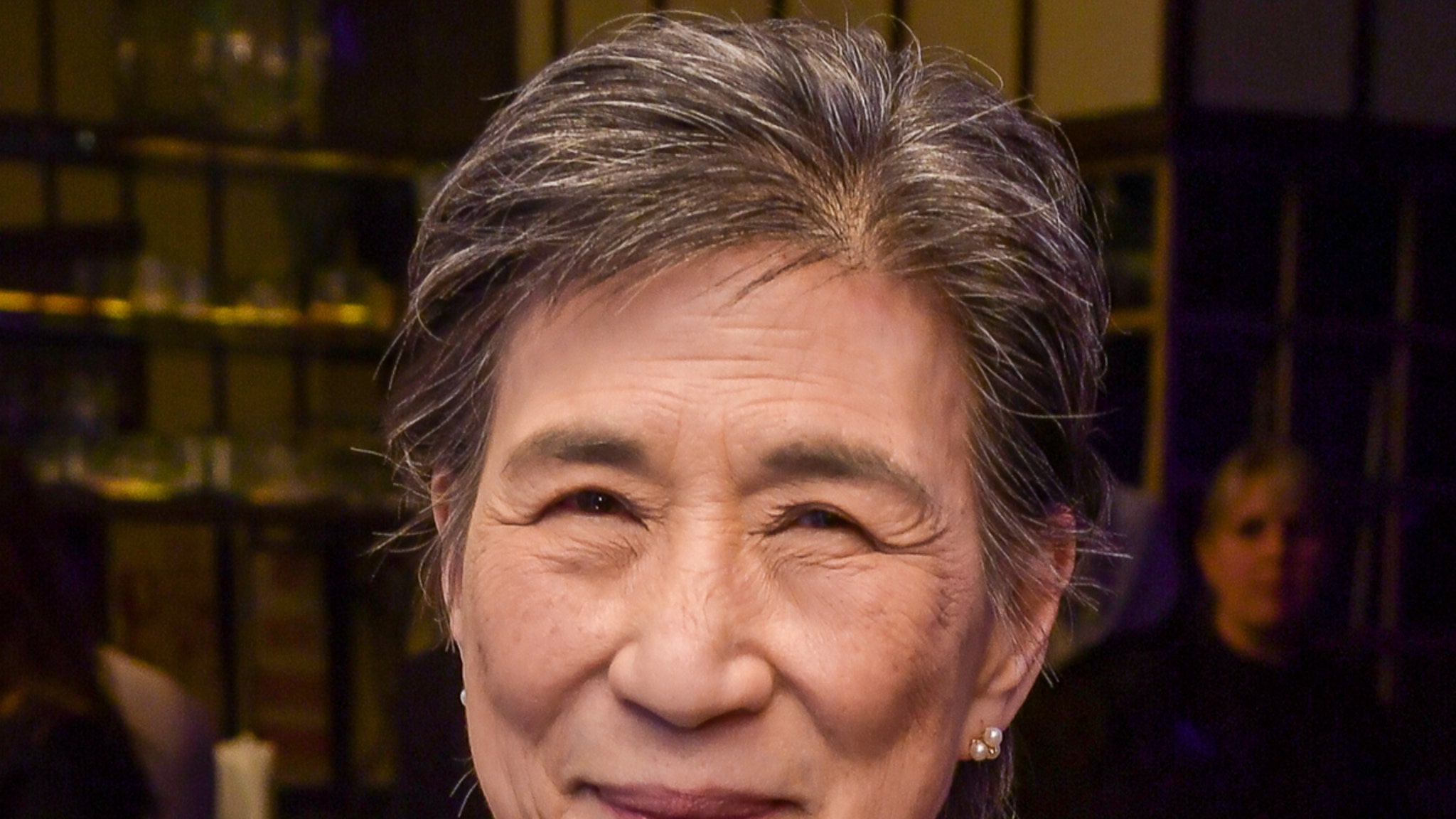
Wai Ching Ho -- a longtime actress best known for her role in several Marvel TV series -- has died ... according to several former costars. Peter Shinkoda -- who appeared with Wai Ching in