World
Ebola spreading in DR Congo ‘faster than any previous outbreak’: WHO

Ebola spreading in DR Congo ‘faster than any previous outbreak’: WHO

A doctor provides care to a patient with Ebola virus disease at the Rwampara Ebola Treatment Centre (ETC) in Bunia, Ituri, in the east of the Democratic Republic of the Congo. AFP The World Health Organisation (WHO) warned Thursday that Ebola was spreading in the Democratic Republic of the Congo (DR Congo) more quickly than during any previous outbreak of the deadly virus.More than 2,000 cases including 796 deaths have been confirmed in the DR Congo since the outbreak was declared two months ago, making it "now the third-largest Ebola outbreak on record", WHO chief Tedros Adhanom Ghebreyesus told reporters.By comparison, he pointed out that the big Ebola outbreak in the DR Congo in 2018-20 "took more than 10 months to reach 2,000 confirmed cases", warning that the virus was spreading faster than ever seen before."In the past month, it has expanded faster than any previous outbreak," he warned.The DR Congo's 17th Ebola outbreak was declared on May 15 after several deaths in Ituri, a mineral-rich northeastern province, plagued by armed groups.Cases of Ebola, which spreads through close contact and infected bodily fluids, have so far been found in five DR Congo provinces, as well as in neighbouring Uganda, though the vast majority are in Ituri.Tedros hailed the rapid ramping-up of the response to the outbreak, pointing out that treatment capacity in northeastern DR Congo now stood at 800 beds, while laboratory capacity had jumped from a single lab to 16.However, he warned that "despite the progress we have made, the outbreak in DR Congo is continuing to outpace the response".The WHO chief highlighted that over 80% of new cases were being detected "outside known contact lists, showing that transmission chains are still being missed"."About two-thirds of deaths are occurring in communities, among people who never receive care in a health facility," he acknowledged.Complicating things further, the current outbreak is caused by the rare Bundibugyo species of Ebola, for which there is no approved vaccine or treatment.However, Tedros hailed "encouraging progress on vaccines and therapeutics".Trials for two potential treatments for Bundibugyo patients – the monoclonal antibody MBP134 and the antiviral drug remdesivir – have also been under way in Ituri since July 2.And this past Monday, the first safety trial began on Monday for the ChAdOx1 vaccine, led by the University of Oxford, Tedros said.And on Tuesday, a trial of the antiviral obeldesivir began to test its effectiveness in post-exposure prophylaxis for people who had come in contact with confirmed Bundibugyo cases but had yet to develop the disease.Even without approved vaccines and treatments, 377 people have recovered in the DR Congo, said Tedros, "showing that with early diagnosis and safe care, this disease can be survived and stopped".The WHO chief said that one of the biggest concerns remained "the complex environment in which the outbreak is happening", with the vast majority of cases found in conflict-torn Ituri."Active armed conflict is hampering access to the affected areas, and hindering the response," he said, pointing out that on Wednesday, a treatment centre "was attacked" in Ituri's capital Bunia.The main priorities, he said, included reducing transmission in Ituri by strengthening surveillance; safe and dignified burials of highly infectious bodies of deceased Ebola patients; and clinical management of the sick.To do this, he stressed the urgent need for more support from the international community, pointing to "a shortfall of more than $400mn" for a joint plan put forward by the WHO and the African Centres for Disease Control to address the outbreak.  Related Story

Sports
Argentina World Cup semi-final hero Martinez ‘dreamt’ of scoring winner

Argentina World Cup semi-final hero Martinez ‘dreamt’ of scoring winner

Lautaro Martinez of Argentina celebrates after their win over England in the World Cup semi-final in Atlanta. (AFP) Argentina's World Cup semi-final match-winner Lautaro Martinez said he had "dreamt" of scoring the goal which took his team through to the final at England's expense on Wednesday."I dreamt it. I told Alexis (Mac Allister) that I was going to score," Martinez said after his heroics off the bench in Atlanta as the reigning champions won the game 2-1."And I said on the bench to Facundo Medina that I was going to come on and score."The World Cup holders were trailing 1-0 at the Mercedes-Benz Stadium when the Inter Milan striker was sent on in the 81st minute in place of left-back Nicolas Tagliafico.Lionel Messi set up Enzo Fernandez to equalise in the 85th minute and the Argentina captain then crossed for Martinez to head in the winner in the second minute of injury time."When my old man first bought me a pair of boots, I always dreamed of scoring this goal," said an emotional Martinez.When he spoke again to reporters after leaving the dressing room, Martinez said he had just got off the phone to his mother, who was at work.The 28-year-old Martinez lost his place in Lionel Scaloni's Argentina team early on their run to glory at the 2022 World Cup.He started all three group games this time, scoring in the 3-1 win over Jordan, but was substituted in the narrow victory over Cape Verde in the last 32 and has not started since.Nevertheless, he came on to score in the 3-1 extra-time defeat of Switzerland in the quarter-finals before his decisive role against England.Argentina will now take on Spain in Sunday's final in New Jersey."We are going to be coming up against a top-class side who have not lost in 38 games and have great players," said Martinez."Now we need to get some rest but also enjoy this because what we are doing is not easy, getting back to the final as defending champions three and a half years after winning it."Spain's last defeat was a 1-0 reverse in a friendly against Colombia in March 2024.The teams were due to meet in Qatar in March in the Finalissima, the fixture recently introduced to pit the European champions against the winners of the Copa America.That game was postponed due to the war in the Middle East, triggered by US-Israeli strikes against Iran.The only previous World Cup meeting of Spain and Argentina came in 1966, when the South Americans won 2-1 in a group-stage contest played at Birmingham's Villa Park.  Related Story

World
Japan PM approval rating below 50% for first time

Japan PM approval rating below 50% for first time

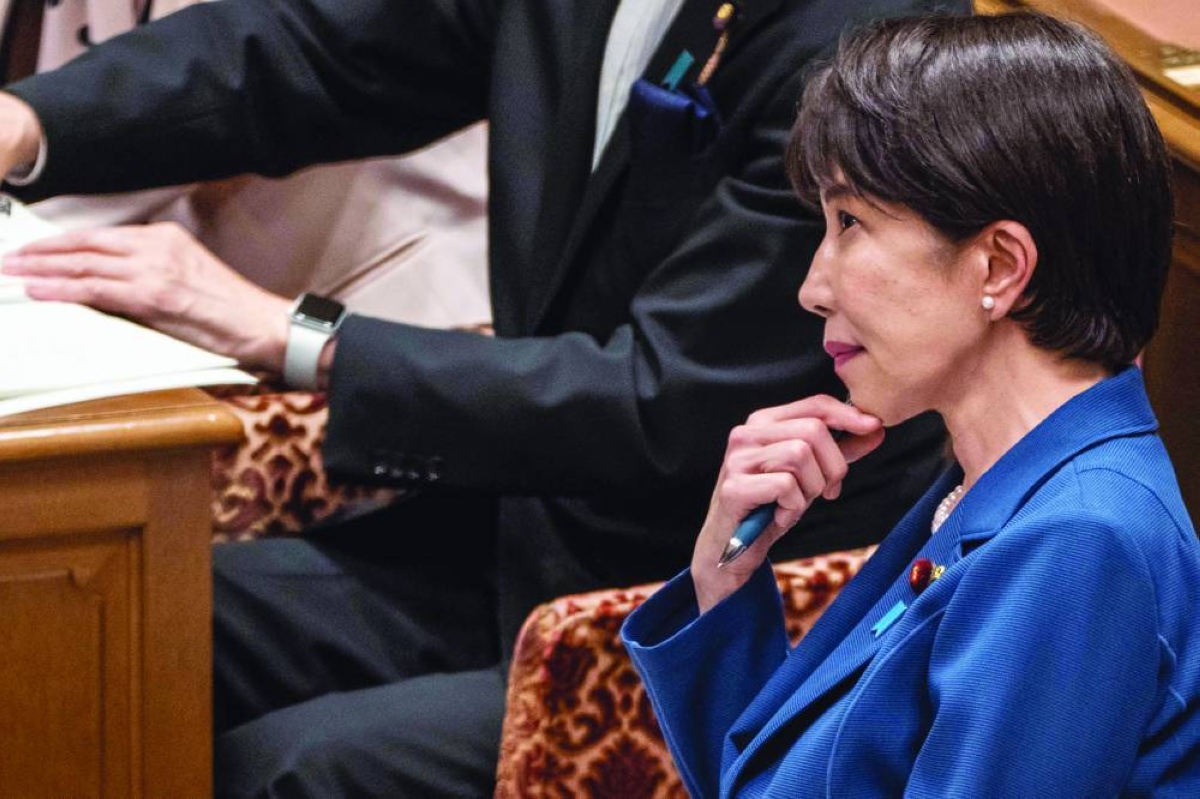
Sanae Takaichi. (AFP/File picture) Approval ratings for Japanese Prime Minister Sanae Takaichi's conservative government dipped below 50% for the first time since coming to power in October in a poll published Thursday.The Jiji Press survey put backing for Takaichi's cabinet at 49%, with the sharpest drop among voters in their 60s, whose support went from 63.7% last month to 39.9%.While supporters still cited the leadership and trustworthiness of Japan's first woman prime minister, top reasons for disapproval included "cannot hope for much" and "poor policies".In February, Takaichi further cemented her power base with a resounding victory in lower house snap elections, in part buoyed by her popularity among young voters charmed by her diplomatic savvy, relatability and the change she symbolised.But at the same time, her suggestion in November that Tokyo could intervene militarily in any attack on self-ruled Taiwan has hit Japan's ties with China, which sees the island as its territory.And earlier this month a group of nearly 150 Japanese academics petitioned lawmakers over her push for a bill that criminalises the desecration of Japan's national flag.Also helping Takaichi has been a slowdown in inflation in recent months, after sharp price rises contributed to the downfall of her two predecessors in quick succession.  Related Story

World
Body of Indian sailor missing after Oman ship attack found

Body of Indian sailor missing after Oman ship attack found

The body of an Indian sailor who went missing after his ship was attacked off the coast of Oman has been recovered, a seafarers’ union official said yesterday. Heramb Karmarkar, a 30-year-old marine engineer from the western Indian city of Pune, had been missing since Sunday’s attack on the Cypriot-flagged GFS Galaxy. “I got a call Tuesday evening from the company the ship belonged to informing me that Heramb Karmarkar’s body has been found by the Omani coast guard,” Manoj Yadav, of the Forward Seamen’s Union of India, told AFP. “This was almost 60 hours after we first received news that he was missing.” The other 23 crew members — including 10 Indian nationals — were rescued Sunday. The US Central Command said the ship had been disabled by fire and damage to its engine room, accusing Tehran of attacking it.India is one of the largest contributors of sailors to merchant shipping worldwide, with more than 320,000 active seafarers in 2025, according to officials. The attack came as Tehran announced it was closing the Strait of Hormuz and launched missiles and drones at its Gulf neighbours in retaliation for US strikes.The Strait of Hormuz, a vital shipping route through which about a fifth of the world’s oil passed before the war broke out on February 28, is a major point of contention between the US and Iran.  

World
EU, Ukraine seal ‘drone deal’ to boost production, establish joint ventures

EU, Ukraine seal ‘drone deal’ to boost production, establish joint ventures

Ukraine's President Volodymyr Zelensky and European Commission President Ursula von der Leyen pose for a photo during signing ceremony of the defence industrial partnership aimed at expanding joint drone production at a joint press conference

Opinion
A hidden pipeline brings Amazon and Walmart to African shoppers

A hidden pipeline brings Amazon and Walmart to African shoppers

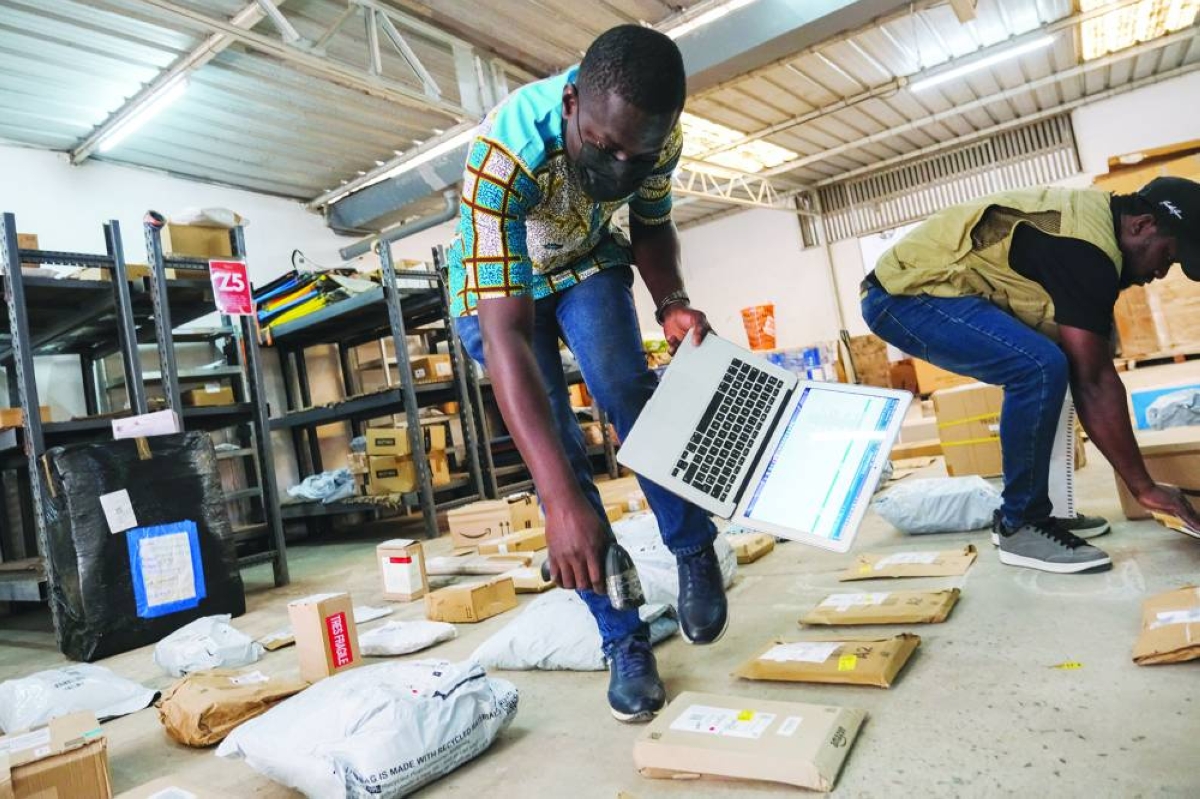
No bank card? No address? No problem. Shoppers in Africa increasingly are buying online from big brands such as Amazon or Walmart even though they have no physical presence ‌on much of the continent. Among those benefiting from the shift are local and foreign package-forwarding companies that use technology and ​increasing internet penetration in Africa to overcome hurdles, including ‌a lack of formal street addresses and customers with no access to traditional banks. One is Senegalese startup, Afrety, which provides a ‌snapshot of how Africa’s shoppers can rely on intermediaries to buy from the ‌United States, Europe and China and receive the package at their ‌doorstep. Delivering without an addressAfrety’s service provides shoppers with delivery addresses at warehouses in France, the United States and China. Multiple purchases can be consolidated for each customer and repackaged for dispatch to West Africa. On arrival, customs duties are paid, benefiting local governments. Customers without bank cards can pay by digital, mobile money accounts that can be charged with cash at kiosks. Mobile money is used widely in Senegal, along with other parts of Africa, instead of conventional banking. Once the packages arrive in Senegal, motorbikes and vans parked outside Afrety’s depot deliver using GPS across a major city like Dakar. “You have to be very, very, very flexible. That’s the key word,” Souane Diop, the 34-year-old CEO, told Reuters, outside his depot filled with packages labelled Amazon and other international brands. Diop said the company started in 2018 with the aim of connecting informal networks of air travellers between France and Senegal. From small ​beginnings it has grown to four to five metric tons by air and two to three containers by sea each week. To keep costs low, Afrety rents its warehouse in France and uses partners in the US and China to handle trade there. A revolution in online shopping in AfricaGlobal logistics company Aramex is a much ‌bigger rival, operating two platforms with overlapping services. Whereas Afrety grew out of the deep connections ​between Senegal and former colonial power France, which has a large Senegalese diaspora population, Aramex in Sub-Saharan Africa relies on MyUS, ​which began by providing goods for US expatriates living in Africa. Aramex acquired MyUS in 2022 and in addition runs a platform that it created, Shop and Ship, which also delivers to many countries on the continent. Aramex Group Chief Executive Amadou Diallo told Reuters the company aims to serve African customers that want choice and brands otherwise unavailable to them. Angola is one of its main destinations, but it also operates in difficult environments, notably Somalia, which has been riven by war for decades. Online growth funds are finiteAramex says Sub-Saharan Africa is one of its fastest growing regions. The products most in demand are electronics, apparel, toys and machinery for agriculture and auto parts. The company says it plans to double revenue from shipping these and other goods there by 2030. However, constraints on growth remain. For Aramex and also Afrety, customers mostly live in or near major cities, where relative wealth is concentrated. That is because e-commerce in Africa is largely driven by economic hubs, according to Tech Cabal Insights, a consultancy. Internet penetration has ‌reached around 43% of Africa’s 1.5bn people, but ‌only a small fraction have enough income to shop online, it says. Even in Nigeria, West Africa’s economic powerhouse, only 1 in 3 internet users shop online. In poorer regions like Central Africa, only about 1 in 20 people shop online, the consultancy says. The exception of South AfricaSouth Africa, the richest economy in sub-Saharan Africa, dominates the continent’s internet use and stands alone in Africa for its level of online shopping. Online retail volumes in South Africa have grown by close to 35% annually over the last five years to about 140bn rand in 2025 ($7.26bn), Mastercard figures show. The growth has drawn big brands to set up their first operations in sub-Saharan Africa. Amazon launched its first online marketplace in South Africa in 2024, competing with local e-commerce giant Takealot. The first Walmart-branded stores in Africa opened in Johannesburg last year. When asked, neither Amazon nor Walmart commented on whether they were considering expanding to other ​parts of sub-Saharan Africa. They also did not respond to requests for data on sales volumes to intermediaries. Competition intensifies in strong marketsEven if the online giants remain absent from much of Africa, the intermediaries face other competition. Nigerian retail company Jumia, often known colloquially as the Amazon of Africa, operates in eight countries in sub-Saharan Africa, selling consumer goods ranging from fashion to electronics to home appliances. It has yet to make a profit, but says it expects to break even this year. Its Chief Executive Francis Dufay told Reuters that the company is fending off competition from Chinese retail giants including Temu and Shein by tailoring its services to each country, including opening local help centres and pick-up points in rural areas. Executives at both Jumia and Aramex said Nigeria was among the African e-commerce markets with most potential. The Nigerian government does not routinely publish e-commerce figures but has cited United Nations figures estimating the total at around $75 ‌billion in 2025. Aramex opened a warehouse ​in Nigeria in April this year. Jumia’s Dufay said business there has grown by around 50% over the last quarter of 2025. “It’s still totally underpenetrated We’re just at the beginning of our transformation In Nigeria,” he said. 

World
Toronto air ranked among world’s worst after wildfire

Toronto air ranked among world’s worst after wildfire

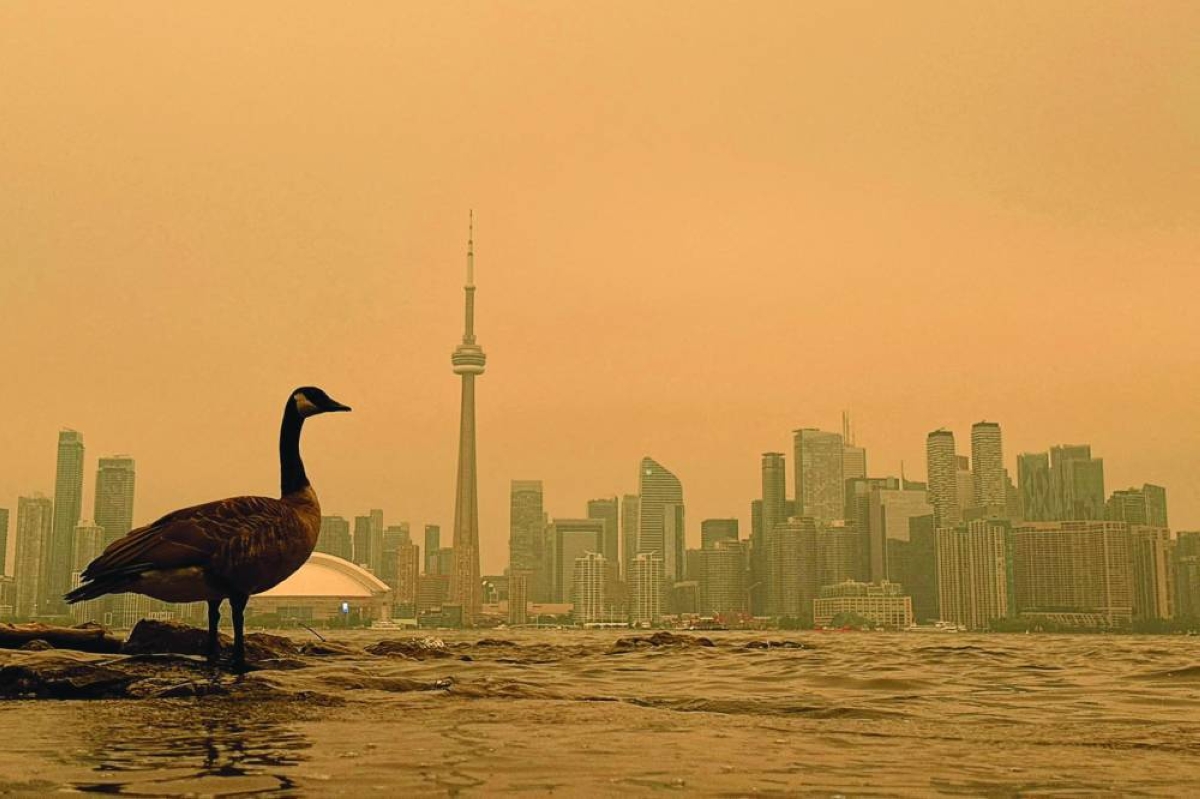
Toronto had the worst air quality of any major city in the world Wednesday, the Swiss firm IQAir said, as Canadian authorities urged people to stay indoors. Toronto edged out New Delhi and the Democratic Republic of Congo’s capital Kinshasa as wildfire smoke turned the skies a hazy yellowish-grey in Canada’s largest city. “The biggest contributor to Toronto’s spike in air pollution right now is wildfires, though the higher than average temperatures are also playing a role,” Armen Araradian of IQAir told AFP. While this year’s wildfire season has been fairly muted compared to the devastation caused in recent years, there are more than 800 active fires nationwide. Smoke from blazes in northwestern Ontario has filtered down to Toronto, the provincial capital. City officials have closed pools, cancelled summer camp programs and closed the official FIFA Fan Festival ahead of Wednesday’s semi-final match between England and Argentina.Montreal saw a similar, though less severe impact from wildfires on Tuesday. Smoke from the wildfires also worsened air quality across the border in the US, with Pennsylvania, New York, Connecticut, Massachusetts, Maine and New Hampshire particularly impacted. New Yorkers were warned by state authorities that they “may see visible smoke and hazy skies across the state and spikes in smoke-related pollution.” Canadians are enduring potentially hazardous air as a record-smashing North American heat wave persists. Extreme heat and humidity in the Mountain West spilled over to the densely populated East Coast of the US and Ontario. The heat in Ontario is expected to ease by the weekend, but officials have warned of persistent risk from wildfires through the remaining summer months. So far, Canadian wildfires have scorched 1.9 mn hectares this year, an area nearly the size of Slovenia. That damage remains far off the pace of 2023, Canada’s worst wildfire season on record.  Related Story

Opinion
From unipolar moment to uncertain leadership, waning US influence

From unipolar moment to uncertain leadership, waning US influence

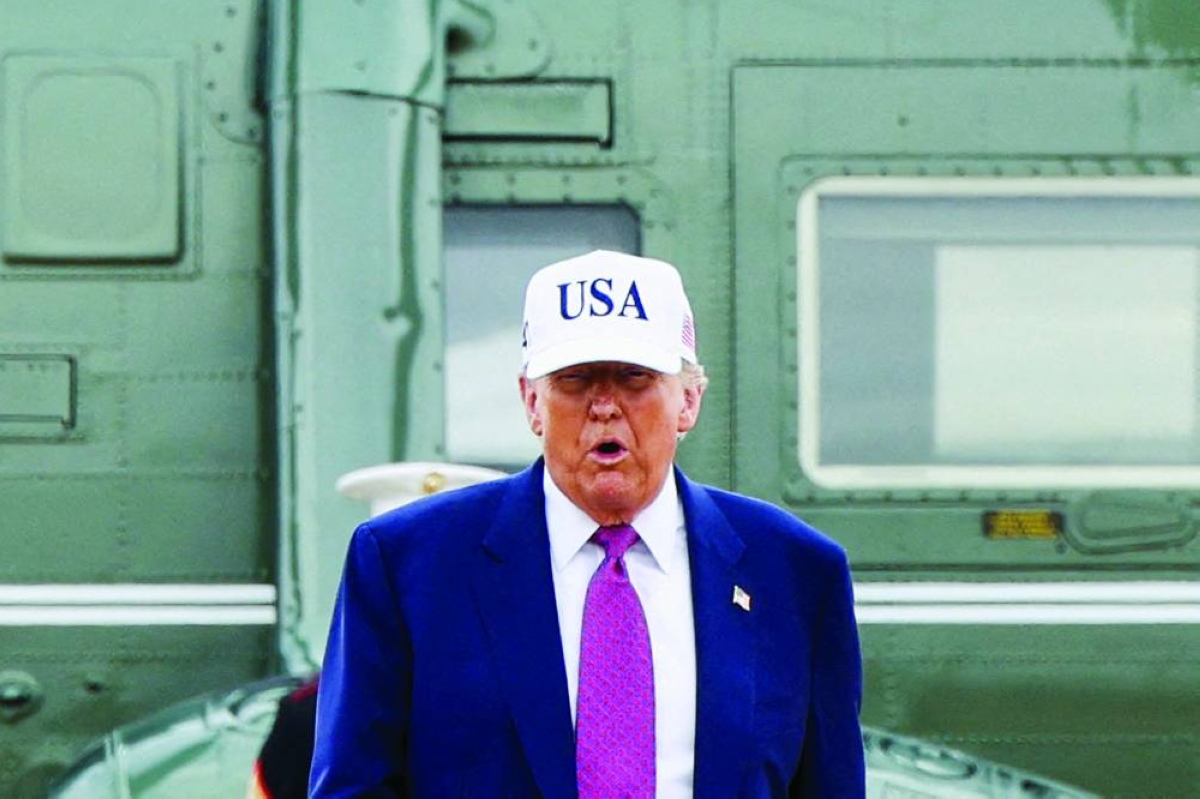
US President Donald Trump steps out of Marine One for a visit to Fort Bragg to mark the US Army anniversary, in North Carolina, last year in this file photo. (Reuters) In a recent article marking America’s 250th anniversary, The Economist magazine made an interesting observation. Measured by several criteria, the US of 2026 is “richer, stronger and cleverer than ever”. Yet at the same time, as the piece points out, America’s “dominance appears to be eroding”. Certainly, US military spending is unmatched and it has access to many more overseas bases than any combination of its rivals. On the economic front, though losing ground to China every year, its companies still dominate tech, it is the biggest player in oil and gas, and the dollar remains the world’s reserve currency. Yet it is hard to disagree with The Economist’s conclusion. Time and again, from Afghanistan to Iraq, and during the current conflict with Iran, the US willingness to spend vast amounts on superior warfighting capabilities has not translated into strategic victory. There is also a growing perception, even among long-time partners, that the US is an unreliable ally. It is no longer taken for granted that “American leadership is the one constant in an uncertain world”, as President Obama put it only a decade ago. Instead, in recent decades the US has struggled to demonstrate leadership by providing followers across the world with the security, stability and order they expect from their leader. This point is important. It is far easier to get regional partners to follow you voluntarily when you take their interests into account and are committed to defending those interests. This is as much a matter of political will as material power. The absence of political will quickly translates into a loss of strategic influence that damages a leader’s standing with its followers. To take one example, despite its enormous material advantages over the Assad regime and its Russian patron, the Obama administration’s lack of resolve and strategic clarity in the Syrian civil war diminished America’s leadership. As one of many similar media headlines put it in 2016, “Russia’s grip on Syria tightens as brittle ceasefire deal leaves US out in the cold”. Followers will continue to follow even when the leader ignores their interests or lacks the will to act in support of those interests. They do so because they have no better options or because they fear the leader will unleash punitive measures against them, such as tariffs and sanctions. But this form of leadership is coercive, expensive and consumes a lot of political capital to keep weaker and smaller states, including allies, in line. The result is a downward spiral that undermines the leader’s legitimacy and makes it harder for it to shape the international system in line with its own interests – a key test of geopolitical dominance. All this was evident in mid-April when US allies responded negatively to President Donald Trump’s call for a US-led Hormuz coalition after Iran closed the Strait. Unlike earlier post–Cold War coalitions, where participation was both broad and geographically diverse, the Hormuz initiative struggled from the outset to attract even a core group of committed partners among Washington’s traditional allies. For example, none of the three countries who participated in the initial military invasion of Iraq in 2003 — Australia, the UK and Poland — agreed to get involved. Prime Minister Donald Tusk of Poland publicly ruled out sending troops. His Australian counterpart, Anthony Albanese, explained bluntly “This is not our war”. The UK’s Keir Starmer promised his country would “not buckle” under US pressure. This refusal to follow Washington is notable because freedom of navigation through the Strait of Hormuz is a shared interest of the entire international community. Nor can we put this non-involvement down to legitimate concerns about escalation with Iran or domestic political opposition. Similar risks and constraints were present in Iraq and Afghanistan yet did not prevent large numbers of states from contributing in various ways. A more persuasive explanation is that in the past America’s allies willingly followed the US more than today. They did so because they believed the relationship, despite real differences on some issues, was based on reciprocity, shared interests and even common values. Spanish prime minister, José María Aznar, explained that he joined the US coalition in Iraq in 2003, despite huge popular opposition at home, because, “The strengthenging of relations with the United States was a priority.” He added, “you cannot ask a friend for help and then later, when that same friends asks you for something, say no”. Contrast this with the position of Pedro Sánchez, Spain’s current prime minister. He called the attack on Iran an “absurd and illegal war”, denied the US access to his country’s military bases and stood up to President Trump when he threatened to cut off trade and kick Spain out of Nato. This is not to say that the era of American power is over. Despite its much-reduced position, the US continues to be the “powerful outsider” at the centre of most regions. The procession of government leaders visiting the White House to pay homage attests to this. Even Sánchez has downplayed his disagreements with Trump. But the recent Hormuz episode, and the wider war with Iran, provide an important indication of how changes in perceptions of US power and leadership are reshaping the geopolitical order. It is also a reminder of something else: that America’s “unipolar moment”, which began with its victory in the Cold War in the early 1990s, was always going to be just that — a moment. It is rare for one state to sustain indefinitely its position as the preeminent militarily, economic and diplomatic actor across all regions at the same time. This state of affairs is always temporary. Eventually, another state or, more usually, a combination of states will, as Napoleon found out, put their differences aside, come together and overturn the unipolar order. Having lived for almost forty years in a world defined by an overwhelming concentration of power in a single state, the US, it is easy to forget that unipolarity is the exception not the norm throughout history. The writer is Professor of International Politics and Director of the Small States and Energy Studies Programs at Georgetown University in Qatar.@RoryDavidMiller 

World
Republicans unveil $95bn pre-election spending push

Republicans unveil $95bn pre-election spending push

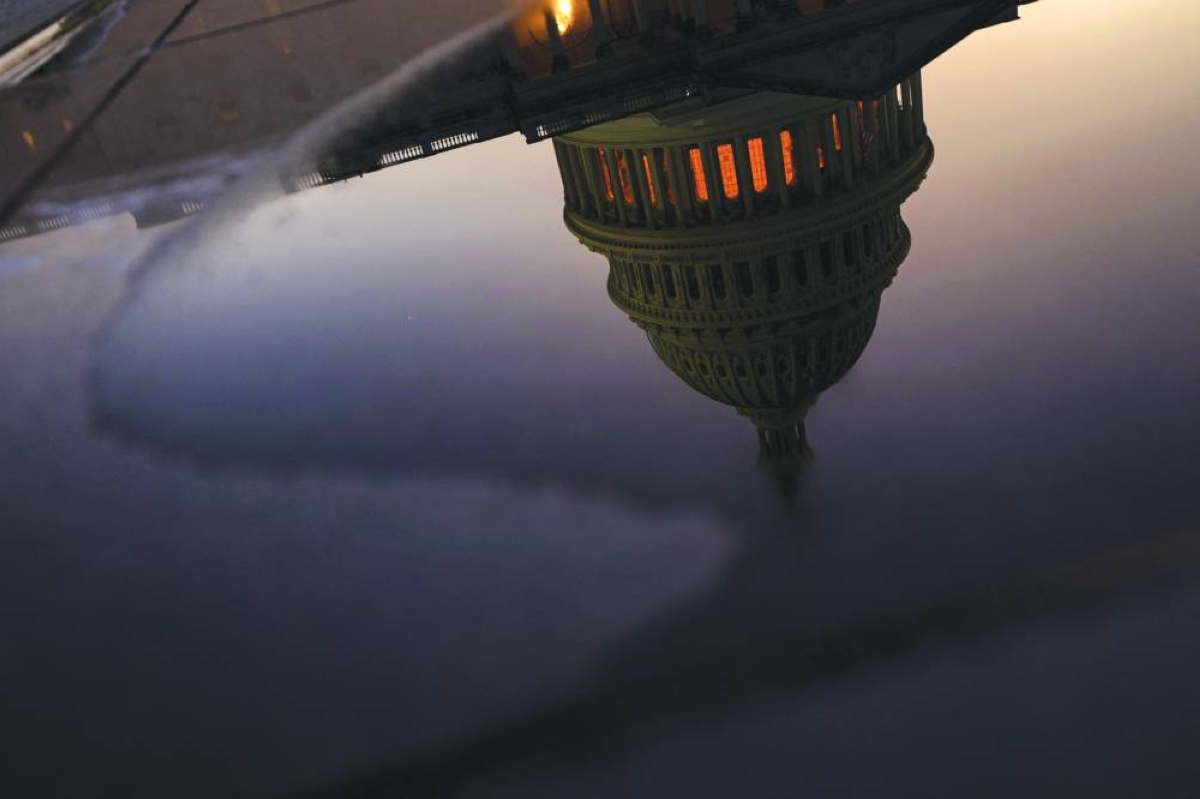
The US Capitol is reflected in water in Washington, DC US. (Reuters) US House Republicans unveiled a $95 bn spending framework Wednesday, launching their final major push to pass defence, farm and voting restriction measures before midterm elections that could cost them control of Congress. The plan would provide $73 bn for the military and intelligence agencies, including funding tied to the war with Iran, along with $12 bn in aid for farmers hurt by President Donald Trump’s trade war. It would also direct $10 bn toward election-related grants, as Republicans try to revive parts of Trump’s SAVE America Act, a voting restrictions bill that would require proof of citizenship to register to vote and photo identification at polling places. The House has passed a different version of the SAVE Act separately, but it has stalled in the Senate, where some Republicans have warned that it lacks support and may not qualify for the fast-track budget process party leaders hope to use. That process allows certain tax and spending bills to pass the 100-member Senate by a simple majority, avoiding the higher, 60-vote threshold usually needed to overcome Democratic opposition. The budget resolution released Wednesday is only a framework. If adopted by the House and Senate, it would allow Republicans to assemble a fuller bill later this summer and try to pass it without Democratic votes. House Republican leaders want to pass the framework next week before lawmakers leave Washington for a long summer break, leaving only a narrow window to complete the package before November. But the plan faces resistance from fiscal conservatives inside the party because it does not pair the new spending with cuts elsewhere. Representative Warren Davidson, a Republican fiscal hawk, has warned that the package could not advance without savings to offset the cost. After the framework was released, Davidson posted a blunt prediction on X: “DOA,” shorthand for “dead on arrival.” The fight underscores the competing pressures on Republicans as they try to show voters action on national security, agriculture and election security while also maintaining their claim to fiscal discipline. Trump had demanded far more defense spending than the House framework provides, but Republican leaders are trying to balance White House pressure with concerns from lawmakers wary of adding to the deficit.  Related Story

Entertainment
Michelle Branch Reveals She Bought Her Iconic ‘Everywhere’ Music Video T-Shirt at the Mall

Michelle Branch Reveals She Bought Her Iconic ‘Everywhere’ Music Video T-Shirt at the Mall

Who knew a trip to the mall would lead to one of the most iconic music video looks of the early 2000s?Michelle Branch took fans down memory lane while celebrating the 25th anniversary of The Spirit