World
Russia pounds Kyiv in major ballistic missile attack

Russia pounds Kyiv in major ballistic missile attack

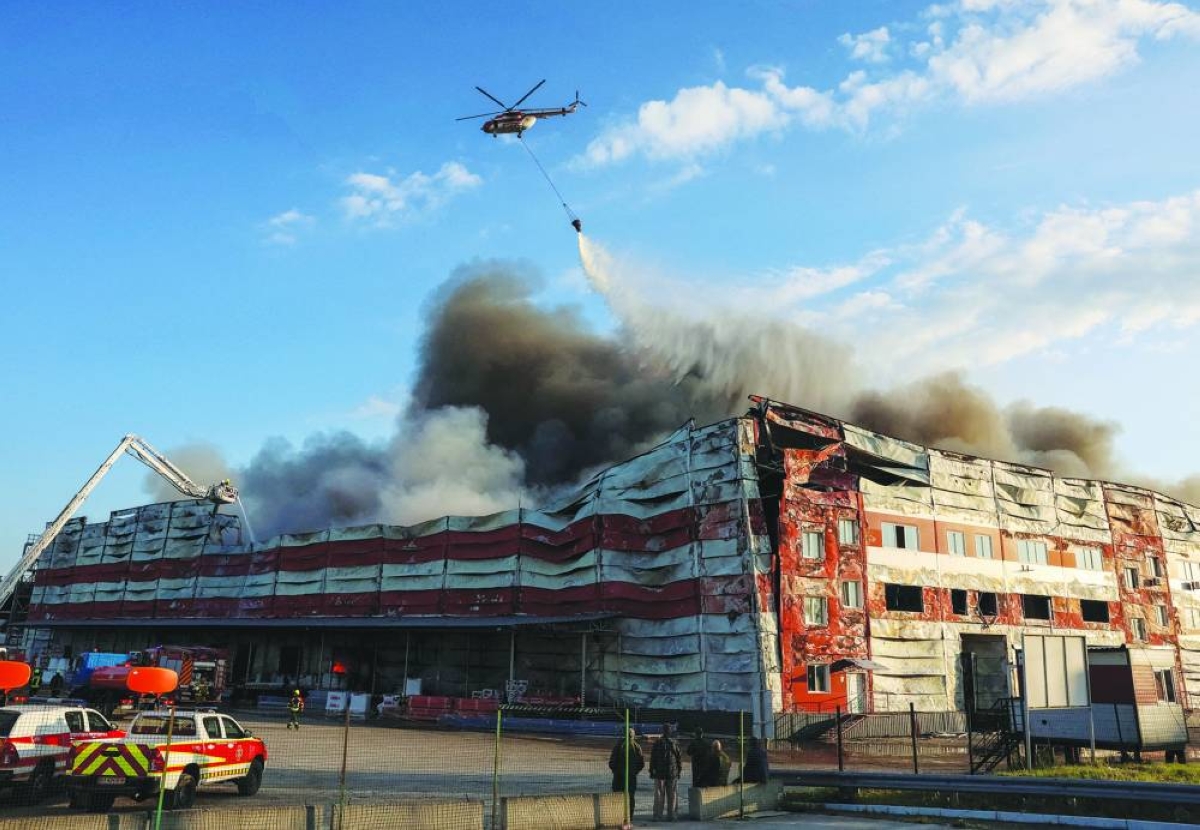
A firefighting helicopter drops water over the site of a Russian missile strike, amid Russia's attack on Ukraine, in Kyiv region, Sunday. (Reuters) Russia battered Ukraine's capital Kyiv overnight with one of its biggest ballistic missile barrages of the war, killing at least one person and wounding 16 others, President Volodymyr Zelensky said Sunday.A series of powerful explosions thundered across the darkened city in an attack that involved 41 missiles of various types, the air force said, ravaging buildings across several districts and sparking fires.Residential buildings, warehouses, a supermarket and a dormitory were among the structures damaged, said Kyiv Mayor Vitali Klitschko, adding that three people were in a serious condition.Separately Sunday, four people were killed and 19 wounded in a strike on a postal depot outside the northeastern city of Kharkiv near the Russian border, the regional governor said.At one location in western Kyiv, emergency workers picked through smouldering debris and doused bombed-out apartments.A resident who identified himself as Vlad told Reuters he had been inside his apartment when a blast tore off his balcony door, which smashed him in the head."My grandmother lives with me, and she can't walk. How could I run away and leave her behind?" he said.Closer to the city centre, the strikes damaged a frequently targeted metro station and destroyed an underground pedestrian passage nearby, leaving a pile of rubble.Sunday evening, rescuers in the southeastern city of Zaporizhzhia were digging for survivors after Russian bombs struck residential buildings there, authorities said, killing at least two people and wounding 14.CRITICAL SHORTAGE OF AIR DEFENCESRussian forces have stepped up ballistic missile strikes on Kyiv and other cities in recent weeks as Ukraine struggles with a critical shortage of US-designed air defences.Kyiv's military said it had shot down 18 missiles in Sunday's attack, which was aimed primarily at the Ukrainian capital. It added that 108 out of 125 drones had also been downed.Last week, Zelensky said the US and Ukraine have reached a political agreement on licences to make Patriot interceptor missiles. He added that he hoped production could begin by the end of the year.But the mounting Russian attacks in the fifth year of Moscow's full-scale war are heaping pressure on Kyiv's foreign partners to accelerate supply of anti-ballistic defences."Protection against ballistic missiles is our constant and top priority right now," Zelensky said on X Sunday. "Interceptors are needed every day."'KYIV WILL FLOURISH'Later Sunday, workers cleared rubble from around the damaged Kyiv metro station and caved-in underpass as passersby looked on, seemingly unfazed.Fruit vendors resumed business as usual in their makeshift stalls as an excavator poured debris into a dump truck in the background."Kyiv will flourish," said Iryna Lomeyko, 68, hinting at the stubborn normality of a neighbourhood that has been heavily damaged by repeated Russian strikes."Those idiots destroy everything, but we'll repair it and build anew," she added. "Everything will be alright."  Related Story

World
ICE officers to wear body cameras during vehicle stops, border czar says

ICE officers to wear body cameras during vehicle stops, border czar says

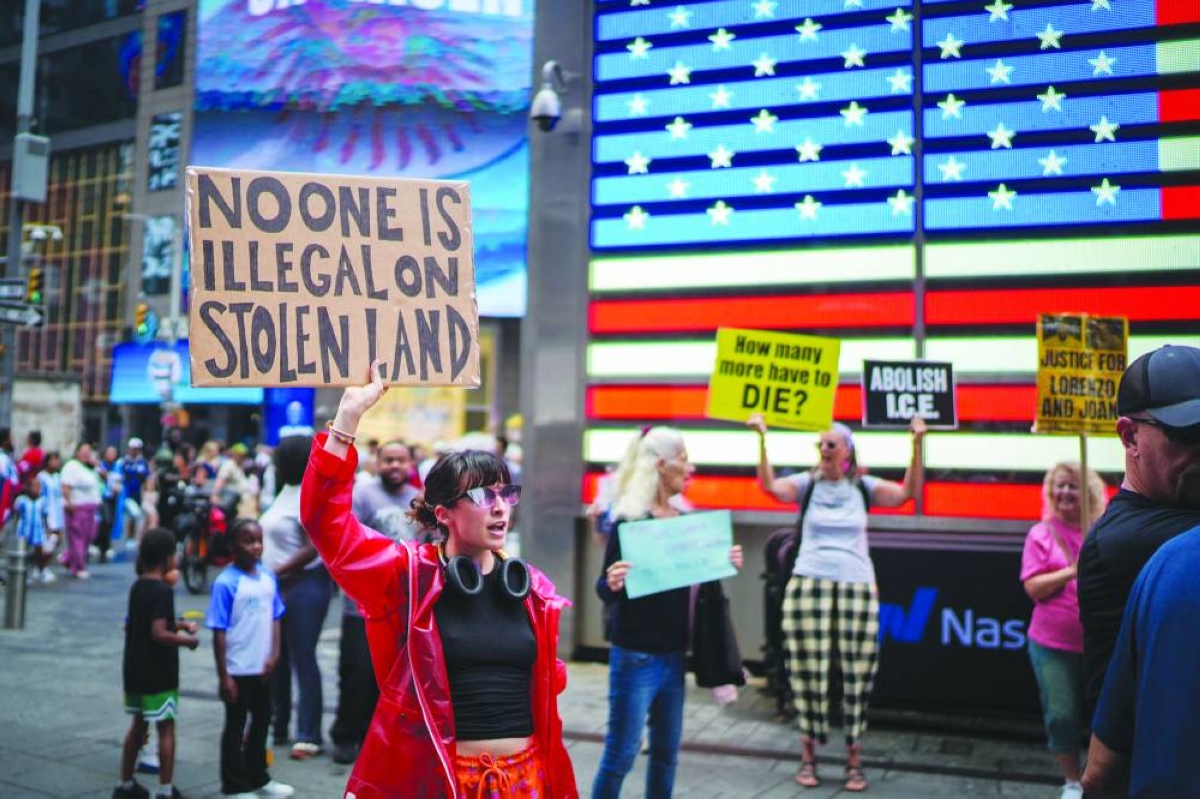
People participate in a protest against US Immigration and Customs Enforcement (ICE) in New York. AFP In the wake of multiple fatal shootings involving US Immigration and Customs Enforcement (ICE) officers, the agency will require its officers to record vehicle stops with at least one body camera, Trump administration border czar Tom Homan said Sunday."They exonerate more law enforcement than they convict, and I want officers to wear body cameras because I want the American people to see what the officers saw when they took that action,” he said on the Fox & Friends Weekend programme.Homan’s comments come after federal immigration agents fatally shot two men six days apart during traffic stops in Texas and Maine earlier this month.There is no body-camera footage from ICE agents involved in those incidents.In a separate interview on CBS's Face the Nation show, Homan said money for the cameras was held up during the partial government shutdown earlier this year."The cameras have been purchased right now," Homan said. "They're training the trainer in deploying the cameras nationwide."The agency's tactics came under renewed public scrutiny in recent days after an ICE officer on July 13 killed a driver from Colombia in the coastal Maine town of Biddeford, about 15 miles (24km) south of Portland.Six days earlier, another ICE officer in Houston fatally shot a Mexican national.Homan said last week that the agency would temporarily suspend most vehicle stops around the country to review procedures.Within 24 hours of Homan’s comments, US President Donald Trump directed federal immigration agents to resume them.The back-to-back shootings sparked protests in Maine, Houston and Boston and raised questions over ICE agents' lack of body cameras.The ICE launched a body-camera pilot programme in 2024 and deployed cameras to officers in five cities: Baltimore, Buffalo, Detroit, Philadelphia, and Washington, DC.The Trump administration moved last year to slow-walk the programme, urging Congress to cut funding by 75%, Reuters reported in January.In February, after the killing of two US citizens during an immigration crackdown in Minnesota, then US Department of Homeland Security (DHS) chief Kristi Noem said the body camera programme would be rolled out to ICE agents nationwide "as funding is available”.At least seven people have been shot dead during federal immigration enforcement operations since January 2025, when Trump launched mass deportations after returning to office following campaign promises of an immigration crackdown.  Related Story

World
Sao Tome and Principe votes for president

Sao Tome and Principe votes for president

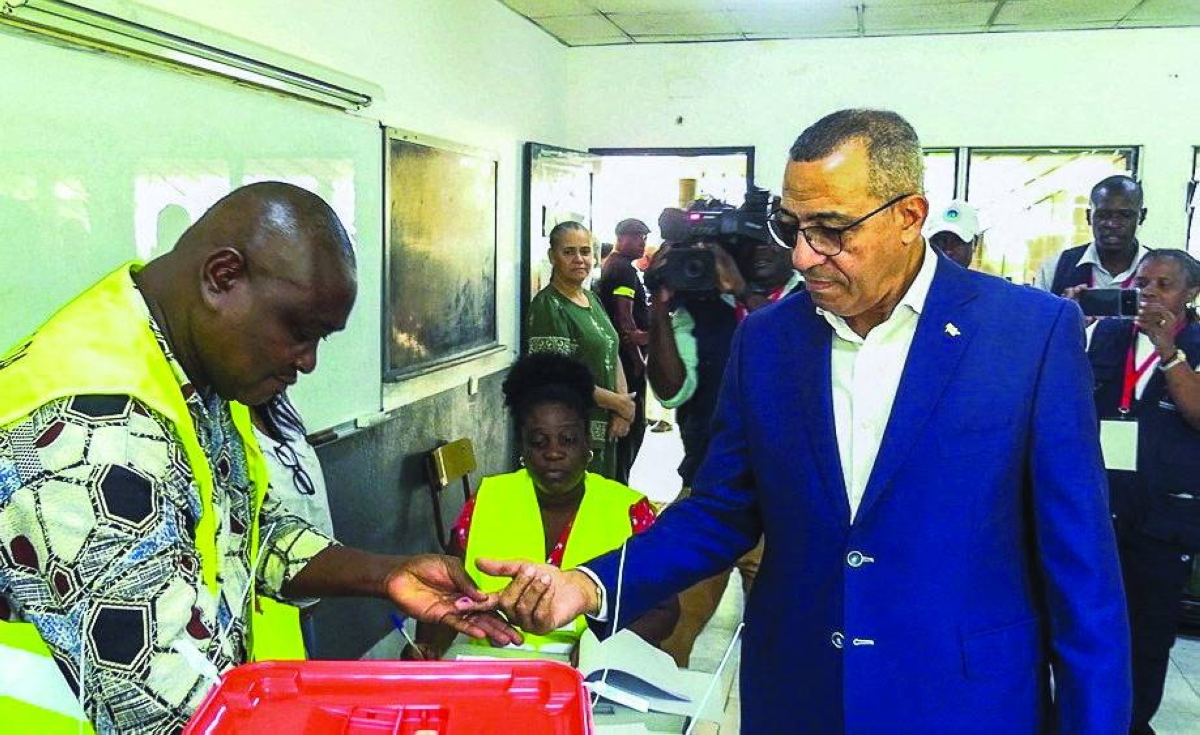
Voters in the Atlantic archipelago of Sao Tome and Principe, regarded as a model of democracy in Africa, headed to the polls Sunday for a presidential election.Outgoing President Carlos Vila Nova faces party rival Nito Viegas D'Abreu, a current member of parliament backed by former prime minister Patrice Trovoada, along with two independent candidates.Polling official Wernick Capita told AFP that the first few hours had been "calm" after polling stations opened at 7am (0700 GMT) "because people prefer to vote in the afternoon".Olivia Fatima, who cast her vote in Sao Tome city, said the crucial point of the election was "to get people out of poverty".A former Portuguese colony in the Gulf of Guinea, the island nation of 200,000 inhabitants has a history marked by attempted coups including one in 2022 that was promptly thwarted by the military.The scattering of islands off the coast of western equatorial Africa is now viewed as a model of African parliamentary democracy.The president has a largely ceremonial role, responsible for representation and the promulgation of laws, while most executive powers lie with the prime minister.Vila Nova, 66, elected president in 2021 with his Independent Democratic Action (ADI) party's support, is casting himself as the guarantor of the "political stability of the country".He has faced criticism for dismissing former prime minister Trovoada in January 2025, a move ruled one year later to be contrary to the constitution.Trovoada, now head of the ADI and vying to regain the prime minister post in legislative polls this coming September, has thrown his support behind Vila Nova's rival Viegas D'Abreu.Viegas D'Abreu, the 43-year-old leader of the ADI group in parliament, is promoting himself as a representative of those born after the country's independence in 1975.There are 142,298 eligible voters, according to the election commission.Preliminary results are expected Monday.A second round on August 9 will be held if no candidate secures more than 50% of the vote.Legislative elections are planned for September.On the international stage, Sao Tome and Principe is a partner of the European Union and of former colonial power Portugal, whose slave and sugar trade it once served.It also has partnerships with China and Russia, signing a military pact with the latter in 2024.The archipelago derives most of its revenue from agriculture, particularly the production of cocoa and coffee, as well as vanilla and pepper.Its unique landscapes also make it a prime tourist destination, especially for the ultra-wealthy.Major international oil firms including TotalEnergies have acquired licences to explore for oil and gas reserves off the archipelago's shores.However, the island nation remains heavily dependent on international aid, with a large majority of its population living below the poverty line.  Related Story

World
Rubio to visit Southeast Asia in bid to reaffirm partnerships

Rubio to visit Southeast Asia in bid to reaffirm partnerships

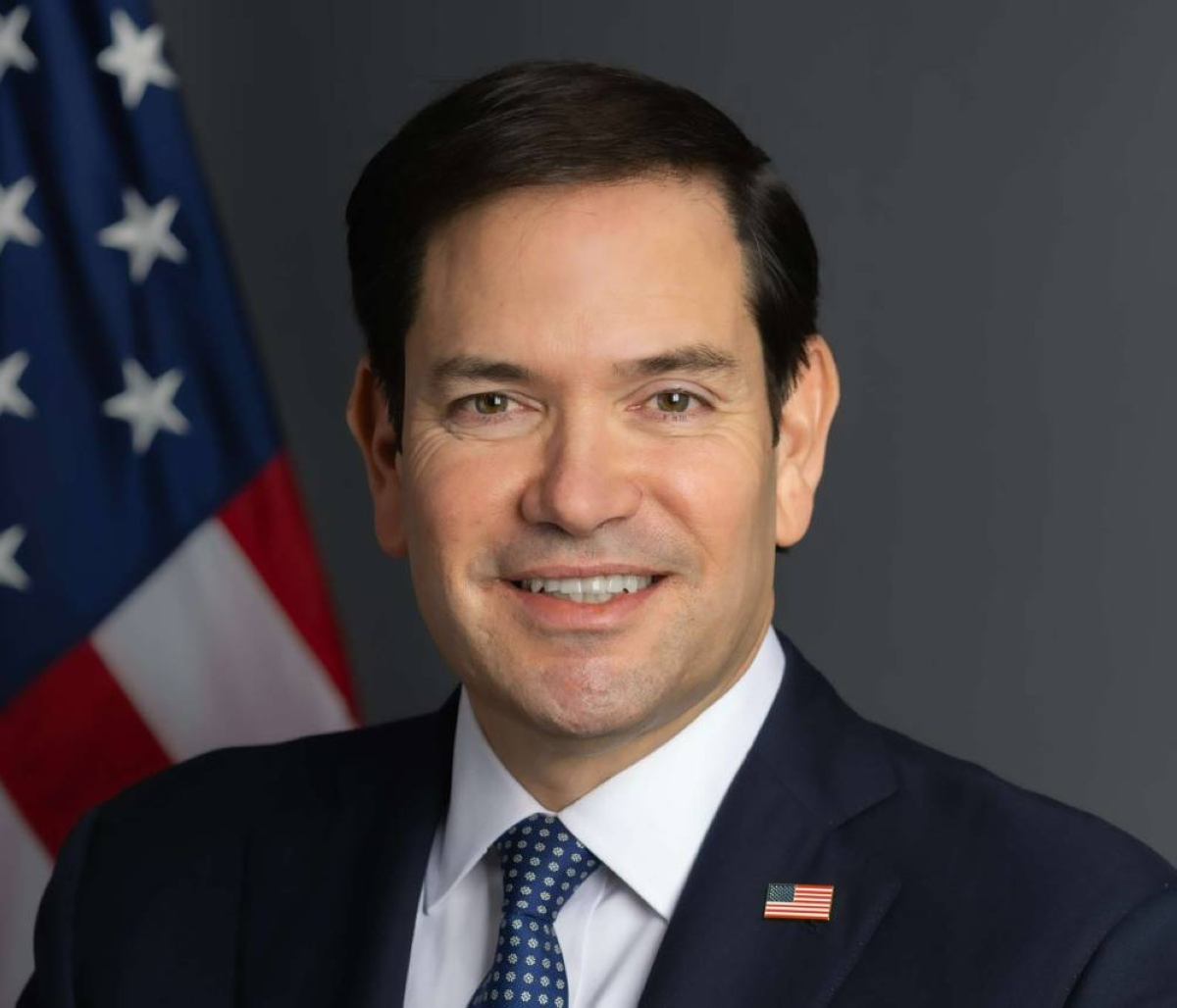
US Secretary of State Marco Rubio travels to the Philippines next week to meet with his Southeast Asian counterparts, the State Department said on Friday, as the rekindled war with Iran places traditional American allies under economic strain. The trip comes as the pace of strikes in the Middle East shows no signs of slowing, and just days after US President Donald Trump launched a sweeping attack on Thursday on China — alleging Beijing carried out substantial meddling in US elections. Rubio is due to attend a meeting of foreign ministers from the Association of Southeast Asian Nations (Asean) in Manila from Tuesday-Thursday. He attended last year’s gathering in Kuala Lumpur.State Department spokesman Tommy Pigott said the trip “advances a clear US priority: a free and open Indo-Pacific that delivers safety, security, and prosperity for the region and for the American people.”For Washington, that means seeking to counter China’s growing influence. The State Department provided no details of his schedule, but last year Rubio met Chinese Foreign Minister Wang Yi on the sidelines of the Asean gathering. The two top diplomats spoke recently by telephone following Trump’s visit to China last spring. Iran will be on the agenda in Manila, with Asian countries — particularly those that do not produce oil — being hit hard by the conflict and its repercussions for traffic through the Strait of Hormuz.About 80% of the hydrocarbons passing through the waterway are bound for Asian countries, according to the International Energy Agency. At a Cebu summit in May, the leaders of the 11 Southeast Asian countries discussed creating a shared fuel reserve, according to Philippine President Ferdinand Marcos, whose country holds Asean’s rotating chairmanship this year. Rubio is expected to meet Marcos as part of a strengthened US partnership with the Philippines, with the contentious issue of the South China Sea certain to come up. The waters are disputed by several members of the bloc and China. Incidents regularly occur between vessels in the area, nearly all of which Beijing claims, despite an international ruling that its position has no legal basis.The situation in Myanmar is also expected to be discussed. Asean foreign ministers on Sunday called on their Myanmar counterpart to make “concrete” progress on a peace plan aimed at ending the country’s civil war.Myanmar has been largely sidelined within Asean since a 2021 military coup.China is Myanmar’s main ally and one of the few countries to have backed the junta since the overthrow of Aung San Suu Kyi’s elected government. 

World
China’s Xi says AI should not be dominated by one country

China’s Xi says AI should not be dominated by one country

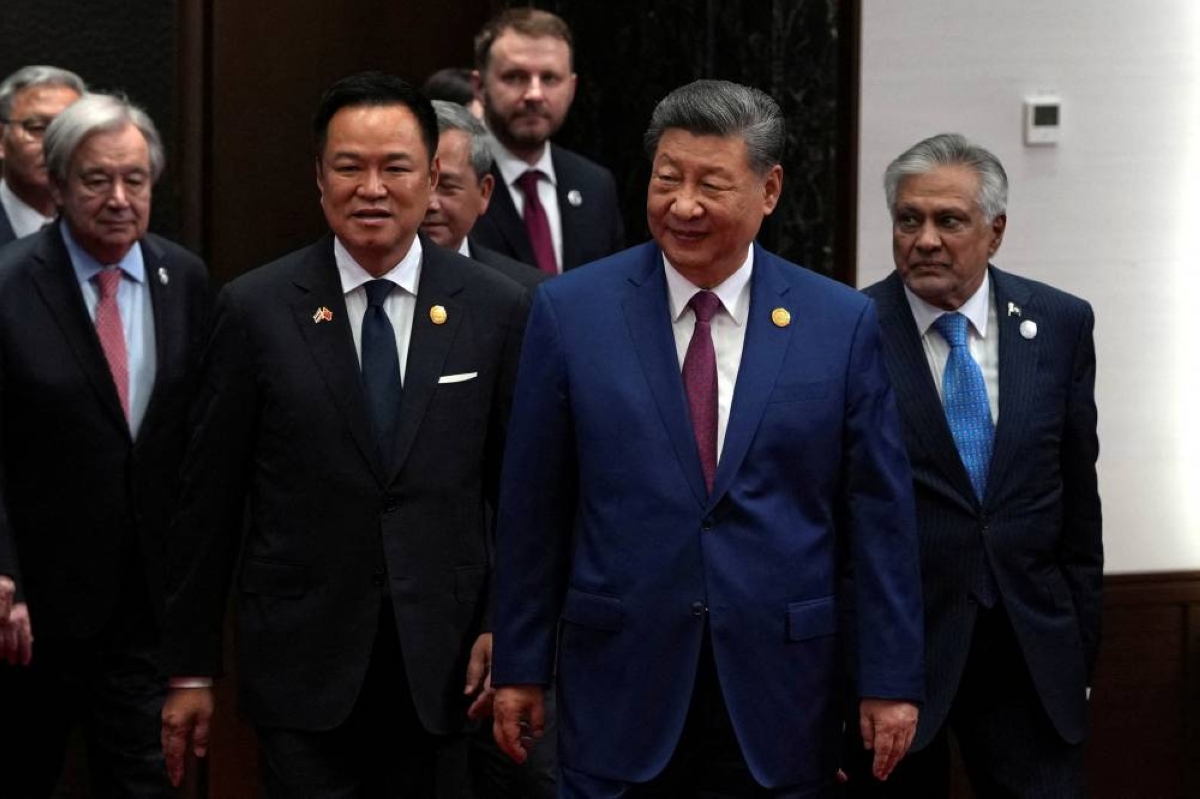
UN Secretary-General Antonio Guterres, Thailand Prime Minister Anutin Charnvirakul, Chinese President Xi Jinping and Pakistan Deputy Prime Minister Mohammad Ishaq Dar arrive for a group photo before the opening ceremony for the World AI Conference

World
Mayor Mamdani says still mulling Netanyahu arrest during UN meet

Mayor Mamdani says still mulling Netanyahu arrest during UN meet

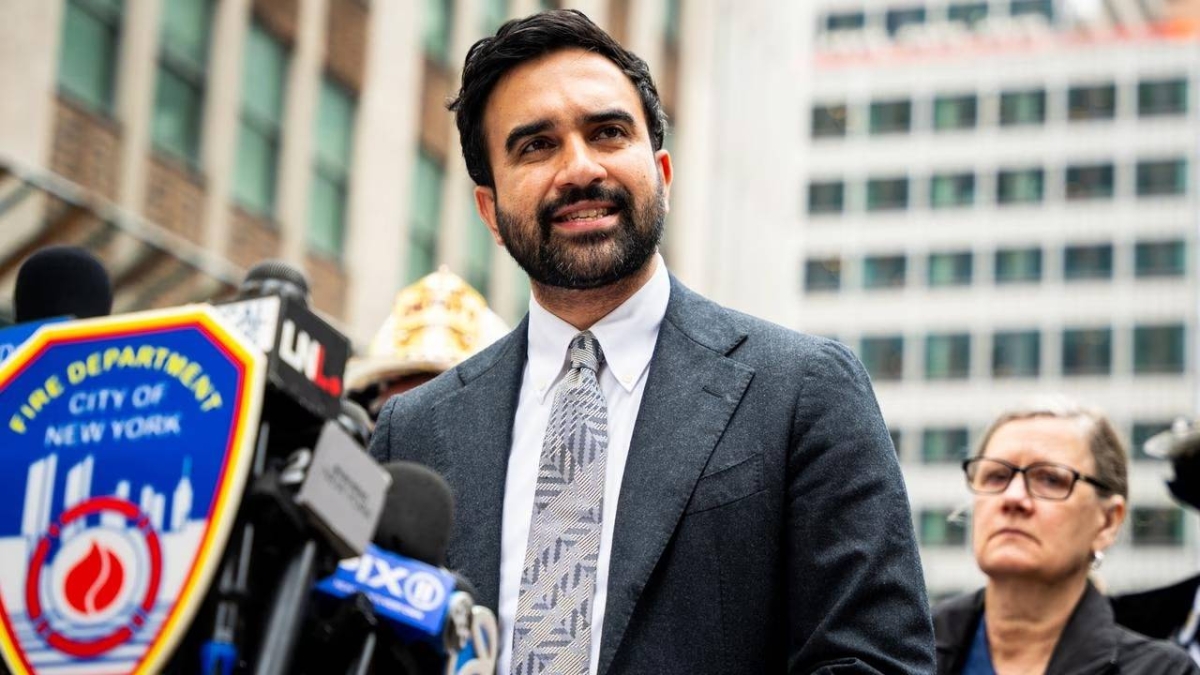
New York Mayor Zohran Mamdani is in talks over whether to try to arrest Israeli Prime Minister Benjamin Netanyahu during an upcoming UN summit, he said in an interview published yesterday — prompting a sharp rebuke from Netanyahu’s camp. “I believe that Prime Minister Netanyahu belongs in The Hague,” Mamdani told The New York Times. “He’s a war criminal who has been charged by the International Criminal Court.”The leftist Mamdani, who has called Israel an “apartheid regime,” added: “That is an opinion that is held by many, purely because of what his actions have wrought over these last many years.” Mamdani admitted he was not sure if he has the power to order the New York Police Department to detain a foreign leader but is discussing the matter with the city’s legal team.“Whatever the law allows me to do in New York City, that’s what we will do,” he said. The UN General Assembly, a major gathering of world leaders, takes place in September at UN headquarters in New York.Mamdani in the past has vowed to send the NYPD to enforce arrest warrants against leaders wanted by the International Criminal Court, including Netanyahu or Russian President Vladimir Putin. The Hague-based ICC said in 2024 that it had reasonable grounds to believe Netanyahu was responsible for alleged war crimes and crimes against humanity related to Israel’s offensive in Gaza.Danny Danon, Israel’s ambassador to the UN, quickly called out Mamdani. “Instead of focusing on his responsibilities as mayor and confronting the rising wave of antisemitism in his city, he has chosen to incite hostility and generate headlines by attacking the State of Israel,” Danon wrote on X.“It will not change a thing. Israeli Prime Minister @netanyahu will come to New York, address the UN General Assembly with pride, and stand before the world to state Israel’s truth and its unwavering right to defend its citizens,” Israel’s ambassador to the UN said.“And if anyone should be arrested, it is @NYCMayor Zohran Mamdani.”Netanyahu has accused Mamdani of supporting Hamas, saying on a recent New York radio show: “I think, secretly, he hates America.” 

World
Argentina-Spain tickets soar near $10K for WC final

Argentina-Spain tickets soar near $10K for WC final

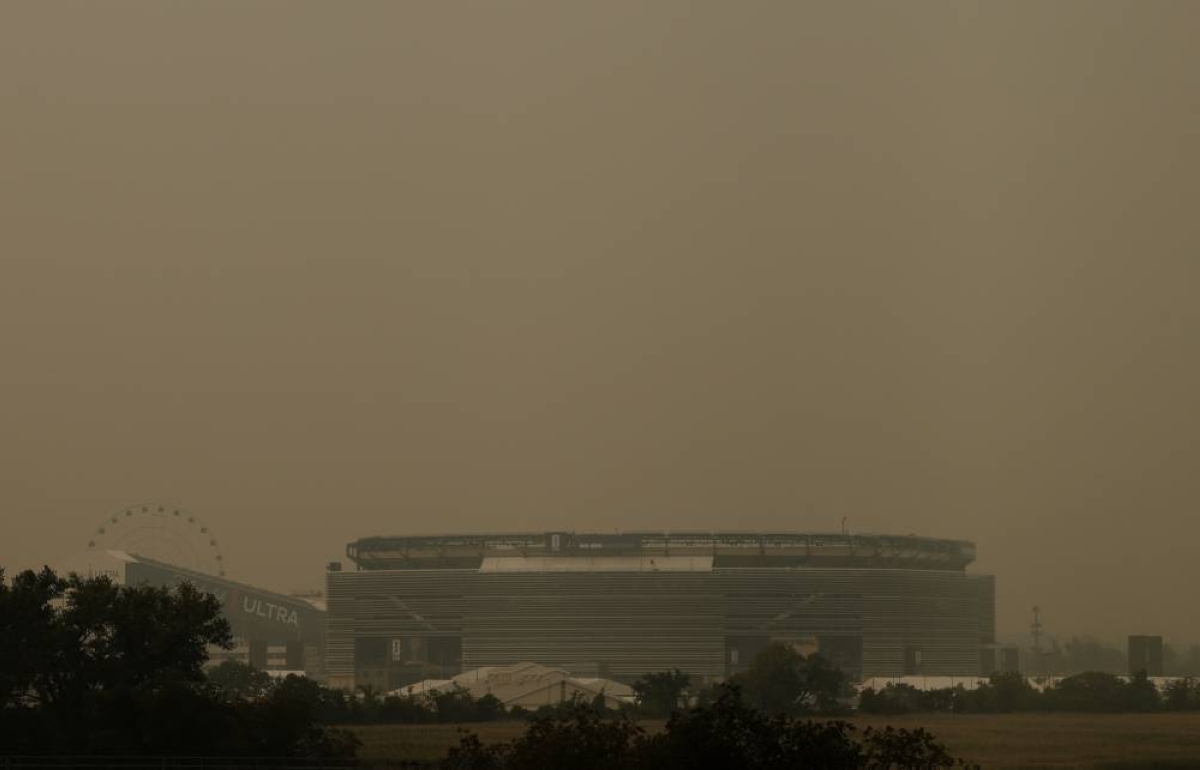
Soccer Football - FIFA World Cup 2026 - Final - Spain v Argentina - Preview - New York New Jersey Stadium, East Rutherford, New Jersey, U.S. - July 18, 2026 General view as smoke from

World
Wildfire: Canada prepares to evacuate Ontario community

Wildfire: Canada prepares to evacuate Ontario community

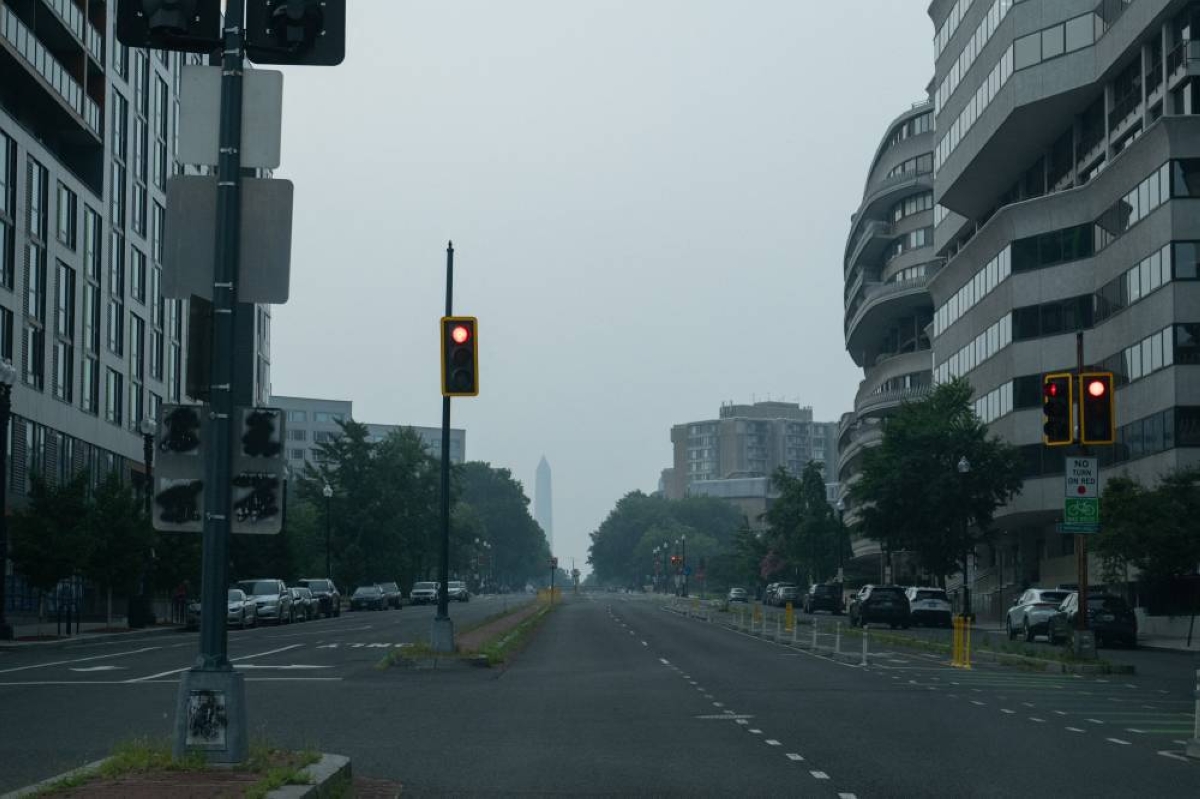
Smoke from Canadian wildfires lingers over Washington, D.C., U.S., July 18, 2026. REUTERS/Annabelle Gordon The Canadian military was preparing yesterday to evacuate a remote community of 600 people threatened by forest wildfires that have spread, choking smoke across a broad swath of the US.Federal Emergencies Minister Eleanor Olszewski said late on Friday that the armed forces would use aircraft to evacuate the inhabitants of Fort Hope in sparsely populated northwestern Ontario, where some of the most intense fires are burning. The region has few roads and relies heavily on air travel. Thousands of people have already been evacuated from affected areas to cities farther south in Ontario.Major forest fires have become a regular annual occurrence in Canada, home to some of the world’s largest forest landscapes. Climate experts say rising temperatures have led to drier timber and increased fire risk. The federal natural resources ministry on yesterday said 69 new fires had been reported overnight in Canada, bringing the number to 955. The total area burned so far is almost 28,500 square km, well below the five-year average. But winds have carried the smoke south of the border, prompting authorities to issue air quality alerts and health warnings in parts of the US.As of yesterday’s morning, the US Environmental Protection Agency’s AirNow site rated the air quality as “unhealthy” in an area including southern Ontario, eastern areas of Ohio and West Virginia, most of Pennsylvania and New Jersey, much of Virginia and all of Maryland, Delaware and Washington, DC. Parts of western Pennsylvania, including Pittsburgh, were rated “very unhealthy”. AirNow predicted that the air quality in those areas would improve over the course of the day.Smoke from the Canadian fires will have only a minimal impact on Sunday’s soccer World Cup final at New York New Jersey Stadium, forecaster AccuWeather said on Friday. President Donald Trump on Friday blamed what he called incompetent Canadian forest management for the smoke and said he would add the “incalculable cost” of dealing with the pollution to existing tariffs on Canadian goods.After Trump’s comments, Olszewski said Canada has invested C$12bn ($8.56bn) in forestsustainability and fire prevention since the year 2020 as the country continues to confront increasingly drier and warmer weather conditions. 

Opinion
Qatar’s emergency medicine model shows value of planning

Qatar’s emergency medicine model shows value of planning

Qatar’s emergency medicine story is not just about hospitals, beds, or brand-new equipment. It is about a state choosing to build an integrated system that treats emergency care as a strategic public good, not a patchwork of last-minute fixes. The new review in Qatar Medical Journal points to something more important than institutional pride: it shows how policy, training, and planning can reshape the quality of care. In a region where health systems are often tested by fast population growth, heavy reliance on expatriate professionals, and sudden crises, Qatar has moved with unusual coherence. Its achievement lies not only in what has been built, but in how it has been built — through central coordination, competency-based education, and a deliberate effort to connect clinical practice with national priorities. That matters because emergency medicine is the true stress test of any health system. It reveals whether hospitals can respond quickly, whether staffing is sufficient, whether training is credible, and whether different parts of the system can work together under pressure. Qatar appears to have answered those questions with a model that is increasingly specialty-led, operationally disciplined, and resilient. The transformation from a fragmented, generalist-driven approach to a cohesive emergency network is therefore more than an administrative upgrade; it is a statement of maturity. The study’s emphasis on workforce development deserves particular attention. A healthcare system may invest in buildings and technology, but without a strong pipeline of trained physicians and multidisciplinary teams, such investments remain incomplete. Qatar’s residency programme, interprofessional education, and subspecialty development have helped create capacity from within the system rather than simply importing it. That is the more durable path. It produces continuity, strengthens institutional memory, and gives the country greater control over standards. Yet the report also highlights a familiar dilemma: retention. Graduating emergency physicians from more than 20 countries speaks to the attractiveness and credibility of the programme, but the migration of some graduates abroad shows that talent mobility remains a reality. This is not a weakness unique to Qatar; it is a global challenge. Still, it raises a practical question for policymakers everywhere: how do you train world-class professionals and keep enough of them to serve the public system that invested in them? The answer may lie in making the system itself a destination. Professionals are more likely to stay where they see career progression, research opportunity, service stability, and a clear sense of mission. Qatar has already signaled many of those conditions. The next task is to deepen them. The system’s performance during the Covid-19 pandemic and the 2022 FIFA World Cup reinforces the broader lesson. Emergency medicine is often judged in ordinary times, but its real value emerges under extraordinary strain. Qatar’s ability to expand ICU capacity, deploy telehealth, reconfigure facilities, and maintain response standards during global events suggests a system that can absorb shocks without losing direction. That is the definition of resilience. For other countries, the lesson is clear. Emergency medicine cannot be developed by improvisation. It requires national planning, linked education pathways, clinical governance, and a willingness to invest for the long term. Qatar has shown that a small state can build a large-scale model of competence when its institutions move in the same direction. The result is not just better emergency care, but a stronger health system overall.     

Opinion
Of Türkiye’s triumph and everlasting bonds with Qatar

Of Türkiye’s triumph and everlasting bonds with Qatar

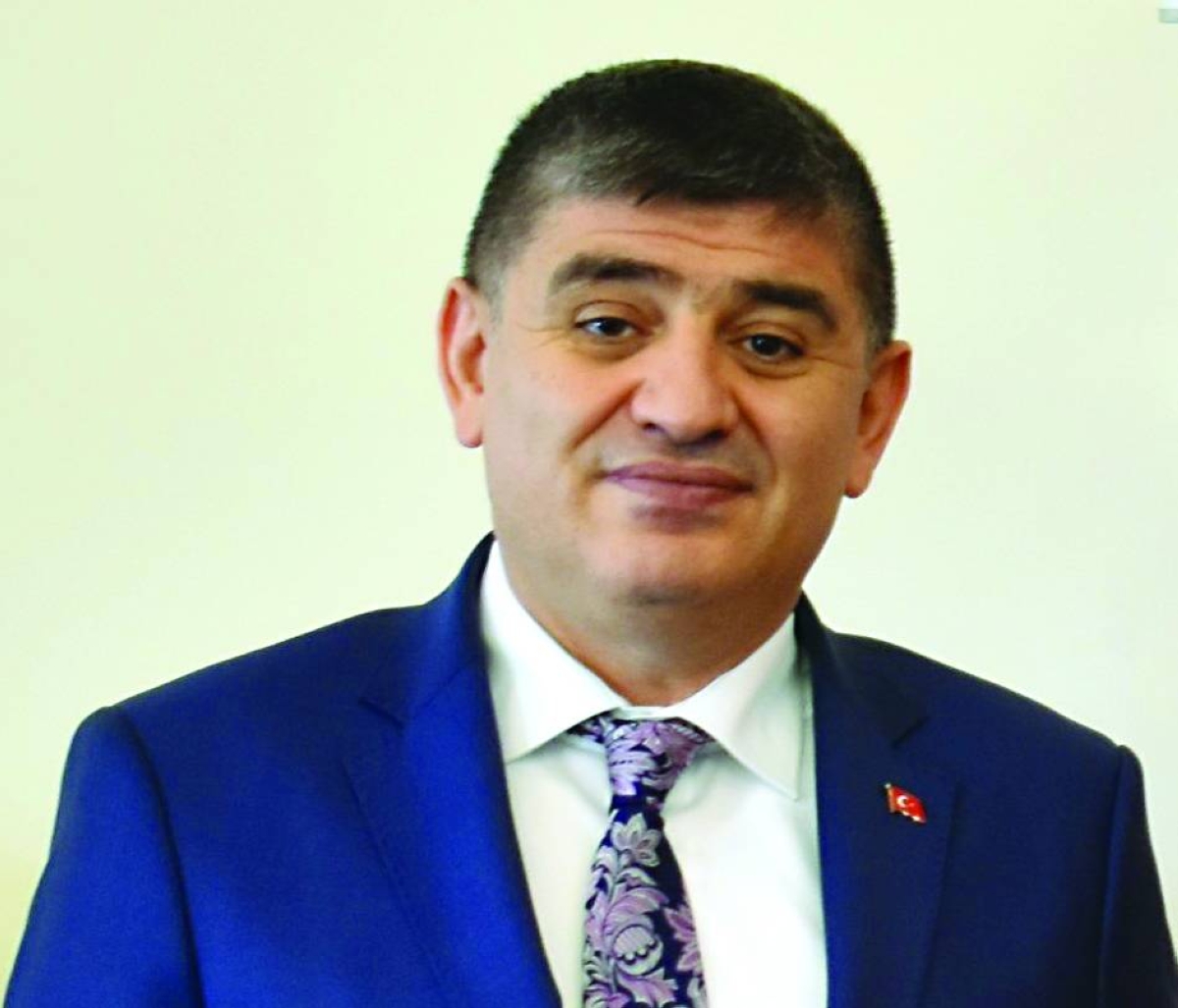
Throughout history, nations have experienced periods of turbulence and resilience, marked by both misfortune and triumphs. A decade ago, the attempted coup orchestrated by the Fethullahist Terrorist Organisation (FETO), on the night of July 15, 2016 stands as a stark example of such a moment in Türkiye’s recent history. FETO aimed at toppling the democratically elected government and subverting the constitutional order. This insidious attempt was decisively thwarted by the foresight, unity, and unwavering resolve of the Turkish nation. Turkish people, irrespective of political, religious, or ethnic differences, poured into the squares and streets, resisting tanks and confronting armed forces with nothing but their national flags and unyielding determination so as to prevent the heinous attempt. On that dark night, as a result of the acts of terrorism committed by FETO, 253 of our citizens were martyred and more than 2,000 citizens injured. Thus, July 15 has since become a symbol of national resilience and unity, declared as Democracy and National Unity Day. It serves as a stark reminder of the threats that countries may face and the extraordinary strength they can muster in response. This critical juncture assisted to reinforce Türkiye’s institutional foundations and reaffirm the collective commitment of its people to freedom, democracy and national sovereignty. In response, the Turkish government launched a comprehensive and multi-faceted campaign domestically and internationally to dismantle FETO’s network and bring those responsible to justice in accordance with the principles of the rule of law and fundamental rights and freedoms. Most of the FETO presence have been dispersed globally by means of international co-operation by friendly and allied countries. Besides being a terrorist organisation, FETO also has an organised crime structure with a cult-like character that has rarely been seen in history. It consists of multi-layered international and secret cells that sometimes present themselves as non-governmental organisations, as educational institutions, sometimes as commercial entities and/or under the guise of a religious community to advance their hidden goals. This shadowy and shady organisational structure, which abuses all universal values for its own secret agenda, poses a major national security threat to all countries and societies in which it operates. Hence, the fight against FETO is one of the most important components of Türkiye’s national security at home and abroad. The death of the organisation’s ringleader Fethullah Gülen in the United States on October 20, 2024, will not make us complacent. We are fully cognizant of the fact that the struggle against these types of devious organisations is not a 100-metre run but a marathon. Hence, we will continue our relentless fight with determination until this dark organisation is entirely eradicated. Since the July 15 coup attempt, Türkiye continued to achieve remarkable success and has made noteworthy strides across multiple sectors by reinforcing its democratic governance, enhancing its economy, advancing its industries, particularly defense area, expanding global humanitarian outreach, and becoming a key player in regional diplomacy, despite the challenges such as Covid-19 and February 6 earthquakes. Turkish economy has demonstrated resilience and sustained growth, maintaining its position as 16th, with the total GDP of $1.64tn in 2025, among the world’s top 20 economies. Our exports have reached to $273.4bn in 2025 and is expected to be over $400bn in the coming years. Türkiye has not only completed its mega infrastructure projects (Eurasia Tunnel), also has added new ones (1915 Çanakkale Strait, Istanbul Airport etc.). Besides, impressive advancements in technology, especially in military field (advanced UAV’s), and automative sector (first domestically produced electric car TOGG) has persisted since the failed coup attempt. As the defence industry is an inevitable necessity for major countries, Türkiye has emerged as a global frontrunner, supported by a robust R&D budget approaching $3bn, over 80% domestic production capacity, and a project portfolio valued at more than $100bn. While maintaining its engagement with traditional allies such as Nato and the European Union, Türkiye reinforced its proactive and multidimensional approach in regional and global diplomacy. As one of the prominent members of the Organisation of Islamic Cooperation (OIC), the Developing Eight (D-8), the Organisation of Turkic States, Asia Cooperation Dialogue and MIKTA, Türkiye has brought additional efficiency and dynamism to all institutions during its Term Presidencies. Türkiye’s foreign policy, indeed, remains firmly rooted in a commitment to regional stability, multilateral engagement, and proactive peacebuilding. We uphold dialogue over division, prioritise partnerships rather than polarization, and advocate for diplomacy as the principal means of resolving disputes. Through deepening and widening its comprehensive policies, Türkiye has spawned the 3rd largest diplomatic network globally with 264 missions. Türkiye has a leading role in conflict prevention, peaceful resolution of conflicts and mediation. Under President Erdogan’s leadership, Türkiye has solidified its role as a mediator in global diplomacy, facilitating key peace talks and leading efforts to resolve regional and global crises. Türkiye has also adopted a value-based foreign policy that places human dignity at its core as it ranks first among the countries that provide the most aid in terms of its GDP. Türkiye has remained committed to its ethical principles on just causes, foremost among them the Palestinian issue, and has consistently voiced its rejection of double standards in addressing the rights of peoples. While commemorating tenth year of July 15, Qatar’s principled stance and solidarity with Türkiye should be remembered. In the immediate aftermath of the coup attempt, His Highness the Amir Sheikh Tamim bin Hamad al-Thani extended the first message of solidarity. HE Prime Minister and Minister of Foreign Affairs Sheikh Mohammed bin Abdulrahman al-Thani was among the first foreign officials to visit Türkiye in the aftermath of this night. Qatar’s firm stance, its unequivocal support for Türkiye’s elected government, and its deep empathy with the Turkish people have not been forgotten. And this brotherly gesture not only affirmed our mutual trust and solidarity but also further reinforced our already resolute ties and made the foundation even stronger that our strategic co-operation is based on. Indeed, President Erdoğan personally stated that any violations against brotherly country Qatar, in the wake of Iran – US/Israeli war, are inadmissible. He stressed that Türkiye always stands by Qatar in its difficult times. The bonds between two countries are deeply rooted in a shared vision for a more stable, prosperous, and peaceful region. We collaborate with Qatar to promote peace, conflict resolution, and humanitarian assistance from Gaza to the Horn of Africa and elsewhere possible. Besides having a shared vision for a better future, Türkiye and Qatar hold a shared destiny which was melded by the blood of our martyrs in the tragic accident of a helicopter crash that happened in March 2026. On this solemn occasion, we cannot fail to remember His Highness the Father Amir Sheikh Hamad bin Khalifa al-Thani, a steadfast supporter and sincere friend of Türkiye, who played a pivotal role in elevating Turkish-Qatari relations to the unprecedented level they enjoy today. Through his visionary leadership, the enduring bonds of fraternity between our two nations were further strengthened, paving the way for a strategic partnership rooted in mutual trust, genuine respect, and a shared commitment to justice and common values. May Allah have mercy upon him. As we commemorate the 10th anniversary of July 15 and celebrate Democracy and National Unity Day, we pay tribute to the martyrs and veterans who sacrificed their lives and well-being to defend our nation. We also express our heartfelt appreciation for those who stood by us.